Loading...
Jia Xu vs Julius Caesar
Julius Caesar leads by 31.4 pts · 2 figures compared
…
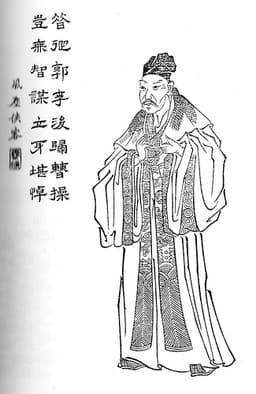
Jia Xu
Politician · Ancient
51.4Total

Julius Caesar
General · Ancient
82.8Total
Basic Information
Born
147
-100
Died
223
-44
Era
Ancient
Ancient
Nationality
China
Roman Republic
Occupation
Politician
General
Civilization
Eastern
Western
Score Comparison
Military (10%)
45.0
88.0
Political (20%)
39.4
78.0
Influence (20%)
56.4
85.0
Legacy (20%)
50.0
82.0
Leadership (15%)
67.0
80.0
Strategy (15%)
43.3
85.0
TOTAL
51.4
82.8
Jia Xu — Complete Timeline
192 AD
Advised Li Jue and Guo Si to attack Chang'anWar◆ Major
After Dong Zhuo's death, Jia Xu advised his subordinates Li Jue and Guo Si to gather their troops and attack Chang'an rather than disbanding. This led to the capture of the capital and the restoration of their power, though it plunged the region into further chaos.
Han DynastyWarlord EraChang'an
Impact: nationaldestructive
199 AD
Switched allegiance to Cao CaoPolitical Action
Jia Xu left Zhang Xiu's service and joined Cao Cao, bringing with him strategic advice. Cao Cao welcomed him and later relied on his counsel for major decisions.
Cao CaoAllegiance ChangeAdvisor
Impact: national
200 AD
Advised Cao Cao to attack Yuan Shao at GuanduWar◆ Major
When Cao Cao hesitated to engage Yuan Shao due to lack of supplies, Jia Xu argued that Cao Cao's strategic acumen and the morale of his troops outweighed Yuan Shao's numerical advantage. Cao Cao followed the advice and won the Battle of Guandu.
Battle of GuanduCao CaoMilitary Advice
Impact: regionalconstructive
208 AD
Opposed Cao Cao's plan to attack Sun QuanPolitical Action
After Cao Cao's defeat at Red Cliffs, Jia Xu advised against a hasty second invasion of Jiangdong, arguing that Cao Cao should consolidate his gains first. Cao Cao did not follow this advice and suffered further setbacks.
Red CliffsCao CaoStrategic Advice
Impact: regionalconstructive
215 AD
Advised Cao Cao to invade Hanzhong via the Qinling MountainsWar
Jia Xu recommended that Cao Cao launch a campaign against Zhang Lu in Hanzhong using a mountain route. The campaign succeeded, and Cao Cao gained control of Hanzhong.
Hanzhong CampaignCao CaoMilitary Strategy
Impact: regionalconstructive
Julius Caesar — Complete Timeline
58 BC
Gallic WarsWar◆ Major
Caesar, as proconsul of Gaul, launched a series of campaigns that conquered all of Gaul (modern France, Belgium, and parts of Switzerland). He fought numerous battles, including against the Helvetii, the Belgae, and the Gallic chieftain Vercingetorix. The wars brought immense wealth and a loyal army to Caesar.
Gallic WarsConquestRoman Expansion
Impact: regional
49 BC
Crossing the RubiconPolitical Action◆ Major
Caesar led Legio XIII across the Rubicon River into Italy, defying the Roman Senate's order to disband his army. This act triggered a civil war against Pompey and the Optimates, ultimately leading to Caesar's dictatorship and the end of the Roman Republic.
Roman Civil WarEnd of RepublicPower Struggle
Impact: global
48 BC
Battle of PharsalusWar◆ Major
Caesar's outnumbered army defeated the larger forces of Pompey the Great at Pharsalus in Greece. Caesar's tactical use of a reserve line to counter Pompey's cavalry charge proved decisive. Pompey fled to Egypt, where he was assassinated, leaving Caesar as the undisputed master of the Roman world.
Roman Civil WarBattleDecisive Victory
Impact: regional
44 BC
Appointment as Dictator for LifePolitical Action◆ Major
The Roman Senate appointed Caesar dictator perpetuo (dictator for life), granting him unprecedented personal power. This move concentrated military, legislative, and judicial authority in one person, effectively ending the Roman Republic's traditional system of checks and balances and alarming many senators.
DictatorshipEnd of RepublicPower Consolidation
Impact: regionaldestructive
Assassination on the Ides of MarchPolitical Action◆ Major
A group of Roman senators, led by Marcus Junius Brutus and Gaius Cassius Longinus, stabbed Caesar to death at a meeting of the Senate in the Theatre of Pompey. The assassination was intended to restore the Republic, but instead triggered another civil war that led to the rise of the Roman Empire.
AssassinationRoman PoliticsEnd of Republic
Impact: globaldestructive
Expert Analysis
jia-xu-vs-julius-caesar
# The Strategist and the Storm
On a winter morning in 44 BCE, Julius Caesar walked into the Senate chamber, ignoring a soothsayer’s warning and a colleague’s desperate note pressed into his hand. Within minutes, he lay bleeding from twenty-three stab wounds, the Republic’s most brilliant general destroyed by the very men he had elevated. Half a world away and two centuries later, a Chinese advisor named Jia Xu died peacefully in his bed at seventy-six, having served four warlords, outlived three empires, and never lost a battle he counseled. Both men shaped the course of civilizations. One changed the world; the other survived it. Their stories ask a haunting question: Is it better to seize history by the throat, or to whisper in its ear?
Origins
Caesar was born into the patrician Julian clan, a family of ancient prestige but dwindling influence. His Rome was a violent republic in decay, where ambitious men bought votes, commanded legions, and murdered rivals in the streets. From childhood, Caesar learned that glory and danger were the same coin. He was captured by pirates as a young man, laughed at their ransom demand, and after his release, crucified them—a preview of the man who would later write his own war commentaries in the third person.
Jia Xu came from a very different world. He was born in 147 CE, during the twilight of the Han Dynasty, when corruption ran deep and peasant rebellions tore the empire apart. Unlike Caesar, Jia Xu emerged from a modest family of scholars. His path was not the battlefield but the council chamber. Where Caesar trained himself to command legions, Jia Xu trained himself to read men. The difference in their origins—one born to lead, the other born to advise—would define everything that followed.
Rise to Power
Caesar’s ascent was a masterpiece of calculated risk. He borrowed fortunes to fund public games, forged alliances with the richest men in Rome, and at forty, conquered Gaul in a brutal eight-year campaign that killed a million people and enslaved another million. His Commentaries on the Gallic Wars turned military butchery into literary propaganda. When the Senate ordered him to disband his army, Caesar crossed the Rubicon River in 49 BCE, igniting a civil war. “The die is cast,” he reportedly said—a gambler’s phrase from a man who bet everything and won.
Jia Xu’s rise was quieter but no less dramatic. In 192 CE, after the tyrant Dong Zhuo was assassinated, his former subordinates Li Jue and Guo Si panicked, ready to flee or surrender. Jia Xu stopped them. “If you abandon your troops and flee,” he said, “a single constable could arrest you. But if you gather your men and attack Chang’an, you control the empire.” They followed his advice, captured the capital, and for years held the Han emperor hostage. Jia Xu had just handed desperate men an empire—and he did it without commanding a single soldier.
Leadership & Governance
As dictator of Rome, Caesar was a hurricane. He reformed the calendar, granted citizenship to provincials, launched massive building projects, and packed the Senate with his supporters. He pardoned former enemies, including Brutus and Cassius—a mercy that would cost him his life. His military genius was absolute: at the Battle of Alesia (52 BCE), he besieged Gaul’s greatest rebel while simultaneously building a second wall to repel a relief army, trapping both enemies in a single, impossible net.
Jia Xu governed through suggestion. In 200 CE, when Cao Cao hesitated to attack the warlord Yuan Shao at Guandu, Jia Xu told him: “You have four advantages: vision, judgment, command, and troops. Even if Yuan Shao has ten times your numbers, you will win.” Cao Cao attacked and won, breaking Yuan Shao’s power forever. In 208, after Cao Cao’s catastrophic defeat at Red Cliffs, Jia Xu advised against a second invasion: “First secure the interior, win the people’s hearts. Then cross the river.” Cao Cao ignored him—and lost again. Jia Xu never gave orders. He simply spoke truth to power, and when power refused to listen, he waited.
Triumph & Tragedy
Caesar’s greatest triumph was his conquest of Gaul, which made him the richest and most feared man in Rome. His greatest tragedy was the Ides of March, when sixty senators—many of them his pardoned enemies—stabbed him to death. His last words, according to tradition, were to Brutus: “Et tu, Brute?” It was the tragedy of a man who believed his brilliance could charm betrayal.
Jia Xu’s triumph was subtler. In 215, he advised Cao Cao to invade Hanzhong through the Qinling Mountains, a campaign that succeeded and expanded Cao Cao’s domain. His tragedy was the curse of foresight: he watched warlords make mistakes he had predicted, knowing his advice could save them but unable to force their hands. Unlike Caesar, Jia Xu never lost a battle—because he never fought one. His tragedy was not death, but irrelevance when ignored.
Character & Destiny
Caesar was reckless, generous, and obsessed with legacy. He pardoned enemies because he believed his greatness made him invulnerable. He walked into the Senate without guards because he could not imagine his own murder. His character was a blade: brilliant, sharp, and destined to break.
Jia Xu was cautious, self-effacing, and obsessed with survival. He switched masters freely, never holding a top post, never making enemies. When asked why he avoided high office, he replied: “I have merely offered plans. I do not seek fame.” His character was a shadow: invisible, indispensable, and eternal.
Legacy
Caesar’s legacy is the Roman Empire itself. His name became a title—Kaiser, Tsar—and his reforms shaped Western law, language, and governance for two thousand years. He is remembered as a god, a tyrant, and a martyr, the man who destroyed the Republic to save it.
Jia Xu’s legacy is quieter but no less real. In Chinese history, he is remembered as a master strategist of the heart, a man who understood that the most powerful weapon is not the sword but the word. His advice shaped the rise of the Cao Wei dynasty, which would unify northern China and lay the foundations for the Jin Dynasty.
Conclusion
Caesar and Jia Xu represent two poles of power: the lightning bolt and the whisper. Caesar believed history belonged to those who acted, who took risks, who crossed rivers. Jia Xu believed history belonged to those who thought, who waited, who never crossed a river unless the current was in their favor. One changed the world and died for it. One survived to see his advice vindicated by time. Both were right. And their stories remind us that in the game of thrones, there are many ways to win—and even more ways to lose. The question is not which path is better, but which one you are willing to walk.
Rankings
🥇
Julius CaesarLeader
Mil: 88.0Pol: 78.0Inf: 85.0
82.8
🥈
Jia Xu
Mil: 45.0Pol: 39.4Inf: 56.4
51.4
+31.4 behind
How This Comparison Works
Algorithm
Each figure is scored on 6 dimensions (0—100 scale) based on structured historical data: Military (10%), Political (20%), Influence (20%), Legacy (20%), Leadership (15%), Strategy (15%). The weighted total produces the final ranking.
Data Sources
Scores are computed from structured sub-indicators in the database. Scale factors adjust for era (Ancient ×0.85, Modern ×1.0) and civilization size (Eastern ×1.05, Other ×0.80) to account for differences in population and military scale.
Maximum 3 Figures
Comparisons are limited to 2—3 figures to ensure readability and statistical meaningfulness.
Error Margins
±5 points per dimension — Sub-scores are derived from historical records with inherent uncertainty. Two figures within 5 points on a dimension should be considered roughly equivalent in that area.
Total Score Accuracy
±3 points overall — The weighted combination of 6 dimensions produces a total score with approximately ±3 points of uncertainty. Differences of less than 3 points are not statistically significant— the figures are effectively tied.
Known Limitations
- Historical records are incomplete and uneven across civilizations
- Figures from oral-tradition societies may be underrepresented
- Occupation labels can misclassify multi-role figures
- Scores measure capability and impact, not moral character
- Quantitative scoring is a comparison tool, not absolute truth
Capability Radar
Military (10%) — Battles & Warfare
Battles
10
95
Win Rate
15
92
Expansion
5
97
Political (20%) — Governance & Reform
Reform
10
90
Diplomacy
70
85
Economy
10
82
Influence (20%) — Cultural & Global Reach
Cultural
30
88
Global
20
94
Legacy (20%) — Historical Impact
Historical
50
95
Longevity
40
96
Leadership (15%) — Power & Stability
Tenure
30
75
Stability
40
60
Strategy (15%) — Tactics & Innovation
Strategy
70
94
Tactics
60
96
Reform
5
88
Similar Comparisons
Comments & Discussion
CaesarConqueror6/17/2026
Caesar wins every time for sheer impact. He didn't just survive—he rewrote Roman history, created the Julian calendar we still use, and his conquest of Gaul killed a million people. Jia Xu was a clever survivor in a collapsing dynasty, sure, but he's a footnote next to the man who literally changed how Western civilization measures time.
历史铁军6/17/2026
拿贾诩跟凯撒比,根本是个错误选项。凯撒是征服者,改变了世界格局;贾诩顶多是个聪明的保命大师,在乱世里东躲西藏。一个死在元老院二十三刀下,一个在床上老死。谁更有血性?历史只记住改变规则的人,不是偷偷活着的看客。
TogaTactician6/17/2026
Y'all miss the point—Caesar was a flash in the pan, dead at 55 after a few glorious years. Jia Xu's legacy is in the long game: he helped found the Cao Wei dynasty, and his strategies kept the north stable for decades. Surviving three empires isn't cowardice; it's the ultimate proof of strategic genius. Caesar changed the world temporarily—Jia Xu helped build one that lasted.
智慧狐狸6/17/2026
凯撒是莽夫,贾诩是智者。一个明晃晃地死,一个暗戳戳地活。贾诩劝曹操别打赤壁,曹操不听,结果火烧连营。这不叫胆小,这叫预判。凯撒有人刺杀他,贾诩连个想杀他的人都找不着。高下立判,存活才叫真本事。
DataDork6/17/2026
Fun fact: Caesar's death ended the Republic and started the Empire, a shift that impacted millions. Jia Xu's death changed exactly nothing. Impact metrics favor Caesar by any measure—economic shifts, population control, institutional collapse. Jia Xu advised, sure, but his name doesn't move armies. Data doesn't lie: Caesar's scale dwarfs Jia Xu's.
晚生书生6/17/2026
数据分析没必要神化凯撒。贾诩推动的屯田制养活了多少饥民?他建议的联姻和缓政策让北方免于内战。凯撒杀了Gaul百万人,贾诩救了可能更多。历史不是谁死得壮烈,而是谁让更多人活着。数字面前,凯撒的丰功伟绩是血染的,贾诩的隐忍却是金色的。