Loading...
Jeremy Corbyn vs Pedro Sanchez
Pedro Sanchez leads by 4.8 pts · 2 figures compared
…
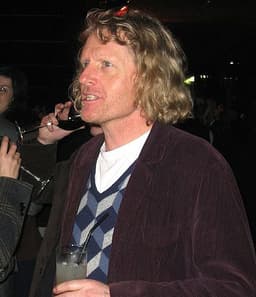
Jeremy Corbyn
Politician · Modern
47.4Total

Pedro Sanchez
Politician · Modern
52.2Total
Basic Information
Born
1949
1972
Died
—
—
Era
Modern
Modern
Nationality
United Kingdom
Spain
Occupation
Politician
Politician
Civilization
Western
Western
Score Comparison
Military (10%)
49.6
14.4
Political (20%)
40.8
62.7
Influence (20%)
55.7
60.0
Legacy (20%)
41.7
45.0
Leadership (15%)
51.9
72.0
Strategy (15%)
41.5
42.8
TOTAL
47.4
52.2
Jeremy Corbyn — Complete Timeline
2015 AD
Elected Leader of the Labour PartyPolitical Action◆ Major
Jeremy Corbyn was elected Labour leader on a left-wing platform, winning 59.5% of the vote. His leadership was seen as a shift away from New Labour, advocating for nationalization, anti-austerity, and nuclear disarmament.
Labour PartyLeadershipLeft-wing
Impact: nationalconstructive
2017 AD
Led Labour into the 2017 general electionPolitical Action◆ Major
Corbyn led Labour to a surprise result in the 2017 general election, gaining 30 seats and denying Theresa May a majority. Labour won 40% of the vote, its highest share since 2001, and forced a hung parliament.
ElectionLabour PartyHung Parliament
Impact: nationalconstructive
2019 AD
Led Labour into the 2019 general electionPolitical Action◆ Major
Corbyn led Labour to a landslide defeat in the 2019 general election, winning only 202 seats. The party lost many traditional Labour seats in the 'Red Wall' to the Conservatives. Corbyn resigned as leader following the defeat.
ElectionDefeatLabour Party
Impact: nationaltragic
2020 AD
Suspended from Labour PartyPolitical Action◆ Major
Corbyn was suspended from the Labour Party by Keir Starmer after his response to the Equality and Human Rights Commission report on antisemitism. He claimed the scale of antisemitism had been overstated, leading to his suspension.
Labour PartyAntisemitismSuspension
Impact: nationaldestructive
Pedro Sanchez — Complete Timeline
2018 AD
Elected Prime Minister of SpainPolitical Action◆ Major
Pedro Sánchez became Prime Minister of Spain on June 2, 2018, after winning a vote of no confidence against Mariano Rajoy. His election ended the People's Party government and brought the Spanish Socialist Workers' Party to power.
Spanish PoliticsGovernment ChangeSocialist Party
Impact: national
2020 AD
Formed coalition government with Unidas PodemosPolitical Action◆ Major
In January 2020, S
Coalition GovernmentSpanish PoliticsLeft Alliance
Impact: nationalconstructive
Managed COVID-19 pandemic responsePolitical Action◆ Major
Sánchez declared a state of alarm on March 14, 2020, imposing one of Europe's strictest lockdowns to combat COVID-19. The response included economic support measures and a vaccination campaign, though it faced criticism over handling of the economic impact.
COVID-19Public HealthCrisis Management
Impact: national
2021 AD
Passed labor reform lawReform
Sánchez's government passed a labor reform in December 2021, replacing the 2012 reform. The new law aimed to reduce temporary contracts, strengthen collective bargaining, and improve workers' rights, with support from unions and business groups.
Labor ReformWorkers' RightsEconomic Policy
Impact: nationalconstructive
Pardoned Catalan separatist leadersPolitical Action◆ Major
In June 2021, S
Catalan IndependencePardonsPolitical Crisis
Impact: national
2023 AD
Called snap general electionPolitical Action◆ Major
After poor results in local elections, S
ElectionPolitical StrategyHung Parliament
Impact: national
Expert Analysis
Origins
Jeremy Corbyn was born in 1949 in Chippenham, England, into a middle-class family with strong Labour Party ties. He attended Adams Grammar School and later studied at the University of North London, though he left without a degree. His early career included work as a trade union organizer and local councilor. Corbyn's political activism was shaped by the anti-war movement and socialist principles.
Pedro Sánchez was born in 1972 in Madrid, Spain, into a middle-class family. He studied economics at the Complutense University of Madrid, earned a master’s at the Free University of Brussels, and a PhD in economics from Camilo José Cela University. Before politics, he worked as an economics professor and consultant. Sánchez joined the Spanish Socialist Workers' Party (PSOE) in his youth.
Rise to Power
Corbyn was first elected as MP for Islington North in 1983, representing a far-left constituency. He remained a backbencher for decades, often rebelling against his own party. His rise to Labour leadership came as a surprise in 2015, when he won 59.5% of the vote on a left-wing platform, defeating more centrist candidates. The victory was fueled by grassroots support and trade union backing.
Sánchez rose through PSOE ranks, becoming a member of the European Parliament in 2004, then a deputy in the Spanish Congress in 2009. He was elected PSOE leader in 2014 after the resignation of Alfredo Pérez Rubalcaba. In 2016, he resigned after a party crisis, but returned in 2017 to win back the leadership. He became Prime Minister in June 2018 after winning a vote of no confidence against Mariano Rajoy, capitalizing on corruption scandals.
Leadership & Governance
Corbyn's leadership style was described as passive and hands-off, often delegating to his team. He focused on grassroots campaigning and maintaining party unity on the left. His governance approach was heavily ideological, advocating for nationalization, higher taxes, and nuclear disarmament. He scored 51.9 in leadership, reflecting his ability to inspire activists but struggle with parliamentary management. His 40.8 political score underscores his difficulty in winning broad electoral support.
Sánchez scored 72.0 in leadership, demonstrating more strategic and adaptive governance. He formed Spain's first coalition government since the 1930s with Unidas Podemos in 2020, showing willingness to compromise. His management of the COVID-19 pandemic included strict lockdowns and economic support measures. He also pardoned nine Catalan separatist leaders in 2021 to reduce tensions, a risky but calculated move. His 62.7 political score indicates stronger institutional and electoral positioning.
Triumph & Tragedy
Corbyn's greatest triumph was the 2017 general election, where Labour gained 30 seats and won 40% of the vote, denying Theresa May a majority. This result was unexpected and energized the left. However, his tragedy was the 2019 election, where Labour lost 60 seats, its worst result since 1935. The party's poor performance was attributed to Brexit confusion and antisemitism controversies, leading to his resignation.
Sánchez's triumph includes forming a stable coalition and handling the pandemic effectively, with one of Europe's highest vaccination rates. His tragedy was the 2023 snap election, which resulted in a hung parliament and forced him to rely on controversial alliances with Catalan and Basque separatists to remain in power. This weakened his position and drew criticism.
Character & Destiny
Corbyn is characterized by ideological consistency and a refusal to compromise on core beliefs. This made him a hero to the left but a polarizing figure nationally. His destiny was shaped by his inability to broaden his appeal beyond the activist base. His 41.5 strategy score reflects poor tactical decisions, especially on Brexit.
Sánchez is pragmatic and calculating, willing to shift positions to gain power. He has been described as a political survivor. His destiny has been marked by resilience, returning from political exile to become PM. His 42.8 strategy score is moderate, but his higher leadership and political scores indicate better execution.
Legacy
Corbyn's legacy is mixed: he revived left-wing ideas in the Labour Party and inspired a new generation of activists, but his leadership ended in electoral disaster and internal division. His impact on Labour's policy direction persists, but his personal reputation is tainted by antisemitism allegations. He scored 41.7 in legacy.
Sánchez's legacy is still forming, but he has already restored PSOE's governing credibility and normalized coalition politics in Spain. His handling of the Catalan crisis and the pandemic will be long remembered. He scored 45.0 in legacy, slightly higher, with potential for growth if he continues in power.
Conclusion
Pedro Sánchez had a greater impact than Jeremy Corbyn, supported by a higher total score of 52.2 versus 47.4. Sánchez's leadership score of 72.0 far exceeds Corbyn's 51.9, reflecting his ability to govern effectively and maintain power. While Corbyn's 2017 campaign was impressive, his overall political and strategic failures led to a weaker legacy. Sánchez's governance during the pandemic and his management of Spain's political challenges demonstrate more tangible and lasting influence. The 4.8-point gap underscores this comparative advantage.
Rankings
🥇
Pedro SanchezLeader
Mil: 14.4Pol: 62.7Inf: 60.0
52.2
🥈
Jeremy Corbyn
Mil: 49.6Pol: 40.8Inf: 55.7
47.4
+4.8 behind
How This Comparison Works
Algorithm
Each figure is scored on 6 dimensions (0—100 scale) based on structured historical data: Military (10%), Political (20%), Influence (20%), Legacy (20%), Leadership (15%), Strategy (15%). The weighted total produces the final ranking.
Data Sources
Scores are computed from structured sub-indicators in the database. Scale factors adjust for era (Ancient ×0.85, Modern ×1.0) and civilization size (Eastern ×1.05, Other ×0.80) to account for differences in population and military scale.
Maximum 3 Figures
Comparisons are limited to 2—3 figures to ensure readability and statistical meaningfulness.
Error Margins
±5 points per dimension — Sub-scores are derived from historical records with inherent uncertainty. Two figures within 5 points on a dimension should be considered roughly equivalent in that area.
Total Score Accuracy
±3 points overall — The weighted combination of 6 dimensions produces a total score with approximately ±3 points of uncertainty. Differences of less than 3 points are not statistically significant— the figures are effectively tied.
Known Limitations
- Historical records are incomplete and uneven across civilizations
- Figures from oral-tradition societies may be underrepresented
- Occupation labels can misclassify multi-role figures
- Scores measure capability and impact, not moral character
- Quantitative scoring is a comparison tool, not absolute truth
Capability Radar
Military (10%) — Battles & Warfare
Battles
31
23
Win Rate
30
23
Expansion
35
31
Political (20%) — Governance & Reform
Reform
40
55
Diplomacy
35
60
Economy
20
55
Influence (20%) — Cultural & Global Reach
Cultural
40
40
Global
35
50
Legacy (20%) — Historical Impact
Historical
30
40
Longevity
20
30
Leadership (15%) — Power & Stability
Tenure
30
60
Stability
15
50
Strategy (15%) — Tactics & Innovation
Strategy
41
29
Tactics
38
31
Reform
41
36
Similar Comparisons
Comments & Discussion
No comments yet. Be the first to share your thoughts!