Loading...
Heshen vs Jeremy Corbyn
Jeremy Corbyn leads by 4.1 pts · 2 figures compared
…

Heshen
Politician · Modern
43.3Total
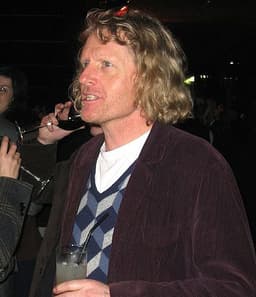
Jeremy Corbyn
Politician · Modern
47.4Total
Basic Information
Born
1750
1949
Died
1799
—
Era
Modern
Modern
Nationality
China
United Kingdom
Occupation
Politician
Politician
Civilization
Eastern
Western
Score Comparison
Military (10%)
12.7
49.6
Political (20%)
26.4
40.8
Influence (20%)
48.6
55.7
Legacy (20%)
45.0
41.7
Leadership (15%)
74.0
51.9
Strategy (15%)
36.2
41.5
TOTAL
43.3
47.4
Heshen — Complete Timeline
1776 AD
Rose to power as Qianlong's favorite ministerPolitical Action◆ Major
Heshen gained the favor of the Qianlong Emperor through flattery and administrative skill, rapidly ascending to high office. He became Grand Secretary and controlled key government appointments and finances.
FavoritismRise to PowerQing Court
Impact: national
1790 AD
Amassed vast personal fortune through corruptionPolitical Action◆ Major
Heshen systematically embezzled state funds, accepted bribes, and extorted officials, accumulating a fortune estimated at over 1 billion taels of silver. His corruption drained the Qing treasury and weakened the state.
CorruptionEmbezzlementQing Decline
Impact: nationaldestructive
1799 AD
Arrested and forced to commit suicide after Qianlong's deathPolitical Action
Upon the death of the Qianlong Emperor, the Jiaqing Emperor ordered Heshen's arrest on charges of corruption and abuse of power. Heshen was forced to commit suicide, and his vast wealth was confiscated by the state.
ArrestExecutionAnti-Corruption
Impact: nationaltragic
Jeremy Corbyn — Complete Timeline
2015 AD
Elected Leader of the Labour PartyPolitical Action◆ Major
Jeremy Corbyn was elected Labour leader on a left-wing platform, winning 59.5% of the vote. His leadership was seen as a shift away from New Labour, advocating for nationalization, anti-austerity, and nuclear disarmament.
Labour PartyLeadershipLeft-wing
Impact: nationalconstructive
2017 AD
Led Labour into the 2017 general electionPolitical Action◆ Major
Corbyn led Labour to a surprise result in the 2017 general election, gaining 30 seats and denying Theresa May a majority. Labour won 40% of the vote, its highest share since 2001, and forced a hung parliament.
ElectionLabour PartyHung Parliament
Impact: nationalconstructive
2019 AD
Led Labour into the 2019 general electionPolitical Action◆ Major
Corbyn led Labour to a landslide defeat in the 2019 general election, winning only 202 seats. The party lost many traditional Labour seats in the 'Red Wall' to the Conservatives. Corbyn resigned as leader following the defeat.
ElectionDefeatLabour Party
Impact: nationaltragic
2020 AD
Suspended from Labour PartyPolitical Action◆ Major
Corbyn was suspended from the Labour Party by Keir Starmer after his response to the Equality and Human Rights Commission report on antisemitism. He claimed the scale of antisemitism had been overstated, leading to his suspension.
Labour PartyAntisemitismSuspension
Impact: nationaldestructive
Expert Analysis
Origins
Heshen (1750–1799) was born into a minor Manchu military family under the Qing dynasty. Orphaned early, he learned the Manchu and Chinese languages, and entered the imperial guard as a young man. His rise began when he caught the attention of the Qianlong Emperor through his quick wit and administrative skills. Jeremy Corbyn (born 1949) grew up in a middle-class family in Chippenham, England. His parents were peace activists; his father was an electrical engineer. Corbyn joined the Labour Party at 16 and became active in local politics, working for trade unions before being elected as MP for Islington North in 1983. Both men entered politics from modest beginnings, but their paths diverged sharply: Heshen through imperial favor, Corbyn through grassroots activism.
Rise to Power
Heshen's ascent was meteoric. By 1776, he was appointed to the Grand Council, and by 1784 he became Grand Secretary, controlling state finances and personnel. His power relied entirely on Qianlong's trust, which he cultivated through flattery and efficient execution of imperial orders. Corbyn's rise was slower: he spent decades as a backbench MP, known for his left-wing views and activism. In 2015, he unexpectedly won the Labour leadership election with 59.5% of the vote, defeating more centrist candidates. His platform of anti-austerity, nationalization, and social justice energized a new membership but alienated the party establishment. Heshen scored 26.4 in political skill, reflecting his ability to navigate court intrigue, while Corbyn scored 40.8, indicating broader electoral success but weaker internal party management.
Leadership & Governance
Heshen's governance was characterized by centralized control and systematic corruption. He created a network of loyal officials, extorted bribes, and embezzled state funds, amassing a fortune estimated at over 1 billion taels of silver (over $200 billion today). He stifled dissent and manipulated the legal system to protect his interests. Corbyn's leadership was democratic but factional. He empowered grassroots members and promoted policies like renationalizing railways and canceling tuition fees. However, his leadership was plagued by accusations of antisemitism within the party, which he handled poorly, and his foreign policy positions (e.g., criticizing NATO) divided the party. Heshen's leadership score of 74.0 reflects his authoritarian control, while Corbyn's 51.9 indicates his struggles to unite his party.
Triumph & Tragedy
Heshen's triumph was his unprecedented accumulation of wealth and power; he was arguably the most corrupt official in Chinese history. His tragedy came swiftly: upon Qianlong's death in 1799, the Jiaqing Emperor ordered his arrest. He was found guilty of 20 charges, including corruption and treason, and forced to commit suicide. His fortune was confiscated, but much was lost. Corbyn's triumph was the 2017 general election, where Labour gained 30 seats, winning 40% of the vote and denying the Conservatives a majority. His tragedy was the 2019 election, where Labour lost 60 seats, winning only 202 seats, its worst result since 1935. The defeat was blamed on his unpopularity, Brexit ambiguity, and antisemitism issues. Corbyn was suspended from the Labour Party in 2020 after his response to an antisemitism report. Both men saw dramatic falls from power: Heshen's death and Corbyn's political exile.
Character & Destiny
Heshen was intelligent, ambitious, and ruthless. He understood the mechanics of imperial power and exploited them without scruple. His character made him indispensable to Qianlong but also ensured his destruction when the emperor died. Corbyn is principled, stubborn, and idealistic. He refused to compromise his beliefs, even when politically damaging. His character inspired devotion among supporters but alienated centrists and traditional Labour voters. Heshen's destiny was sealed by his dependence on a single patron; Corbyn's by his inability to adapt to the realities of British electoral politics. Their scores reflect this: Heshen's strategy of 36.2 shows a focus on short-term gain, while Corbyn's 41.5 shows some strategic acumen but poor execution in key moments.
Legacy
Heshen's legacy is as a byword for corruption in Chinese culture. His story illustrates the dangers of unchecked power and cronyism. The Qing dynasty's decline is partly attributed to his abuses. Corbyn's legacy is more contested: he shifted the Labour Party leftward, influencing policy debates on austerity and inequality. However, his leadership also damaged Labour's electoral viability and deepened internal divisions. His impact on British politics is measured by the rise of a more radical left, but also by the party's subsequent centrist turn under Keir Starmer. Heshen scores 45.0 in legacy, reflecting his enduring infamy; Corbyn scores 41.7, indicating a more ambiguous impact.
Conclusion
While Corbyn's political influence scored higher overall (47.4 vs. 43.3), Heshen's impact on China's history was more profound. Heshen's corruption contributed to the Qing dynasty's weakening, with long-term consequences for China's development. Corbyn's impact on UK politics was significant but largely contained within his party. Heshen's story is a clear lesson in the perils of absolute power, while Corbyn's remains a subject of debate. In terms of historical weight, Heshen had greater impact: his actions directly affected the fate of an empire, whereas Corbyn's influence was more limited to a single party's trajectory.
Rankings
🥇
Jeremy CorbynLeader
Mil: 49.6Pol: 40.8Inf: 55.7
47.4
🥈
Heshen
Mil: 12.7Pol: 26.4Inf: 48.6
43.3
+4.1 behind
How This Comparison Works
Algorithm
Each figure is scored on 6 dimensions (0—100 scale) based on structured historical data: Military (10%), Political (20%), Influence (20%), Legacy (20%), Leadership (15%), Strategy (15%). The weighted total produces the final ranking.
Data Sources
Scores are computed from structured sub-indicators in the database. Scale factors adjust for era (Ancient ×0.85, Modern ×1.0) and civilization size (Eastern ×1.05, Other ×0.80) to account for differences in population and military scale.
Maximum 3 Figures
Comparisons are limited to 2—3 figures to ensure readability and statistical meaningfulness.
Error Margins
±5 points per dimension — Sub-scores are derived from historical records with inherent uncertainty. Two figures within 5 points on a dimension should be considered roughly equivalent in that area.
Total Score Accuracy
±3 points overall — The weighted combination of 6 dimensions produces a total score with approximately ±3 points of uncertainty. Differences of less than 3 points are not statistically significant— the figures are effectively tied.
Known Limitations
- Historical records are incomplete and uneven across civilizations
- Figures from oral-tradition societies may be underrepresented
- Occupation labels can misclassify multi-role figures
- Scores measure capability and impact, not moral character
- Quantitative scoring is a comparison tool, not absolute truth
Capability Radar
Military (10%) — Battles & Warfare
Battles
12
31
Win Rate
20
30
Expansion
20
35
Political (20%) — Governance & Reform
Reform
5
40
Diplomacy
20
35
Economy
10
20
Influence (20%) — Cultural & Global Reach
Cultural
10
40
Global
20
35
Legacy (20%) — Historical Impact
Historical
40
30
Longevity
30
20
Leadership (15%) — Power & Stability
Tenure
70
30
Stability
15
15
Strategy (15%) — Tactics & Innovation
Strategy
20
41
Tactics
25
38
Reform
31
41
Similar Comparisons
Comments & Discussion
No comments yet. Be the first to share your thoughts!