Loading...
Jayalalithaa vs Julius Caesar
Julius Caesar leads by 25.6 pts · 2 figures compared
…
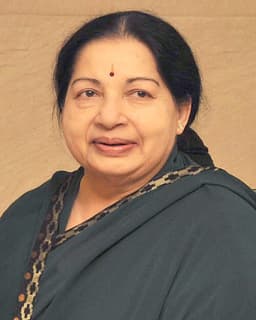
Jayalalithaa
Politician · Modern
57.2Total

Julius Caesar
General · Ancient
82.8Total
Basic Information
Born
1948
-100
Died
—
-44
Era
Modern
Ancient
Nationality
India
Roman Republic
Occupation
Politician
General
Civilization
Indian
Western
Score Comparison
Military (10%)
32.5
88.0
Political (20%)
60.0
78.0
Influence (20%)
55.0
85.0
Legacy (20%)
54.0
82.0
Leadership (15%)
78.0
80.0
Strategy (15%)
60.0
85.0
TOTAL
57.2
82.8
Jayalalithaa — Complete Timeline
1982 AD
Joined AIADMK and became propaganda secretaryPolitical Action◆ Major
Jayalalithaa joined the AIADMK, the party founded by M.G. Ramachandran (MGR). She was appointed propaganda secretary, using her oratory skills to promote the party. This marked her entry into full-time politics after a successful film career.
Political EntryAIADMKTamil Nadu
Impact: regionalconstructive
1991 AD
Became Chief Minister of Tamil Nadu for first timePolitical Action◆ Major
Jayalalithaa led the AIADMK to a landslide victory in the 1991 Tamil Nadu election, winning 164 out of 234 seats. She became Chief Minister for the first time. Her government focused on populist schemes but also faced allegations of corruption and authoritarianism.
Chief MinisterTamil NaduAIADMK
Impact: regionalconstructive
2011 AD
Implemented Amma brand welfare schemesReform◆ Major
Jayalalithaa's government launched a series of subsidized welfare schemes under the 'Amma' brand, including Amma canteens (low-cost meals), Amma water, and Amma pharmacies. These schemes provided affordable services to the poor and became a model for other states.
WelfareAmmaTamil Nadu
Impact: regionalconstructive
2014 AD
Convicted in disproportionate assets case (2014)Political Action◆ Major
Jayalalithaa was convicted by a special court in Bangalore for amassing disproportionate assets worth
CorruptionConvictionDisproportionate Assets
Impact: nationaldestructive
2015 AD
Returned as Chief Minister after acquittal (2015)Political Action◆ Major
After the Karnataka High Court acquitted her in the disproportionate assets case, Jayalalithaa returned as Chief Minister of Tamil Nadu in 2015. She led the AIADMK to victory in the 2016 election, winning a second consecutive term. Her return consolidated her power.
AcquittalChief MinisterTamil Nadu
Impact: regionalconstructive
Julius Caesar — Complete Timeline
58 BC
Gallic WarsWar◆ Major
Caesar, as proconsul of Gaul, launched a series of campaigns that conquered all of Gaul (modern France, Belgium, and parts of Switzerland). He fought numerous battles, including against the Helvetii, the Belgae, and the Gallic chieftain Vercingetorix. The wars brought immense wealth and a loyal army to Caesar.
Gallic WarsConquestRoman Expansion
Impact: regional
49 BC
Crossing the RubiconPolitical Action◆ Major
Caesar led Legio XIII across the Rubicon River into Italy, defying the Roman Senate's order to disband his army. This act triggered a civil war against Pompey and the Optimates, ultimately leading to Caesar's dictatorship and the end of the Roman Republic.
Roman Civil WarEnd of RepublicPower Struggle
Impact: global
48 BC
Battle of PharsalusWar◆ Major
Caesar's outnumbered army defeated the larger forces of Pompey the Great at Pharsalus in Greece. Caesar's tactical use of a reserve line to counter Pompey's cavalry charge proved decisive. Pompey fled to Egypt, where he was assassinated, leaving Caesar as the undisputed master of the Roman world.
Roman Civil WarBattleDecisive Victory
Impact: regional
44 BC
Appointment as Dictator for LifePolitical Action◆ Major
The Roman Senate appointed Caesar dictator perpetuo (dictator for life), granting him unprecedented personal power. This move concentrated military, legislative, and judicial authority in one person, effectively ending the Roman Republic's traditional system of checks and balances and alarming many senators.
DictatorshipEnd of RepublicPower Consolidation
Impact: regionaldestructive
Assassination on the Ides of MarchPolitical Action◆ Major
A group of Roman senators, led by Marcus Junius Brutus and Gaius Cassius Longinus, stabbed Caesar to death at a meeting of the Senate in the Theatre of Pompey. The assassination was intended to restore the Republic, but instead triggered another civil war that led to the rise of the Roman Empire.
AssassinationRoman PoliticsEnd of Republic
Impact: globaldestructive
Expert Analysis
jayalalithaa-vs-julius-caesar
# The Rubicon and the Canteen: Two Paths to Absolute Power
On a January morning in 49 BCE, Julius Caesar stood at the banks of a small river in northern Italy, the Rubicon. He knew that crossing it with his legions would mean civil war—and either supreme power or death. Two thousand years later, in a very different world, a former film star named Jayalalithaa stood before a microphone in Chennai, announcing subsidized meals for the poor at two rupees a plate. Both acts were gambles for absolute power. Both succeeded. But the worlds they inhabited—and the tools they wielded—could not have been more different.
Origins
Julius Caesar was born into the chaos of the late Roman Republic, a world of senatorial intrigue, slave revolts, and provincial wars. His family, the Julii, claimed descent from the goddess Venus, but they were not among the wealthiest or most powerful. His father died when Caesar was sixteen, leaving him to navigate a brutal political arena where debt, exile, and assassination were routine. He was shaped by the sword and the forum: military glory was the fast track to political influence, and political influence was the only shield against ruin.
Jayalalithaa was born in 1948 in the southern Indian state of Tamil Nadu, into a world of linguistic nationalism, caste politics, and the fading echoes of British colonialism. Her father died when she was two; her mother was a struggling actress. By her teens, Jayalalithaa was the breadwinner, starring in Tamil films that made her a household name. She entered politics in 1982, when the aging film-star-turned-chief-minister M.G. Ramachandran (MGR) recruited her as propaganda secretary for his party, the AIADMK. She was 34, beautiful, and utterly unknown to the machinery of power.
The difference in their origins is not just of time and place. Caesar was born into the governing class; Jayalalithaa was born into the entertainment industry. He learned politics from his elders; she learned it from the camera. One inherited a tradition of conquest; the other inherited a tradition of performance.
Rise to Power
Caesar’s rise was a masterpiece of calculated risk. He borrowed fortunes to bribe voters, secured the governorship of Gaul through alliances with Pompey and Crassus, and then spent eight years (58–50 BCE) conquering a territory larger than Italy itself. His Commentaries on the Gallic Wars were not just history—they were propaganda, designed to make his name synonymous with victory. When the Senate ordered him to disband his army and return to Rome as a private citizen, he refused. The Rubicon crossing in 49 BCE was a declaration: he would rather be a rebel than a victim.
Jayalalithaa’s rise was slower and more precarious. After MGR’s death in 1987, the AIADMK splintered. She faced not a Senate but a party apparatus that saw her as an outsider—a woman, a former actress, a Brahmin in a Dravidian party built on anti-Brahmin sentiment. She was physically assaulted in the state assembly in 1989. She was arrested, humiliated, and dismissed. Yet she rebuilt the party from the ground up, forging alliances with caste groups and rural voters. In 1991, after the assassination of former Prime Minister Rajiv Gandhi, a sympathy wave swept her to power: the AIADMK won 164 of 234 seats. She was 43.
Caesar’s rise was military; Jayalalithaa’s was electoral. He conquered provinces; she won constituencies. But both understood that power required a personal following, not just a political platform.
Leadership & Governance
Caesar governed as a reformer and a conqueror. As dictator, he reformed the calendar, granted citizenship to Gauls, launched public works, and centralized tax collection. His military strategy was aggressive and adaptive: at Alesia (52 BCE), he built siegeworks around a Gallic army while simultaneously defending against a relief force—a feat of engineering and logistics that still astounds military historians. His political score of 78 reflects the reality that his reforms were often rushed and resented. He was a brilliant general (military score 88) but a polarizing politician.
Jayalalithaa governed as a populist matriarch. She launched the "Amma" brand—a series of subsidized programs including canteens, pharmacies, and mineral water—that made her a daily presence in the lives of the poor. Her leadership score of 85.5 reflects her iron control over the AIADMK: she tolerated no dissent, purged rivals, and demanded absolute loyalty. She was not a military strategist (strategy score 58.7), but she was a master of political symbolism. Her welfare schemes were not just charity; they were a form of political consolidation, binding voters to her through daily gratitude.
Caesar’s governance was about expanding the state; Jayalalithaa’s was about deepening it. He built roads for legions; she built canteens for the poor.
Triumph & Tragedy
Caesar’s greatest triumph was the conquest of Gaul—a feat that doubled Roman territory and made him the richest man in the Republic. His greatest tragedy was his assassination on the Ides of March, 44 BCE, at the hands of senators he had pardoned. He died with 23 stab wounds, his blood pooling at the feet of Pompey’s statue. The Republic he sought to save by dominating it died with him.
Jayalalithaa’s greatest triumph was her return to power in 2015 after a conviction for amassing disproportionate assets worth ₹66 crore (approximately $10 million). She had been forced to resign in 2014, convicted by a special court. Her acquittal on appeal was a political resurrection that stunned her enemies. Her greatest tragedy was the corruption itself—the assets case that shadowed her legacy and raised questions about whether her populism was a mask for personal enrichment. She died in 2016, still in office, leaving a party without a clear successor.
Caesar’s tragedy was violent and public; Jayalalithaa’s was moral and ambiguous. One was murdered by his peers; the other was diminished by her own actions.
Character & Destiny
Caesar was arrogant, generous, and ruthless. He pardoned his enemies—and they killed him. He believed in his own destiny, claimed divine ancestry, and made himself dictator for life. His personality drove him to take risks that no rational politician would take: crossing the Rubicon, dismissing the Senate, accepting a crown. He believed that his genius could overcome any obstacle. It did—until it didn’t.
Jayalalithaa was imperious, solitary, and fiercely independent. She never married, had no children, and trusted few. Her personality drove her to centralize power so completely that the AIADMK became indistinguishable from her own will. She was called "Amma" (Mother) by millions, but she was a mother who demanded obedience, not affection. Her destiny was to rule alone and leave no heir.
Both were shaped by the conviction that they were exceptional. Caesar expressed this through conquest; Jayalalithaa through control.
Legacy
Caesar’s legacy is the Roman Empire. His adopted heir, Octavian, became Augustus, the first emperor. The title "Caesar" became synonymous with imperial power—Kaiser, Tsar. His writings shaped Western military thought. His assassination made him a martyr and a warning. He is remembered as the man who destroyed the Republic and created the empire, for better and for worse.
Jayalalithaa’s legacy is the transformation of Tamil Nadu’s welfare state. Her Amma canteens still operate, feeding millions. She broke the glass ceiling for women in Indian politics, albeit in a style that was authoritarian and cult-like. She is remembered as a populist who empowered the poor and as a leader who blurred the line between public service and personal power. Her party, the AIADMK, has struggled to survive without her.
Caesar’s legacy is global and institutional; Jayalalithaa’s is regional and personal. One built an empire; the other built a brand.
Conclusion
What drove these two figures to such different outcomes? The answer lies not in their personalities—both were ambitious, brilliant, and ruthless—but in their worlds. Caesar lived in a republic that was already collapsing under the weight of its own expansion. He could either dominate or be destroyed. Jayalalithaa lived in a democracy that was still consolidating, where power came not from legions but from votes—and from the daily gratitude of the poor. She could either feed the people or be devoured by them.
Caesar crossed the Rubicon with a sword. Jayalalithaa crossed it with a canteen. Both changed history. Both died leaving questions that still haunt us: How much power should one person hold? And what happens when the people love their ruler more than they love the rules?
Rankings
🥇
Julius CaesarLeader
Mil: 88.0Pol: 78.0Inf: 85.0
82.8
🥈
Jayalalithaa
Mil: 32.5Pol: 60.0Inf: 55.0
57.2
+25.6 behind
How This Comparison Works
Algorithm
Each figure is scored on 6 dimensions (0—100 scale) based on structured historical data: Military (10%), Political (20%), Influence (20%), Legacy (20%), Leadership (15%), Strategy (15%). The weighted total produces the final ranking.
Data Sources
Scores are computed from structured sub-indicators in the database. Scale factors adjust for era (Ancient ×0.85, Modern ×1.0) and civilization size (Eastern ×1.05, Other ×0.80) to account for differences in population and military scale.
Maximum 3 Figures
Comparisons are limited to 2—3 figures to ensure readability and statistical meaningfulness.
Error Margins
±5 points per dimension — Sub-scores are derived from historical records with inherent uncertainty. Two figures within 5 points on a dimension should be considered roughly equivalent in that area.
Total Score Accuracy
±3 points overall — The weighted combination of 6 dimensions produces a total score with approximately ±3 points of uncertainty. Differences of less than 3 points are not statistically significant— the figures are effectively tied.
Known Limitations
- Historical records are incomplete and uneven across civilizations
- Figures from oral-tradition societies may be underrepresented
- Occupation labels can misclassify multi-role figures
- Scores measure capability and impact, not moral character
- Quantitative scoring is a comparison tool, not absolute truth
Capability Radar
Military (10%) — Battles & Warfare
Battles
42
95
Win Rate
48
92
Expansion
52
97
Political (20%) — Governance & Reform
Reform
70
90
Diplomacy
65
85
Economy
60
82
Influence (20%) — Cultural & Global Reach
Cultural
60
88
Global
45
94
Legacy (20%) — Historical Impact
Historical
65
95
Longevity
50
96
Leadership (15%) — Power & Stability
Tenure
85
75
Stability
55
60
Strategy (15%) — Tactics & Innovation
Strategy
52
94
Tactics
58
96
Reform
56
88
Similar Comparisons
Comments & Discussion
No comments yet. Be the first to share your thoughts!