Loading...
Jack Lynch vs Julius Caesar
Julius Caesar leads by 29.3 pts · 2 figures compared
…
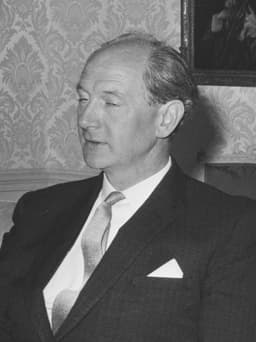
Jack Lynch
Politician · Modern
53.5Total

Julius Caesar
General · Ancient
82.8Total
Basic Information
Born
1917
-100
Died
1999
-44
Era
Modern
Ancient
Nationality
Ireland
Roman Republic
Occupation
Politician
General
Civilization
Western
Western
Score Comparison
Military (10%)
49.8
88.0
Political (20%)
68.0
78.0
Influence (20%)
52.5
85.0
Legacy (20%)
44.2
82.0
Leadership (15%)
66.0
80.0
Strategy (15%)
42.9
85.0
TOTAL
53.5
82.8
Jack Lynch — Complete Timeline
1966 AD
Became Taoiseach of IrelandPolitical Action◆ Major
Lynch succeeded Se
LeadershipFianna FáilIrish Politics
Impact: national
1969 AD
Responded to the Outbreak of the TroublesPolitical Action◆ Major
Lynch's government faced the outbreak of the Northern Ireland Troubles in 1969. He made a televised address stating that the Irish government 'can no longer stand by' as violence erupted. This led to the deployment of Irish Army field hospitals near the border and increased tensions with the UK.
Northern IrelandTroublesBorder
Impact: regional
1970 AD
Arms Crisis and Resignation of MinistersPolitical Action
In May 1970, Lynch sacked two ministers, Charles Haughey and Neil Blaney, for allegedly conspiring to import arms for the IRA. The Arms Crisis led to a major political scandal and trial, though the accused were acquitted. Lynch's actions were seen as a defense of democratic norms.
Arms CrisisIRAScandal
Impact: nationaldestructive
1973 AD
Lost Re-election to Fine Gael-Labour CoalitionPolitical Action◆ Major
Lynch's Fianna F
Election DefeatCoalitionFianna Fáil
Impact: national
Julius Caesar — Complete Timeline
58 BC
Gallic WarsWar◆ Major
Caesar, as proconsul of Gaul, launched a series of campaigns that conquered all of Gaul (modern France, Belgium, and parts of Switzerland). He fought numerous battles, including against the Helvetii, the Belgae, and the Gallic chieftain Vercingetorix. The wars brought immense wealth and a loyal army to Caesar.
Gallic WarsConquestRoman Expansion
Impact: regional
49 BC
Crossing the RubiconPolitical Action◆ Major
Caesar led Legio XIII across the Rubicon River into Italy, defying the Roman Senate's order to disband his army. This act triggered a civil war against Pompey and the Optimates, ultimately leading to Caesar's dictatorship and the end of the Roman Republic.
Roman Civil WarEnd of RepublicPower Struggle
Impact: global
48 BC
Battle of PharsalusWar◆ Major
Caesar's outnumbered army defeated the larger forces of Pompey the Great at Pharsalus in Greece. Caesar's tactical use of a reserve line to counter Pompey's cavalry charge proved decisive. Pompey fled to Egypt, where he was assassinated, leaving Caesar as the undisputed master of the Roman world.
Roman Civil WarBattleDecisive Victory
Impact: regional
44 BC
Appointment as Dictator for LifePolitical Action◆ Major
The Roman Senate appointed Caesar dictator perpetuo (dictator for life), granting him unprecedented personal power. This move concentrated military, legislative, and judicial authority in one person, effectively ending the Roman Republic's traditional system of checks and balances and alarming many senators.
DictatorshipEnd of RepublicPower Consolidation
Impact: regionaldestructive
Assassination on the Ides of MarchPolitical Action◆ Major
A group of Roman senators, led by Marcus Junius Brutus and Gaius Cassius Longinus, stabbed Caesar to death at a meeting of the Senate in the Theatre of Pompey. The assassination was intended to restore the Republic, but instead triggered another civil war that led to the rise of the Roman Empire.
AssassinationRoman PoliticsEnd of Republic
Impact: globaldestructive
Expert Analysis
jack-lynch-vs-julius-caesar
### The General and the Peacemaker: Two Paths to Power in Divided Worlds
On a January day in 49 BCE, Julius Caesar stood at the Rubicon River, a small stream that marked the boundary of his command. To cross it with his army was to declare war on the Roman Republic itself. Two thousand years later, on a tense August evening in 1969, Jack Lynch faced a different kind of Rubicon: a television camera in Dublin, as the streets of Belfast and Derry burned. Caesar chose war; Lynch chose words. Both men understood that history would judge them by the decisions of a single moment. But what drove a Roman general to shatter a republic, and an Irish politician to hold one together?
### Origins
Caesar was born into the chaos of a dying republic. His family, the Julii, claimed descent from the goddess Venus, but they were political outsiders in a system dominated by a corrupt aristocracy. The young Caesar learned early that in Rome, survival meant ambition. He watched his uncle Marius die in civil war, saw Sulla’s proscription lists claim friends, and understood that power was not inherited—it was seized. His era was one of iron and blood, where a man’s worth was measured by the legions he commanded.
Jack Lynch was born in 1917 in Cork, Ireland, a country still bleeding from the War of Independence and the Civil War. His father was a tailor, his mother a homemaker. The Ireland of his youth was poor, devout, and deeply suspicious of England. But Lynch’s world was not the battlefield of Gaul; it was the hurling pitch. He became one of Ireland’s greatest sportsmen, winning six All-Ireland medals. In a nation that worshipped its athletes, this gave him a unique currency: he was trusted before he ever spoke a political word. His era was one of fragile peace, where influence came not from conquest but from consensus.
### Rise to Power
Caesar’s path was a masterclass in calculated risk. He borrowed fortunes to fund games and bribes, climbing the political ladder through the *cursus honorum*. His military command in Gaul (58–50 BCE) was his making. Over eight years, he conquered a territory larger than Italy, wrote *Commentaries* that made him a legend, and built an army that loved him more than the Senate. When ordered to disband, he chose civil war. Crossing the Rubicon was not a gamble—it was the only logical move for a man who had staked everything on glory.
Lynch’s rise was quieter but no less strategic. He entered politics in 1948 as a Fianna Fáil candidate, a party built by Eamon de Valera on the dream of a united, Gaelic Ireland. Lynch’s legal mind and calm demeanor made him a natural minister. In 1966, he succeeded Seán Lemass as Taoiseach. He was not the most brilliant orator nor the most charismatic figure. But in a party full of fiery republicans, Lynch offered something rare: stability.
### Leadership & Governance
Caesar ruled like a storm. As dictator, he reformed the calendar, granted citizenship to provincials, and launched public works that employed the poor. He pardoned former enemies, believing clemency was a weapon. But his military genius—the swift sieges of Alesia, the daring landings in Britain—was also his flaw. He governed as a general, not a statesman. The Senate became a stage for his will, not a forum for debate. He centralized power because he believed only he could save Rome. In doing so, he made enemies of men who valued the Republic more than their lives.
Lynch governed like a referee. During the early Troubles (1969–1972), Northern Ireland descended into sectarian violence. Lynch’s televised address in August 1969 was careful: he condemned violence, called for British troop withdrawal, but did not send the Irish Army across the border. This infuriated hardliners in his own cabinet, who wanted to invade. In 1970, Lynch sacked two ministers—Charles Haughey and Neil Blaney—for allegedly plotting to import arms for the IRA. It was a political earthquake. Lynch chose the rule of law over the romance of rebellion. His strategy was not conquest but containment: keep the Republic out of the war, preserve democracy, and wait for a political solution.
### Triumph & Tragedy
Caesar’s greatest moment was his triumph over Pompey at Pharsalus in 48 BCE, where he defeated a larger army with veteran legions. His tragedy was the Ides of March, 44 BCE, when senators stabbed him to death. He had won everything—and lost his life because he could not see that his power threatened the very order he claimed to save.
Lynch’s triumph was surviving the Arms Crisis. By purging his cabinet, he proved that the Irish state would not become a haven for paramilitaries. His tragedy was more subtle: he was a leader of a partitioned island, and he could not heal the wound. The Troubles continued for three more decades. Lynch’s moderation was his strength, but also his limitation—he could not offer a grand vision, only a steady hand.
### Character & Destiny
Caesar was driven by *dignitas*—a Roman concept of personal honor and status. He could not accept second place. His brilliance was also his blindness: he saw the Republic as a tool for his ambition, not a sacred trust. His personality made him a conqueror, but it also made him a target.
Lynch was driven by *moderation*. A pragmatist in a land of poets and revolutionaries, he believed that stability was the foundation of freedom. His sportsman’s discipline gave him patience. He did not seek glory; he sought survival—for his government, his party, and his country. Where Caesar saw history as a stage for his greatness, Lynch saw it as a minefield to be crossed.
### Legacy
Caesar’s legacy is the Roman Empire. He destroyed the Republic, but in its ashes, Augustus built a system that lasted five centuries. Caesar’s name became a title—*Kaiser*, *Tsar*—for emperors who followed. He is remembered as a genius, a tyrant, and the man who changed the world.
Lynch’s legacy is more modest but no less real. He kept the Republic of Ireland out of a war that could have destroyed it. He proved that democracy could survive the Troubles. Today, he is remembered as a decent man in a brutal time. His name does not echo in titles, but it appears in history books as the Taoiseach who said no to the gun.
### Conclusion
History does not repeat itself, but it often asks the same question: when the world is breaking, do you reach for a sword or a microphone? Caesar chose the sword and reshaped the world. Lynch chose the microphone and kept his small nation intact. Both were men of their time—one forged in the chaos of a dying republic, the other in the fragile peace of a new one. The Roman’s tragedy was that he could not stop; the Irishman’s was that he could not start. And perhaps that is the deepest lesson: greatness is not a score. It is a choice, made at a riverbank or in a television studio, that echoes long after the speaker is gone.
Rankings
🥇
Julius CaesarLeader
Mil: 88.0Pol: 78.0Inf: 85.0
82.8
🥈
Jack Lynch
Mil: 49.8Pol: 68.0Inf: 52.5
53.5
+29.3 behind
How This Comparison Works
Algorithm
Each figure is scored on 6 dimensions (0—100 scale) based on structured historical data: Military (10%), Political (20%), Influence (20%), Legacy (20%), Leadership (15%), Strategy (15%). The weighted total produces the final ranking.
Data Sources
Scores are computed from structured sub-indicators in the database. Scale factors adjust for era (Ancient ×0.85, Modern ×1.0) and civilization size (Eastern ×1.05, Other ×0.80) to account for differences in population and military scale.
Maximum 3 Figures
Comparisons are limited to 2—3 figures to ensure readability and statistical meaningfulness.
Error Margins
±5 points per dimension — Sub-scores are derived from historical records with inherent uncertainty. Two figures within 5 points on a dimension should be considered roughly equivalent in that area.
Total Score Accuracy
±3 points overall — The weighted combination of 6 dimensions produces a total score with approximately ±3 points of uncertainty. Differences of less than 3 points are not statistically significant— the figures are effectively tied.
Known Limitations
- Historical records are incomplete and uneven across civilizations
- Figures from oral-tradition societies may be underrepresented
- Occupation labels can misclassify multi-role figures
- Scores measure capability and impact, not moral character
- Quantitative scoring is a comparison tool, not absolute truth
Capability Radar
Military (10%) — Battles & Warfare
Battles
30
95
Win Rate
31
92
Expansion
34
97
Political (20%) — Governance & Reform
Reform
50
90
Diplomacy
60
85
Economy
55
82
Influence (20%) — Cultural & Global Reach
Cultural
30
88
Global
25
94
Legacy (20%) — Historical Impact
Historical
35
95
Longevity
30
96
Leadership (15%) — Power & Stability
Tenure
55
75
Stability
60
60
Strategy (15%) — Tactics & Innovation
Strategy
39
94
Tactics
40
96
Reform
44
88
Similar Comparisons
Comments & Discussion
No comments yet. Be the first to share your thoughts!