Loading...
Louis XVIII vs Nizam-ul-Mulk Asaf Jah I
Nizam-ul-Mulk Asaf Jah I leads by 12.2 pts · 2 figures compared
…
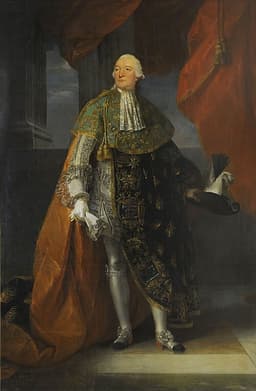
Louis XVIII
Emperor · Modern
49.5Total
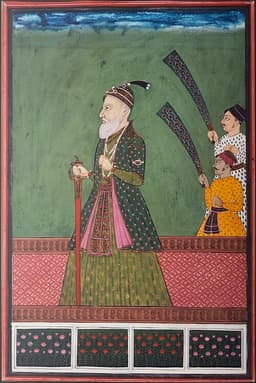
Nizam-ul-Mulk Asaf Jah I
Emperor · Modern
61.7Total
Basic Information
Born
1755
1671
Died
1824
1748
Era
Modern
Modern
Nationality
France
India
Occupation
Emperor
Emperor
Civilization
Western
Indian
Score Comparison
Military (10%)
17.2
61.7
Political (20%)
68.0
72.0
Influence (20%)
51.0
55.0
Legacy (20%)
43.3
55.0
Leadership (15%)
55.3
78.0
Strategy (15%)
56.8
55.0
TOTAL
49.5
61.7
Louis XVIII — Complete Timeline
1814 AD
Charter of 1814Reform◆ Major
Louis XVIII granted the Charter of 1814, a constitution that preserved many Napoleonic legal and administrative reforms while restoring the monarchy. It established a hereditary monarchy, a bicameral legislature, and guaranteed civil liberties such as freedom of religion and press.
ConstitutionReformBourbon Restoration
Impact: nationalconstructive
Restoration of the Bourbon MonarchyPolitical Action
After Napoleon's abdication, Louis XVIII was installed as King of France by the Allied powers. He issued the Charter of 1814, establishing a constitutional monarchy with a bicameral parliament. This restored the Bourbon dynasty but under limited sovereignty.
RestorationConstitutional MonarchyBourbon
Impact: nationalconstructive
1815 AD
Hundred Days and Second RestorationPolitical Action◆ Major
Napoleon escaped from Elba and returned to power, forcing Louis XVIII to flee to Ghent. After Napoleon's defeat at Waterloo, Louis returned to the throne in July 1815. The second restoration was marked by the White Terror, a wave of reprisals against Bonapartists and republicans.
Napoleonic WarsRestorationWhite Terror
Impact: nationaldestructive
Congress of ViennaPolitical Action◆ Major
Louis XVIII's representatives participated in the Congress of Vienna, which redrew European borders after Napoleon's defeat. France was reduced to its 1792 borders and required to pay an indemnity. The congress aimed to restore the balance of power and legitimize the Bourbon monarchy.
DiplomacyPost-NapoleonicBalance of Power
Impact: global
1824 AD
Death of Louis XVIIIOther
Louis XVIII died on September 16, 1824, after a reign of nearly ten years. He was succeeded by his brother, Charles X, whose ultra-royalist policies would lead to the July Revolution of 1830. Louis XVIII's reign was marked by relative stability and constitutional governance.
SuccessionMonarchyEnd of Reign
Impact: national
Nizam-ul-Mulk Asaf Jah I — Complete Timeline
1722 AD
Appointed Grand Vizier of the Mughal EmpirePolitical Action◆ Major
Nizam-ul-Mulk Asaf Jah I was appointed Grand Vizier (Prime Minister) of the Mughal Empire under Emperor Muhammad Shah. He attempted to reform the empire's administration and finances but faced opposition from court factions.
Mughal EmpireGrand VizierAdministration
Impact: national
1724 AD
Battle of Shakar KhedaWar◆ Major
Nizam-ul-Mulk Asaf Jah I defeated the Mughal imperial forces led by Mubariz Khan at the Battle of Shakar Kheda. This victory solidified his control over the Deccan and effectively established his independent rule.
BattleDeccanMughal Empire
Impact: regional
Founded the Asaf Jahi dynasty and the state of HyderabadPolitical Action
After resigning as Grand Vizier, Nizam-ul-Mulk Asaf Jah I established an independent principality in the Deccan, founding the Asaf Jahi dynasty. He made Hyderabad his capital and created a stable state that would last for over two centuries.
HyderabadDynastyDeccanIndependence
Impact: regionalconstructive
1725 AD
Implemented administrative reforms in the DeccanReform◆ Major
Nizam-ul-Mulk Asaf Jah I introduced a system of revenue administration and governance in the Deccan that balanced local autonomy with central authority. His reforms provided stability and prosperity to the region for decades.
AdministrationRevenueDeccan
Impact: regionalconstructive
Expert Analysis
Origins
Louis XVIII (1755-1824) was born Louis Stanislas Xavier, grandson of King Louis XV. He was educated in the royal court, deeply influenced by the absolutist traditions. The French Revolution forced him into exile in 1791, where he remained for over two decades, moving across Europe. His brother Louis XVI was executed in 1793.
Nizam-ul-Mulk Asaf Jah I (1671-1748) was born Mir Qamar-ud-din Siddiqi to a noble family serving the Mughal Empire. His father was a governor under Aurangzeb. He received military and administrative training, rising through Mughal ranks. He served as a commander in the Deccan campaigns.
Rise to Power
Louis XVIII's rise came after Napoleon's defeat in 1814. The Allied powers restored the Bourbon monarchy, and Louis became king on condition of accepting a constitution. He issued the Charter of 1814, which preserved Napoleonic reforms while reestablishing the monarchy. However, Napoleon's return in 1815 forced Louis to flee to Ghent. After Waterloo, he was restored again, marking the Second Restoration.
Asaf Jah I rose to become Grand Vizier of the Mughal Empire in 1722 under Emperor Muhammad Shah. He attempted to reform the empire but faced opposition. Resigning in 1724, he moved to the Deccan and defeated Mughal forces at the Battle of Shakar Kheda (1724). This victory allowed him to establish an independent state, Hyderabad, founding the Asaf Jahi dynasty.
Leadership & Governance
Louis XVIII governed as a constitutional monarch under the Charter of 1814. He maintained Napoleon's legal code and administrative system, balancing royalist and revolutionary factions. His political score of 68.0 reflects his ability to navigate post-Napoleonic France, but his leadership score of 55.3 indicates limited authority. He relied on ministers like Richelieu and Decazes.
Asaf Jah I implemented administrative reforms in the Deccan, introducing a revenue system that balanced local autonomy with central control. He maintained stability through alliances with local chiefs. His political score of 72.0 and leadership score of 78.0 show stronger governance. He founded a dynasty that lasted until 1948.
Triumph & Tragedy
Louis XVIII's triumph was the restoration of the Bourbon monarchy without major bloodshed, achieving a constitutional settlement. His tragedy was the Hundred Days, when Napoleon returned and he fled, undermining his legitimacy. He died in 1824, succeeded by his reactionary brother Charles X, leading to the 1830 revolution.
Asaf Jah I's triumph was founding a stable state that endured for over two centuries. His tragedy was that his dynasty eventually became a British princely state, losing sovereignty. He died in 1748, leaving a strong foundation.
Character & Destiny
Louis XVIII was pragmatic and cautious, willing to compromise to retain power. He accepted the Charter despite being an absolutist. His character shaped a relatively peaceful reign but lacked the dynamism to prevent future unrest.
Asaf Jah I was ambitious and strategic, leaving the Mughal court to build his own domain. His decisiveness at Shakar Kheda and administrative skill ensured his dynasty's longevity. Historians note his ability to balance central and local powers.
Legacy
Louis XVIII's legacy is mixed: he restored monarchy but failed to reconcile France's divisions. The Charter of 1814 influenced later constitutions. His reign is often overshadowed by Napoleon and the 1830 revolution. His legacy score of 43.3 reflects limited long-term impact.
Asaf Jah I founded the Asaf Jahi dynasty, which ruled Hyderabad until 1948. His administrative system influenced later princely states. He is remembered as a capable founder. His legacy score of 55.0 is higher, reflecting a lasting state.
Conclusion
Nizam-ul-Mulk Asaf Jah I had greater impact. His military score of 61.7 versus Louis's 17.2, political score 72.0 vs 68.0, leadership 78.0 vs 55.3, and influence 55.0 vs 51.0 all favor him. Asaf Jah I founded a dynasty and state that persisted for centuries, while Louis XVIII's restoration was temporary. Data supports Asaf Jah I as the more effective leader.
Rankings
🥇
Nizam-ul-Mulk Asaf Jah ILeader
Mil: 61.7Pol: 72.0Inf: 55.0
61.7
🥈
Louis XVIII
Mil: 17.2Pol: 68.0Inf: 51.0
49.5
+12.2 behind
How This Comparison Works
Algorithm
Each figure is scored on 6 dimensions (0—100 scale) based on structured historical data: Military (10%), Political (20%), Influence (20%), Legacy (20%), Leadership (15%), Strategy (15%). The weighted total produces the final ranking.
Data Sources
Scores are computed from structured sub-indicators in the database. Scale factors adjust for era (Ancient ×0.85, Modern ×1.0) and civilization size (Eastern ×1.05, Other ×0.80) to account for differences in population and military scale.
Maximum 3 Figures
Comparisons are limited to 2—3 figures to ensure readability and statistical meaningfulness.
Error Margins
±5 points per dimension — Sub-scores are derived from historical records with inherent uncertainty. Two figures within 5 points on a dimension should be considered roughly equivalent in that area.
Total Score Accuracy
±3 points overall — The weighted combination of 6 dimensions produces a total score with approximately ±3 points of uncertainty. Differences of less than 3 points are not statistically significant— the figures are effectively tied.
Known Limitations
- Historical records are incomplete and uneven across civilizations
- Figures from oral-tradition societies may be underrepresented
- Occupation labels can misclassify multi-role figures
- Scores measure capability and impact, not moral character
- Quantitative scoring is a comparison tool, not absolute truth
Capability Radar
Military (10%) — Battles & Warfare
Battles
34
65
Win Rate
42
70
Expansion
42
70
Political (20%) — Governance & Reform
Reform
30
80
Diplomacy
55
85
Economy
40
80
Influence (20%) — Cultural & Global Reach
Cultural
20
65
Global
25
55
Legacy (20%) — Historical Impact
Historical
40
70
Longevity
30
75
Leadership (15%) — Power & Stability
Tenure
15
85
Stability
35
75
Strategy (15%) — Tactics & Innovation
Strategy
48
80
Tactics
49
75
Reform
50
60
Similar Comparisons
Comments & Discussion
No comments yet. Be the first to share your thoughts!