Loading...
Ivan IV the Terrible vs Jahangir
Ivan IV the Terrible leads by 10.4 pts · 2 figures compared
…
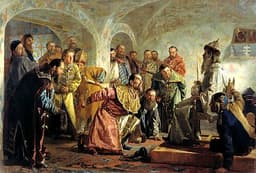
Ivan IV the Terrible
Emperor · Modern
63.3Total
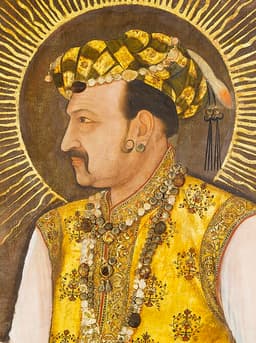
Jahangir
Emperor · Modern
52.9Total
Basic Information
Born
1530
1569
Died
1584
1627
Era
Modern
Modern
Nationality
Russia
Mughal Empire
Occupation
Emperor
Emperor
Civilization
Western
Indian
Score Comparison
Military (10%)
80.0
38.3
Political (20%)
45.0
43.7
Influence (20%)
72.0
59.0
Legacy (20%)
55.0
46.7
Leadership (15%)
68.0
74.0
Strategy (15%)
66.3
50.0
TOTAL
63.3
52.9
Ivan IV the Terrible — Complete Timeline
1547 AD
Coronation as First Tsar of RussiaPolitical Action
Ivan IV was crowned Tsar of All Russia at the Dormition Cathedral in Moscow, adopting the title of tsar (Caesar). This marked the formal transformation of the Grand Principality of Moscow into the Tsardom of Russia.
CoronationTsardomMoscow
Impact: national
1552 AD
Conquest of the Khanate of KazanWar
Ivan IV led a campaign that captured the city of Kazan after a long siege. The annexation of the Kazan Khanate opened the Volga River to Russian expansion and marked the beginning of Russian imperialism in the east.
KazanVolgaExpansion
Impact: regional
1558 AD
Livonian WarWar◆ Major
Ivan IV invaded Livonia (modern Latvia and Estonia) to gain access to the Baltic Sea. The war lasted 25 years and involved Poland-Lithuania, Sweden, and Denmark. It ended in Russian defeat with the Treaty of Yam-Zapolsky in 1582.
LivoniaBalticWar
Impact: regional
1565 AD
Establishment of the OprichninaPolitical Action
Ivan IV divided Russia into the oprichnina (his personal domain) and the zemshchina (the rest). He created a separate administration and a corps of oprichniki who carried out mass executions, land confiscations, and terror against the boyars.
OprichninaTerrorBoyars
Impact: nationaldestructive
1570 AD
Massacre of NovgorodWar◆ Major
Ivan IV led the oprichniki in a punitive expedition against Novgorod, suspecting the city of plotting to defect to Lithuania. Thousands were executed, and the city was looted and destroyed, ending its economic and political power.
NovgorodMassacreOprichnina
Impact: regionaltragic
1581 AD
Killed His Son Ivan IvanovichOther◆ Major
Ivan IV struck his eldest son and heir, Tsarevich Ivan Ivanovich, with a pointed staff during an argument, causing fatal injuries. This left the throne to the mentally weak Fyodor I, leading to the end of the Rurikid dynasty.
PatricideSuccessionRurikids
Impact: nationaltragic
Jahangir — Complete Timeline
1606 AD
Execution of Guru Arjan DevPolitical Action◆ Major
Jahangir ordered the execution of Guru Arjan Dev, the fifth Sikh guru, for supporting the rebellion of his son Khusrau. Guru Arjan Dev was tortured and died in Mughal custody. This event marked a turning point in Sikh-Mughal relations, leading to the militarization of the Sikh community.
ExecutionSikhismReligious Conflict
Impact: regionaldestructive
Rebellion of Prince KhusrauPolitical Action
Jahangir's eldest son, Prince Khusrau, rebelled against his father shortly after Jahangir's accession. Khusrau gathered an army and marched on Lahore. Jahangir's forces defeated the rebellion, and Khusrau was captured. He was later blinded and imprisoned, dying in 1622.
RebellionSuccessionKhusrau
Impact: nationaltragic
1611 AD
Marriage to Nur JahanPolitical Action◆ Major
Jahangir married Mehr-un-Nissa, who was given the title Nur Jahan. She became his most influential wife and effectively co-ruled the empire. Nur Jahan controlled court appointments, issued decrees, and managed the empire's finances. Her influence marked a period of significant female political power in the Mughal court.
MarriageNur JahanCourt Politics
Impact: national
1612 AD
Granting of Trade Rights to the English East India CompanyPolitical Action◆ Major
Jahangir granted the English East India Company permission to establish a trading post at Surat. This was the first formal English foothold in India. The company later expanded its influence, eventually becoming the dominant colonial power in the subcontinent.
TradeEast India CompanyColonialism
Impact: global
Expert Analysis
Origins
Ivan IV Vasilyevich, later known as Ivan the Terrible, was born on August 25, 1530, in Kolomenskoye, Russia. He was the son of Grand Prince Vasily III and Elena Glinskaya. After his father's death in 1533, Ivan's mother ruled as regent until her death in 1538, likely by poisoning. Ivan grew up amid violent power struggles among the boyar factions, which shaped his distrust of the nobility. He was formally crowned as the first Tsar of All Russia on January 16, 1547, at the Dormition Cathedral in Moscow, adopting the title of tsar (Caesar) to assert his divine right to rule.
Jahangir, born Nur-ud-din Muhammad Salim on August 31, 1569, in Fatehpur Sikri, was the third son of the Mughal emperor Akbar and his wife Mariam-uz-Zamani. He received a comprehensive education in languages, philosophy, and military tactics. His early life was marked by rebellion against his father: in 1599, Salim declared himself emperor at Allahabad while Akbar was still alive. After Akbar's death in 1605, he ascended the throne at age 36, taking the title Jahangir ("Conqueror of the World").
Rise to Power
Ivan IV's rise was formalized through his coronation as the first tsar, but his actual power consolidated after the Moscow fire of 1547, which sparked a rebellion against the Glinsky family. He introduced reforms with the help of the Chosen Council, a group of advisors, including the convening of the first Zemsky Sobor (assembly of the land) in 1549 and the issuance of a new law code (Sudebnik) in 1550. His military success in the conquest of the Khanate of Kazan in 1552 was a turning point, opening the Volga River to Russian expansion and earning him popular support.
Jahangir's path to power was complicated by his rebellion against Akbar. In 1600, he set up a rival court in Allahabad, minting coins in his name and ordering the Friday sermon to be read in his name. Akbar eventually reconciled with him, and Salim succeeded peacefully in 1605. However, his reign began with the rebellion of his own son, Prince Khusrau, in 1606, which Jahangir suppressed brutally, executing the Sikh guru Arjan Dev for supporting the rebellion.
Leadership & Governance
Ivan IV's leadership evolved from the early reform period to autocratic terror. After the death of his first wife Anastasia in 1560, he became increasingly paranoid. In 1565, he established the Oprichnina, dividing Russia into the oprichnina (his personal domain) and the zemshchina (the rest). He created a corps of oprichniki, black-robed agents who enforced his will through terror. He confiscated boyar lands, executed thousands, and conducted campaigns of mass murder, such as the Massacre of Novgorod in 1570, where an estimated 2,000 to 15,000 people were killed. His political score of 45.0 reflects the instability he caused.
Jahangir's governance was more decentralized. He relied heavily on his wife Nur Jahan, whom he married in 1611. She effectively co-ruled, issuing decrees and managing the court. Jahangir was known for his love of justice: he installed a Chain of Justice outside the Red Fort in Agra, which petitioners could pull to summon the emperor. However, his addiction to alcohol and opium often left him incapacitated. He granted trade rights to the English East India Company in 1612, allowing them to establish a factory at Surat, which was a strategic decision with long-term consequences. His leadership score of 74.0 reflects his ability to delegate but also his lack of direct control.
Triumph & Tragedy
Ivan IV's greatest triumph was the conquest of the Khanates of Kazan (1552) and Astrakhan (1556), which expanded Russia's territory by over one million square kilometers and gave Russia control of the Volga River. He also initiated the printing of books in Russia and built St. Basil's Cathedral in Moscow. However, his tragedies include the failure of the Livonian War (1558–1583), which lasted 25 years and drained resources without gaining access to the Baltic Sea. His domestic terror, especially the Oprichnina, devastated the economy and society, leading to a demographic crisis. In a fit of rage, he killed his own son and heir, Ivan Ivanovich, in 1581, leaving the throne to his mentally disabled son Feodor.
Jahangir's triumph was his patronage of the arts and architecture. The Mughal painting reached its zenith under his reign, and he built the Shalimar Gardens in Kashmir. He also maintained the stability of the vast Mughal Empire. His tragedies include the execution of Guru Arjan Dev, which alienated the Sikh community and sowed seeds of future conflict. The rebellion of his son Khusrau and later the rebellion of his son Khurram (Shah Jahan) plagued his later years. His addiction to opium and alcohol undermined his health and judgment; he died in 1627 on a journey to Kashmir.
Character & Destiny
Ivan IV was intelligent and well-read but deeply paranoid and prone to violent outbursts. His childhood trauma shaped his distrust of the boyars, leading him to employ terror as a tool of control. His character directly caused the destruction of the Oprichnina and the death of his son, which ultimately led to the Time of Troubles after his death. Historians assess him as a complex figure: a reformer who became a tyrant.
Jahangir was more introspective and artistically inclined. He wrote his memoirs, the Tuzuk-i-Jahangiri, which reveal a sensitive and observant personality. However, his indecisiveness and addiction weakened his rule. His reliance on Nur Jahan led to court factions and rebellions. His character of seeking pleasure over governance allowed the empire to drift, though it remained intact due to the administrative foundations laid by Akbar.
Legacy
Ivan IV's legacy is mixed: he is remembered for centralizing the Russian state and expanding its territory, but his methods set a precedent for autocratic terror. The Oprichnina model influenced later secret police. His military score of 80.0 reflects his conquests, but his political score of 45.0 shows the instability he caused. He is a central figure in Russian history, often invoked as a symbol of both strong leadership and tyranny.
Jahangir's legacy is primarily cultural: his patronage of painting and architecture left a lasting mark on Mughal art. His grant of trading rights to the English East India Company had enormous implications, as it allowed the British to establish a foothold in India. His influence score of 59.0 reflects his role in shaping Mughal culture, but his political score of 43.7 indicates weak governance. He is remembered as a lover of art and justice, but also as an emperor who allowed his wife to rule.
Conclusion
Ivan IV the Terrible had a greater impact on history than Jahangir, as measured by his total score of 63.3 versus 52.9. Ivan's conquests fundamentally transformed Russia into a multi-ethnic empire and centralized power in the tsar, a model that persisted for centuries. His reign marked the beginning of Russia's expansion and the consolidation of autocracy. While Jahangir's cultural contributions are significant, his political decisions, such as the English trading rights, had long-term consequences that were not immediately apparent. However, Ivan's legacy of terror and instability also contributed to the Time of Troubles, whereas Jahangir's reign was relatively stable. In terms of raw impact on the course of history, Ivan's actions reshaped a nation, while Jahangir's influence was more diffuse. Therefore, Ivan IV the Terrible emerges as the more consequential figure.
Rankings
🥇
Ivan IV the TerribleLeader
Mil: 80.0Pol: 45.0Inf: 72.0
63.3
🥈
Jahangir
Mil: 38.3Pol: 43.7Inf: 59.0
52.9
+10.4 behind
How This Comparison Works
Algorithm
Each figure is scored on 6 dimensions (0—100 scale) based on structured historical data: Military (10%), Political (20%), Influence (20%), Legacy (20%), Leadership (15%), Strategy (15%). The weighted total produces the final ranking.
Data Sources
Scores are computed from structured sub-indicators in the database. Scale factors adjust for era (Ancient ×0.85, Modern ×1.0) and civilization size (Eastern ×1.05, Other ×0.80) to account for differences in population and military scale.
Maximum 3 Figures
Comparisons are limited to 2—3 figures to ensure readability and statistical meaningfulness.
Error Margins
±5 points per dimension — Sub-scores are derived from historical records with inherent uncertainty. Two figures within 5 points on a dimension should be considered roughly equivalent in that area.
Total Score Accuracy
±3 points overall — The weighted combination of 6 dimensions produces a total score with approximately ±3 points of uncertainty. Differences of less than 3 points are not statistically significant— the figures are effectively tied.
Known Limitations
- Historical records are incomplete and uneven across civilizations
- Figures from oral-tradition societies may be underrepresented
- Occupation labels can misclassify multi-role figures
- Scores measure capability and impact, not moral character
- Quantitative scoring is a comparison tool, not absolute truth
Capability Radar
Military (10%) — Battles & Warfare
Battles
75
45
Win Rate
70
40
Expansion
85
25
Political (20%) — Governance & Reform
Reform
75
30
Diplomacy
40
40
Economy
50
35
Influence (20%) — Cultural & Global Reach
Cultural
65
60
Global
60
35
Legacy (20%) — Historical Impact
Historical
75
50
Longevity
70
40
Leadership (15%) — Power & Stability
Tenure
85
55
Stability
20
30
Strategy (15%) — Tactics & Innovation
Strategy
70
30
Tactics
65
35
Reform
80
20
Similar Comparisons
Comments & Discussion
No comments yet. Be the first to share your thoughts!