Loading...
Alexander I of Russia vs Jahangir
Alexander I of Russia leads by 10.6 pts · 2 figures compared
…

Alexander I of Russia
Emperor · Modern
63.5Total
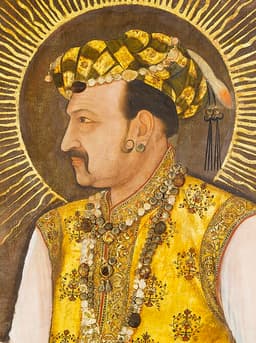
Jahangir
Emperor · Modern
52.9Total
Basic Information
Born
1777
1569
Died
1825
1627
Era
Modern
Modern
Nationality
Russia
Mughal Empire
Occupation
Emperor
Emperor
Civilization
Western
Indian
Score Comparison
Military (10%)
82.0
38.3
Political (20%)
70.0
43.7
Influence (20%)
55.0
59.0
Legacy (20%)
55.0
46.7
Leadership (15%)
72.0
74.0
Strategy (15%)
65.4
50.0
TOTAL
63.5
52.9
Alexander I of Russia — Complete Timeline
1801 AD
Accession as Emperor of RussiaPolitical Action◆ Major
Alexander I ascended the throne after the assassination of his father, Paul I. He was aware of the conspiracy but did not prevent it. His accession was greeted with relief by the nobility, who hoped for a return to the liberal policies of Catherine the Great.
SuccessionAssassinationLiberal Hopes
Impact: national
1812 AD
Defeat of Napoleon in the Patriotic War of 1812War
Alexander I led Russia during Napoleon's invasion. The Russian army retreated, employing scorched-earth tactics, and then defeated the French at the Battle of Borodino. Napoleon's Grand Army was destroyed during the winter retreat from Moscow. This victory made Alexander a key figure in European politics.
Napoleonic WarsBorodinoMoscow
Impact: globalconstructive
1814 AD
Congress of ViennaPolitical Action
Alexander I played a leading role at the Congress of Vienna, which redrew the map of Europe after Napoleon's defeat. He advocated for the creation of the Holy Alliance and secured Russian control over Poland as a constitutional kingdom. The congress established a balance of power that lasted for decades.
DiplomacyHoly AlliancePoland
Impact: globalconstructive
1815 AD
Establishment of the Holy AlliancePolitical Action◆ Major
Alexander I initiated the Holy Alliance with Austria and Prussia, a pact based on Christian principles to maintain peace and suppress revolutions. The alliance became a tool for reactionary policies across Europe, intervening in uprisings in Italy and Spain. It reflected Alexander's growing mysticism and conservatism.
AllianceConservatismReaction
Impact: global
Granting of the Constitution to PolandPolitical Action◆ Major
Alexander I granted a liberal constitution to the Kingdom of Poland, which he created as a personal union with Russia. The constitution established a parliament, civil liberties, and a separate army. However, Alexander later violated its provisions, leading to Polish discontent and eventual uprisings.
PolandConstitutionLiberalism
Impact: regionalconstructive
1825 AD
Mysterious Death and Legend of Feodor KuzmichOther◆ Major
Alexander I died suddenly in Taganrog under unclear circumstances, leading to rumors that he had faked his death to become a hermit. The legend of Feodor Kuzmich, a holy man who appeared in Siberia and was believed to be Alexander, persisted for decades. His death triggered the Decembrist Revolt.
DeathLegendDecembrist Revolt
Impact: national
Jahangir — Complete Timeline
1606 AD
Execution of Guru Arjan DevPolitical Action◆ Major
Jahangir ordered the execution of Guru Arjan Dev, the fifth Sikh guru, for supporting the rebellion of his son Khusrau. Guru Arjan Dev was tortured and died in Mughal custody. This event marked a turning point in Sikh-Mughal relations, leading to the militarization of the Sikh community.
ExecutionSikhismReligious Conflict
Impact: regionaldestructive
Rebellion of Prince KhusrauPolitical Action
Jahangir's eldest son, Prince Khusrau, rebelled against his father shortly after Jahangir's accession. Khusrau gathered an army and marched on Lahore. Jahangir's forces defeated the rebellion, and Khusrau was captured. He was later blinded and imprisoned, dying in 1622.
RebellionSuccessionKhusrau
Impact: nationaltragic
1611 AD
Marriage to Nur JahanPolitical Action◆ Major
Jahangir married Mehr-un-Nissa, who was given the title Nur Jahan. She became his most influential wife and effectively co-ruled the empire. Nur Jahan controlled court appointments, issued decrees, and managed the empire's finances. Her influence marked a period of significant female political power in the Mughal court.
MarriageNur JahanCourt Politics
Impact: national
1612 AD
Granting of Trade Rights to the English East India CompanyPolitical Action◆ Major
Jahangir granted the English East India Company permission to establish a trading post at Surat. This was the first formal English foothold in India. The company later expanded its influence, eventually becoming the dominant colonial power in the subcontinent.
TradeEast India CompanyColonialism
Impact: global
Expert Analysis
Origins
Alexander I Pavlovich was born on December 23, 1777, in Saint Petersburg, the eldest son of Emperor Paul I and Empress Maria Feodorovna. Raised by his grandmother, Catherine the Great, he received an enlightened education under the Swiss tutor Frédéric-César de La Harpe, who instilled liberal ideals. His father's erratic rule and eventual assassination in 1801—which Alexander tacitly permitted—shaped his complex character.
Jahangir, born Nur-ud-din Muhammad Salim on August 31, 1569, in Fatehpur Sikri, was the eldest son of Emperor Akbar and Mariam-uz-Zamani. He received a comprehensive education in Persian, Turki, Arabic, and the arts under tutors like Abdur Rahim Khan-i-Khanan. His early life was marked by rebellion against his father, including a revolt in 1599 when he proclaimed himself emperor. His accession in 1605 followed Akbar's death.
Rise to Power
Alexander I ascended the throne on March 23, 1801, after the assassination of his father, Paul I. The conspiracy involved high-ranking nobles and Alexander's tacit approval. He initially pursued reforms with his "Unofficial Committee" (1801–1803), including education and administrative changes. His military rise came during the Napoleonic Wars: he allied with Austria and Prussia, suffered defeat at Austerlitz (1805) and Friedland (1807), then signed the Treaty of Tilsit (1807), temporarily allying with Napoleon. The turning point was Napoleon's invasion of Russia in 1812. Alexander's strategy of retreat and scorched earth led to the French army's destruction, making him the savior of Europe.
Jahangir's rise was tumultuous. He rebelled against Akbar in 1599, seizing Allahabad and declaring himself emperor. Akbar suppressed the revolt but eventually reconciled. Upon Akbar's death in 1605, Jahangir ascended smoothly, but his son Khusrau rebelled in 1606. Jahangir defeated Khusrau and executed his supporter, Sikh Guru Arjan Dev. Jahangir consolidated power by marrying Mehr-un-Nissa (Nur Jahan) in 1611, who became the de facto ruler. Unlike Alexander, Jahangir's rise was marked by family conflict rather than foreign war.
Leadership & Governance
Alexander I's leadership was a blend of liberal idealism and autocratic pragmatism. He granted a constitution to Poland in 1815, established the Holy Alliance (1815) to suppress revolutions, and presided over the Congress of Vienna (1814–1815), which created a balance of power in Europe. His governance scores 70.0 in political ability. However, his domestic reforms stalled after 1815, and he increased censorship and repression, a shift often attributed to his religious mysticism. In contrast, Jahangir's leadership (score 74.0) was more laissez-faire, with effective delegation to Nur Jahan. He codified laws in his memoirs, the Tuzuk-i-Jahangiri, and promoted justice (e.g., the Chain of Justice). However, his addiction to opium and alcohol impaired his rule. Alexander's governance was centralized and European-focused; Jahangir's was decentralized with growing English influence.
Triumph & Tragedy
Alexander's greatest triumph was the defeat of Napoleon in 1812, a military campaign earning him a military score of 82.0. He entered Paris in 1814 and was hailed as the "Savior of Europe." The Congress of Vienna solidified his influence. His tragedy was his failure to reform Russia internally: serfdom remained, and his later reactionary policies alienated liberals. The Decembrist Revolt (1825) occurred after his death, partly due to his unfulfilled promises.
Jahangir's triumph was the patronage of arts—Mughal painting reached its zenith under him, and he built the Shalimar Gardens. He expanded the empire in the Deccan and maintained stability. His tragedy was the execution of Guru Arjan Dev in 1606, which alienated Sikhs and led to long-term conflict. His inability to control his sons' rebellions and his addiction weakened the empire. His military score is low at 38.3, reflecting his reliance on generals.
Character & Destiny
Alexander I was enigmatic and contradictory—liberal yet autocratic, pious yet complicit in patricide. His character, scoring 72.0 in leadership, was shaped by guilt and mysticism, leading to withdrawal from governance in later years. His destiny was to be the "Sphinx of the North"—a figure admired but not understood. Jahangir, with a leadership score of 74.0, was more straightforward: he loved justice and art but was indolent and addicted. His destiny was to be overshadowed by his father Akbar and his wife Nur Jahan. Both rulers were shaped by their relationships: Alexander by his grandmother and tutor, Jahangir by his wife and father.
Legacy
Alexander I's legacy is mixed. He is remembered for defeating Napoleon and shaping Europe via the Congress of Vienna and the Holy Alliance. His influence score of 55.0 reflects his impact on European diplomacy but limited domestic change. The Russian Empire remained an autocracy. Jahangir's legacy (score 46.7) is more cultural: his memoirs, the Tuzuk, provide insight into Mughal court life; his patronage of art influenced Mughal painting. His grant of trade rights to the English East India Company in 1613 at Surat planted the seed for British colonization. Both left incomplete legacies: Alexander failed to reform Russia; Jahangir failed to secure the dynasty's future.
Conclusion
Alexander I of Russia had a greater impact than Jahangir. With a total score of 63.5 versus Jahangir's 52.9, Alexander's military and political achievements—especially defeating Napoleon and shaping Europe—were more consequential on a global scale. Jahangir's cultural contributions are significant, but his reign saw the beginning of English influence that led to Mughal decline. Alexander's actions directly altered the course of European history, while Jahangir's legacy is more regional and ultimately undermined by his successors. Therefore, Alexander I stands as the more impactful ruler.
Rankings
🥇
Alexander I of RussiaLeader
Mil: 82.0Pol: 70.0Inf: 55.0
63.5
🥈
Jahangir
Mil: 38.3Pol: 43.7Inf: 59.0
52.9
+10.6 behind
How This Comparison Works
Algorithm
Each figure is scored on 6 dimensions (0—100 scale) based on structured historical data: Military (10%), Political (20%), Influence (20%), Legacy (20%), Leadership (15%), Strategy (15%). The weighted total produces the final ranking.
Data Sources
Scores are computed from structured sub-indicators in the database. Scale factors adjust for era (Ancient ×0.85, Modern ×1.0) and civilization size (Eastern ×1.05, Other ×0.80) to account for differences in population and military scale.
Maximum 3 Figures
Comparisons are limited to 2—3 figures to ensure readability and statistical meaningfulness.
Error Margins
±5 points per dimension — Sub-scores are derived from historical records with inherent uncertainty. Two figures within 5 points on a dimension should be considered roughly equivalent in that area.
Total Score Accuracy
±3 points overall — The weighted combination of 6 dimensions produces a total score with approximately ±3 points of uncertainty. Differences of less than 3 points are not statistically significant— the figures are effectively tied.
Known Limitations
- Historical records are incomplete and uneven across civilizations
- Figures from oral-tradition societies may be underrepresented
- Occupation labels can misclassify multi-role figures
- Scores measure capability and impact, not moral character
- Quantitative scoring is a comparison tool, not absolute truth
Capability Radar
Military (10%) — Battles & Warfare
Battles
75
45
Win Rate
70
40
Expansion
80
25
Political (20%) — Governance & Reform
Reform
60
30
Diplomacy
90
40
Economy
55
35
Influence (20%) — Cultural & Global Reach
Cultural
55
60
Global
75
35
Legacy (20%) — Historical Impact
Historical
85
50
Longevity
70
40
Leadership (15%) — Power & Stability
Tenure
80
55
Stability
70
30
Strategy (15%) — Tactics & Innovation
Strategy
85
30
Tactics
60
35
Reform
65
20
Similar Comparisons
Comments & Discussion
No comments yet. Be the first to share your thoughts!