Loading...
Henry Julius of Brunswick vs Jahangir
Jahangir leads by 5.4 pts · 2 figures compared
…

Henry Julius of Brunswick
Emperor · Modern
47.5Total
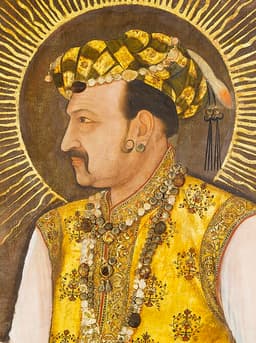
Jahangir
Emperor · Modern
52.9Total
Basic Information
Born
1564
1569
Died
1613
1627
Era
Modern
Modern
Nationality
Brunswick
Mughal Empire
Occupation
Emperor
Emperor
Civilization
Western
Indian
Score Comparison
Military (10%)
43.3
38.3
Political (20%)
40.8
43.7
Influence (20%)
51.8
59.0
Legacy (20%)
40.0
46.7
Leadership (15%)
65.7
74.0
Strategy (15%)
42.3
50.0
TOTAL
47.5
52.9
Henry Julius of Brunswick — Complete Timeline
1576 AD
Founded the University of HelmstedtCultural◆ Major
Henry Julius, as Duke of Brunswick-Wolfenb
EducationUniversityPatronage
Impact: regionalconstructive
1594 AD
Wrote the play 'Von einem ungeratenen Sohn'Cultural
Henry Julius authored the play 'Von einem ungeratenen Sohn' (Of a Prodigal Son), one of several dramas he wrote. His works were performed by his court troupe, the 'Englische Kom
TheatreLiteratureDrama
Impact: regional
1600 AD
Conducted alchemical experiments at the courtInvention
Henry Julius, known for his interest in alchemy, maintained a laboratory at his court in Wolfenb
AlchemyScienceCourt
Jahangir — Complete Timeline
1606 AD
Execution of Guru Arjan DevPolitical Action◆ Major
Jahangir ordered the execution of Guru Arjan Dev, the fifth Sikh guru, for supporting the rebellion of his son Khusrau. Guru Arjan Dev was tortured and died in Mughal custody. This event marked a turning point in Sikh-Mughal relations, leading to the militarization of the Sikh community.
ExecutionSikhismReligious Conflict
Impact: regionaldestructive
Rebellion of Prince KhusrauPolitical Action
Jahangir's eldest son, Prince Khusrau, rebelled against his father shortly after Jahangir's accession. Khusrau gathered an army and marched on Lahore. Jahangir's forces defeated the rebellion, and Khusrau was captured. He was later blinded and imprisoned, dying in 1622.
RebellionSuccessionKhusrau
Impact: nationaltragic
1611 AD
Marriage to Nur JahanPolitical Action◆ Major
Jahangir married Mehr-un-Nissa, who was given the title Nur Jahan. She became his most influential wife and effectively co-ruled the empire. Nur Jahan controlled court appointments, issued decrees, and managed the empire's finances. Her influence marked a period of significant female political power in the Mughal court.
MarriageNur JahanCourt Politics
Impact: national
1612 AD
Granting of Trade Rights to the English East India CompanyPolitical Action◆ Major
Jahangir granted the English East India Company permission to establish a trading post at Surat. This was the first formal English foothold in India. The company later expanded its influence, eventually becoming the dominant colonial power in the subcontinent.
TradeEast India CompanyColonialism
Impact: global
Expert Analysis
Origins
Henry Julius of Brunswick was born in 1564 as the eldest son of Duke Julius of Brunswick-Wolfenbüttel. He received a thorough humanist education, studying at the University of Helmstedt, which his father had founded. His early exposure to theology, law, and the natural sciences shaped his intellectual pursuits. He also developed a keen interest in alchemy and drama, writing plays that were performed at his court. His upbringing in a small German principality prepared him for a life of scholarly governance.
Jahangir was born in 1569 as Prince Salim, the eldest surviving son of Emperor Akbar and his Rajput wife, Mariam-uz-Zamani. He grew up in the opulent Mughal court, surrounded by political intrigue and military campaigns. His education included Persian, Turkish, Arabic, and the arts of warfare and statecraft. His early life was marked by rebellion against his father, including an attempt to seize power in 1600, which strained their relationship. This rebellious streak defined his later rule.
Rise to Power
Henry Julius became Duke of Brunswick-Wolfenbüttel in 1589 upon his father's death. His rise was straightforward, as he inherited the title without major conflict. He focused on consolidating his rule through administrative reforms and patronage of learning. His support for the University of Helmstedt enhanced his reputation as a scholar-prince. He also engaged in alchemical experiments, seeking to transmute base metals into gold, which was a common pursuit among Renaissance rulers.
Jahangir's ascent was far more turbulent. He rebelled against Akbar in 1599, declaring himself emperor and setting up a rival court in Allahabad. After Akbar's death in 1605, Jahangir ascended the throne with the support of key nobles, but faced immediate challenges. His son Khusrau rebelled in 1606, forcing Jahangir to crush the uprising and execute Guru Arjan Dev for supporting the rebellion. Jahangir's consolidation of power involved eliminating rivals and securing loyalty through a combination of force and patronage.
Leadership & Governance
Henry Julius ruled as a typical Renaissance prince, emphasizing law, education, and culture. He reformed the administration of his duchy, promoting efficient tax collection and legal consistency. He personally oversaw the university, ensuring it became a center for Protestant theology and humanist studies. His governance was characterized by a hands-on approach, but his small territory limited his political influence. He scored 40.8 in political skill, reflecting the constraints of ruling a minor German state.
Jahangir, scoring 43.7 in politics, governed a vast multi-ethnic empire. He continued Akbar's policies of religious tolerance and administrative centralization, but his rule was heavily influenced by his wife, Nur Jahan. She effectively co-ruled, managing court factions and issuing decrees. Jahangir's leadership scored 74.0, indicating his ability to maintain imperial cohesion despite personal weaknesses. He granted trade rights to the English East India Company in 1613, which had long-term consequences for India. However, his reliance on Nur Jahan and his struggles with addiction (opium and alcohol) undermined his authority.
Triumph & Tragedy
Henry Julius's greatest triumph was the founding and development of the University of Helmstedt, which became a major intellectual hub in northern Germany. His plays, such as 'Von einem ungeratenen Sohn,' were among the first German dramas performed by professional actors. In alchemy, he pursued knowledge but achieved no notable breakthroughs. His tragedy lay in his limited impact: his duchy remained a small player in European politics, and his cultural contributions were overshadowed by larger states. His overall legacy score of 40.0 reflects this.
Jahangir's triumphs include the consolidation of Mughal power after Akbar and the flourishing of art and culture under his patronage. The Mughal painting reached its zenith, and his memoirs, the Tuzuk-i-Jahangiri, provide valuable historical insights. He also maintained the empire's territorial integrity. His tragedies are numerous: the execution of Guru Arjan Dev alienated the Sikh community, leading to centuries of conflict. His son Khusrau's rebellion and subsequent death (blinded and killed) created a succession crisis. His addiction and neglect of governance allowed the empire to become faction-ridden. His military score of 38.3 reflects his lack of personal command in major campaigns.
Character & Destiny
Henry Julius was an intellectual and a reformer, but his character was cautious and inward-looking. He preferred scholarly pursuits to military expansion, which limited his political influence. His destiny was to be a competent but unremarkable ruler in a minor state. Historians view him as a typical Renaissance prince, more interested in culture than conquest.
Jahangir was a complex figure: intelligent, artistic, but also impulsive and addicted. His love for nature and justice coexisted with cruelty and indecisiveness. His character shaped his destiny—his inability to control his vices and his reliance on Nur Jahan led to a decline in imperial authority. Yet, his patronage of the arts left a lasting cultural legacy. He scored 46.7 in legacy, higher than Henry Julius's 40.0, due to the enduring impact of Mughal art and architecture.
Legacy
Henry Julius's legacy is primarily academic. The University of Helmstedt operated until 1810 and influenced German education. His plays are studied as early examples of German drama, but they are not widely performed. His alchemical work is a footnote in the history of science. His influence score of 51.8 is modest, reflecting his limited reach.
Jahangir's legacy is more substantial. His reign is remembered as a golden age of Mughal culture, with masterpieces like the Jahangirnama and stunning miniature paintings. The English East India Company's foothold in Surat eventually led to British rule in India. His religious policies, though initially tolerant, were marred by the execution of Guru Arjan Dev. His influence score of 59.0 and legacy score of 46.7 reflect his mixed but significant impact on Indian history.
Conclusion
Jahangir had a greater impact than Henry Julius of Brunswick. With a total score of 52.9 compared to Henry Julius's 47.5, Jahangir's influence on a larger stage and his cultural contributions outweigh the scholarly achievements of the German duke. While Henry Julius fostered education in a small duchy, Jahangir shaped the subcontinent's political and cultural trajectory. Jahangir's leadership (74.0 vs 65.7) and influence (59.0 vs 51.8) were higher, despite his personal flaws. The execution of Guru Arjan Dev and the granting of trade rights to the English had repercussions that lasted centuries, whereas Henry Julius's university, though important, did not alter the course of history. Thus, Jahangir emerges as the more consequential figure.
Rankings
🥇
JahangirLeader
Mil: 38.3Pol: 43.7Inf: 59.0
52.9
🥈
Henry Julius of Brunswick
Mil: 43.3Pol: 40.8Inf: 51.8
47.5
+5.4 behind
How This Comparison Works
Algorithm
Each figure is scored on 6 dimensions (0—100 scale) based on structured historical data: Military (10%), Political (20%), Influence (20%), Legacy (20%), Leadership (15%), Strategy (15%). The weighted total produces the final ranking.
Data Sources
Scores are computed from structured sub-indicators in the database. Scale factors adjust for era (Ancient ×0.85, Modern ×1.0) and civilization size (Eastern ×1.05, Other ×0.80) to account for differences in population and military scale.
Maximum 3 Figures
Comparisons are limited to 2—3 figures to ensure readability and statistical meaningfulness.
Error Margins
±5 points per dimension — Sub-scores are derived from historical records with inherent uncertainty. Two figures within 5 points on a dimension should be considered roughly equivalent in that area.
Total Score Accuracy
±3 points overall — The weighted combination of 6 dimensions produces a total score with approximately ±3 points of uncertainty. Differences of less than 3 points are not statistically significant— the figures are effectively tied.
Known Limitations
- Historical records are incomplete and uneven across civilizations
- Figures from oral-tradition societies may be underrepresented
- Occupation labels can misclassify multi-role figures
- Scores measure capability and impact, not moral character
- Quantitative scoring is a comparison tool, not absolute truth
Capability Radar
Military (10%) — Battles & Warfare
Battles
5
45
Win Rate
5
40
Expansion
5
25
Political (20%) — Governance & Reform
Reform
30
30
Diplomacy
35
40
Economy
30
35
Influence (20%) — Cultural & Global Reach
Cultural
40
60
Global
10
35
Legacy (20%) — Historical Impact
Historical
30
50
Longevity
20
40
Leadership (15%) — Power & Stability
Tenure
40
55
Stability
25
30
Strategy (15%) — Tactics & Innovation
Strategy
10
30
Tactics
10
35
Reform
15
20
Similar Comparisons
Comments & Discussion
No comments yet. Be the first to share your thoughts!