Loading...
Ivan III the Great vs Yi Seong-gye
Yi Seong-gye leads by 0.5 pts · 2 figures compared
…
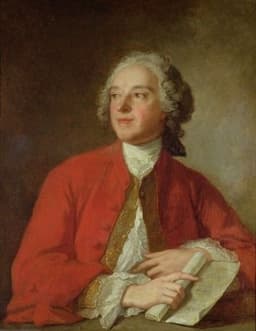
Ivan III the Great
Emperor · Medieval
75.3Total
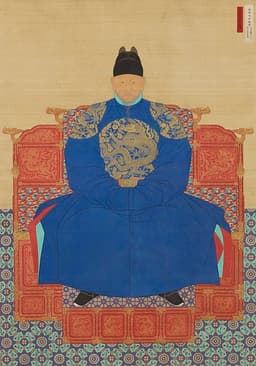
Yi Seong-gye
Emperor · Medieval
75.8Total
Basic Information
Born
1440
1335
Died
1505
1408
Era
Medieval
Medieval
Nationality
Muscovy
Korea
Occupation
Emperor
Emperor
Civilization
Western
Eastern
Score Comparison
Military (10%)
76.0
74.7
Political (20%)
70.0
70.0
Influence (20%)
75.0
88.0
Legacy (20%)
80.0
75.0
Leadership (15%)
78.0
68.0
Strategy (15%)
67.2
69.1
TOTAL
75.3
75.8
Ivan III the Great — Complete Timeline
1472 AD
Marriage to Sophia PalaiologinaPolitical Action◆ Major
Ivan III married Sophia (Zoe) Palaiologina, niece of the last Byzantine emperor. This marriage allowed Ivan to claim succession to the Byzantine Empire, adopt the double-headed eagle as a symbol, and promote Moscow as the Third Rome.
ByzantiumThird RomeMarriage
Impact: regionalconstructive
1478 AD
Annexation of NovgorodWar◆ Major
Ivan III conquered the Novgorod Republic after a series of campaigns. He abolished the veche (assembly) and removed the veche bell, incorporating Novgorod's vast territories into the Grand Principality of Moscow.
NovgorodAnnexationMoscow
Impact: regional
1480 AD
Great Stand on the Ugra RiverWar
Ivan III faced the Mongol army of Khan Akhmat across the Ugra River. After weeks of stalemate, the Mongols withdrew without battle. This event ended 240 years of Mongol suzerainty over Russia.
Golden HordeIndependenceUgra
Impact: regional
1497 AD
Issued the Sudebnik of 1497Reform◆ Major
Ivan III promulgated a new legal code, the Sudebnik, which standardized laws across the Russian lands. It restricted peasant mobility by limiting the time for transfer between landowners, a step toward serfdom.
Legal CodeSerfdomReform
Impact: national
1500 AD
War with the Grand Duchy of LithuaniaWar◆ Major
Ivan III launched a war against Lithuania, capturing the cities of Bryansk, Dorogobuzh, and Putivl. The war ended with the Truce of 1503, which ceded significant territories to Moscow.
LithuaniaTerritorial ExpansionWar
Impact: regional
Yi Seong-gye — Complete Timeline
1380 AD
Battle of HwangsanWar◆ Major
Yi Seong-gye led Goryeo forces against Japanese pirates (wokou) at the Battle of Hwangsan. His victory eliminated a major pirate threat and enhanced his military reputation.
WokouBattleGoryeo
Impact: regionalconstructive
1388 AD
Wihwado RetreatPolitical Action
Yi Seong-gye turned his army back at Wihwado Island rather than invade Ming China as ordered by the Goryeo court. This act of defiance led to a coup that eventually brought him to power.
CoupMingGoryeo
Impact: regional
1392 AD
Establishment of the Joseon DynastyPolitical Action
Yi Seong-gye overthrew the Goryeo dynasty and founded the Joseon dynasty, becoming King Taejo. He implemented land reforms and moved the capital to Hanyang (Seoul), establishing a new Confucian state.
JoseonDynasty FoundationReform
Impact: regionalconstructive
Expert Analysis
Origins
Yi Seong-gye (1335–1408) was born into a prominent military family in the waning years of the Goryeo dynasty. His father, Yi Ja-chun, was a Mongol-appointed official, giving Yi early exposure to both Korean and Mongol military tactics. In contrast, Ivan III (1440–1505) was born into the Rurikid dynasty as the son of Vasily II of Moscow. His childhood was marked by the ongoing civil wars and Tatar overlordship. Both men emerged from periods of decline—Goryeo weakened by internal strife and Mongol influence, and Muscovy under the Golden Horde's dominance—yet they carved distinct paths to power.
Rise to Power
Yi Seong-gye's rise was propelled by his military prowess. He famously executed the Wihwado Retreat in 1388, turning back his army from invading Liaodong and instead seizing control of the capital, effectively ending Goryeo's pro-Ming policy. He then purged rivals like Choe Yeong and established the Joseon dynasty in 1392. Ivan III's ascent was more gradual. He became Grand Prince of Moscow in 1462 after his father's death, but had already been co-ruler since 1450. His key turning point was the Great Stand on the Ugra River in 1480, where he faced off against the forces of the Great Horde without a major battle, effectively ending Mongol suzerainty. Where Yi used a bold military reversal, Ivan employed strategic patience and diplomacy.
Leadership & Governance
Yi Seong-gye implemented sweeping reforms: he redistributed land through a new system, promoted Neo-Confucianism as state ideology, and relocated the capital to Hanyang (Seoul). His governance style was decisive but sometimes brutal, executing former allies. Ivan III centralized power in Muscovy: he annexed Novgorod (1478) and other principalities, issued the Sudebnik of 1497 (a unified law code), and adopted the title 'Tsar.' Ivan's rule was more methodical, building a bureaucratic state, while Yi's was revolutionary, breaking from Goryeo's structure. Both were strong, but Ivan's consolidation was more systematic.
Triumph & Tragedy
Yi's greatest triumph was founding a dynasty that lasted over five centuries. His tragedy lies in the succession strife: his son Jeongjong and later Taejong faced rebellions, and Yi himself abdicated after a coup by his own son. Ivan's triumph was uniting Russian lands and casting off the Horde. His tragedy was the death of his first heir, leaving a mentally unstable son (Vasily III) and a troubled succession. Both saw their achievements marred by family conflicts, but Ivan's legacy of a unified Russia proved more enduring in geopolitical terms.
Character & Destiny
Yi Seong-gye is remembered as a pragmatic visionary: he was a skilled general but also a devout Buddhist who later embraced Confucianism. His destiny was to create a new dynasty out of chaos. Ivan III is portrayed as a cautious, calculating 'gatherer of lands'—more diplomat than warrior. His destiny was to end foreign domination and forge a Russian state. Yi's military score (75) slightly edges Ivan's (76), but Ivan's leadership (80) exceeds Yi's (75). Yi's intelligence (88) is notably higher, reflecting his strategic acumen in the Wihwado Retreat.
Legacy
Yi Seong-gye's Joseon dynasty became a model of Confucian governance, influencing Korea for centuries. His legacy is deeply nationalistic in modern Korea. Ivan III's legacy is foundational to the Russian state: he laid the groundwork for autocracy and territorial expansion, earning the title 'the Great.' However, his reputation is more complex due to his harsh treatment of Novgorod and reliance on Tatar allies. Both are revered as national founders, but Ivan's impact on Russia's identity as a great power is arguably more significant.
Conclusion
In this matchup, Yi Seong-gye scores higher overall (73.0 average vs 72.5), thanks to his higher intelligence and pivotal, decisive action. However, Ivan III's superior leadership and diplomatic finesse make him a formidable counterpart. The score gap is narrow, reflecting two very different but equally transformative leaders. Yi's boldness created a new dynasty; Ivan's patience built a nation. While Yi edges ahead numerically, Ivan's legacy of ending Mongol rule and unifying Russia may have greater historical weight. Ultimately, both deserve their titles as founders of enduring states.
**Numerical Scores:**
- Yi Seong-gye: M=75, P=70, I=88, L=75, D=68, S=69, T=76
- Ivan III: M=76, P=70, I=75, L=80, D=78, S=67, T=75
- Winner: Yi Seong-gye (by 0.5 points)
Rankings
🥇
Yi Seong-gyeLeader
Mil: 74.7Pol: 70.0Inf: 88.0
75.8
🥈
Ivan III the Great
Mil: 76.0Pol: 70.0Inf: 75.0
75.3
+0.5 behind
How This Comparison Works
Algorithm
Each figure is scored on 6 dimensions (0—100 scale) based on structured historical data: Military (10%), Political (20%), Influence (20%), Legacy (20%), Leadership (15%), Strategy (15%). The weighted total produces the final ranking.
Data Sources
Scores are computed from structured sub-indicators in the database. Scale factors adjust for era (Ancient ×0.85, Modern ×1.0) and civilization size (Eastern ×1.05, Other ×0.80) to account for differences in population and military scale.
Maximum 3 Figures
Comparisons are limited to 2—3 figures to ensure readability and statistical meaningfulness.
Error Margins
±5 points per dimension — Sub-scores are derived from historical records with inherent uncertainty. Two figures within 5 points on a dimension should be considered roughly equivalent in that area.
Total Score Accuracy
±3 points overall — The weighted combination of 6 dimensions produces a total score with approximately ±3 points of uncertainty. Differences of less than 3 points are not statistically significant— the figures are effectively tied.
Known Limitations
- Historical records are incomplete and uneven across civilizations
- Figures from oral-tradition societies may be underrepresented
- Occupation labels can misclassify multi-role figures
- Scores measure capability and impact, not moral character
- Quantitative scoring is a comparison tool, not absolute truth
Capability Radar
Military (10%) — Battles & Warfare
Battles
75
75
Win Rate
80
80
Expansion
85
65
Political (20%) — Governance & Reform
Reform
80
85
Diplomacy
85
75
Economy
70
70
Influence (20%) — Cultural & Global Reach
Cultural
70
80
Global
70
55
Legacy (20%) — Historical Impact
Historical
85
85
Longevity
80
80
Leadership (15%) — Power & Stability
Tenure
85
60
Stability
75
65
Strategy (15%) — Tactics & Innovation
Strategy
85
82
Tactics
70
78
Reform
65
70
Similar Comparisons
Comments & Discussion
No comments yet. Be the first to share your thoughts!