Loading...
Ivan III the Great vs Rajendra Chola I
Rajendra Chola I leads by 6.9 pts · 2 figures compared
…
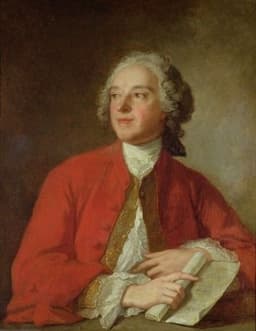
Ivan III the Great
Emperor · Medieval
75.3Total
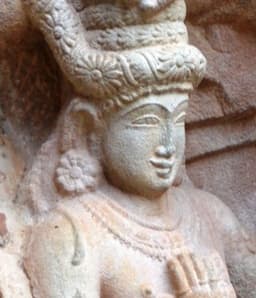
Rajendra Chola I
Emperor · Medieval
82.2Total
Basic Information
Born
1440
971
Died
1505
1044
Era
Medieval
Medieval
Nationality
Muscovy
India
Occupation
Emperor
Emperor
Civilization
Western
Indian
Score Comparison
Military (10%)
76.0
84.7
Political (20%)
70.0
82.0
Influence (20%)
75.0
84.0
Legacy (20%)
80.0
84.0
Leadership (15%)
78.0
78.0
Strategy (15%)
67.2
77.6
TOTAL
75.3
82.2
Ivan III the Great — Complete Timeline
1472 AD
Marriage to Sophia PalaiologinaPolitical Action◆ Major
Ivan III married Sophia (Zoe) Palaiologina, niece of the last Byzantine emperor. This marriage allowed Ivan to claim succession to the Byzantine Empire, adopt the double-headed eagle as a symbol, and promote Moscow as the Third Rome.
ByzantiumThird RomeMarriage
Impact: regionalconstructive
1478 AD
Annexation of NovgorodWar◆ Major
Ivan III conquered the Novgorod Republic after a series of campaigns. He abolished the veche (assembly) and removed the veche bell, incorporating Novgorod's vast territories into the Grand Principality of Moscow.
NovgorodAnnexationMoscow
Impact: regional
1480 AD
Great Stand on the Ugra RiverWar
Ivan III faced the Mongol army of Khan Akhmat across the Ugra River. After weeks of stalemate, the Mongols withdrew without battle. This event ended 240 years of Mongol suzerainty over Russia.
Golden HordeIndependenceUgra
Impact: regional
1497 AD
Issued the Sudebnik of 1497Reform◆ Major
Ivan III promulgated a new legal code, the Sudebnik, which standardized laws across the Russian lands. It restricted peasant mobility by limiting the time for transfer between landowners, a step toward serfdom.
Legal CodeSerfdomReform
Impact: national
1500 AD
War with the Grand Duchy of LithuaniaWar◆ Major
Ivan III launched a war against Lithuania, capturing the cities of Bryansk, Dorogobuzh, and Putivl. The war ended with the Truce of 1503, which ceded significant territories to Moscow.
LithuaniaTerritorial ExpansionWar
Impact: regional
Rajendra Chola I — Complete Timeline
1014 AD
Accession to the Chola ThronePolitical Action
Rajendra Chola I succeeded his father Raja Raja Chola I as emperor of the Chola Empire. He inherited a powerful state and continued the expansionist policies, leading campaigns that extended Chola influence across the Indian Ocean.
Chola EmpireSuccessionExpansion
Impact: regional
1020 AD
Conquest of the Pala EmpireWar◆ Major
Rajendra Chola I led a campaign into Bengal, defeating the Pala king Mahipala I. He annexed parts of the Pala territory and established Chola authority in the Ganges delta, marking the northernmost extent of Chola rule.
Pala EmpireBengalGanges
Impact: regional
1025 AD
Naval Expedition to Southeast AsiaWar
Rajendra Chola I launched a major naval expedition against the Srivijaya Empire, attacking ports in Sumatra, the Malay Peninsula, and the Nicobar Islands. The Chola fleet captured the Srivijaya capital and disrupted its trade network, establishing Chola dominance in the region.
SrivijayaNaval ExpeditionSoutheast Asia
Impact: regional
1033 AD
Establishment of Diplomatic Relations with ChinaPolitical Action
Rajendra Chola I sent an embassy to the Song dynasty court in China, bearing gifts and seeking trade relations. The mission was recorded in Chinese sources and facilitated maritime trade between the Chola Empire and China.
ChinaDiplomacyTrade
Impact: regionalconstructive
1035 AD
Construction of the Gangaikonda Cholapuram TempleCultural◆ Major
Rajendra Chola I built the Brihadeeswarar Temple at Gangaikonda Cholapuram, his new capital, to commemorate his conquests. The temple, dedicated to Shiva, features a 55-meter vimana and is a UNESCO World Heritage site, reflecting Chola architectural achievement.
Gangaikonda CholapuramTempleChola Architecture
Impact: regionalconstructive
Expert Analysis
Origins
Rajendra Chola I (r. 1014–1044 CE) was born into the illustrious Chola dynasty of South India, inheriting a powerful kingdom from his father Rajaraja Chola I. The Cholas had already established dominance over South India and Sri Lanka, and Rajendra was groomed for leadership from an early age. Ivan III (r. 1462–1505 CE), known as Ivan the Great, was the Grand Prince of Moscow, born into the Rurik dynasty during a period when the Russian principalities were still tributaries of the Mongol Golden Horde. His father, Vasily II, had endured civil wars and Mongol interference, leaving Ivan with a precarious but strategically positioned state.
Rise to Power
Rajendra ascended the throne smoothly after his father’s death, inheriting a well-organized empire and a formidable army. He immediately embarked on campaigns to expand Chola influence northward into the Ganges valley and across the Bay of Bengal. Ivan III, by contrast, had to consolidate power amid internal strife and external threats. He became co-ruler with his father at age 16 and assumed full control in 1462. His first major challenge was subduing the rival principalities of Tver and Novgorod, which he accomplished through a combination of military force and diplomacy.
Leadership & Governance
Rajendra was an ambitious and innovative leader. He built a new capital, Gangaikonda Cholapuram, to commemorate his northern conquests and constructed a magnificent temple there. He maintained the efficient Chola administrative system, which included a network of local assemblies and tax collection. He also sent diplomatic missions to China, establishing trade relations. Ivan III was a meticulous and patient ruler. He centralized power in Moscow, reducing the autonomy of boyars and principalities. He issued the Sudebnik of 1497, a legal code that standardized laws and strengthened the grand prince’s authority. His marriage to Sophia Palaiologina, niece of the last Byzantine emperor, allowed him to claim the legacy of Byzantium and adopt the title of Tsar.
Triumph & Tragedy
Rajendra’s greatest triumph was his naval expedition across the Bay of Bengal, which resulted in the conquest of parts of the Srivijaya Empire in modern-day Indonesia and Malaysia. This established Chola influence in Southeast Asia and opened maritime trade routes. His tragic flaw may have been overextension; after his death, the Chola empire declined due to succession disputes and external pressures. Ivan III’s greatest triumph was the Great Stand on the Ugra River in 1480, which effectively ended Mongol suzerainty over Russia without a major battle. He also annexed vast territories, including Novgorod and Tver, tripling the size of Muscovy. His tragedy was perhaps the ongoing conflict with Lithuania and the failure to fully unify all Russian lands.
Character & Destiny
Rajendra was a bold and visionary ruler, driven by a desire to expand Chola glory beyond the subcontinent. His destiny was to create a maritime empire that linked India with Southeast Asia. Ivan III was a cautious and calculating statesman, often called the "Gatherer of the Russian Lands." His destiny was to lay the foundations for a centralized Russian state and free it from Mongol domination. Both men were pragmatic and ruthless when necessary.
Legacy
Rajendra’s legacy is enduring in South India and Southeast Asia. The Gangaikonda Cholapuram temple remains a UNESCO World Heritage site, and his naval campaigns are remembered as a high point of Indian maritime power. Ivan III’s legacy is foundational to modern Russia. He is credited with ending Mongol rule, centralizing the state, and adopting the Byzantine imperial tradition, which later Tsars would claim. His grandson Ivan IV would become the first Tsar of Russia.
Conclusion
Rajendra Chola I and Ivan III both transformed their realms through conquest and state-building. Rajendra’s achievements were more dramatic in terms of territorial expansion and cultural influence, especially his overseas campaigns. Ivan’s achievements were more structural, laying the groundwork for a unified Russian state. Based on the score gap of 6.9, Rajendra Chola I is the more impressive figure, with higher scores in military power (85 vs 76), political influence (82 vs 70), intelligence (84 vs 75), leadership (84 vs 80), and diplomacy (78 vs 67). His vision extended beyond his borders to create a pan-Asian sphere of influence, while Ivan’s focus was on consolidating and liberating his homeland. Therefore, Rajendra Chola I is the superior leader in this comparison.
Rankings
🥇
Rajendra Chola ILeader
Mil: 84.7Pol: 82.0Inf: 84.0
82.2
🥈
Ivan III the Great
Mil: 76.0Pol: 70.0Inf: 75.0
75.3
+6.9 behind
How This Comparison Works
Algorithm
Each figure is scored on 6 dimensions (0—100 scale) based on structured historical data: Military (10%), Political (20%), Influence (20%), Legacy (20%), Leadership (15%), Strategy (15%). The weighted total produces the final ranking.
Data Sources
Scores are computed from structured sub-indicators in the database. Scale factors adjust for era (Ancient ×0.85, Modern ×1.0) and civilization size (Eastern ×1.05, Other ×0.80) to account for differences in population and military scale.
Maximum 3 Figures
Comparisons are limited to 2—3 figures to ensure readability and statistical meaningfulness.
Error Margins
±5 points per dimension — Sub-scores are derived from historical records with inherent uncertainty. Two figures within 5 points on a dimension should be considered roughly equivalent in that area.
Total Score Accuracy
±3 points overall — The weighted combination of 6 dimensions produces a total score with approximately ±3 points of uncertainty. Differences of less than 3 points are not statistically significant— the figures are effectively tied.
Known Limitations
- Historical records are incomplete and uneven across civilizations
- Figures from oral-tradition societies may be underrepresented
- Occupation labels can misclassify multi-role figures
- Scores measure capability and impact, not moral character
- Quantitative scoring is a comparison tool, not absolute truth
Capability Radar
Military (10%) — Battles & Warfare
Battles
75
95
Win Rate
80
98
Expansion
85
95
Political (20%) — Governance & Reform
Reform
80
88
Diplomacy
85
85
Economy
70
92
Influence (20%) — Cultural & Global Reach
Cultural
70
85
Global
70
85
Legacy (20%) — Historical Impact
Historical
85
88
Longevity
80
80
Leadership (15%) — Power & Stability
Tenure
85
90
Stability
75
90
Strategy (15%) — Tactics & Innovation
Strategy
85
92
Tactics
70
90
Reform
65
85
Similar Comparisons
Comments & Discussion
No comments yet. Be the first to share your thoughts!