Loading...
Ivan Asen II vs Li Chun
Ivan Asen II leads by 1.7 pts · 2 figures compared
…
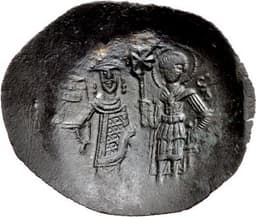
Ivan Asen II
Emperor · Medieval
63.3Total

Li Chun
Emperor · Medieval
61.6Total
Basic Information
Born
1190
778
Died
1241
820
Era
Medieval
Medieval
Nationality
Bulgaria
China
Occupation
Emperor
Emperor
Civilization
Western
Eastern
Score Comparison
Military (10%)
78.0
60.0
Political (20%)
72.0
70.0
Influence (20%)
61.0
61.0
Legacy (20%)
52.0
52.0
Leadership (15%)
66.0
68.0
Strategy (15%)
65.4
66.3
TOTAL
63.3
61.6
Ivan Asen II — Complete Timeline
1218 AD
Expansion of the Second Bulgarian EmpireWar◆ Major
Ivan Asen II expanded Bulgarian territory through campaigns against the Latin Empire and the Kingdom of Thessalonica. He captured Adrianople and extended Bulgarian influence into the Peloponnese.
ExpansionLatin EmpireThessalonica
Impact: regional
1230 AD
Battle of KlokotnitsaWar
Ivan Asen II defeated the Despotate of Epirus at Klokotnitsa. The victory restored Bulgarian control over Thrace, Macedonia, and Albania, making Bulgaria the dominant power in the Balkans.
BattleBalkan DominanceEpirus
Impact: regional
Construction of the Church of the Holy Forty MartyrsCultural
Ivan Asen II built the Church of the Holy Forty Martyrs in Veliko Tarnovo to commemorate his victory at Klokotnitsa. The church became a major cultural and religious monument.
ArchitectureChurchMonument
Impact: nationalconstructive
1235 AD
Restoration of the Bulgarian PatriarchatePolitical Action◆ Major
Ivan Asen II secured recognition of the Bulgarian Patriarchate from the Ecumenical Patriarch of Constantinople. This restored the autocephalous status of the Bulgarian Church, enhancing national prestige.
ChurchPatriarchateReligious Independence
Impact: regionalconstructive
Li Chun — Complete Timeline
806 AD
Yuanhe Restoration CampaignsWar◆ Major
Li Chun launched a series of military campaigns to reassert central control over rebellious fanzhen. He defeated the warlords of Sichuan, Zhenhai, and other provinces, reducing their autonomy and restoring imperial authority.
Yuanhe RestorationFanzhen SuppressionMilitary Campaigns
Impact: nationalconstructive
812 AD
Defeat of the Fanzhen of ZhaoyiWar◆ Major
Li Chun's forces defeated the powerful Zhaoyi fanzhen, whose military governor had rebelled. This victory was a major achievement of the Yuanhe Restoration, demonstrating the Tang court's renewed military strength.
Yuanhe RestorationZhaoyiMilitary Victory
Impact: nationalconstructive
819 AD
Submission of the Fanzhen of ChengdePolitical Action◆ Major
After a long campaign, the Chengde fanzhen submitted to central authority. This was the last major fanzhen to be brought under control during Li Chun's reign, marking the peak of the Yuanhe Restoration.
Yuanhe RestorationChengdeSubmission
Impact: nationalconstructive
820 AD
Death of Li ChunOther
Li Chun died in 820, possibly poisoned by eunuchs. His death ended the Yuanhe Restoration, and subsequent emperors were unable to maintain the central authority he had reestablished.
DeathYuanhe Restoration EndEunuch Power
Impact: nationaltragic
Expert Analysis
Origins
Ivan Asen II (born c. 1190s) was the son of Tsar Ivan Asen I, one of the founders of the Second Bulgarian Empire. He spent his early years in exile after the Byzantine conquest of Bulgaria in 1018, but his family reclaimed power in 1185. His upbringing was shaped by the struggle to re-establish Bulgarian independence and the constant warfare with the Latin Empire, Epirus, and Byzantium. Li Chun (born 778) was the eldest son of Emperor Tang Shunzong. He was born into the Tang imperial family during a period of decline, with powerful eunuchs and regional military governors (fanzhen) undermining central authority. He received a thorough Confucian education and early exposure to court politics.
Rise to Power
Ivan Asen II came to the throne in 1218 after overthrowing his cousin Boril, who had ruled poorly. His decisive moment came in 1230 at the Battle of Klokotnitsa, where he defeated Theodore Komnenos Doukas of Epirus, capturing him and his army. This victory allowed Bulgaria to dominate the Balkans, controlling Thrace, Macedonia, and Albania. Li Chun ascended the throne in 805 after his father abdicated due to illness. He immediately faced a rebellion from the eunuchs and military governors. His rise was gradual, marked by a series of campaigns against the fanzhen, beginning with the defeat of the warlord Liu Pi in Sichuan (806).
Leadership & Governance
Ivan Asen II ruled as a medieval autocrat but was known for his clemency. After Klokotnitsa, he freed captured soldiers and allowed them to return home, earning a reputation for mercy. He also restored the Bulgarian Patriarchate in 1235, strengthening the national church. His governance focused on territorial expansion and alliance-building, notably with the Nicaean Empire against the Latins. Li Chun pursued centralization, curbing the power of eunuchs and fanzhen. He appointed capable officials and reformed the tax system, but his reliance on eunuchs for palace administration ultimately weakened his achievements. His military score of 60.0 reflects his limited direct battlefield involvement, while Ivan Asen II's 78.0 highlights his personal command.
Triumph & Tragedy
Ivan Asen II's greatest triumph was the Battle of Klokotnitsa, which made Bulgaria the leading power in the Balkans. He also expanded the empire to its greatest extent since the First Bulgarian Empire. His tragedy came in 1241 when he died suddenly, possibly from plague, leaving a weak heir. His death led to rapid decline, as Mongol invasions and internal strife unraveled his gains. Li Chun's triumph was the Yuanhe Restoration (805-820), where he reasserted central control over most rebellious fanzhen, including the powerful Zhaoyi and Chengde. His tragedy was his death in 820, likely poisoned by eunuchs. The restoration collapsed under his successors, and the Tang dynasty never recovered its former authority. Li Chun's political score of 70.0 reflects his governance, but his legacy score of 52.0 shows the fragility of his achievements.
Character & Destiny
Ivan Asen II was pragmatic and strategic, often choosing diplomacy over war. His clemency after Klokotnitsa won him allies, but his sudden death left his empire vulnerable. His leadership score of 66.0 indicates a capable but not exceptional ruler. Li Chun was determined and focused, but his inability to permanently curb eunuch power doomed his reforms. His strategy score of 66.3 is slightly higher than Ivan Asen II's 65.4, reflecting his methodical campaigns. Both men's destinies were shaped by their inability to ensure succession: Ivan Asen II's son was too young, and Li Chun's successors were weak.
Legacy
Ivan Asen II is remembered as one of Bulgaria's greatest medieval rulers, but his legacy is limited to national history. The Church of the Holy Forty Martyrs stands as a monument to his reign. His restoration of the Patriarchate had lasting religious significance. Li Chun's Yuanhe Restoration is a key episode in Tang history, but its collapse meant that his impact was short-lived. Modern historians see him as a capable reformer who could not overcome structural problems. In terms of overall impact, Ivan Asen II's military achievements and territorial gains had more immediate consequences, but Li Chun's administrative reforms influenced later Chinese governance.
Conclusion
Ivan Asen II had a greater immediate impact on the geopolitical landscape of the Balkans, with a total score of 63.3 compared to Li Chun's 61.6. His victory at Klokotnitsa reshaped regional power, while Li Chun's restoration was more of a temporary reversal of decline. Although both failed to establish lasting dynasties, Ivan Asen II's Bulgaria remained a significant power for decades after his death, whereas Tang China's decline accelerated post-820. Therefore, Ivan Asen II is the more impactful ruler.
Rankings
🥇
Ivan Asen IILeader
Mil: 78.0Pol: 72.0Inf: 61.0
63.3
🥈
Li Chun
Mil: 60.0Pol: 70.0Inf: 61.0
61.6
+1.7 behind
How This Comparison Works
Algorithm
Each figure is scored on 6 dimensions (0—100 scale) based on structured historical data: Military (10%), Political (20%), Influence (20%), Legacy (20%), Leadership (15%), Strategy (15%). The weighted total produces the final ranking.
Data Sources
Scores are computed from structured sub-indicators in the database. Scale factors adjust for era (Ancient ×0.85, Modern ×1.0) and civilization size (Eastern ×1.05, Other ×0.80) to account for differences in population and military scale.
Maximum 3 Figures
Comparisons are limited to 2—3 figures to ensure readability and statistical meaningfulness.
Error Margins
±5 points per dimension — Sub-scores are derived from historical records with inherent uncertainty. Two figures within 5 points on a dimension should be considered roughly equivalent in that area.
Total Score Accuracy
±3 points overall — The weighted combination of 6 dimensions produces a total score with approximately ±3 points of uncertainty. Differences of less than 3 points are not statistically significant— the figures are effectively tied.
Known Limitations
- Historical records are incomplete and uneven across civilizations
- Figures from oral-tradition societies may be underrepresented
- Occupation labels can misclassify multi-role figures
- Scores measure capability and impact, not moral character
- Quantitative scoring is a comparison tool, not absolute truth
Capability Radar
Military (10%) — Battles & Warfare
Battles
75
70
Win Rate
85
75
Expansion
75
65
Political (20%) — Governance & Reform
Reform
65
85
Diplomacy
75
70
Economy
60
75
Influence (20%) — Cultural & Global Reach
Cultural
55
55
Global
40
50
Legacy (20%) — Historical Impact
Historical
60
70
Longevity
50
60
Leadership (15%) — Power & Stability
Tenure
70
60
Stability
65
65
Strategy (15%) — Tactics & Innovation
Strategy
80
70
Tactics
70
65
Reform
60
80
Similar Comparisons
Comments & Discussion
No comments yet. Be the first to share your thoughts!