Loading...
This comparison has not been analyzed yet.
One-time AI generation (~1 minute). Scores and timeline are already available below.
Ivan Asen I vs James I of Aragon
Ivan Asen I leads by 4.8 pts · 2 figures compared
…
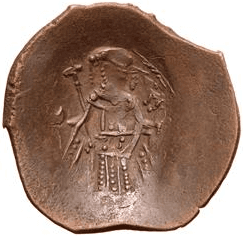
Ivan Asen I
Emperor · Medieval
63.5Total

James I of Aragon
Emperor · Medieval
58.7Total
Basic Information
Born
1160
1208
Died
1196
1276
Era
Medieval
Medieval
Nationality
Bulgaria
Aragon
Occupation
Emperor
Emperor
Civilization
Western
Western
Score Comparison
Military (10%)
61.7
74.7
Political (20%)
68.0
45.0
Influence (20%)
62.0
61.0
Legacy (20%)
58.0
54.0
Leadership (15%)
74.0
66.0
Strategy (15%)
60.7
58.0
TOTAL
63.5
58.7
Ivan Asen I — Complete Timeline
1185 AD
Uprising against Byzantine rule (1185)War
Ivan Asen I, along with his brother Peter IV, led a successful uprising of Bulgarians and Vlachs against Byzantine rule. The rebellion began in Tarnovo and quickly spread, leading to the restoration of the Bulgarian state.
UprisingByzantine-Bulgar WarsSecond Bulgarian Empire
Impact: regionalconstructive
Founding of the Second Bulgarian EmpirePolitical Action
Ivan Asen I and his brother Peter IV established the Second Bulgarian Empire with its capital at Tarnovo. They were crowned co-emperors, marking the restoration of Bulgarian independence after nearly 170 years of Byzantine rule.
FoundingBulgarian EmpireIndependence
Impact: regionalconstructive
1196 AD
Assassination by a boyarPolitical Action◆ Major
Ivan Asen I was assassinated by his cousin Ivanko, a boyar, during a period of internal conflict. His death temporarily destabilized the Second Bulgarian Empire, but his brother Peter IV continued to rule.
AssassinationInternal ConflictBulgarian Empire
Impact: nationaltragic
James I of Aragon — Complete Timeline
1229 AD
Conquest of MallorcaWar◆ Major
James I led a fleet from Salou to invade the island of Mallorca, defeating the Almohad governor. The conquest added the Balearic Islands to the Crown of Aragon and established a base for Mediterranean trade.
ReconquistaConquestMallorca
Impact: regionalconstructive
1238 AD
Conquest of ValenciaWar◆ Major
James I captured the city of Valencia after a long siege, incorporating the Kingdom of Valencia into the Crown of Aragon. The conquest added a wealthy and populous territory to Aragon and extended Christian control down the Mediterranean coast.
ReconquistaConquestValencia
Impact: regionalconstructive
1258 AD
Treaty of CorbeilPolitical Action◆ Major
James I signed the Treaty of Corbeil with Louis IX of France, renouncing Aragonese claims to territories in southern France in exchange for French recognition of Aragonese rule over Roussillon and Montpellier. This treaty defined the border between France and Aragon.
TreatyBorderFranceAragon
Impact: regionalconstructive
1261 AD
Promulgation of the Furs of ValenciaReform◆ Major
James I granted the Kingdom of Valencia its own legal code, the Furs, which established a separate legal and administrative system for the new kingdom. This code balanced royal authority with local privileges and became a model for later Aragonese governance.
LawLegal CodeValencia
Impact: regionalconstructive
This comparison has not been analyzed yet.
One-time AI generation (~1 minute). Scores and timeline are already available below.
Rankings
🥇
Ivan Asen ILeader
Mil: 61.7Pol: 68.0Inf: 62.0
63.5
🥈
James I of Aragon
Mil: 74.7Pol: 45.0Inf: 61.0
58.7
+4.8 behind
How This Comparison Works
Algorithm
Each figure is scored on 6 dimensions (0—100 scale) based on structured historical data: Military (10%), Political (20%), Influence (20%), Legacy (20%), Leadership (15%), Strategy (15%). The weighted total produces the final ranking.
Data Sources
Scores are computed from structured sub-indicators in the database. Scale factors adjust for era (Ancient ×0.85, Modern ×1.0) and civilization size (Eastern ×1.05, Other ×0.80) to account for differences in population and military scale.
Maximum 3 Figures
Comparisons are limited to 2—3 figures to ensure readability and statistical meaningfulness.
Error Margins
±5 points per dimension — Sub-scores are derived from historical records with inherent uncertainty. Two figures within 5 points on a dimension should be considered roughly equivalent in that area.
Total Score Accuracy
±3 points overall — The weighted combination of 6 dimensions produces a total score with approximately ±3 points of uncertainty. Differences of less than 3 points are not statistically significant— the figures are effectively tied.
Known Limitations
- Historical records are incomplete and uneven across civilizations
- Figures from oral-tradition societies may be underrepresented
- Occupation labels can misclassify multi-role figures
- Scores measure capability and impact, not moral character
- Quantitative scoring is a comparison tool, not absolute truth
Capability Radar
Military (10%) — Battles & Warfare
Battles
65
70
Win Rate
70
75
Expansion
70
75
Political (20%) — Governance & Reform
Reform
65
70
Diplomacy
60
65
Economy
55
60
Influence (20%) — Cultural & Global Reach
Cultural
55
55
Global
45
50
Legacy (20%) — Historical Impact
Historical
65
60
Longevity
60
55
Leadership (15%) — Power & Stability
Tenure
60
75
Stability
50
60
Strategy (15%) — Tactics & Innovation
Strategy
65
70
Tactics
60
65
Reform
55
60
Similar Comparisons
Comments & Discussion
No comments yet. Be the first to share your thoughts!