Loading...
Emperor Xianzong of Tang vs Ivan Asen I
Ivan Asen I leads by 2.8 pts · 2 figures compared
…
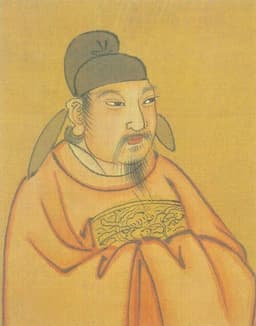
Emperor Xianzong of Tang
Emperor · Medieval
60.7Total
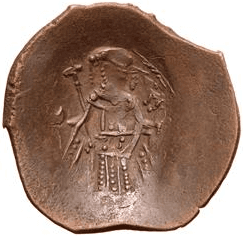
Ivan Asen I
Emperor · Medieval
63.5Total
Basic Information
Born
778
1160
Died
820
1196
Era
Medieval
Medieval
Nationality
China
Bulgaria
Occupation
Emperor
Emperor
Civilization
Eastern
Western
Score Comparison
Military (10%)
70.0
61.7
Political (20%)
65.0
68.0
Influence (20%)
59.0
62.0
Legacy (20%)
54.0
58.0
Leadership (15%)
68.0
74.0
Strategy (15%)
55.0
60.7
TOTAL
60.7
63.5
Emperor Xianzong of Tang — Complete Timeline
805 AD
Yuanhe RestorationPolitical Action
Emperor Xianzong initiated the Yuanhe Restoration, a series of reforms aimed at centralizing power and curbing the autonomy of military governors (jiedushi). He reasserted imperial authority over several rebellious provinces, strengthening the Tang state.
ReformCentralization
Impact: regionalconstructive
810 AD
Campaign against the Chengde CircuitWar◆ Major
Emperor Xianzong launched a military campaign against the Chengde Circuit, a rebellious province in Hebei. After initial setbacks, the Tang forces secured a victory, forcing the Chengde governor to submit to imperial authority.
Military CampaignRebellion Suppression
Impact: nationalconstructive
812 AD
Campaign against the Zhaoyi CircuitWar◆ Major
Emperor Xianzong's forces conquered the Zhaoyi Circuit, a rebellious province in modern Shanxi. This victory further reduced the power of the military governors and strengthened imperial control.
Military CampaignRebellion Suppression
Impact: nationalconstructive
818 AD
Campaign against the Pinglu CircuitWar◆ Major
Emperor Xianzong launched a campaign against the Pinglu Circuit in Shandong. The Tang forces defeated the rebel governor, bringing the province back under imperial control and completing the Yuanhe Restoration's military successes.
Military CampaignRebellion Suppression
Impact: nationalconstructive
820 AD
Death of Emperor XianzongPolitical Action◆ Major
Emperor Xianzong died suddenly, possibly poisoned by eunuchs. His death ended the Yuanhe Restoration, and subsequent emperors were unable to maintain the centralization he achieved, leading to the Tang dynasty's further decline.
DeathSuccession Crisis
Impact: regionaltragic
Ivan Asen I — Complete Timeline
1185 AD
Uprising against Byzantine rule (1185)War
Ivan Asen I, along with his brother Peter IV, led a successful uprising of Bulgarians and Vlachs against Byzantine rule. The rebellion began in Tarnovo and quickly spread, leading to the restoration of the Bulgarian state.
UprisingByzantine-Bulgar WarsSecond Bulgarian Empire
Impact: regionalconstructive
Founding of the Second Bulgarian EmpirePolitical Action
Ivan Asen I and his brother Peter IV established the Second Bulgarian Empire with its capital at Tarnovo. They were crowned co-emperors, marking the restoration of Bulgarian independence after nearly 170 years of Byzantine rule.
FoundingBulgarian EmpireIndependence
Impact: regionalconstructive
1196 AD
Assassination by a boyarPolitical Action◆ Major
Ivan Asen I was assassinated by his cousin Ivanko, a boyar, during a period of internal conflict. His death temporarily destabilized the Second Bulgarian Empire, but his brother Peter IV continued to rule.
AssassinationInternal ConflictBulgarian Empire
Impact: nationaltragic
Expert Analysis
Origins
Emperor Xianzong of Tang (born Li Chun, 778 CE) was the 12th emperor of the Tang dynasty. He was the grandson of Emperor Daizong and son of Emperor Shunzong. His early life was marked by the decline of central authority as regional military governors (jiedushi) became increasingly autonomous. He received a traditional Confucian education and was known for his intelligence and decisiveness from a young age.
Ivan Asen I (born c. 1160s) was a Bulgarian nobleman of probable Vlach origin. He grew up in the Byzantine-controlled region of Moesia, where the local population suffered under heavy taxation and oppressive rule. His family held some local influence, but details of his early life are scarce due to limited historical records. He was likely raised with a strong sense of Bulgarian identity and resentment toward Byzantine domination.
Rise to Power
Xianzong came to power in 805 CE after his father Shunzong abdicated due to illness. Shunzong's brief reign had been marked by paralysis and court intrigue. Xianzong, then 27, quickly asserted his authority by executing or exiling corrupt officials and eunuchs who had dominated the court. His rise was smooth but required decisive action to consolidate control.
Ivan Asen I, along with his brother Peter IV, launched an uprising against Byzantine rule in 1185 CE. The rebellion began in Tarnovo, where the brothers incited the populace by claiming that the Byzantine emperor had refused their request for a pronoia (land grant). They exploited widespread discontent over taxes and the desire for independence. The uprising quickly gained momentum, and by 1186, they had established control over much of northern Bulgaria. They were crowned co-emperors, marking the rebirth of the Bulgarian state after 167 years of Byzantine rule.
Leadership & Governance
Xianzong's leadership focused on centralization. He implemented the Yuanhe Restoration (806-820 CE), a series of reforms to weaken the jiedushi. He appointed loyal officials to key posts, reduced the power of eunuchs, and reorganized the tax system. Militarily, he launched campaigns against rebellious circuits, achieving notable successes against Chengde (809 CE), Zhaoyi (812 CE), and Pinglu (818 CE). His governance was authoritative and pragmatic, but his reliance on eunuchs for intelligence and palace security eventually backfired.
Ivan Asen I ruled as co-emperor with his brother, but he was the primary military leader. He organized the new Bulgarian state with a feudal structure, granting lands to boyars (nobles) in exchange for military service. He maintained the Orthodox Christian faith and established the patriarchate in Tarnovo, strengthening religious legitimacy. His leadership was decentralized compared to Xianzong, relying on the loyalty of regional nobles. He scored 74.0 in leadership, higher than Xianzong's 68.0, reflecting his ability to inspire a diverse coalition.
Triumph & Tragedy
Xianzong's greatest triumph was the Yuanhe Restoration, which temporarily restored Tang authority. He subdued several rebellious circuits, expanded the empire's borders, and revitalized the economy. However, his greatest failure was his inability to permanently curb the power of the jiedushi. After his death, the reforms collapsed, and the Tang dynasty continued its decline. His suspicious death, possibly by poisoning by eunuchs, ended his momentum.
Ivan Asen I's triumph was the successful uprising and founding of the Second Bulgarian Empire, which lasted for over two centuries. He secured recognition from the Byzantine Empire through a peace treaty in 1187. His tragedy was his assassination in 1196 by his cousin Ivanko, a boyar, during internal power struggles. This destabilized the empire, though his brother Peter IV continued to rule.
Character & Destiny
Xianzong was decisive and ambitious, but his trust in eunuchs proved fatal. He was known for his strict discipline and intolerance of dissent. Historical assessments suggest he was one of the more capable late Tang emperors, but his efforts were undermined by systemic issues. His military score of 70.0 reflects his moderate success in campaigns.
Ivan Asen I was charismatic and resilient, able to rally diverse ethnic groups (Bulgarians, Vlachs, Cumans) against a common enemy. He was more politically astute than Xianzong, scoring 68.0 in political compared to Xianzong's 65.0. His assassination underscores the volatile nature of medieval Balkan politics, where personal loyalty was often fleeting.
Legacy
Xianzong's legacy is mixed. He is remembered as the emperor who briefly revived Tang power, but his failure to create lasting centralization meant the dynasty continued its decline. His reforms influenced later Chinese administrations, but his death marked the end of effective Tang rule. His legacy score of 54.0 reflects this limited long-term impact.
Ivan Asen I's legacy is more enduring. He is celebrated as a national hero in Bulgaria, the founder of the Second Bulgarian Empire. The state he created lasted until 1396, resisting Byzantine and later Ottoman expansion. His establishment of the Tarnovo Patriarchate elevated Bulgarian religious autonomy. His legacy score of 58.0 is slightly higher than Xianzong's.
Conclusion
While Xianzong's Yuanhe Restoration is notable, its impact was short-lived and failed to reverse the Tang decline. Ivan Asen I, despite his lower total score (63.5 vs 60.7), founded a state that endured for centuries and shaped Bulgarian national identity. His leadership score of 74.0 and political acumen of 68.0 indicate superior ability to build and sustain a new polity. Therefore, Ivan Asen I had greater historical impact. His creation of the Second Bulgarian Empire had lasting consequences for the Balkans, whereas Xianzong's reforms faded within a generation.
Rankings
🥇
Ivan Asen ILeader
Mil: 61.7Pol: 68.0Inf: 62.0
63.5
🥈
Emperor Xianzong of Tang
Mil: 70.0Pol: 65.0Inf: 59.0
60.7
+2.8 behind
How This Comparison Works
Algorithm
Each figure is scored on 6 dimensions (0—100 scale) based on structured historical data: Military (10%), Political (20%), Influence (20%), Legacy (20%), Leadership (15%), Strategy (15%). The weighted total produces the final ranking.
Data Sources
Scores are computed from structured sub-indicators in the database. Scale factors adjust for era (Ancient ×0.85, Modern ×1.0) and civilization size (Eastern ×1.05, Other ×0.80) to account for differences in population and military scale.
Maximum 3 Figures
Comparisons are limited to 2—3 figures to ensure readability and statistical meaningfulness.
Error Margins
±5 points per dimension — Sub-scores are derived from historical records with inherent uncertainty. Two figures within 5 points on a dimension should be considered roughly equivalent in that area.
Total Score Accuracy
±3 points overall — The weighted combination of 6 dimensions produces a total score with approximately ±3 points of uncertainty. Differences of less than 3 points are not statistically significant— the figures are effectively tied.
Known Limitations
- Historical records are incomplete and uneven across civilizations
- Figures from oral-tradition societies may be underrepresented
- Occupation labels can misclassify multi-role figures
- Scores measure capability and impact, not moral character
- Quantitative scoring is a comparison tool, not absolute truth
Capability Radar
Military (10%) — Battles & Warfare
Battles
60
65
Win Rate
65
70
Expansion
50
70
Political (20%) — Governance & Reform
Reform
80
65
Diplomacy
70
60
Economy
70
55
Influence (20%) — Cultural & Global Reach
Cultural
55
55
Global
40
45
Legacy (20%) — Historical Impact
Historical
65
65
Longevity
50
60
Leadership (15%) — Power & Stability
Tenure
65
60
Stability
60
50
Strategy (15%) — Tactics & Innovation
Strategy
70
65
Tactics
55
60
Reform
75
55
Similar Comparisons
Comments & Discussion
No comments yet. Be the first to share your thoughts!