Loading...
Ito Hirobumi vs Qin Shi Huang
Qin Shi Huang leads by 11.4 pts · 2 figures compared
…
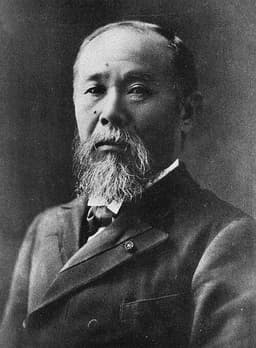
Ito Hirobumi
Politician · Modern
73.8Total
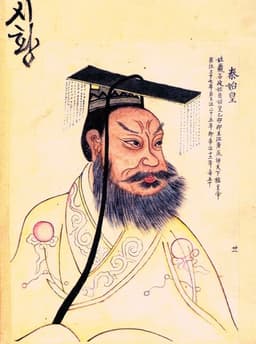
Qin Shi Huang
Emperor · Ancient
85.2Total
Basic Information
Born
1841
-259
Died
1909
-210
Era
Modern
Ancient
Nationality
Japan
China
Occupation
Politician
Emperor
Civilization
Eastern
Eastern
Score Comparison
Military (10%)
50.0
80.0
Political (20%)
86.0
90.0
Influence (20%)
71.0
85.0
Legacy (20%)
80.0
90.0
Leadership (15%)
80.9
78.0
Strategy (15%)
60.0
82.0
TOTAL
73.8
85.2
Ito Hirobumi — Complete Timeline
1882 AD
Establishment of the Bank of JapanReform◆ Major
Under Ito Hirobumi's leadership, the Bank of Japan was established as the nation's central bank. It was modeled after European central banks and aimed to stabilize the currency and control inflation. This institution was crucial for Japan's economic modernization and industrial growth.
Central BankEconomic ReformModernization
Impact: nationalconstructive
1885 AD
First Prime Minister of JapanPolitical Action◆ Major
Ito Hirobumi became the first Prime Minister of Japan under the new cabinet system. He served four non-consecutive terms and was instrumental in shaping the modern Japanese state. His tenure focused on centralizing power, modernizing the economy, and strengthening the military.
Prime MinisterCabinet SystemMeiji Period
Impact: nationalconstructive
1889 AD
Drafting of the Meiji ConstitutionReform
Ito Hirobumi led the drafting of the Meiji Constitution, which established a constitutional monarchy with a bicameral parliament (the Diet). The constitution granted the emperor sovereign power but also provided for elected representatives. It was promulgated in 1889 and remained in effect until 1947.
ConstitutionMeiji PeriodGovernment Reform
Impact: nationalconstructive
1909 AD
Assassination at Harbin StationPolitical Action◆ Major
Ito Hirobumi was assassinated by Korean nationalist An Jung-geun at Harbin railway station in Manchuria. Ito was on a mission to negotiate with Russian officials regarding Korea. His death shocked Japan and was used to justify the formal annexation of Korea in 1910.
AssassinationKoreaAnnexation
Impact: globaltragic
Qin Shi Huang — Complete Timeline
246 BC
Construction of the Mausoleum and Terracotta ArmyOther◆ Major
Qin Shi Huang commissioned a vast mausoleum complex near Xi'an, guarded by thousands of life-sized terracotta soldiers, horses, and chariots. The project employed hundreds of thousands of workers and reflected his obsession with immortality and imperial power.
Impact: global
230 BC
Conquest of the Six Warring StatesWar
From 230 to 221 BCE, Ying Zheng led the Qin state in a series of campaigns that conquered the Han, Zhao, Wei, Chu, Yan, and Qi states. This unified China under a single ruler for the first time, ending the Warring States period.
Impact: global
221 BC
Standardization of Writing, Currency, and MeasurementsReform◆ Major
Qin Shi Huang ordered the standardization of Chinese script, currency, and weights and measures across the unified empire. This facilitated administration, trade, and cultural integration, laying a foundation for future dynasties.
Impact: globalconstructive
Proclamation of the Qin DynastyPolitical Action
After conquering the last independent state, Ying Zheng declared himself Shi Huangdi (First Emperor), founding the Qin Dynasty. He adopted a new title to signify his supreme authority and initiated centralized imperial rule.
Impact: global
214 BC
Initiation of the Great Wall ConstructionOther◆ Major
Qin Shi Huang ordered the connection and extension of existing northern fortifications to create a unified defensive wall against nomadic Xiongnu raids. This project involved massive conscripted labor and became the precursor to the later Great Wall.
Impact: regional
213 BC
Burning of Books and Burying of ScholarsPolitical Action◆ Major
On the advice of Li Si, Qin Shi Huang ordered the burning of historical records and philosophical texts not aligned with Legalist doctrine. He also had 460 Confucian scholars buried alive to suppress dissent and consolidate ideological control.
Impact: nationaldestructive
Expert Analysis
ito-hirobumi-vs-qin-shi-huang
# The Unifiers: Qin Shi Huang and Ito Hirobumi
On a winter morning in 1909, a Korean nationalist named An Jung-geun stepped onto the platform of Harbin railway station in Manchuria. He raised a pistol and fired three times at a Japanese statesman who had just arrived from a meeting with Russian officials. The victim, Ito Hirobumi, fell dead at the age of sixty-eight. More than two thousand years earlier, on the other side of the East China Sea, another unifier lay dying in a carriage during an imperial inspection tour, surrounded by conspirators who would conceal his death for weeks. Qin Shi Huang had swallowed mercury pills in pursuit of immortality, only to find oblivion. Both men shaped their nations forever. One built an empire that collapsed within years of his death; the other laid foundations that would endure for decades. Why did their paths diverge so sharply?
Origins
Qin Shi Huang was born in 259 BC, the son of a king and a concubine, into a world of warring states where seven kingdoms had devoured dozens of smaller ones. The Qin state, perched in the rugged west, was a land of harsh laws and militaristic discipline, shaped by Legalist philosophers who believed that human nature required strict control. The boy grew up watching his father’s generals fight border skirmishes, learning that power was a blade that cut both ways. By the time he ascended the throne at thirteen, he had already absorbed the brutal lesson that mercy was weakness.
Ito Hirobumi, born in 1841 in the Choshu domain of feudal Japan, came from a samurai family of modest means. His world was one of ritualized hierarchy and isolation, where the Tokugawa shogunate had kept Japan closed to the outside world for two centuries. But the arrival of Commodore Perry’s black ships in 1853 shattered that peace. The young Ito witnessed firsthand how Western gunboats could force open a nation. While Qin Shi Huang inherited a tradition of conquest, Ito inherited a crisis—and a burning question: how could Japan survive the modern world without being devoured by it?
Rise to Power
Qin Shi Huang’s rise was a military campaign. Between 230 and 221 BC, he led his armies in a methodical, six-year blitz against the remaining warring states: Han, Zhao, Wei, Chu, Yan, and Qi. Each conquest was a masterpiece of strategy and ruthlessness. He bribed ministers, assassinated generals, and flooded cities when sieges stalled. By 221 BC, at the age of thirty-eight, he stood alone as the master of all China. He proclaimed himself *Shi Huangdi*—the First Emperor—and declared that his dynasty would last ten thousand generations.
Ito Hirobumi’s rise was political and intellectual. He was among the young samurai who traveled secretly to England in 1863 to study Western technology and governance. Returning to Japan, he joined the reformers who overthrew the shogunate in the Meiji Restoration of 1868. While Qin Shi Huang conquered with swords, Ito conquered with pens and treaties. He studied European constitutions, visited Bismarck’s Germany, and gradually became the chief architect of Japan’s transformation. In 1885, he became the nation’s first Prime Minister—not through birthright, but through sheer competence.
Leadership & Governance
Qin Shi Huang governed through terror and uniformity. He standardized writing, currency, and measurements across his empire, turning a chaos of local scripts and weights into a single system that would last two millennia. He ordered the construction of roads, canals, and the Great Wall, linking northern fortifications into a defensive barrier. But his Legalist philosophy demanded absolute control. In 213 BC, on the advice of his chancellor Li Si, he ordered the burning of all historical records and philosophical texts not aligned with the Qin ideology, and buried 460 scholars alive for dissent. The First Emperor believed that unity required erasing the past.
Ito Hirobumi governed through adaptation and consensus. He understood that Japan could not simply copy the West; it had to find its own path. In 1882, he established the Bank of Japan, modeled after European central banks but tailored to Japanese conditions. In 1889, he drafted the Meiji Constitution, which created a constitutional monarchy with a bicameral parliament—the Diet—while preserving the emperor’s authority as a sacred, unifying symbol. Ito did not burn books; he opened schools. He did not bury scholars; he sent them abroad to study. His governance was a delicate balancing act between tradition and modernity, between imperial power and democratic representation.
Triumph & Tragedy
Qin Shi Huang’s greatest triumph was unification itself. To guard his tomb near Xi’an, he commissioned an army of life-sized terracotta soldiers—thousands of them, each with a unique face, standing in silent ranks for eternity. This mausoleum was a testament to his ambition: he wanted to rule even in death. But his greatest tragedy was the fragility of his creation. He left no clear successor, and his empire collapsed within three years of his death in 210 BC, torn apart by rebellions and power struggles. The First Emperor had unified China, but he had not built a system that could survive without him.
Ito Hirobumi’s triumph was the Meiji Constitution, which gave Japan a stable, modern government that would last until 1947. His tragedy came at Harbin Station. He was on a mission to negotiate with Russia over influence in Manchuria—a region Japan had fought to control in the Russo-Japanese War of 1904–1905. The Korean nationalist who killed him saw Ito as the architect of Japan’s colonization of Korea. In that moment, Ito’s legacy became entangled with empire and violence. The unifier had become an oppressor.
Character & Destiny
Qin Shi Huang was paranoid, megalomaniacal, and obsessed with immortality. He sent expeditions to find the elixir of life, built a network of secret passages to avoid assassination, and trusted no one. His character drove him to extremes: he could not tolerate dissent, so he crushed it; he could not tolerate death, so he tried to cheat it. This paranoia ultimately doomed his dynasty, for he had no one to carry on his work.
Ito Hirobumi was pragmatic, patient, and flexible. He was a statesman who knew when to compromise and when to stand firm. He served four non-consecutive terms as Prime Minister, stepping aside when needed and returning when called. His character allowed him to build institutions that could outlast any single ruler. But his pragmatism had a dark side: he supported Japan’s expansion into Korea and Manchuria, believing that empire was necessary for survival. That choice made him a target and a symbol of oppression.
Legacy
Qin Shi Huang is remembered as the First Emperor, the man who gave China its name and its administrative DNA. The Great Wall, the standardized script, the very idea of a unified Chinese state—all trace back to him. But he is also remembered as a tyrant who burned books and buried scholars. His legacy is a paradox: a founder who was also a destroyer.
Ito Hirobumi is remembered as the father of modern Japan. The Meiji Constitution, the Bank of Japan, the cabinet system—all bear his imprint. He is honored on the 1,000-yen note, a symbol of Japan’s modernization. But his role in colonizing Korea stains his reputation, especially in East Asia. His legacy, too, is a paradox: a builder of democracy who was also an architect of empire.
Conclusion
The two unifiers faced the same fundamental problem: how to forge a single nation from fragments. Qin Shi Huang answered with iron and fire, imposing unity from above. His empire collapsed, but the idea of unity survived. Ito Hirobumi answered with institutions and adaptation, building a framework that could evolve. His system endured, but its moral compromises still haunt Japan’s relations with its neighbors. One built for eternity and failed; the other built for change and succeeded—at a cost. Perhaps the lesson is that lasting unity requires not just power, but patience; not just vision, but the wisdom to know what must be preserved and what must be transformed. The First Emperor and the first Prime Minister both understood that a nation must be made. They simply disagreed on how.
Rankings
🥇
Qin Shi HuangLeader
Mil: 80.0Pol: 90.0Inf: 85.0
85.2
🥈
Ito Hirobumi
Mil: 50.0Pol: 86.0Inf: 71.0
73.8
+11.4 behind
How This Comparison Works
Algorithm
Each figure is scored on 6 dimensions (0—100 scale) based on structured historical data: Military (10%), Political (20%), Influence (20%), Legacy (20%), Leadership (15%), Strategy (15%). The weighted total produces the final ranking.
Data Sources
Scores are computed from structured sub-indicators in the database. Scale factors adjust for era (Ancient ×0.85, Modern ×1.0) and civilization size (Eastern ×1.05, Other ×0.80) to account for differences in population and military scale.
Maximum 3 Figures
Comparisons are limited to 2—3 figures to ensure readability and statistical meaningfulness.
Error Margins
±5 points per dimension — Sub-scores are derived from historical records with inherent uncertainty. Two figures within 5 points on a dimension should be considered roughly equivalent in that area.
Total Score Accuracy
±3 points overall — The weighted combination of 6 dimensions produces a total score with approximately ±3 points of uncertainty. Differences of less than 3 points are not statistically significant— the figures are effectively tied.
Known Limitations
- Historical records are incomplete and uneven across civilizations
- Figures from oral-tradition societies may be underrepresented
- Occupation labels can misclassify multi-role figures
- Scores measure capability and impact, not moral character
- Quantitative scoring is a comparison tool, not absolute truth
Capability Radar
Military (10%) — Battles & Warfare
Battles
0
85
Win Rate
0
90
Expansion
70
90
Political (20%) — Governance & Reform
Reform
95
95
Diplomacy
90
75
Economy
80
90
Influence (20%) — Cultural & Global Reach
Cultural
75
95
Global
80
85
Legacy (20%) — Historical Impact
Historical
85
95
Longevity
80
95
Leadership (15%) — Power & Stability
Tenure
85
70
Stability
85
65
Strategy (15%) — Tactics & Innovation
Strategy
0
85
Tactics
0
80
Reform
85
95
Similar Comparisons
Comments & Discussion
War Lord from Wei6/17/2026
Comparison of a swordsman vs. a negotiator is flawed. You mention Qin's empire collapsed in years? That's oversimplified—the systems he built—centralized bureaucracy, standardized weights, script—lasted millennia, surviving right into Ito's Japan. Ito's Meiji Constitution? Gutted by militarists in the 1930s. Show me a cabinet that preserved its founder's vision longer than China's Legalist codes did. Qin's legacy is iron; Ito's is paper.
毒药先生6/17/2026
说秦始皇追求长生失败就完事了?老秦吃的水银是方士忽悠的,但他统一文字、车同轨、度量衡,这些硬标准让分裂的华夏有了共同基因。伊藤博文搞的宪法呢?天皇大权在握,军部一膨胀就废了。表面看明治维新几十年,实际上伊藤的“立宪君主制”软弱得像豆腐。秦的规矩几千年不倒,伊藤的规矩自家人先不守,这能比?
Kanto Scholar6/17/2026
Your assessment misses the core difference: scale and method. Qin Shi Huang conquered rival kingdoms through brutal warfare, unifying by force and ideology. Ito Hirobumi, however, unified a fractured Japan through political acumen—buying off samurai, drafting a constitution that balanced factions. Qin's unity was top-down, authoritarian, and collapsed under its own weight; Ito's was negotiated, persistent, and built the platform for Japan's modernization. One was a tyrant's dream; the other, a p
古墓派小邓6/17/2026
说什么伊藤比秦始皇更持久?信不信我拿兵马俑跟你换明治铜像?秦朝才十五年,但郡县制、小篆、秦半两、驰道这些底子,之后两千年谁不是照着抄?伊藤搞的内阁制,不到三代就被军部架空,最后昭和那些军阀还不是学秦始皇那一套狠厉?持久不持久,得看你活在哪代人的记忆里。
Counterpunch Historian6/17/2026
Let's cut the "foundations endured for decades" fluff. Ito's constitutional monarchy literally enabled Japanese militarism to hijack the state in the 1930s. The Diet he designed was toothless against the Army General Staff. Qin at least built a machine that, while brutal, created the template for imperial rule that China's next dynasties copied wholesale. What Ito-made institution survives today besides a paper cabinet? I'd rather have a flawed empire blueprint than a constitution that caved to