Loading...
Ito Hirobumi vs Napoleon Bonaparte
Ito Hirobumi leads by 2.9 pts · 2 figures compared
…
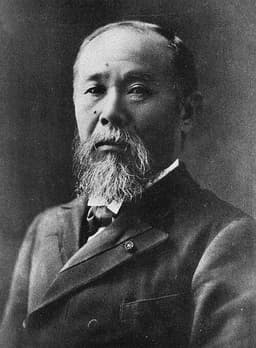
Ito Hirobumi
Politician · Modern
73.8Total

Napoleon Bonaparte
General · Modern
70.9Total
Basic Information
Born
1841
1769
Died
1909
1821
Era
Modern
Modern
Nationality
Japan
France
Occupation
Politician
General
Civilization
Eastern
Western
Score Comparison
Military (10%)
50.0
94.0
Political (20%)
86.0
72.0
Influence (20%)
71.0
40.0
Legacy (20%)
80.0
80.0
Leadership (15%)
80.9
78.0
Strategy (15%)
60.0
90.0
TOTAL
73.8
70.9
Ito Hirobumi — Complete Timeline
1882 AD
Establishment of the Bank of JapanReform◆ Major
Under Ito Hirobumi's leadership, the Bank of Japan was established as the nation's central bank. It was modeled after European central banks and aimed to stabilize the currency and control inflation. This institution was crucial for Japan's economic modernization and industrial growth.
Central BankEconomic ReformModernization
Impact: nationalconstructive
1885 AD
First Prime Minister of JapanPolitical Action◆ Major
Ito Hirobumi became the first Prime Minister of Japan under the new cabinet system. He served four non-consecutive terms and was instrumental in shaping the modern Japanese state. His tenure focused on centralizing power, modernizing the economy, and strengthening the military.
Prime MinisterCabinet SystemMeiji Period
Impact: nationalconstructive
1889 AD
Drafting of the Meiji ConstitutionReform
Ito Hirobumi led the drafting of the Meiji Constitution, which established a constitutional monarchy with a bicameral parliament (the Diet). The constitution granted the emperor sovereign power but also provided for elected representatives. It was promulgated in 1889 and remained in effect until 1947.
ConstitutionMeiji PeriodGovernment Reform
Impact: nationalconstructive
1909 AD
Assassination at Harbin StationPolitical Action◆ Major
Ito Hirobumi was assassinated by Korean nationalist An Jung-geun at Harbin railway station in Manchuria. Ito was on a mission to negotiate with Russian officials regarding Korea. His death shocked Japan and was used to justify the formal annexation of Korea in 1910.
AssassinationKoreaAnnexation
Impact: globaltragic
Napoleon Bonaparte — Complete Timeline
1799 AD
Coup of 18 BrumaireOther◆ Major
Napoleon Bonaparte, with support from his brother Lucien and key political figures, overthrew the Directory in a bloodless coup. He established the Consulate with himself as First Consul, effectively becoming the ruler of France. This event ended the French Revolution's most unstable period.
French RevolutionCoupRise to Power
Impact: regional
1804 AD
Promulgation of the Napoleonic CodeOther◆ Major
Napoleon enacted the Civil Code of the French, known as the Napoleonic Code, a comprehensive set of laws that replaced the fragmented feudal legal systems. The code established legal equality, protected property rights, and secularized law. It became the basis for legal systems in many European and world countries.
Legal ReformNapoleonic CodeCivil Law
Impact: globalconstructive
1805 AD
Battle of AusterlitzWar◆ Major
Napoleon's Grande Arm
Napoleonic WarsBattleDecisive Victory
Impact: global
1812 AD
Invasion of RussiaWar◆ Major
Napoleon led the Grande Arm
Napoleonic WarsInvasionDisaster
Impact: globaldestructive
1815 AD
Battle of WaterlooWar◆ Major
Napoleon's French army was defeated by the combined forces of the Duke of Wellington's Anglo-Allied army and Gebhard Leberecht von Bl
Napoleonic WarsBattleFinal Defeat
Impact: globaldestructive
Expert Analysis
ito-hirobumi-vs-napoleon-bonaparte
# The Emperor and the Architect
On a frozen October morning in 1909, a Korean nationalist named An Jung-geun raised a pistol at Harbin railway station and ended the life of Ito Hirobumi, Japan’s first prime minister and the chief architect of its modern state. Forty-four years earlier, on a June evening in 1815, Napoleon Bonaparte watched his Imperial Guard crumble at Waterloo, his dream of European domination dissolving into mud and blood. One man built an empire of laws and institutions; the other built an empire of glory and conquest. Both fell to assassins and armies, but their legacies diverged as sharply as the civilizations that shaped them.
Origins
Napoleon was born in 1769 on the Mediterranean island of Corsica, a land recently annexed by France. His family was minor nobility, poor and resentful of French rule. He spoke Italian before French, and his childhood was marked by the humiliations of a conquered people. Yet the French Revolution, which erupted when he was twenty, cracked open the old order and offered a path for a brilliant outsider. The chaos of revolution became his classroom.
Ito Hirobumi was born in 1841 in Hagi, a castle town in western Japan, into a low-ranking samurai family. His world was feudal, hierarchical, and sealed off from the West. But in 1853, Commodore Perry’s black ships appeared off Japan’s coast, and the shock of Western power shattered the Tokugawa shogunate. Ito was part of a generation that realized Japan must change or perish. Where Napoleon inherited a revolution, Ito inherited a crisis.
Rise to Power
Napoleon’s ascent was meteoric and military. At twenty-four, he drove the British out of Toulon and became a brigadier general. At twenty-six, he crushed a royalist uprising in Paris with a “whiff of grapeshot.” By thirty, he was First Consul of France, having toppled the corrupt Directory. His genius for war—speed, deception, and the ruthless concentration of force—carried him from Italy to Egypt to the gates of Moscow. Each victory made him indispensable; each campaign enlarged his ambition.
Ito’s rise was quieter but no less decisive. He did not command armies; he studied them. In 1863, as a young samurai, he secretly traveled to England to learn about Western industry, navies, and constitutions. Returning to Japan, he joined the Meiji Restoration—a coup by reformist samurai who abolished feudalism and centralized power. Ito became a bureaucrat, not a general. He drafted laws, negotiated treaties, and traveled to Europe again in 1882 to study its political systems. His weapon was not the sword but the constitution.
Leadership & Governance
Napoleon governed as he fought: with audacity and control. As First Consul and later Emperor, he centralized the French state, created the Bank of France, and codified the Napoleonic Code—a legal system that enshrined merit, property rights, and secular authority. He built roads, schools, and a modern bureaucracy. But his governance was inseparable from war. He appointed his brothers as kings, demanded tribute from conquered states, and bled France of its youth for his campaigns. His political wisdom was real but brittle: it depended on victory.
Ito governed as a consensus-builder and institutionalist. As Japan’s first prime minister in 1885, he established a cabinet system modeled on Prussia’s. In 1882, he oversaw the creation of the Bank of Japan, stabilizing the currency and financing industrialization. His crowning achievement was the Meiji Constitution of 1889, which established a constitutional monarchy with a bicameral parliament. Ito did not rule alone; he balanced the emperor, the military, and the emerging political parties. His power was less dramatic than Napoleon’s, but more durable.
Triumph & Tragedy
Napoleon’s greatest moment was Austerlitz in 1805, where he destroyed the combined armies of Russia and Austria. His empire stretched from Spain to Poland. His tragedy was the invasion of Russia in 1812—a catastrophic miscalculation driven by hubris and an inability to stop. The Grande Armée of 600,000 men returned with barely 100,000. Exiled to Elba, he escaped, rallied France, and fell again at Waterloo. He died in 1821 on Saint Helena, a prisoner of the British.
Ito’s triumph was the Meiji Constitution, which transformed Japan from a feudal backwater into a modern power in a single generation. His tragedy was that the constitution he crafted could not contain the militarism it unleashed. Ito himself was assassinated in 1909 at Harbin station by a Korean nationalist, a victim of the very imperialism he had helped Japan embrace. His death foreshadowed the dark path Japan would take toward total war.
Character & Destiny
Napoleon was driven by an insatiable hunger for glory. “I am not a man,” he once said, “but a thing—a force.” He believed in destiny and willpower, and he bent history to his ambition. But his character—restless, arrogant, unable to delegate—made him incapable of consolidating what he conquered. He won battles but lost peace.
Ito was pragmatic and patient. He was not a charismatic speaker or a battlefield hero; he was a fixer, a negotiator, a learner. He understood that Japan could not defeat the West, so it must join it. His character—disciplined, adaptable, and cautious—allowed him to build institutions that outlasted him. But his willingness to compromise with militarists and imperialists also planted seeds of future disaster.
Legacy
Napoleon’s legacy is the modern state: the Napoleonic Code, the centralized administration, the myth of the self-made man. He is remembered as a genius of war and a tyrant of ambition—a figure of awe and warning. His name still echoes in law, art, and politics across Europe.
Ito’s legacy is modern Japan. He gave it a constitution, a banking system, and a place among world powers. He is honored as the “father of the Meiji Constitution.” But his imperialism stained his reputation, especially in Korea and China. Today, he is studied as a master of institutional design—a builder, not a destroyer.
Conclusion
Napoleon and Ito represent two faces of modernity: the conqueror and the architect. Napoleon tried to remake the world in his image through force; Ito tried to remake his nation through law. One burned bright and fast, leaving a crater; the other built slowly, leaving a foundation. Their lives remind us that power can be wielded with a sword or a pen—and that history judges both by what survives them. In the end, Napoleon’s empire crumbled; Ito’s Japan endured. But both men, in their different ways, transformed the world they inherited into something unrecognizable.
Rankings
🥇
Ito HirobumiLeader
Mil: 50.0Pol: 86.0Inf: 71.0
73.8
🥈
Napoleon Bonaparte
Mil: 94.0Pol: 72.0Inf: 40.0
70.9
+2.9 behind
How This Comparison Works
Algorithm
Each figure is scored on 6 dimensions (0—100 scale) based on structured historical data: Military (10%), Political (20%), Influence (20%), Legacy (20%), Leadership (15%), Strategy (15%). The weighted total produces the final ranking.
Data Sources
Scores are computed from structured sub-indicators in the database. Scale factors adjust for era (Ancient ×0.85, Modern ×1.0) and civilization size (Eastern ×1.05, Other ×0.80) to account for differences in population and military scale.
Maximum 3 Figures
Comparisons are limited to 2—3 figures to ensure readability and statistical meaningfulness.
Error Margins
±5 points per dimension — Sub-scores are derived from historical records with inherent uncertainty. Two figures within 5 points on a dimension should be considered roughly equivalent in that area.
Total Score Accuracy
±3 points overall — The weighted combination of 6 dimensions produces a total score with approximately ±3 points of uncertainty. Differences of less than 3 points are not statistically significant— the figures are effectively tied.
Known Limitations
- Historical records are incomplete and uneven across civilizations
- Figures from oral-tradition societies may be underrepresented
- Occupation labels can misclassify multi-role figures
- Scores measure capability and impact, not moral character
- Quantitative scoring is a comparison tool, not absolute truth
Capability Radar
Military (10%) — Battles & Warfare
Battles
0
95
Win Rate
0
90
Expansion
70
95
Political (20%) — Governance & Reform
Reform
95
95
Diplomacy
90
80
Economy
80
85
Influence (20%) — Cultural & Global Reach
Cultural
75
85
Global
80
90
Legacy (20%) — Historical Impact
Historical
85
95
Longevity
80
90
Leadership (15%) — Power & Stability
Tenure
85
85
Stability
85
70
Strategy (15%) — Tactics & Innovation
Strategy
0
95
Tactics
0
98
Reform
85
92
Similar Comparisons
Comments & Discussion
No comments yet. Be the first to share your thoughts!