Loading...
Ito Hirobumi vs Julius Caesar
Julius Caesar leads by 9.0 pts · 2 figures compared
…
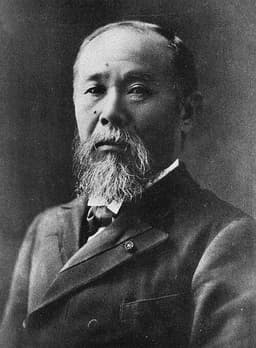
Ito Hirobumi
Politician · Modern
73.8Total

Julius Caesar
General · Ancient
82.8Total
Basic Information
Born
1841
-100
Died
1909
-44
Era
Modern
Ancient
Nationality
Japan
Roman Republic
Occupation
Politician
General
Civilization
Eastern
Western
Score Comparison
Military (10%)
50.0
88.0
Political (20%)
86.0
78.0
Influence (20%)
71.0
85.0
Legacy (20%)
80.0
82.0
Leadership (15%)
80.9
80.0
Strategy (15%)
60.0
85.0
TOTAL
73.8
82.8
Ito Hirobumi — Complete Timeline
1882 AD
Establishment of the Bank of JapanReform◆ Major
Under Ito Hirobumi's leadership, the Bank of Japan was established as the nation's central bank. It was modeled after European central banks and aimed to stabilize the currency and control inflation. This institution was crucial for Japan's economic modernization and industrial growth.
Central BankEconomic ReformModernization
Impact: nationalconstructive
1885 AD
First Prime Minister of JapanPolitical Action◆ Major
Ito Hirobumi became the first Prime Minister of Japan under the new cabinet system. He served four non-consecutive terms and was instrumental in shaping the modern Japanese state. His tenure focused on centralizing power, modernizing the economy, and strengthening the military.
Prime MinisterCabinet SystemMeiji Period
Impact: nationalconstructive
1889 AD
Drafting of the Meiji ConstitutionReform
Ito Hirobumi led the drafting of the Meiji Constitution, which established a constitutional monarchy with a bicameral parliament (the Diet). The constitution granted the emperor sovereign power but also provided for elected representatives. It was promulgated in 1889 and remained in effect until 1947.
ConstitutionMeiji PeriodGovernment Reform
Impact: nationalconstructive
1909 AD
Assassination at Harbin StationPolitical Action◆ Major
Ito Hirobumi was assassinated by Korean nationalist An Jung-geun at Harbin railway station in Manchuria. Ito was on a mission to negotiate with Russian officials regarding Korea. His death shocked Japan and was used to justify the formal annexation of Korea in 1910.
AssassinationKoreaAnnexation
Impact: globaltragic
Julius Caesar — Complete Timeline
58 BC
Gallic WarsWar◆ Major
Caesar, as proconsul of Gaul, launched a series of campaigns that conquered all of Gaul (modern France, Belgium, and parts of Switzerland). He fought numerous battles, including against the Helvetii, the Belgae, and the Gallic chieftain Vercingetorix. The wars brought immense wealth and a loyal army to Caesar.
Gallic WarsConquestRoman Expansion
Impact: regional
49 BC
Crossing the RubiconPolitical Action◆ Major
Caesar led Legio XIII across the Rubicon River into Italy, defying the Roman Senate's order to disband his army. This act triggered a civil war against Pompey and the Optimates, ultimately leading to Caesar's dictatorship and the end of the Roman Republic.
Roman Civil WarEnd of RepublicPower Struggle
Impact: global
48 BC
Battle of PharsalusWar◆ Major
Caesar's outnumbered army defeated the larger forces of Pompey the Great at Pharsalus in Greece. Caesar's tactical use of a reserve line to counter Pompey's cavalry charge proved decisive. Pompey fled to Egypt, where he was assassinated, leaving Caesar as the undisputed master of the Roman world.
Roman Civil WarBattleDecisive Victory
Impact: regional
44 BC
Appointment as Dictator for LifePolitical Action◆ Major
The Roman Senate appointed Caesar dictator perpetuo (dictator for life), granting him unprecedented personal power. This move concentrated military, legislative, and judicial authority in one person, effectively ending the Roman Republic's traditional system of checks and balances and alarming many senators.
DictatorshipEnd of RepublicPower Consolidation
Impact: regionaldestructive
Assassination on the Ides of MarchPolitical Action◆ Major
A group of Roman senators, led by Marcus Junius Brutus and Gaius Cassius Longinus, stabbed Caesar to death at a meeting of the Senate in the Theatre of Pompey. The assassination was intended to restore the Republic, but instead triggered another civil war that led to the rise of the Roman Empire.
AssassinationRoman PoliticsEnd of Republic
Impact: globaldestructive
Expert Analysis
ito-hirobumi-vs-julius-caesar
# Two Men Who Bent History
On a January morning in 49 BCE, Julius Caesar stood at the banks of the Rubicon River, a small stream separating his province of Gaul from Italy proper. He knew that crossing it with his army meant civil war—and likely death if he failed. "The die is cast," he reportedly said, and he crossed. On an October day in 1909, Ito Hirobumi stepped off a train at Harbin Station in Manchuria, a statesman on a diplomatic mission. Moments later, a Korean nationalist fired a revolver into his chest. Two men, separated by two thousand years and half a world, each shaped their nations at moments of supreme transition. One built an empire that would last centuries; the other built a constitution that would transform a feudal island into a modern power. But why did one die a dictator and the other a martyr—and what drove their wildly different paths?
Origins
Julius Caesar was born into the chaos of the late Roman Republic, a world of aristocratic feuds, slave revolts, and crumbling traditions. His family, the Julii, claimed descent from the goddess Venus, but they were politically modest—not wealthy, not dominant. Caesar's father died when he was sixteen, leaving him to navigate a ruthless system where success meant military glory, popular favor, and ruthless alliances. His was a world that rewarded ambition without mercy.
Ito Hirobumi was born in 1841 in Hagi, a provincial town in feudal Japan, into a low-ranking samurai family. His world was rigid, hierarchical, and closed: the Tokugawa shogunate had isolated Japan for over two centuries. But by Ito's youth, Western warships were appearing off Japan's coasts, and the old order was cracking. Ito was present when the Black Ships of Commodore Perry arrived in 1853—a shock that convinced him Japan must modernize or be colonized. Where Caesar inherited a dying republic, Ito inherited a collapsing feudalism.
Rise to Power
Caesar's rise was a masterclass in calculated risk. He borrowed fortunes to fund public spectacles, built alliances with the powerful generals Pompey and Crassus, and then spent eight years conquering Gaul—a campaign of staggering brutality and brilliance that made him legendary. When the Senate ordered him to disband his army, he chose war instead. The Rubicon crossing was not a gamble; it was the logical end of a life spent accumulating leverage.
Ito's rise was quieter but no less determined. As a young samurai, he was part of the radical movement that overthrew the shogunate and restored the emperor. He then traveled secretly to Britain to study Western banking, navies, and constitutions—a dangerous journey for a man who could have been executed as a traitor. Back in Japan, he rose through the new Meiji government not by conquest but by drafting laws, designing ministries, and studying European systems. His power came from paper, not swords.
Leadership & Governance
Caesar governed as a conqueror. As dictator, he reformed the calendar, extended citizenship to provinces, launched public works, and centralized authority. But his rule was always personal—dependent on his genius, his army's loyalty, and the fear he inspired. He pardoned former enemies but never built lasting institutions. When he was assassinated, the Republic died with him, replaced by the imperial system his adopted heir created.
Ito governed as an institution-builder. As Japan's first prime minister (1885), he modeled the cabinet system after Prussia. He led the drafting of the Meiji Constitution (1889), which created a bicameral parliament, guaranteed limited rights, and placed the emperor as symbolic sovereign. He also established the Bank of Japan (1882), stabilizing the currency. His power was impersonal—embedded in laws and offices that outlasted him. Where Caesar concentrated power in himself, Ito dispersed it into structures.
Triumph & Tragedy
Caesar's greatest triumph was the conquest of Gaul—a campaign that added a vast territory to the Roman world and made him the richest man in the Republic. His greatest tragedy was his assassination on the Ides of March, 44 BCE, stabbed by senators he had pardoned. He died expecting to become king; instead, he became a legend.
Ito's greatest triumph was the Meiji Constitution, which gave Japan a modern political framework and helped it become the first Asian nation to rival European powers. His greatest tragedy was his assassination at Harbin Station in 1909, killed by a Korean nationalist who saw him as an imperialist oppressor. Ito had been on a mission to discuss the annexation of Korea—a policy he supported. He died as a symbol of the very empire he helped build.
Character & Destiny
Caesar was audacious, brilliant, and utterly convinced of his own destiny. He wrote his own commentaries, staged his own triumphs, and forgave enemies because he believed he could control them. His character drove him to cross the Rubicon—and it also drove the conspiracy that killed him. He could not imagine a world where he was not the center.
Ito was cautious, pragmatic, and systematic. He studied constitutions the way Caesar studied battlefields. He understood that Japan's survival depended not on one man's genius but on creating institutions that could endure. His character led him to build a state, not a cult. Yet his pragmatism also led him to support imperial expansion—and that expansion brought the assassin's bullet.
Legacy
Caesar's legacy is the Roman Empire itself. His name became a title—Kaiser, Tsar—and his reforms shaped Western governance for millennia. But he also destroyed the Republic and set a precedent for military dictators that haunts the West to this day.
Ito's legacy is modern Japan. The Meiji Constitution lasted until 1947, and the institutions he designed—the cabinet, the central bank, the civil service—remain foundational. He is remembered as the "father of the Japanese constitution," a statesman who transformed a feudal society into a world power. But his role in Japan's colonization of Korea stains his memory in East Asia.
Conclusion
Caesar and Ito both faced a world in crisis—one at the end of a republic, the other at the birth of a nation. Caesar chose the path of the conqueror, bending history to his will until history broke him. Ito chose the path of the architect, building frameworks that would outlast his own life. One died because he was too powerful; the other died because the power he built was used against others. Their stories remind us that the same ambition can build an empire or a constitution—and that the men who shape history are always shaped by the limits they refuse to see.
Rankings
🥇
Julius CaesarLeader
Mil: 88.0Pol: 78.0Inf: 85.0
82.8
🥈
Ito Hirobumi
Mil: 50.0Pol: 86.0Inf: 71.0
73.8
+9.0 behind
How This Comparison Works
Algorithm
Each figure is scored on 6 dimensions (0—100 scale) based on structured historical data: Military (10%), Political (20%), Influence (20%), Legacy (20%), Leadership (15%), Strategy (15%). The weighted total produces the final ranking.
Data Sources
Scores are computed from structured sub-indicators in the database. Scale factors adjust for era (Ancient ×0.85, Modern ×1.0) and civilization size (Eastern ×1.05, Other ×0.80) to account for differences in population and military scale.
Maximum 3 Figures
Comparisons are limited to 2—3 figures to ensure readability and statistical meaningfulness.
Error Margins
±5 points per dimension — Sub-scores are derived from historical records with inherent uncertainty. Two figures within 5 points on a dimension should be considered roughly equivalent in that area.
Total Score Accuracy
±3 points overall — The weighted combination of 6 dimensions produces a total score with approximately ±3 points of uncertainty. Differences of less than 3 points are not statistically significant— the figures are effectively tied.
Known Limitations
- Historical records are incomplete and uneven across civilizations
- Figures from oral-tradition societies may be underrepresented
- Occupation labels can misclassify multi-role figures
- Scores measure capability and impact, not moral character
- Quantitative scoring is a comparison tool, not absolute truth
Capability Radar
Military (10%) — Battles & Warfare
Battles
0
95
Win Rate
0
92
Expansion
70
97
Political (20%) — Governance & Reform
Reform
95
90
Diplomacy
90
85
Economy
80
82
Influence (20%) — Cultural & Global Reach
Cultural
75
88
Global
80
94
Legacy (20%) — Historical Impact
Historical
85
95
Longevity
80
96
Leadership (15%) — Power & Stability
Tenure
85
75
Stability
85
60
Strategy (15%) — Tactics & Innovation
Strategy
0
94
Tactics
0
96
Reform
85
88
Similar Comparisons
Comments & Discussion
No comments yet. Be the first to share your thoughts!