Loading...
Isoroku Yamamoto vs Wang Yaowu
Isoroku Yamamoto leads by 13.4 pts · 2 figures compared
…

Isoroku Yamamoto
General · Modern
61.0Total
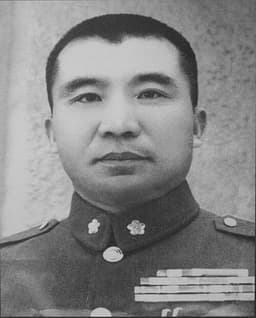
Wang Yaowu
General · Modern
47.6Total
Basic Information
Born
1884
1904
Died
1943
1968
Era
Modern
Modern
Nationality
Japan
China
Occupation
General
General
Civilization
Eastern
Eastern
Score Comparison
Military (10%)
82.0
30.0
Political (20%)
46.6
39.4
Influence (20%)
65.0
51.0
Legacy (20%)
55.0
43.3
Leadership (15%)
57.6
61.1
Strategy (15%)
72.0
60.0
TOTAL
61.0
47.6
Isoroku Yamamoto — Complete Timeline
1941 AD
Planning the attack on Pearl HarborWar
As Commander-in-Chief of the Combined Fleet, Yamamoto conceived and oversaw the planning of the surprise attack on the U.S. Pacific Fleet at Pearl Harbor. The attack brought the United States into World War II.
World War IIPearl HarborStrategy
Impact: globaldestructive
1942 AD
Battle of MidwayWar
Yamamoto commanded the Japanese fleet at Midway, intending to destroy U.S. carriers. The Japanese lost four carriers in a decisive defeat, marking a turning point in the Pacific War. Yamamoto's plan was overly complex.
World War IIMidwayDefeat
Impact: globaltragic
Attack on Port Moresby (Operation MO)War◆ Major
Yamamoto ordered the invasion of Port Moresby, New Guinea, to isolate Australia. The resulting Battle of the Coral Sea was a tactical draw but stopped the Japanese advance, the first check on Japanese expansion.
World War IICoral SeaNaval Battle
Impact: regional
1943 AD
Operation Vengeance (Death of Yamamoto)War◆ Major
U.S. intelligence intercepted Yamamoto's flight plan. P-38 Lightning fighters shot down his bomber over Bougainville. His death was a major blow to Japanese morale and removed a key strategic leader.
World War IIAssassinationAir Battle
Impact: regionaltragic
Wang Yaowu — Complete Timeline
1938 AD
Commanded the KMT Forces in the Battle of Tai'erzhuangWar◆ Major
Wang Yaowu commanded the 74th Army in the Battle of Tai'erzhuang, a major Chinese victory against the Japanese. His troops played a key role in the defense and counterattack. The battle boosted Chinese morale early in the Second Sino-Japanese War.
Second Sino-Japanese WarVictory
Impact: nationalconstructive
1947 AD
Defended Shandong Against the CommunistsWar◆ Major
Wang Yaowu was appointed commander of KMT forces in Shandong province. He led campaigns against the Communist forces but was eventually defeated. His failure to hold Shandong contributed to the KMT's loss of northern China.
Chinese Civil WarShandong
Impact: regional
1948 AD
Captured by the Communists in JinanWar◆ Major
Wang Yaowu was captured by the People's Liberation Army during the Battle of Jinan. His capture marked the fall of a key KMT stronghold. He was later imprisoned and rehabilitated by the Communist government.
Chinese Civil WarCapture
Impact: national
Expert Analysis
Origins
Isoroku Yamamoto was born on April 4, 1884, in Nagaoka, Japan, into a former samurai family. His father was a schoolmaster. Yamamoto graduated from the Imperial Japanese Naval Academy in 1904 and served in the Russo-Japanese War, where he lost two fingers at the Battle of Tsushima. He later studied at Harvard University (1919–1921) and served as a naval attaché in Washington, D.C., gaining deep understanding of American industrial power.
Wang Yaowu was born in 1904 in Tai'an, Shandong, China, into a farming family. He graduated from the Whampoa Military Academy in 1924, a key institution for Nationalist officers. He joined the Kuomintang (KMT) and quickly rose through ranks during the Northern Expedition. Unlike Yamamoto's naval focus, Wang was an army commander specializing in ground warfare.
Rise to Power
Yamamoto's rise came through progressive naval thought. He advocated for naval aviation and opposed war with the United States, but once ordered, he planned the attack on Pearl Harbor (December 7, 1941). His strategic vision made him Commander-in-Chief of the Combined Fleet in 1939. His success at Pearl Harbor made him a national hero.
Wang Yaowu rose to prominence during the Second Sino-Japanese War. He commanded the 74th Army in the Battle of Tai'erzhuang (March–April 1938), a major Chinese victory. His troops held the line against Japanese forces, earning him recognition. By 1946, he was appointed commander of KMT forces in Shandong province, tasked with holding territory against the Communists.
Leadership & Governance
Yamamoto's leadership style was hands-on and innovative. He pushed for carrier-based aviation, transforming the Japanese navy. He was respected but also criticized for his gambling nature. At Pearl Harbor, he achieved a tactical victory but failed to destroy U.S. carriers. His governance over the Combined Fleet was centralized; he micromanaged operations like Midway, which contributed to the defeat.
Wang Yaowu led from the front, known for personal bravery. At Tai'erzhuang, he rallied his troops. As commander in Shandong, he focused on fortifying cities but struggled with logistics and corruption. His governance was hampered by KMT infighting. He scored 61.1 in leadership, higher than Yamamoto's 57.6, reflecting his direct command style.
Triumph & Tragedy
Yamamoto's greatest triumph was the Pearl Harbor attack, sinking four U.S. battleships and destroying 188 aircraft. His tragedy was Midway (June 4–7, 1942), where he lost four carriers, turning the tide in the Pacific. He also failed to foresee the U.S. ability to recover quickly. His death in Operation Vengeance (April 18, 1943) was a major blow.
Wang Yaowu's triumph was Tai'erzhuang, where his 74th Army inflicted heavy casualties. His tragedy came in the Chinese Civil War. In September 1948, he was captured at Jinan after a rapid Communist advance. His defeat symbolized KMT decline. He scored 30.0 in military, reflecting his overall record.
Character & Destiny
Yamamoto was cautious yet bold, a gambler who knew the odds. He once said he could run wild for six months but then expected defeat. His character led him to execute a high-risk plan at Midway, which failed. His destiny was sealed by his own fame—U.S. intelligence targeted him specifically.
Wang Yaowu was determined but politically naive. He focused on military tactics over strategy, unable to secure Shandong against Communist insurgency. His capture was due to overconfidence and poor intelligence. He later cooperated with the Communists after 1949.
Legacy
Yamamoto's legacy is mixed. He revolutionized naval aviation but his strategic errors are studied. He scored 55.0 in legacy. His attack on Pearl Harbor is a historical turning point. In Japan, he is a complex figure—a reluctant warrior. Wang Yaowu's legacy is more obscure. He is remembered in China for Tai'erzhuang but not celebrated. His score of 43.3 reflects limited impact. The KMT's defeat overshadowed his contributions.
Conclusion
Isoroku Yamamoto had greater impact globally. His military score of 82.0 dwarfs Wang's 30.0. Yamamoto's actions changed the course of World War II, while Wang's influence was regional. Even in leadership, where Wang scored higher (61.1 vs 57.6), Yamamoto's strategic decisions affected millions. The score gap of 13.4 points is justified. Yamamoto's total score of 61.0 reflects a figure of world-historical importance, while Wang's 47.6 places him as a competent but not exceptional commander.
Rankings
🥇
Isoroku YamamotoLeader
Mil: 82.0Pol: 46.6Inf: 65.0
61.0
🥈
Wang Yaowu
Mil: 30.0Pol: 39.4Inf: 51.0
47.6
+13.4 behind
How This Comparison Works
Algorithm
Each figure is scored on 6 dimensions (0—100 scale) based on structured historical data: Military (10%), Political (20%), Influence (20%), Legacy (20%), Leadership (15%), Strategy (15%). The weighted total produces the final ranking.
Data Sources
Scores are computed from structured sub-indicators in the database. Scale factors adjust for era (Ancient ×0.85, Modern ×1.0) and civilization size (Eastern ×1.05, Other ×0.80) to account for differences in population and military scale.
Maximum 3 Figures
Comparisons are limited to 2—3 figures to ensure readability and statistical meaningfulness.
Error Margins
±5 points per dimension — Sub-scores are derived from historical records with inherent uncertainty. Two figures within 5 points on a dimension should be considered roughly equivalent in that area.
Total Score Accuracy
±3 points overall — The weighted combination of 6 dimensions produces a total score with approximately ±3 points of uncertainty. Differences of less than 3 points are not statistically significant— the figures are effectively tied.
Known Limitations
- Historical records are incomplete and uneven across civilizations
- Figures from oral-tradition societies may be underrepresented
- Occupation labels can misclassify multi-role figures
- Scores measure capability and impact, not moral character
- Quantitative scoring is a comparison tool, not absolute truth
Capability Radar
Military (10%) — Battles & Warfare
Battles
85
45
Win Rate
70
40
Expansion
60
35
Political (20%) — Governance & Reform
Reform
30
25
Diplomacy
50
30
Economy
20
20
Influence (20%) — Cultural & Global Reach
Cultural
55
20
Global
65
15
Legacy (20%) — Historical Impact
Historical
70
30
Longevity
60
20
Leadership (15%) — Power & Stability
Tenure
40
40
Stability
20
25
Strategy (15%) — Tactics & Innovation
Strategy
80
45
Tactics
95
50
Reform
75
30
Similar Comparisons
Comments & Discussion
No comments yet. Be the first to share your thoughts!