Loading...
Ishida Mitsunari vs Wang Yaowu
Ishida Mitsunari leads by 3.1 pts · 2 figures compared
…

Ishida Mitsunari
General · Modern
50.7Total
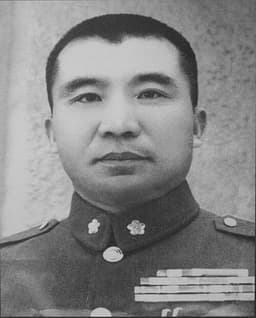
Wang Yaowu
General · Modern
47.6Total
Basic Information
Born
1560
1904
Died
1600
1968
Era
Modern
Modern
Nationality
Japan
China
Occupation
General
General
Civilization
Eastern
Eastern
Score Comparison
Military (10%)
40.0
30.0
Political (20%)
48.0
39.4
Influence (20%)
53.3
51.0
Legacy (20%)
48.3
43.3
Leadership (15%)
54.2
61.1
Strategy (15%)
60.0
60.0
TOTAL
50.7
47.6
Ishida Mitsunari — Complete Timeline
1600 AD
Battle of SekigaharaWar
Ishida Mitsunari commanded the Western Army at Sekigahara against Tokugawa Ieyasu. His forces were defeated due to defections and tactical errors, leading to the establishment of the Tokugawa shogunate.
Sengoku PeriodBattleWestern Army
Impact: nationaldestructive
Siege of Fushimi CastleWar◆ Major
Ishida Mitsunari besieged Fushimi Castle, held by Torii Mototada for Tokugawa Ieyasu. The castle fell after a fierce defense, but the siege delayed the Western Army's movements.
Sengoku PeriodSiegeFushimi
Impact: regionaldestructive
Execution of Ishida MitsunariOther◆ Major
After the Battle of Sekigahara, Ishida Mitsunari was captured by Tokugawa forces. He was executed by beheading in Kyoto, ending his role as a leading opponent of Tokugawa Ieyasu.
Sengoku PeriodExecutionSekigahara
Impact: nationaltragic
Formation of the Western ArmyPolitical Action◆ Major
Ishida Mitsunari formed the Western Army, an alliance of daimyo opposed to Tokugawa Ieyasu. He gathered support from powerful clans like the Mori, Shimazu, and Ukita to challenge Tokugawa's dominance.
Sengoku PeriodAllianceWestern Army
Impact: national
Wang Yaowu — Complete Timeline
1938 AD
Commanded the KMT Forces in the Battle of Tai'erzhuangWar◆ Major
Wang Yaowu commanded the 74th Army in the Battle of Tai'erzhuang, a major Chinese victory against the Japanese. His troops played a key role in the defense and counterattack. The battle boosted Chinese morale early in the Second Sino-Japanese War.
Second Sino-Japanese WarVictory
Impact: nationalconstructive
1947 AD
Defended Shandong Against the CommunistsWar◆ Major
Wang Yaowu was appointed commander of KMT forces in Shandong province. He led campaigns against the Communist forces but was eventually defeated. His failure to hold Shandong contributed to the KMT's loss of northern China.
Chinese Civil WarShandong
Impact: regional
1948 AD
Captured by the Communists in JinanWar◆ Major
Wang Yaowu was captured by the People's Liberation Army during the Battle of Jinan. His capture marked the fall of a key KMT stronghold. He was later imprisoned and rehabilitated by the Communist government.
Chinese Civil WarCapture
Impact: national
Expert Analysis
Origins
Ishida Mitsunari was born in 1559 in Ōmi Province, Japan, to a minor samurai family. His early service under Toyotomi Hideyoshi as a page led to administrative roles, where he excelled in logistics and tax collection. He lacked the battlefield experience of many contemporaries but gained Hideyoshi's trust through competence. Wang Yaowu was born in 1904 in Shandong, China, to a farming family. He graduated from the Whampoa Military Academy in 1924, joining the Kuomintang (KMT) and rising through the ranks due to his tactical acumen. His early career involved fighting against warlords and the Communist forces, establishing him as a capable field commander.
Rise to Power
Mitsunari's rise came through bureaucratic skill rather than combat. He was appointed as one of the Five Commissioners under Hideyoshi, managing land surveys and tax reforms. After Hideyoshi's death in 1598, Mitsunari became a leading figure in the anti-Tokugawa faction, forming the Western Army in 1600 with daimyo like Mori Terumoto and Shimazu Yoshihiro. Wang Yaowu's rise was through military success. He distinguished himself during the Northern Expedition (1926-1928) and later in the Second Sino-Japanese War. His command of the 74th Army led to a key role in the Battle of Tai'erzhuang (1938), a major Chinese victory against Japan, which boosted his reputation. By 1945, he was appointed commander of KMT forces in Shandong.
Leadership & Governance
Mitsunari's leadership was marked by rigid adherence to the Tokugawa-era legalism but lacked the charisma to hold his coalition together. At Sekigahara, his command was undermined by defections, such as Kobayakawa Hideaki turning against him. He scored 54.2 in leadership, reflecting his inability to inspire loyalty. In contrast, Wang Yaowu scored 61.1 in leadership, showing better troop management. He was known for strict discipline and tactical flexibility, as seen in his defense of Shandong against the Communists. However, his governance of Shandong was plagued by corruption and infighting among KMT factions, weakening his position.
Triumph & Tragedy
Mitsunari's greatest triumph was forming the Western Army, a coalition of over 80,000 men, and besieging Fushimi Castle in 1600. His tragedy was the defeat at Sekigahara on October 21, 1600, where his army disintegrated due to betrayals. He was captured and executed, ending his political ambitions. Wang Yaowu's triumph was the victory at Tai'erzhuang, where his 74th Army inflicted heavy casualties on the Japanese. His tragedy was the loss of Shandong to the Communists in 1948, culminating in his capture at the Battle of Jinan. He was held as a prisoner of war until 1959, later serving as a cultural advisor.
Character & Destiny
Mitsunari was a meticulous administrator but politically naive, alienating powerful daimyo like Tokugawa Ieyasu. His decision to rely on the loyalty of Kobayakawa Hideaki, who betrayed him, sealed his fate. His military score of 40.0 reflects poor strategic judgment in battle. Wang Yaowu was a competent tactician but failed to adapt to the political realities of the Chinese Civil War. His loyalty to the KMT and inability to secure popular support in Shandong led to his downfall. His military score of 30.0 is low due to his eventual defeat, though his leadership score of 61.1 shows his skill in direct command.
Legacy
Mitsunari is remembered as a tragic figure who tried to preserve the Toyotomi legacy. His defeat at Sekigahara paved the way for the Tokugawa shogunate, which ruled Japan for 250 years. His legacy score of 48.3 reflects his role as a catalyst for historical change. Wang Yaowu is remembered as a KMT general who fought against both Japanese and Communists. His capture symbolized the collapse of KMT control in northern China. His legacy score of 43.3 is lower, as his contributions were overshadowed by the Communist victory. Both are studied for their roles in pivotal conflicts.
Conclusion
Ishida Mitsunari had a greater historical impact, as his actions at Sekigahara directly led to the Tokugawa shogunate, shaping Japan's early modern period. His total score of 50.7 versus Wang's 47.6 reflects this edge. Wang Yaowu, despite tactical successes, fought in a losing cause and his legacy is less transformative. Mitsunari's defeat, while tragic, was a turning point in Japanese history, whereas Wang's defeat was part of a broader KMT collapse. Thus, Mitsunari's influence endures more significantly.
Rankings
🥇
Ishida MitsunariLeader
Mil: 40.0Pol: 48.0Inf: 53.3
50.7
🥈
Wang Yaowu
Mil: 30.0Pol: 39.4Inf: 51.0
47.6
+3.1 behind
How This Comparison Works
Algorithm
Each figure is scored on 6 dimensions (0—100 scale) based on structured historical data: Military (10%), Political (20%), Influence (20%), Legacy (20%), Leadership (15%), Strategy (15%). The weighted total produces the final ranking.
Data Sources
Scores are computed from structured sub-indicators in the database. Scale factors adjust for era (Ancient ×0.85, Modern ×1.0) and civilization size (Eastern ×1.05, Other ×0.80) to account for differences in population and military scale.
Maximum 3 Figures
Comparisons are limited to 2—3 figures to ensure readability and statistical meaningfulness.
Error Margins
±5 points per dimension — Sub-scores are derived from historical records with inherent uncertainty. Two figures within 5 points on a dimension should be considered roughly equivalent in that area.
Total Score Accuracy
±3 points overall — The weighted combination of 6 dimensions produces a total score with approximately ±3 points of uncertainty. Differences of less than 3 points are not statistically significant— the figures are effectively tied.
Known Limitations
- Historical records are incomplete and uneven across civilizations
- Figures from oral-tradition societies may be underrepresented
- Occupation labels can misclassify multi-role figures
- Scores measure capability and impact, not moral character
- Quantitative scoring is a comparison tool, not absolute truth
Capability Radar
Military (10%) — Battles & Warfare
Battles
45
45
Win Rate
30
40
Expansion
25
35
Political (20%) — Governance & Reform
Reform
40
25
Diplomacy
30
30
Economy
35
20
Influence (20%) — Cultural & Global Reach
Cultural
30
20
Global
20
15
Legacy (20%) — Historical Impact
Historical
45
30
Longevity
35
20
Leadership (15%) — Power & Stability
Tenure
35
40
Stability
20
25
Strategy (15%) — Tactics & Innovation
Strategy
40
45
Tactics
55
50
Reform
20
30
Similar Comparisons
Comments & Discussion
No comments yet. Be the first to share your thoughts!