Loading...
This comparison has not been analyzed yet.
One-time AI generation (~1 minute). Scores and timeline are already available below.
Khanderao Dabhade vs Wang Yaowu
Wang Yaowu leads by 7.4 pts · 2 figures compared
…

Khanderao Dabhade
General · Modern
40.2Total
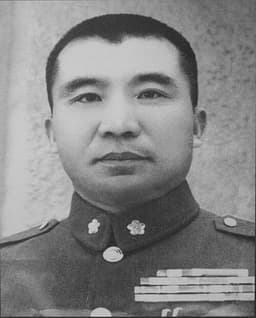
Wang Yaowu
General · Modern
47.6Total
Basic Information
Born
1670
1904
Died
1729
1968
Era
Modern
Modern
Nationality
India
China
Occupation
General
General
Civilization
Indian
Eastern
Score Comparison
Military (10%)
20.0
30.0
Political (20%)
30.8
39.4
Influence (20%)
49.4
51.0
Legacy (20%)
40.0
43.3
Leadership (15%)
47.3
61.1
Strategy (15%)
41.7
60.0
TOTAL
40.2
47.6
Khanderao Dabhade — Complete Timeline
1715 AD
Appointed Senapati of GujaratPolitical Action◆ Major
Khanderao Dabhade was appointed as the Senapati (commander) of the Maratha operations in Gujarat by Shahu I. This gave him authority over Maratha military and revenue collection in the region.
Maratha EmpireGujaratMilitary Command
Impact: regionalconstructive
1720 AD
Battle of BalapurWar◆ Major
Khanderao Dabhade led Maratha forces against the Mughal governor of Gujarat at Balapur. The Marathas achieved a decisive victory, solidifying their control over large parts of Gujarat.
Mughal-Maratha WarsGujarat CampaignBattle
Impact: regional
1723 AD
Established Chauth Collection in GujaratPolitical Action◆ Major
Khanderao Dabhade formalized the collection of chauth (25% tax) from Mughal territories in Gujarat. This system provided a steady revenue stream for the Maratha Empire and reduced Mughal influence.
TaxationMaratha AdministrationGujarat
Impact: regionalconstructive
1728 AD
Conflict with Peshwa Baji Rao IPolitical Action
Khanderao Dabhade opposed the Peshwa Baji Rao I's centralizing policies and his campaign in Malwa. This led to a political rift within the Maratha Empire, with Dabhade asserting his autonomy in Gujarat.
Maratha PoliticsInternal ConflictPeshwa
Impact: nationaldestructive
Wang Yaowu — Complete Timeline
1938 AD
Commanded the KMT Forces in the Battle of Tai'erzhuangWar◆ Major
Wang Yaowu commanded the 74th Army in the Battle of Tai'erzhuang, a major Chinese victory against the Japanese. His troops played a key role in the defense and counterattack. The battle boosted Chinese morale early in the Second Sino-Japanese War.
Second Sino-Japanese WarVictory
Impact: nationalconstructive
1947 AD
Defended Shandong Against the CommunistsWar◆ Major
Wang Yaowu was appointed commander of KMT forces in Shandong province. He led campaigns against the Communist forces but was eventually defeated. His failure to hold Shandong contributed to the KMT's loss of northern China.
Chinese Civil WarShandong
Impact: regional
1948 AD
Captured by the Communists in JinanWar◆ Major
Wang Yaowu was captured by the People's Liberation Army during the Battle of Jinan. His capture marked the fall of a key KMT stronghold. He was later imprisoned and rehabilitated by the Communist government.
Chinese Civil WarCapture
Impact: national
This comparison has not been analyzed yet.
One-time AI generation (~1 minute). Scores and timeline are already available below.
Rankings
🥇
Wang YaowuLeader
Mil: 30.0Pol: 39.4Inf: 51.0
47.6
🥈
Khanderao Dabhade
Mil: 20.0Pol: 30.8Inf: 49.4
40.2
+7.4 behind
How This Comparison Works
Algorithm
Each figure is scored on 6 dimensions (0—100 scale) based on structured historical data: Military (10%), Political (20%), Influence (20%), Legacy (20%), Leadership (15%), Strategy (15%). The weighted total produces the final ranking.
Data Sources
Scores are computed from structured sub-indicators in the database. Scale factors adjust for era (Ancient ×0.85, Modern ×1.0) and civilization size (Eastern ×1.05, Other ×0.80) to account for differences in population and military scale.
Maximum 3 Figures
Comparisons are limited to 2—3 figures to ensure readability and statistical meaningfulness.
Error Margins
±5 points per dimension — Sub-scores are derived from historical records with inherent uncertainty. Two figures within 5 points on a dimension should be considered roughly equivalent in that area.
Total Score Accuracy
±3 points overall — The weighted combination of 6 dimensions produces a total score with approximately ±3 points of uncertainty. Differences of less than 3 points are not statistically significant— the figures are effectively tied.
Known Limitations
- Historical records are incomplete and uneven across civilizations
- Figures from oral-tradition societies may be underrepresented
- Occupation labels can misclassify multi-role figures
- Scores measure capability and impact, not moral character
- Quantitative scoring is a comparison tool, not absolute truth
Capability Radar
Military (10%) — Battles & Warfare
Battles
35
45
Win Rate
40
40
Expansion
40
35
Political (20%) — Governance & Reform
Reform
10
25
Diplomacy
20
30
Economy
15
20
Influence (20%) — Cultural & Global Reach
Cultural
15
20
Global
10
15
Legacy (20%) — Historical Impact
Historical
20
30
Longevity
10
20
Leadership (15%) — Power & Stability
Tenure
25
40
Stability
20
25
Strategy (15%) — Tactics & Innovation
Strategy
30
45
Tactics
30
50
Reform
15
30
Similar Comparisons
Comments & Discussion
No comments yet. Be the first to share your thoughts!