Loading...
Isoroku Yamamoto vs Nian Gengyao
Isoroku Yamamoto leads by 7.0 pts · 2 figures compared
…

Isoroku Yamamoto
General · Modern
61.0Total
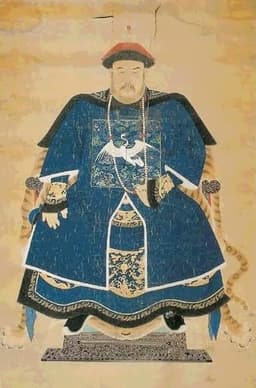
Nian Gengyao
General · Modern
54.0Total
Basic Information
Born
1884
1679
Died
1943
1726
Era
Modern
Modern
Nationality
Japan
China
Occupation
General
General
Civilization
Eastern
Eastern
Score Comparison
Military (10%)
82.0
65.0
Political (20%)
46.6
42.2
Influence (20%)
65.0
54.1
Legacy (20%)
55.0
46.7
Leadership (15%)
57.6
68.0
Strategy (15%)
72.0
57.5
TOTAL
61.0
54.0
Isoroku Yamamoto — Complete Timeline
1941 AD
Planning the attack on Pearl HarborWar
As Commander-in-Chief of the Combined Fleet, Yamamoto conceived and oversaw the planning of the surprise attack on the U.S. Pacific Fleet at Pearl Harbor. The attack brought the United States into World War II.
World War IIPearl HarborStrategy
Impact: globaldestructive
1942 AD
Battle of MidwayWar
Yamamoto commanded the Japanese fleet at Midway, intending to destroy U.S. carriers. The Japanese lost four carriers in a decisive defeat, marking a turning point in the Pacific War. Yamamoto's plan was overly complex.
World War IIMidwayDefeat
Impact: globaltragic
Attack on Port Moresby (Operation MO)War◆ Major
Yamamoto ordered the invasion of Port Moresby, New Guinea, to isolate Australia. The resulting Battle of the Coral Sea was a tactical draw but stopped the Japanese advance, the first check on Japanese expansion.
World War IICoral SeaNaval Battle
Impact: regional
1943 AD
Operation Vengeance (Death of Yamamoto)War◆ Major
U.S. intelligence intercepted Yamamoto's flight plan. P-38 Lightning fighters shot down his bomber over Bougainville. His death was a major blow to Japanese morale and removed a key strategic leader.
World War IIAssassinationAir Battle
Impact: regionaltragic
Nian Gengyao — Complete Timeline
1720 AD
Suppressed Tibetan revolt in LhasaWar◆ Major
Nian Gengyao led Qing forces to expel Dzungar invaders from Tibet and restore the Dalai Lama's authority. This campaign secured Qing control over Tibet and demonstrated his military capability.
TibetMilitary CampaignQing Expansion
Impact: regional
1723 AD
Appointed Grand Secretary and Governor-General of SichuanPolitical Action◆ Major
Nian Gengyao was appointed to high civil and military posts, including Grand Secretary and Governor-General of Sichuan. This made him one of the most powerful officials in the Qing empire.
AppointmentHigh OfficeQing Administration
Impact: national
1726 AD
Arrested and forced to commit suicidePolitical Action
The Yongzheng Emperor accused Nian Gengyao of corruption, treason, and overstepping authority. He was arrested, stripped of rank, and forced to commit suicide, ending his career abruptly.
ExecutionPurgeImperial Disfavor
Impact: nationaltragic
Expert Analysis
Origins
Isoroku Yamamoto was born on April 4, 1884, in Nagaoka, Japan, the sixth son of a impoverished samurai family. He was adopted by the Yamamoto family at age 32, taking their name. He entered the Imperial Japanese Naval Academy in 1901, graduating seventh in his class in 1904. He served in the Russo-Japanese War, losing two fingers at the Battle of Tsushima (1905). His early experiences with naval aviation and study at Harvard University (1919-1921) shaped his strategic thinking.
Nian Gengyao was born in 1679 in Fengyang, Anhui, China, into a military family. His father served as a general, and Nian passed the imperial examinations, earning a jinshi degree in 1700. He began his career as a civil official but quickly shifted to military roles, serving under the Kangxi Emperor during campaigns in Tibet. His rise was tied to his sister's marriage to the future Yongzheng Emperor.
Rise to Power
Yamamoto rose through the naval ranks by advocating for naval aviation and modernization. He became a captain in 1919, rear admiral in 1929, and vice admiral in 1934. His appointment as Commander-in-Chief of the Combined Fleet in 1939 gave him operational control. His key ally was Admiral Shigeyoshi Inoue; opponents included Army leaders who favored a continental strategy. The turning point was his planning of the Pearl Harbor attack (December 7, 1941), which he conceived as a preemptive strike to cripple the U.S. Pacific Fleet.
Nian Gengyao rose under the patronage of the Yongzheng Emperor, who became emperor in 1722. In 1723, Nian led a campaign to suppress a Tibetan revolt in Lhasa, expelling Dzungar invaders and restoring the Dalai Lama's authority. This success led to his appointment as Grand Secretary and Governor-General of Sichuan in 1724, making him one of the most powerful officials in the Qing Empire. His rise was rapid, but it also made him enemies at court.
Leadership & Governance
Yamamoto's leadership style was cautious and strategic. He opposed war with the United States, predicting Japan could not win a prolonged conflict. At Pearl Harbor, he executed a complex carrier-based attack that achieved tactical surprise. However, his governance of the Combined Fleet was centralized; he micromanaged operations, which contributed to the defeat at Midway (June 4-7, 1942), where he lost four carriers. His score of 57.6 in leadership reflects his mixed record: inspiring but inflexible.
Nian Gengyao's leadership was authoritarian and efficient. He suppressed the Tibetan revolt with ruthless force, executing thousands. As governor-general, he implemented strict military discipline and centralized control. His governance score of 68.0 is higher than Yamamoto's, but his political score of 42.2 is lower. He alienated civil officials by overstepping his authority, demanding honors and accumulating wealth. This led to accusations of corruption and treason.
Triumph & Tragedy
Yamamoto's greatest triumph was the Pearl Harbor attack, which sank or damaged 18 U.S. warships and killed 2,403 Americans. It temporarily neutralized the U.S. Pacific Fleet. His greatest failure was the Battle of Midway, where his plan to draw out U.S. carriers failed, resulting in the loss of four Japanese carriers and 3,057 men. This defeat turned the tide in the Pacific. His death on April 18, 1943, during Operation Vengeance, was a tragedy that demoralized Japan.
Nian Gengyao's triumph was the suppression of the Tibetan revolt in 1723-1724, which secured Qing control over Tibet for decades. He also pacified rebellious tribes in Sichuan. His tragedy was his downfall: in 1725, the Yongzheng Emperor accused him of 92 crimes, including corruption, treason, and plotting rebellion. He was arrested, stripped of rank, and forced to commit suicide in 1726. His family was executed or exiled.
Character & Destiny
Yamamoto was a gambler by nature, known for his love of poker and chess. He calculated risks but often overestimated Japanese capabilities. His character shaped his fate: his caution at Pearl Harbor (withdrawing without attacking the oil storage) spared the U.S. fleet's infrastructure, while his insistence on a decisive battle at Midway led to disaster. Historians assess him as a skilled tactician but flawed strategist, with a military score of 82.0 but political score of 46.6.
Nian Gengyao was arrogant and power-hungry. His success in Tibet inflated his ego; he demanded imperial honors and acted as if he were above the law. This provoked the Yongzheng Emperor, who saw him as a threat. His destiny was sealed by his inability to moderate his ambition. His military score of 65.0 and political score of 42.2 reflect his strengths and fatal flaws.
Legacy
Yamamoto's legacy is intertwined with the Pacific War. He is remembered as the architect of Pearl Harbor, a symbol of Japanese naval prowess. His death elevated him to martyr status in Japan. Militarily, his emphasis on carrier aviation influenced naval doctrine. His overall score of 61.0 reflects his impact, though his legacy is tainted by defeat. The U.S. Navy still studies his tactics.
Nian Gengyao's legacy is more obscure. In China, he is remembered as a capable general but a cautionary tale of overreach. His campaigns in Tibet solidified Qing control, but his downfall illustrates the dangers of imperial favor. His total score of 54.0 is lower than Yamamoto's, reflecting less global influence.
Conclusion
Isoroku Yamamoto had greater impact than Nian Gengyao. Yamamoto's military score of 82.0 dwarfs Nian's 65.0, and his strategic score of 72.0 is higher than Nian's 57.5. Yamamoto's actions altered the course of World War II, while Nian's achievements were regional and temporary. Yamamoto's legacy continues to be studied globally, whereas Nian's is confined to Chinese history. Taking a clear position: Yamamoto's influence on modern naval warfare and global events surpasses Nian's contributions to Qing expansion. The score gap of 7.0 points supports this assessment.
Rankings
🥇
Isoroku YamamotoLeader
Mil: 82.0Pol: 46.6Inf: 65.0
61.0
🥈
Nian Gengyao
Mil: 65.0Pol: 42.2Inf: 54.1
54.0
+7.0 behind
How This Comparison Works
Algorithm
Each figure is scored on 6 dimensions (0—100 scale) based on structured historical data: Military (10%), Political (20%), Influence (20%), Legacy (20%), Leadership (15%), Strategy (15%). The weighted total produces the final ranking.
Data Sources
Scores are computed from structured sub-indicators in the database. Scale factors adjust for era (Ancient ×0.85, Modern ×1.0) and civilization size (Eastern ×1.05, Other ×0.80) to account for differences in population and military scale.
Maximum 3 Figures
Comparisons are limited to 2—3 figures to ensure readability and statistical meaningfulness.
Error Margins
±5 points per dimension — Sub-scores are derived from historical records with inherent uncertainty. Two figures within 5 points on a dimension should be considered roughly equivalent in that area.
Total Score Accuracy
±3 points overall — The weighted combination of 6 dimensions produces a total score with approximately ±3 points of uncertainty. Differences of less than 3 points are not statistically significant— the figures are effectively tied.
Known Limitations
- Historical records are incomplete and uneven across civilizations
- Figures from oral-tradition societies may be underrepresented
- Occupation labels can misclassify multi-role figures
- Scores measure capability and impact, not moral character
- Quantitative scoring is a comparison tool, not absolute truth
Capability Radar
Military (10%) — Battles & Warfare
Battles
85
65
Win Rate
70
70
Expansion
60
50
Political (20%) — Governance & Reform
Reform
30
20
Diplomacy
50
40
Economy
20
25
Influence (20%) — Cultural & Global Reach
Cultural
55
30
Global
65
25
Legacy (20%) — Historical Impact
Historical
70
40
Longevity
60
30
Leadership (15%) — Power & Stability
Tenure
40
45
Stability
20
30
Strategy (15%) — Tactics & Innovation
Strategy
80
55
Tactics
95
60
Reform
75
30
Similar Comparisons
Comments & Discussion
No comments yet. Be the first to share your thoughts!