Loading...
Imran Khan vs Patrice Trovoada
Imran Khan leads by 7.9 pts · 2 figures compared
…
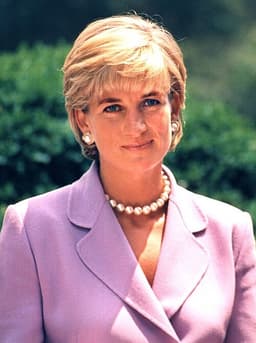
Imran Khan
Politician · Modern
54.8Total
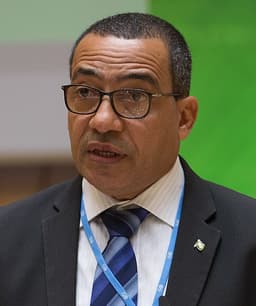
Patrice Trovoada
Politician · Modern
46.9Total
Basic Information
Born
1952
1962
Died
—
—
Era
Modern
Modern
Nationality
Pakistan
Sao Tome
Occupation
Politician
Politician
Civilization
Indian
Other
Score Comparison
Military (10%)
42.1
46.1
Political (20%)
54.7
68.0
Influence (20%)
61.0
47.9
Legacy (20%)
45.0
39.2
Leadership (15%)
65.7
40.0
Strategy (15%)
60.0
43.0
TOTAL
54.8
46.9
Imran Khan — Complete Timeline
1992 AD
Captained Pakistan to Cricket World Cup VictoryCultural◆ Major
Imran Khan captained the Pakistan national cricket team to victory in the 1992 Cricket World Cup, defeating England in the final. This was Pakistan's first World Cup win and a defining moment in its sporting history.
Cricket World CupSportsNational Pride
Impact: nationalconstructive
1996 AD
Founded the Pakistan Tehreek-e-Insaf (PTI) PartyPolitical Action◆ Major
Imran Khan founded the Pakistan Tehreek-e-Insaf (PTI) political party, advocating for justice, anti-corruption, and welfare state. The party initially struggled to gain traction but later became a major force.
PTIPolitical PartyAnti-Corruption
Impact: nationalconstructive
2018 AD
Elected Prime Minister of PakistanPolitical Action
Imran Khan led PTI to victory in the 2018 general election and became Prime Minister of Pakistan. His government focused on anti-corruption, economic reforms, and social welfare programs.
Prime MinisterElection VictoryAnti-Corruption
Impact: nationalconstructive
2022 AD
Ousted by No-Confidence VotePolitical Action◆ Major
Imran Khan was removed from office through a no-confidence vote in the National Assembly, losing his majority after defections. He became the first Pakistani prime minister to be ousted by such a vote.
No-Confidence VoteOusterPolitical Crisis
Impact: nationaldestructive
2023 AD
Arrested on Corruption ChargesPolitical Action◆ Major
Imran Khan was arrested on corruption charges, sparking nationwide protests by his supporters. His arrest deepened political polarization and raised questions about judicial independence.
ArrestCorruption ChargesProtests
Impact: nationaldestructive
Patrice Trovoada — Complete Timeline
2008 AD
Appointed Prime Minister of São Tomé and PríncipePolitical Action
Patrice Trovoada, son of former president Miguel Trovoada, was appointed Prime Minister by President Fradique de Menezes. His first term was short-lived due to a no-confidence vote.
AppointmentGovernmentSão Tomé and Príncipe
Impact: national
2010 AD
Returned as Prime MinisterPolitical Action◆ Major
Trovoada's party won the parliamentary elections, and he became Prime Minister again. He served until 2012, implementing economic reforms and facing political instability.
ElectionGovernmentSão Tomé and Príncipe
Impact: nationalconstructive
2014 AD
Third Term as Prime MinisterPolitical Action
Trovoada won a third term as Prime Minister after his party secured a majority in parliament. His government focused on infrastructure and attracting foreign investment.
ElectionGovernmentSão Tomé and Príncipe
Impact: nationalconstructive
Expert Analysis
Origins
Imran Khan was born on October 5, 1952, in Lahore, Pakistan, into a middle-class family of Pashtun origin. He studied at Aitchison College and later at the Royal Grammar School, Worcester, before attending Keble College, Oxford, where he read Philosophy, Politics, and Economics. His early life was marked by a privileged education and a passion for cricket. In contrast, Patrice Trovoada was born on March 18, 1962, in Libreville, Gabon, while his father, Miguel Trovoada, was in exile. He grew up in São Tomé and Príncipe after the family returned, and studied law at the University of Lisbon. His political lineage—his father was the first president of São Tomé and Príncipe—shaped his early exposure to governance.
Rise to Power
Imran Khan rose to fame as a cricketer, captaining Pakistan to its first Cricket World Cup victory in 1992. After retiring, he founded the Pakistan Tehreek-e-Insaf (PTI) in 1996, advocating for anti-corruption and justice. PTI initially struggled but gained momentum after the 2009 lawyers' movement. In the 2018 general election, PTI won 149 seats, and Khan became Prime Minister on August 18, 2018. Patrice Trovoada entered politics through the Independent Democratic Action (ADI) party, founded by his father. He was first appointed Prime Minister in 2008 by President Fradique de Menezes, but his government fell after a no-confidence vote. He returned to power after ADI won the 2010 parliamentary elections, serving until 2012. He secured a third term in 2014, leading a majority government.
Leadership & Governance
Imran Khan's leadership style was populist and confrontational. He focused on anti-corruption, launching the National Accountability Bureau (NAB) to prosecute politicians and bureaucrats. His economic policies included austerity measures and a drive for self-reliance, but inflation and debt rose. He also introduced the Ehsaas program for social welfare. In foreign policy, he maintained close ties with China and Saudi Arabia, while criticizing the US drone strikes. Patrice Trovoada governed with a more pragmatic approach, emphasizing infrastructure development and attracting foreign investment, particularly in oil exploration. His tenure saw the construction of roads and airports, but economic growth remained modest due to the country's small size and dependence on aid. Trovoada's political score of 68.0 reflects his ability to navigate coalition politics, while Khan's 54.7 indicates a more polarized approach.
Triumph & Tragedy
Imran Khan's greatest triumph was leading Pakistan to World Cup victory in 1992, a moment of national pride. As PM, his signing of the China-Pakistan Economic Corridor (CPEC) agreements boosted infrastructure. His tragedy came in April 2022 when he was ousted by a no-confidence vote, becoming the first Pakistani PM to be removed that way. He was later arrested in 2023 on corruption charges, sparking violent protests. Patrice Trovoada's success lies in winning three terms as PM in a volatile democratic environment, achieving a political score of 68.0. However, his legacy is marred by allegations of corruption, including involvement in the 2016 'Panama Papers' scandal. His failure to diversify the economy beyond oil and cocoa left São Tomé vulnerable to external shocks.
Character & Destiny
Imran Khan is charismatic and determined, but also impulsive and confrontational. His cricket background instilled discipline and a win-at-all-costs attitude, which translated into his political style. He often clashed with the military and opposition, leading to his downfall. Patrice Trovoada is more cautious and diplomatic, shaped by his father's political experience. He focused on stability and incremental progress, but lacked the vision to transform his nation. Khan's leadership score (65.7) exceeds Trovoada's (40.0), reflecting his ability to inspire mass movements, while Trovoada's strategy score (43.0) shows a more reactive approach.
Legacy
Imran Khan's legacy is dual: as a cricket icon and as a polarizing politician. He changed Pakistan's political landscape by mobilizing the urban middle class and youth, but his governance failures and confrontational style left a mixed record. His anti-corruption drive, though popular, was seen as selective. Patrice Trovoada's legacy is that of a durable but unremarkable leader in a small island nation. He helped maintain democratic stability, but his impact on development was limited. In terms of influence, Khan scored 61.0 against Trovoada's 47.9, reflecting his global recognition.
Conclusion
Imran Khan had a greater impact than Patrice Trovoada, despite his lower political score (54.7 vs 68.0). Khan's total score of 54.8 outweighs Trovoada's 46.9 by 7.9 points, driven by higher influence, leadership, and strategy. Khan's ability to inspire millions and alter Pakistan's political discourse is unmatched. Trovoada, while a skilled politician, operated on a smaller stage and left a less transformative legacy. Therefore, Imran Khan emerges as the more consequential figure.
Rankings
🥇
Imran KhanLeader
Mil: 42.1Pol: 54.7Inf: 61.0
54.8
🥈
Patrice Trovoada
Mil: 46.1Pol: 68.0Inf: 47.9
46.9
+7.9 behind
How This Comparison Works
Algorithm
Each figure is scored on 6 dimensions (0—100 scale) based on structured historical data: Military (10%), Political (20%), Influence (20%), Legacy (20%), Leadership (15%), Strategy (15%). The weighted total produces the final ranking.
Data Sources
Scores are computed from structured sub-indicators in the database. Scale factors adjust for era (Ancient ×0.85, Modern ×1.0) and civilization size (Eastern ×1.05, Other ×0.80) to account for differences in population and military scale.
Maximum 3 Figures
Comparisons are limited to 2—3 figures to ensure readability and statistical meaningfulness.
Error Margins
±5 points per dimension — Sub-scores are derived from historical records with inherent uncertainty. Two figures within 5 points on a dimension should be considered roughly equivalent in that area.
Total Score Accuracy
±3 points overall — The weighted combination of 6 dimensions produces a total score with approximately ±3 points of uncertainty. Differences of less than 3 points are not statistically significant— the figures are effectively tied.
Known Limitations
- Historical records are incomplete and uneven across civilizations
- Figures from oral-tradition societies may be underrepresented
- Occupation labels can misclassify multi-role figures
- Scores measure capability and impact, not moral character
- Quantitative scoring is a comparison tool, not absolute truth
Capability Radar
Military (10%) — Battles & Warfare
Battles
42
23
Win Rate
46
26
Expansion
51
26
Political (20%) — Governance & Reform
Reform
40
45
Diplomacy
50
55
Economy
35
40
Influence (20%) — Cultural & Global Reach
Cultural
55
10
Global
50
15
Legacy (20%) — Historical Impact
Historical
40
20
Longevity
30
15
Leadership (15%) — Power & Stability
Tenure
45
60
Stability
20
35
Strategy (15%) — Tactics & Innovation
Strategy
50
31
Tactics
58
32
Reform
56
34
Similar Comparisons
Comments & Discussion
No comments yet. Be the first to share your thoughts!