Loading...
Imran Khan vs Julius Caesar
Julius Caesar leads by 28.0 pts · 2 figures compared
…
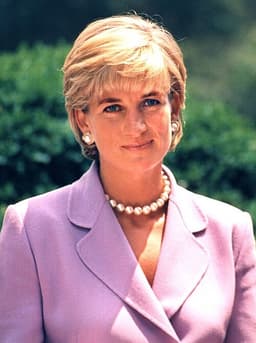
Imran Khan
Politician · Modern
54.8Total

Julius Caesar
General · Ancient
82.8Total
Basic Information
Born
1952
-100
Died
—
-44
Era
Modern
Ancient
Nationality
Pakistan
Roman Republic
Occupation
Politician
General
Civilization
Indian
Western
Score Comparison
Military (10%)
42.1
88.0
Political (20%)
54.7
78.0
Influence (20%)
61.0
85.0
Legacy (20%)
45.0
82.0
Leadership (15%)
65.7
80.0
Strategy (15%)
60.0
85.0
TOTAL
54.8
82.8
Imran Khan — Complete Timeline
1992 AD
Captained Pakistan to Cricket World Cup VictoryCultural◆ Major
Imran Khan captained the Pakistan national cricket team to victory in the 1992 Cricket World Cup, defeating England in the final. This was Pakistan's first World Cup win and a defining moment in its sporting history.
Cricket World CupSportsNational Pride
Impact: nationalconstructive
1996 AD
Founded the Pakistan Tehreek-e-Insaf (PTI) PartyPolitical Action◆ Major
Imran Khan founded the Pakistan Tehreek-e-Insaf (PTI) political party, advocating for justice, anti-corruption, and welfare state. The party initially struggled to gain traction but later became a major force.
PTIPolitical PartyAnti-Corruption
Impact: nationalconstructive
2018 AD
Elected Prime Minister of PakistanPolitical Action
Imran Khan led PTI to victory in the 2018 general election and became Prime Minister of Pakistan. His government focused on anti-corruption, economic reforms, and social welfare programs.
Prime MinisterElection VictoryAnti-Corruption
Impact: nationalconstructive
2022 AD
Ousted by No-Confidence VotePolitical Action◆ Major
Imran Khan was removed from office through a no-confidence vote in the National Assembly, losing his majority after defections. He became the first Pakistani prime minister to be ousted by such a vote.
No-Confidence VoteOusterPolitical Crisis
Impact: nationaldestructive
2023 AD
Arrested on Corruption ChargesPolitical Action◆ Major
Imran Khan was arrested on corruption charges, sparking nationwide protests by his supporters. His arrest deepened political polarization and raised questions about judicial independence.
ArrestCorruption ChargesProtests
Impact: nationaldestructive
Julius Caesar — Complete Timeline
58 BC
Gallic WarsWar◆ Major
Caesar, as proconsul of Gaul, launched a series of campaigns that conquered all of Gaul (modern France, Belgium, and parts of Switzerland). He fought numerous battles, including against the Helvetii, the Belgae, and the Gallic chieftain Vercingetorix. The wars brought immense wealth and a loyal army to Caesar.
Gallic WarsConquestRoman Expansion
Impact: regional
49 BC
Crossing the RubiconPolitical Action◆ Major
Caesar led Legio XIII across the Rubicon River into Italy, defying the Roman Senate's order to disband his army. This act triggered a civil war against Pompey and the Optimates, ultimately leading to Caesar's dictatorship and the end of the Roman Republic.
Roman Civil WarEnd of RepublicPower Struggle
Impact: global
48 BC
Battle of PharsalusWar◆ Major
Caesar's outnumbered army defeated the larger forces of Pompey the Great at Pharsalus in Greece. Caesar's tactical use of a reserve line to counter Pompey's cavalry charge proved decisive. Pompey fled to Egypt, where he was assassinated, leaving Caesar as the undisputed master of the Roman world.
Roman Civil WarBattleDecisive Victory
Impact: regional
44 BC
Appointment as Dictator for LifePolitical Action◆ Major
The Roman Senate appointed Caesar dictator perpetuo (dictator for life), granting him unprecedented personal power. This move concentrated military, legislative, and judicial authority in one person, effectively ending the Roman Republic's traditional system of checks and balances and alarming many senators.
DictatorshipEnd of RepublicPower Consolidation
Impact: regionaldestructive
Assassination on the Ides of MarchPolitical Action◆ Major
A group of Roman senators, led by Marcus Junius Brutus and Gaius Cassius Longinus, stabbed Caesar to death at a meeting of the Senate in the Theatre of Pompey. The assassination was intended to restore the Republic, but instead triggered another civil war that led to the rise of the Roman Empire.
AssassinationRoman PoliticsEnd of Republic
Impact: globaldestructive
Expert Analysis
imran-khan-vs-julius-caesar
# The General and the Cricketer: Two Paths to Power
On a cold March morning in 44 BCE, Julius Caesar fell beneath the daggers of his closest allies in the Senate chamber of Rome. The man who had conquered Gaul, crossed the Rubicon, and remade the Republic died alone, his blood pooling on the marble floor. Nearly two thousand years later, in a very different world, Imran Khan stood before a roaring crowd in Lahore, a cricket bat raised high, having just led Pakistan to its first World Cup victory. One was a general who became a dictator; the other, a sportsman who became a prime minister. Both men sought to transform their nations, but their journeys—and their ends—could not have been more different.
Origins
Julius Caesar was born into the patrician class of the Roman Republic in 100 BCE, a time of violent political rivalries and crumbling traditions. His family, the Julii, claimed descent from the goddess Venus, but they were not wealthy. Caesar’s childhood was shaped by the civil wars of Marius and Sulla, and he learned early that survival in Rome required cunning, ambition, and a willingness to gamble. He was educated in rhetoric, philosophy, and military tactics—the tools of a Roman statesman.
Imran Khan entered the world in 1952 in Lahore, Pakistan, a nation born just five years earlier from the partition of India. His family was Pashtun, with a tradition of service and education; his father was a civil engineer, and his mother a devout Muslim. Unlike Caesar, Khan’s early life was not defined by war but by cricket—a sport that, in Pakistan, was a national obsession. He studied at Oxford, played for the national team, and by the 1980s had become one of the most famous cricketers in the world. Where Caesar inherited a world of swords and senates, Khan inherited one of cricket pitches and colonial legacies.
Rise to Power
Caesar’s rise was a masterclass in calculated audacity. He served as a military tribune, then quaestor in Spain, and later as aedile and pontifex maximus. His great breakthrough came in 58 BCE, when he was appointed governor of Gaul. Over eight years of brutal campaigns, he conquered the vast region, amassing immense wealth, a loyal army, and a reputation for both cruelty and brilliance. When the Senate ordered him to disband his forces, he made his choice: in 49 BCE, he crossed the Rubicon River into Italy, triggering a civil war. “The die is cast,” he reportedly said. Within four years, he defeated his rivals, including Pompey the Great, and declared himself dictator for life.
Imran Khan’s path was slower and more uncertain. After retiring from cricket in 1992, he founded the Pakistan Tehreek-e-Insaf (PTI) party in 1996, campaigning for justice, anti-corruption, and a welfare state. For years, PTI was a marginal force, winning only a single seat in the 2002 elections. Khan’s charisma and his image as an honest outsider slowly built a following, but it was not until 2018 that he led PTI to a decisive victory, becoming prime minister. His rise was not a military coup but a democratic one—a testament to his patience and his ability to connect with a populace weary of dynastic politics.
Leadership & Governance
Caesar’s rule was transformative and ruthless. As dictator, he reformed the calendar (creating the Julian calendar), granted citizenship to many provincials, launched massive building projects, and centralized state power. His military genius was undeniable—he wrote his own commentaries on the Gallic Wars, which remain classics of strategy. Yet his governance was also autocratic: he suppressed dissent, packed the Senate with his supporters, and accepted honors that bordered on divine. He governed as a king in all but name, which proved his undoing.
Imran Khan’s premiership was more constrained. He inherited a Pakistan struggling with debt, corruption, and a weak economy. His government focused on social welfare programs, such as the Ehsaas initiative for the poor, and attempted to crack down on corruption. He also pursued a foreign policy that balanced relations with China, the United States, and Saudi Arabia. But his leadership was often chaotic—his anti-corruption drive was seen by critics as selective, and his economic policies failed to stabilize the currency or attract investment. Unlike Caesar, Khan did not command an army; he had to navigate a fractious coalition, a powerful military establishment, and an opposition that never accepted his mandate.
Triumph & Tragedy
Caesar’s greatest triumph was the conquest of Gaul, which made him fabulously wealthy and gave him the army that would win the civil war. His tragedy was the Ides of March: on March 15, 44 BCE, a group of senators led by Brutus and Cassius stabbed him to death, believing they were saving the Republic. Instead, they plunged Rome into another civil war, and the Republic died anyway. Caesar’s assassination was both a personal tragedy and a historical irony—he had sought to save Rome from chaos, but his methods ensured it.
Imran Khan’s triumph was the 1992 Cricket World Cup victory, a moment of national pride that united a fractured country. His tragedy came in 2022, when he was ousted by a no-confidence vote in the National Assembly, losing his majority after defections from his own coalition. The following year, in 2023, he was arrested on corruption charges, sparking nationwide protests. Where Caesar fell to daggers, Khan fell to ballots and handcuffs—a modern tragedy of democratic fragility.
Character & Destiny
Caesar was a man of immense self-confidence, ambition, and calculation. He believed in his own destiny, and his decisions were driven by a relentless desire for glory and power. He was also generous to his soldiers and forgiving to his enemies—until they threatened him. His character made him a brilliant general and a poor politician in the long run, because he underestimated the depth of Republican sentiment among the elite.
Imran Khan is a man of conviction, charisma, and stubbornness. His cricket career taught him discipline and the value of teamwork, but his political career revealed a tendency toward confrontation and conspiracy theories. He genuinely believes in a vision of a just, independent Pakistan, but his inability to compromise and his reliance on populist rhetoric have alienated many allies. His character made him a beloved leader to millions but also a polarizing figure who could not hold power.
Legacy
Caesar’s legacy is monumental. His name became synonymous with imperial rule—the word “kaiser” and “tsar” derive from it. His reforms laid the foundation for the Roman Empire, which endured for centuries. He is remembered as both a tyrant and a visionary, a man who destroyed a republic and created an empire. History judges him as one of the greatest military minds and political forces of the ancient world.
Imran Khan’s legacy is still unfolding. He remains a popular figure in Pakistan, especially among the youth, but his tenure as prime minister is widely seen as a failure in governance. His arrest and ongoing legal battles have made him a symbol of resistance against the establishment, but he has not yet achieved the transformative change he promised. He may be remembered as a great cricketer who tried to change his country but was undone by the very system he sought to reform.
Conclusion
Two men, two worlds. Caesar crossed a river and changed history; Khan crossed a cricket pitch and entered politics. One built an empire with swords and laws; the other built a movement with speeches and hope. Both sought to reshape their nations, and both were destroyed by the forces they tried to control. The general fell to his peers in the Senate; the cricketer fell to a vote in the assembly. In the end, the question remains the same: can one man truly change the course of history, or does history always have the last word? Caesar’s ghost still haunts Rome; Khan’s fate will be decided by the ballot box and the courts. The stage is different, but the drama is eternal.
Rankings
🥇
Julius CaesarLeader
Mil: 88.0Pol: 78.0Inf: 85.0
82.8
🥈
Imran Khan
Mil: 42.1Pol: 54.7Inf: 61.0
54.8
+28.0 behind
How This Comparison Works
Algorithm
Each figure is scored on 6 dimensions (0—100 scale) based on structured historical data: Military (10%), Political (20%), Influence (20%), Legacy (20%), Leadership (15%), Strategy (15%). The weighted total produces the final ranking.
Data Sources
Scores are computed from structured sub-indicators in the database. Scale factors adjust for era (Ancient ×0.85, Modern ×1.0) and civilization size (Eastern ×1.05, Other ×0.80) to account for differences in population and military scale.
Maximum 3 Figures
Comparisons are limited to 2—3 figures to ensure readability and statistical meaningfulness.
Error Margins
±5 points per dimension — Sub-scores are derived from historical records with inherent uncertainty. Two figures within 5 points on a dimension should be considered roughly equivalent in that area.
Total Score Accuracy
±3 points overall — The weighted combination of 6 dimensions produces a total score with approximately ±3 points of uncertainty. Differences of less than 3 points are not statistically significant— the figures are effectively tied.
Known Limitations
- Historical records are incomplete and uneven across civilizations
- Figures from oral-tradition societies may be underrepresented
- Occupation labels can misclassify multi-role figures
- Scores measure capability and impact, not moral character
- Quantitative scoring is a comparison tool, not absolute truth
Capability Radar
Military (10%) — Battles & Warfare
Battles
42
95
Win Rate
46
92
Expansion
51
97
Political (20%) — Governance & Reform
Reform
40
90
Diplomacy
50
85
Economy
35
82
Influence (20%) — Cultural & Global Reach
Cultural
55
88
Global
50
94
Legacy (20%) — Historical Impact
Historical
40
95
Longevity
30
96
Leadership (15%) — Power & Stability
Tenure
45
75
Stability
20
60
Strategy (15%) — Tactics & Innovation
Strategy
50
94
Tactics
58
96
Reform
56
88
Similar Comparisons
Comments & Discussion
No comments yet. Be the first to share your thoughts!