Loading...
Imran Khan vs Manuel Pinto da Costa
Imran Khan leads by 7.9 pts · 2 figures compared
…
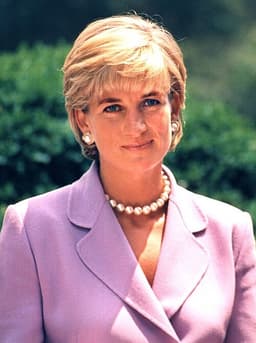
Imran Khan
Politician · Modern
54.8Total
Manuel Pinto da Costa
Politician · Modern
46.9Total
Basic Information
Born
1952
1937
Died
—
—
Era
Modern
Modern
Nationality
Pakistan
Sao Tome
Occupation
Politician
Politician
Civilization
Indian
Other
Score Comparison
Military (10%)
42.1
50.0
Political (20%)
54.7
48.0
Influence (20%)
61.0
49.4
Legacy (20%)
45.0
41.7
Leadership (15%)
65.7
53.2
Strategy (15%)
60.0
39.0
TOTAL
54.8
46.9
Imran Khan — Complete Timeline
1992 AD
Captained Pakistan to Cricket World Cup VictoryCultural◆ Major
Imran Khan captained the Pakistan national cricket team to victory in the 1992 Cricket World Cup, defeating England in the final. This was Pakistan's first World Cup win and a defining moment in its sporting history.
Cricket World CupSportsNational Pride
Impact: nationalconstructive
1996 AD
Founded the Pakistan Tehreek-e-Insaf (PTI) PartyPolitical Action◆ Major
Imran Khan founded the Pakistan Tehreek-e-Insaf (PTI) political party, advocating for justice, anti-corruption, and welfare state. The party initially struggled to gain traction but later became a major force.
PTIPolitical PartyAnti-Corruption
Impact: nationalconstructive
2018 AD
Elected Prime Minister of PakistanPolitical Action
Imran Khan led PTI to victory in the 2018 general election and became Prime Minister of Pakistan. His government focused on anti-corruption, economic reforms, and social welfare programs.
Prime MinisterElection VictoryAnti-Corruption
Impact: nationalconstructive
2022 AD
Ousted by No-Confidence VotePolitical Action◆ Major
Imran Khan was removed from office through a no-confidence vote in the National Assembly, losing his majority after defections. He became the first Pakistani prime minister to be ousted by such a vote.
No-Confidence VoteOusterPolitical Crisis
Impact: nationaldestructive
2023 AD
Arrested on Corruption ChargesPolitical Action◆ Major
Imran Khan was arrested on corruption charges, sparking nationwide protests by his supporters. His arrest deepened political polarization and raised questions about judicial independence.
ArrestCorruption ChargesProtests
Impact: nationaldestructive
Manuel Pinto da Costa — Complete Timeline
1975 AD
Became First President of São Tomé and PríncipePolitical Action
Pinto da Costa was elected as the first president of the newly independent S
IndependencePresidencySão Tomé and Príncipe
Impact: nationalconstructive
1990 AD
Transitioned to Multiparty DemocracyReform◆ Major
Under pressure from internal and external forces, Pinto da Costa oversaw the transition from a one-party state to a multiparty democracy. This led to the first free elections in 1991, which he lost.
DemocratizationPolitical ReformSão Tomé and Príncipe
Impact: nationalconstructive
2011 AD
Returned to PresidencyPolitical Action◆ Major
Pinto da Costa won the presidential election as an independent candidate, returning to power after 20 years. He served one term until 2016, focusing on economic development and political stability.
ElectionPresidencySão Tomé and Príncipe
Impact: nationalconstructive
Expert Analysis
Origins
Imran Khan was born on October 5, 1952, in Lahore, Pakistan, into a wealthy Pashtun family. He studied at Aitchison College and later at the Royal Grammar School in Worcester, England, before attending Keble College, Oxford, where he studied Philosophy, Politics and Economics. His early life was marked by privilege and exposure to both Pakistani and British cultures.
Manuel Pinto da Costa was born on August 5, 1937, in Água Grande, São Tomé and Príncipe, then a Portuguese colony. He studied at the University of Lisbon, where he became involved in anti-colonial movements. His background was more modest, shaped by the struggle for independence and Marxist ideology.
Rise to Power
Imran Khan rose to fame as a cricketer, captaining Pakistan to its first World Cup victory in 1992. He leveraged his popularity to enter politics, founding the Pakistan Tehreek-e-Insaf (PTI) in 1996. His rise was gradual; PTI initially won only one seat in the 2002 elections. The turning point came in 2018, when PTI won the general election, and Khan became Prime Minister on August 18, 2018. His campaign focused on anti-corruption and a welfare state.
Manuel Pinto da Costa was a key figure in the independence movement of São Tomé and Príncipe. After the Carnation Revolution in Portugal in 1974, the colony moved toward independence. Pinto da Costa became the first president on July 12, 1975, after the country gained independence. He led the only legal party, the Movement for the Liberation of São Tomé and Príncipe (MLSTP), establishing a one-party state.
Leadership & Governance
Imran Khan's leadership style was populist and confrontational. He promised a "Naya Pakistan" (New Pakistan), focusing on anti-corruption drives, economic reforms, and social welfare programs like the Ehsaas program. However, his governance faced criticism for economic mismanagement, inflation, and a confrontational stance with the military and opposition. His political score of 54.7 reflects mixed results: he passed some reforms but struggled with coalition politics and a weak economy.
Manuel Pinto da Costa governed as a Marxist-Leninist, nationalizing key industries and establishing a command economy. His political score of 48.0 indicates limited effectiveness. He maintained power through a single-party system until 1990, when he transitioned to multiparty democracy under pressure. His strategy score of 39.0 suggests poor economic outcomes; the country remained heavily dependent on foreign aid. However, he peacefully ceded power after losing the 1991 election, setting a precedent for democratic transitions.
Triumph & Tragedy
Imran Khan's greatest triumph was leading Pakistan to World Cup victory in 1992, a unifying moment for the nation. As PM, his Ehsaas program provided social safety nets. His greatest tragedy was his removal via a no-confidence vote in April 2022, becoming the first Pakistani PM ousted this way. He was later arrested on corruption charges in 2023, sparking protests and deepening political instability. His leadership score of 65.7 reflects his ability to mobilize supporters but also his failure to maintain power.
Manuel Pinto da Costa's triumph was leading his country to independence and later overseeing a peaceful transition to democracy. His tragedy was the economic stagnation under his rule: São Tomé remained one of the poorest countries in Africa. The one-party state suppressed dissent, and his return to presidency in 2011 was marked by limited progress. His military score of 50.0 is nominal, as São Tomé has no significant military.
Character & Destiny
Imran Khan is charismatic and determined, known for his discipline as a cricketer and his persistence in politics. However, his confrontational style alienated allies and institutions. His character shaped his destiny: he rose to the top but also faced downfall due to his inability to compromise. Historical assessments often cite his tenacity but also his polarizing nature.
Manuel Pinto da Costa is pragmatic and resilient. He adapted from Marxist leader to democratic statesman, showing flexibility. His character allowed him to survive politically, but his lack of economic vision limited his impact. He is remembered more as a founder than a reformer.
Legacy
Imran Khan's legacy is mixed. He transformed Pakistani politics by mobilizing youth and challenging the two-party system. His anti-corruption rhetoric influenced public discourse, but his economic policies did not deliver lasting growth. He scored 45.0 in legacy, reflecting his unfinished agenda. His cricket legacy remains iconic.
Manuel Pinto da Costa's legacy is foundational: he was the first president and helped shape the nation's identity. His transition to democracy is a positive mark, but the country's persistent poverty overshadows his tenure. His legacy score of 41.7 indicates limited lasting impact.
Conclusion
Imran Khan scores higher overall (54.8 vs 46.9), driven by his leadership (65.7) and influence (61.0). While Pinto da Costa's role as a founding father is significant, Khan's impact on a larger, more influential country and his ability to inspire millions through cricket and politics gives him greater impact. Khan's story of rise and fall is more consequential globally, despite his failures. Thus, Imran Khan had a greater impact.
Rankings
🥇
Imran KhanLeader
Mil: 42.1Pol: 54.7Inf: 61.0
54.8
🥈
Manuel Pinto da Costa
Mil: 50.0Pol: 48.0Inf: 49.4
46.9
+7.9 behind
How This Comparison Works
Algorithm
Each figure is scored on 6 dimensions (0—100 scale) based on structured historical data: Military (10%), Political (20%), Influence (20%), Legacy (20%), Leadership (15%), Strategy (15%). The weighted total produces the final ranking.
Data Sources
Scores are computed from structured sub-indicators in the database. Scale factors adjust for era (Ancient ×0.85, Modern ×1.0) and civilization size (Eastern ×1.05, Other ×0.80) to account for differences in population and military scale.
Maximum 3 Figures
Comparisons are limited to 2—3 figures to ensure readability and statistical meaningfulness.
Error Margins
±5 points per dimension — Sub-scores are derived from historical records with inherent uncertainty. Two figures within 5 points on a dimension should be considered roughly equivalent in that area.
Total Score Accuracy
±3 points overall — The weighted combination of 6 dimensions produces a total score with approximately ±3 points of uncertainty. Differences of less than 3 points are not statistically significant— the figures are effectively tied.
Known Limitations
- Historical records are incomplete and uneven across civilizations
- Figures from oral-tradition societies may be underrepresented
- Occupation labels can misclassify multi-role figures
- Scores measure capability and impact, not moral character
- Quantitative scoring is a comparison tool, not absolute truth
Capability Radar
Military (10%) — Battles & Warfare
Battles
42
21
Win Rate
46
24
Expansion
51
30
Political (20%) — Governance & Reform
Reform
40
40
Diplomacy
50
50
Economy
35
30
Influence (20%) — Cultural & Global Reach
Cultural
55
20
Global
50
15
Legacy (20%) — Historical Impact
Historical
40
30
Longevity
30
20
Leadership (15%) — Power & Stability
Tenure
45
65
Stability
20
35
Strategy (15%) — Tactics & Innovation
Strategy
50
32
Tactics
58
36
Reform
56
36
Similar Comparisons
Comments & Discussion
No comments yet. Be the first to share your thoughts!