Loading...
Imran Khan vs Mustafa Resid Pasha
Mustafa Resid Pasha leads by 3.9 pts · 2 figures compared
…
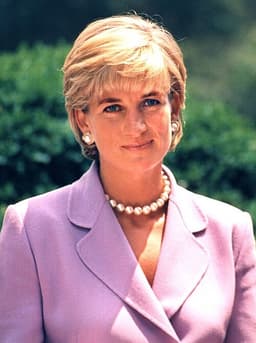
Imran Khan
Politician · Modern
54.8Total

Mustafa Resid Pasha
Politician · Modern
58.7Total
Basic Information
Born
1952
1800
Died
—
1858
Era
Modern
Modern
Nationality
Pakistan
Ottoman Empire
Occupation
Politician
Politician
Civilization
Indian
Middle Eastern
Score Comparison
Military (10%)
42.1
24.5
Political (20%)
54.7
62.7
Influence (20%)
61.0
82.0
Legacy (20%)
45.0
40.0
Leadership (15%)
65.7
80.0
Strategy (15%)
60.0
43.0
TOTAL
54.8
58.7
Imran Khan — Complete Timeline
1992 AD
Captained Pakistan to Cricket World Cup VictoryCultural◆ Major
Imran Khan captained the Pakistan national cricket team to victory in the 1992 Cricket World Cup, defeating England in the final. This was Pakistan's first World Cup win and a defining moment in its sporting history.
Cricket World CupSportsNational Pride
Impact: nationalconstructive
1996 AD
Founded the Pakistan Tehreek-e-Insaf (PTI) PartyPolitical Action◆ Major
Imran Khan founded the Pakistan Tehreek-e-Insaf (PTI) political party, advocating for justice, anti-corruption, and welfare state. The party initially struggled to gain traction but later became a major force.
PTIPolitical PartyAnti-Corruption
Impact: nationalconstructive
2018 AD
Elected Prime Minister of PakistanPolitical Action
Imran Khan led PTI to victory in the 2018 general election and became Prime Minister of Pakistan. His government focused on anti-corruption, economic reforms, and social welfare programs.
Prime MinisterElection VictoryAnti-Corruption
Impact: nationalconstructive
2022 AD
Ousted by No-Confidence VotePolitical Action◆ Major
Imran Khan was removed from office through a no-confidence vote in the National Assembly, losing his majority after defections. He became the first Pakistani prime minister to be ousted by such a vote.
No-Confidence VoteOusterPolitical Crisis
Impact: nationaldestructive
2023 AD
Arrested on Corruption ChargesPolitical Action◆ Major
Imran Khan was arrested on corruption charges, sparking nationwide protests by his supporters. His arrest deepened political polarization and raised questions about judicial independence.
ArrestCorruption ChargesProtests
Impact: nationaldestructive
Mustafa Resid Pasha — Complete Timeline
1839 AD
Proclamation of the Edict of GülhaneReform
As Foreign Minister, Mustafa Re
EdictTanzimatLegal Reform
Impact: nationalprogressive
1846 AD
Implementation of the Tanzimat ReformsReform◆ Major
During his multiple terms as Grand Vizier, Mustafa Re
ReformTanzimatLegal System
Impact: nationalconstructive
Appointment as Grand VizierPolitical Action◆ Major
Mustafa Reşid Pasha was appointed Grand Vizier for the first time in 1846. He had previously served as ambassador to London and Paris, where he absorbed Western ideas. His appointment marked the beginning of the Tanzimat reform era, which aimed to modernize the Ottoman Empire.
AppointmentTanzimatReform
Impact: nationalconstructive
1853 AD
Diplomatic Role in the Crimean WarPolitical Action◆ Major
Mustafa Reşid Pasha served as Foreign Minister during the Crimean War (1853-1856). He negotiated alliances with Britain and France, securing their military support against Russia. His diplomacy helped the Ottoman Empire emerge from the war with its territorial integrity preserved.
DiplomacyCrimean WarAlliance
Impact: regionalconstructive
1858 AD
Death in OfficePolitical Action
Mustafa Reşid Pasha died in 1858 while serving as Grand Vizier. His death marked the end of the first phase of the Tanzimat, but his reforms continued to influence Ottoman modernization efforts for decades.
DeathTanzimatOttoman Politics
Impact: national
Expert Analysis
Origins
Imran Khan was born on October 5, 1952, in Lahore, Pakistan, into a Pashtun family of modest means. He studied at Aitchison College and later at the Royal Grammar School, Worcester, and Keble College, Oxford, where he read Philosophy, Politics, and Economics. His early life was shaped by cricket, becoming a world-class fast bowler and captain. Mustafa Resid Pasha was born in 1800 in Istanbul, Ottoman Empire, into a bureaucratic family. He received a traditional Islamic education and entered the civil service under his patron, the reformist Sultan Mahmud II. His formative years were spent observing the decline of the Ottoman military and administrative systems.
Rise to Power
Imran Khan rose to fame as a cricketer, captaining Pakistan to its first World Cup victory in 1992. He leveraged this fame to enter politics, founding the Pakistan Tehreek-e-Insaf (PTI) in 1996. After years of marginal success, his anti-corruption message resonated with a disillusioned electorate, leading to a landmark victory in the 2018 general election. Mustafa Resid Pasha rose through diplomatic ranks, serving as ambassador to London and Paris, where he absorbed European ideas. In 1839, as Foreign Minister, he drafted the Edict of Gülhane, launching the Tanzimat reforms. His diplomatic skill secured alliances with Britain and France during the Crimean War, and he became Grand Vizier in 1846.
Leadership & Governance
Imran Khan's governance focused on anti-corruption, economic self-reliance, and social welfare. He launched programs like Ehsaas (poverty alleviation) and Sehat Sahulat (health insurance). However, his style was confrontational, often clashing with opposition and institutions. His economic policies faced challenges, with inflation and debt rising. Mustafa Resid Pasha led through reformist decrees, restructuring the military, legal system, and education. He introduced secular courts and equal rights for non-Muslims, though implementation was slow and met resistance from conservative elites. His leadership scored 80.0 versus Khan's 65.7, reflecting his sustained influence over decades.
Triumph & Tragedy
Imran Khan's greatest triumph was the 1992 World Cup victory, a unifying moment for Pakistan. Politically, his 2018 election win was a historic upset. His tragedy was his ouster in a no-confidence vote in 2022, followed by arrest on corruption charges, deepening political instability. Mustafa Resid Pasha's triumph was the Tanzimat, which modernized the Ottoman Empire and prolonged its life. He also successfully navigated the Crimean War, securing European support. His tragedy was that his reforms were incomplete and later reversed; he died in office in 1858, leaving a mixed legacy. Khan's political score is 54.7, while Resid Pasha's is 62.7.
Character & Destiny
Imran Khan is charismatic and determined, but also stubborn and polarizing. His cricket discipline translated into political tenacity, but his inability to compromise led to isolation. His arrest revealed the fragility of his movement. Mustafa Resid Pasha was pragmatic and patient, a diplomat who understood the need for gradual reform. His character allowed him to navigate the Ottoman court's intrigues, but his reliance on sultanic authority limited the depth of change. Scores: Leadership 65.7 vs 80.0, Strategy 60.0 vs 43.0.
Legacy
Imran Khan's legacy is mixed: he inspired a new political consciousness in Pakistan but failed to deliver systemic change. His anti-corruption rhetoric endures, but his tenure is seen as a missed opportunity. Mustafa Resid Pasha's Tanzimat reforms laid the groundwork for modern Turkey, influencing the later Young Turk and Kemalist movements. His influence score of 82.0 reflects his lasting impact on Ottoman and Turkish history. Khan's legacy score is 45.0, while Resid Pasha's is 40.0, but the latter's reforms had a deeper structural effect.
Conclusion
Mustafa Resid Pasha had greater impact due to his role in the Tanzimat, which fundamentally reshaped the Ottoman Empire and set the stage for modern Turkey. Despite a lower total score (58.7 vs 54.8), his reforms were more comprehensive and enduring. Imran Khan's impact, while significant in Pakistan's political narrative, was shorter-lived and less transformative. The architect of Ottoman modernization outranks the cricketer-turned-PM in historical significance.
Rankings
🥇
Mustafa Resid PashaLeader
Mil: 24.5Pol: 62.7Inf: 82.0
58.7
🥈
Imran Khan
Mil: 42.1Pol: 54.7Inf: 61.0
54.8
+3.9 behind
How This Comparison Works
Algorithm
Each figure is scored on 6 dimensions (0—100 scale) based on structured historical data: Military (10%), Political (20%), Influence (20%), Legacy (20%), Leadership (15%), Strategy (15%). The weighted total produces the final ranking.
Data Sources
Scores are computed from structured sub-indicators in the database. Scale factors adjust for era (Ancient ×0.85, Modern ×1.0) and civilization size (Eastern ×1.05, Other ×0.80) to account for differences in population and military scale.
Maximum 3 Figures
Comparisons are limited to 2—3 figures to ensure readability and statistical meaningfulness.
Error Margins
±5 points per dimension — Sub-scores are derived from historical records with inherent uncertainty. Two figures within 5 points on a dimension should be considered roughly equivalent in that area.
Total Score Accuracy
±3 points overall — The weighted combination of 6 dimensions produces a total score with approximately ±3 points of uncertainty. Differences of less than 3 points are not statistically significant— the figures are effectively tied.
Known Limitations
- Historical records are incomplete and uneven across civilizations
- Figures from oral-tradition societies may be underrepresented
- Occupation labels can misclassify multi-role figures
- Scores measure capability and impact, not moral character
- Quantitative scoring is a comparison tool, not absolute truth
Capability Radar
Military (10%) — Battles & Warfare
Battles
42
19
Win Rate
46
26
Expansion
51
25
Political (20%) — Governance & Reform
Reform
40
85
Diplomacy
50
80
Economy
35
70
Influence (20%) — Cultural & Global Reach
Cultural
55
65
Global
50
65
Legacy (20%) — Historical Impact
Historical
40
75
Longevity
30
70
Leadership (15%) — Power & Stability
Tenure
45
75
Stability
20
60
Strategy (15%) — Tactics & Innovation
Strategy
50
29
Tactics
58
35
Reform
56
36
Similar Comparisons
Comments & Discussion
No comments yet. Be the first to share your thoughts!