Loading...
Imad-ul-Mulk vs Li Cui
Imad-ul-Mulk leads by 3.6 pts · 2 figures compared
…

Imad-ul-Mulk
Emperor · Medieval
43.3Total
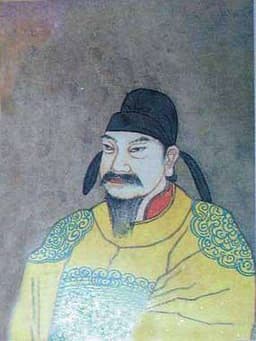
Li Cui
Emperor · Medieval
39.7Total
Basic Information
Born
1490
833
Died
1546
873
Era
Medieval
Medieval
Nationality
India
China
Occupation
Emperor
Emperor
Civilization
Indian
Eastern
Score Comparison
Military (10%)
50.0
21.2
Political (20%)
32.2
25.0
Influence (20%)
49.4
47.9
Legacy (20%)
39.2
38.3
Leadership (15%)
55.3
55.3
Strategy (15%)
30.3
39.6
TOTAL
43.3
39.7
Imad-ul-Mulk — Complete Timeline
1490 AD
Founded Imad Shahi DynastyPolitical Action◆ Major
Imad-ul-Mulk, a Bahmani governor, declared independence from the declining Bahmani Sultanate and established the Imad Shahi dynasty in Berar. This act was part of the fragmentation of the Bahmani kingdom into the Deccan sultanates.
Dynasty FoundingBerar SultanateBahmani Successor
Impact: regionalconstructive
1495 AD
Consolidation of BerarPolitical Action
Imad-ul-Mulk consolidated his control over the Berar region, establishing a stable administration and fortifying key strongholds. He maintained Berar's independence through diplomacy and military preparedness against neighboring sultanates.
ConsolidationBerar SultanateAdministration
Impact: regionalconstructive
1500 AD
Alliance with AhmadnagarPolitical Action
Imad-ul-Mulk formed an alliance with Ahmadnagar's Nizam Shahi dynasty against the Vijayanagara Empire and other Deccan rivals. This alliance helped secure Berar's borders and allowed for coordinated military campaigns.
AllianceDeccan PoliticsDiplomacy
Impact: regionalconstructive
Li Cui — Complete Timeline
868 AD
Suppressed the Pang Xun RebellionWar◆ Major
Li Cui (Tang Yizong) ordered the suppression of the rebellion led by Pang Xun, a mutineer from the southern frontier. The rebellion was crushed after a year of fighting, but it exposed the weakening of Tang military control and foreshadowed larger revolts.
RebellionTang DynastyMilitary Campaign
Impact: nationaldestructive
870 AD
Ignored Growing Unrest and FaminePolitical Action◆ Major
During the later years of Li Cui's reign, widespread famine and banditry erupted across the empire. He failed to implement effective relief measures or military reforms, allowing conditions to worsen that would lead to the Huang Chao Rebellion after his death.
NeglectFamineDecline
Impact: nationaldestructive
Expert Analysis
Origins
**Imad-ul-Mulk** was born as a Bahmani noble, likely of Hindu origin converted to Islam, in the 15th century. He rose through the ranks of the Bahmani Sultanate, serving as a governor in the Berar region. His background was military-administrative, and he capitalized on the weakening central authority of the Bahmani Sultanate after the reign of Mahmud Gawan.
**Li Cui**, known posthumously as Tang Yizong, was born in 833 AD as the eldest son of Emperor Xuānzong of Tang. He received a Confucian education and was designated heir apparent. His early life was sheltered within the palace, and he ascended the throne in 859 AD after his father's death.
Rise to Power
**Imad-ul-Mulk** declared independence from the Bahmani Sultanate in 1490, following the pattern of other Deccan governors. He established the Imad Shahi dynasty in Berar, with its capital at Ellichpur. His rise was facilitated by the fragmentation of the Bahmani state after the murder of Mahmud Gawan and the subsequent power struggles among the Deccan nobles.
**Li Cui** became emperor at age 26 upon his father's death. His succession was smooth, but he inherited an empire already facing fiscal strain and military challenges on the frontiers. His reign began with a brief period of competent rule, but he soon became known for his indulgence in luxury and neglect of state affairs.
Leadership & Governance
**Imad-ul-Mulk** governed Berar with a focus on stability and fortification. He maintained a small but effective army, secured the borders against neighboring sultanates and Vijayanagara, and formed alliances, notably with Ahmadnagar's Nizam Shahi dynasty. His political score of 32.2 reflects his limited scope as a regional ruler, while his leadership score of 55.3 indicates competent but unexceptional governance.
**Li Cui** ruled over the vast Tang Empire but failed to address systemic problems. He ignored growing unrest and famine, leading to the Pang Xun Rebellion (868-869), which he eventually suppressed but at great cost. His political score of 25.0 reflects his ineffective governance, while his leadership score of 55.3 is similar to Imad-ul-Mulk's, but his strategy score of 39.6 shows some military competence in crushing the rebellion.
Triumph & Tragedy
**Imad-ul-Mulk's** greatest triumph was founding the Imad Shahi dynasty, which lasted until 1574 when it was annexed by Ahmadnagar. His consolidation of Berar provided stability for decades. His tragedy was the dynasty's ultimate absorption by a rival, and his failure to expand beyond Berar, limiting his legacy.
**Li Cui's** triumph was the suppression of the Pang Xun Rebellion, which could have toppled the dynasty earlier. His tragedy was his indifference to the suffering of his people: famines and banditry ravaged the empire, and he died in 873 AD, leaving a weakened state that soon collapsed into the Huang Chao rebellion.
Character & Destiny
**Imad-ul-Mulk** was pragmatic and cautious, focusing on survival rather than expansion. His decision to ally with Ahmadnagar preserved Berar but also made it dependent. His character suited a regional potentate in a fragmented era.
**Li Cui** was pleasure-seeking and disengaged from governance. Historical assessments describe him as incompetent and negligent. His character directly led to the decline of the Tang dynasty, as he failed to implement relief measures or reform the bureaucracy.
Legacy
**Imad-ul-Mulk's** legacy is the Imad Shahi dynasty, a minor but notable part of Deccan history. His line ruled Berar for 84 years, and his coins and architecture left a mark. However, his influence score of 49.4 is modest on a global scale.
**Li Cui's** legacy is negative: he is remembered as one of the worst Tang emperors, whose reign hastened the dynasty's collapse. His failure contributed to the massive Huang Chao Rebellion that followed his death. His influence score of 47.9 reflects the impact of his failures, but his legacy score of 38.3 is low due to his poor reputation.
Conclusion
Imad-ul-Mulk, with a total score of 43.3, had a more positive impact than Li Cui's 39.7. Imad-ul-Mulk successfully founded a dynasty and maintained stability in Berar, while Li Cui's neglect accelerated the decline of the Tang Empire. Although Li Cui ruled a larger realm, his failures outweigh his successes. Imad-ul-Mulk's effective, if limited, leadership contrasts with Li Cui's disastrous inaction. Therefore, Imad-ul-Mulk has greater historical impact.
Rankings
🥇
Imad-ul-MulkLeader
Mil: 50.0Pol: 32.2Inf: 49.4
43.3
🥈
Li Cui
Mil: 21.2Pol: 25.0Inf: 47.9
39.7
+3.6 behind
How This Comparison Works
Algorithm
Each figure is scored on 6 dimensions (0—100 scale) based on structured historical data: Military (10%), Political (20%), Influence (20%), Legacy (20%), Leadership (15%), Strategy (15%). The weighted total produces the final ranking.
Data Sources
Scores are computed from structured sub-indicators in the database. Scale factors adjust for era (Ancient ×0.85, Modern ×1.0) and civilization size (Eastern ×1.05, Other ×0.80) to account for differences in population and military scale.
Maximum 3 Figures
Comparisons are limited to 2—3 figures to ensure readability and statistical meaningfulness.
Error Margins
±5 points per dimension — Sub-scores are derived from historical records with inherent uncertainty. Two figures within 5 points on a dimension should be considered roughly equivalent in that area.
Total Score Accuracy
±3 points overall — The weighted combination of 6 dimensions produces a total score with approximately ±3 points of uncertainty. Differences of less than 3 points are not statistically significant— the figures are effectively tied.
Known Limitations
- Historical records are incomplete and uneven across civilizations
- Figures from oral-tradition societies may be underrepresented
- Occupation labels can misclassify multi-role figures
- Scores measure capability and impact, not moral character
- Quantitative scoring is a comparison tool, not absolute truth
Capability Radar
Military (10%) — Battles & Warfare
Battles
25
15
Win Rate
20
10
Expansion
30
5
Political (20%) — Governance & Reform
Reform
20
20
Diplomacy
25
20
Economy
20
15
Influence (20%) — Cultural & Global Reach
Cultural
15
15
Global
10
10
Legacy (20%) — Historical Impact
Historical
20
20
Longevity
15
10
Leadership (15%) — Power & Stability
Tenure
30
60
Stability
20
10
Strategy (15%) — Tactics & Innovation
Strategy
20
10
Tactics
20
10
Reform
15
5
Similar Comparisons
Comments & Discussion
No comments yet. Be the first to share your thoughts!