Loading...
Aparajita Varman vs Li Cui
Li Cui leads by 3.3 pts · 2 figures compared
…
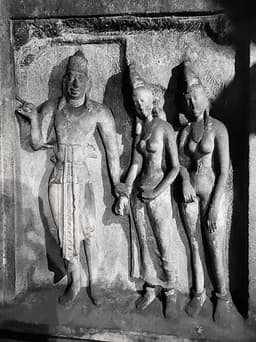
Aparajita Varman
Emperor · Medieval
36.4Total
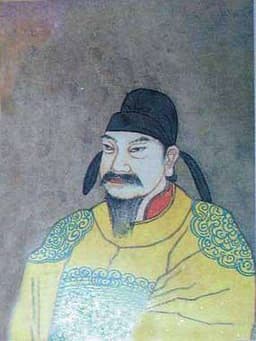
Li Cui
Emperor · Medieval
39.7Total
Basic Information
Born
880
833
Died
897
873
Era
Medieval
Medieval
Nationality
India
China
Occupation
Emperor
Emperor
Civilization
Indian
Eastern
Score Comparison
Military (10%)
21.2
21.2
Political (20%)
33.6
25.0
Influence (20%)
46.3
47.9
Legacy (20%)
35.8
38.3
Leadership (15%)
33.6
55.3
Strategy (15%)
36.8
39.6
TOTAL
36.4
39.7
Aparajita Varman — Complete Timeline
880 AD
Alliance with the Ganga DynastyPolitical Action
Aparajita Varman formed an alliance with the Western Ganga dynasty to counter the growing power of the Cholas. This alliance provided temporary military support but ultimately failed to prevent the Chola conquest of Pallava lands.
AllianceGanga DynastyAnti-Chola Coalition
Impact: regional
890 AD
Loss of Kanchipuram to the CholasWar◆ Major
Aparajita Varman lost the Pallava capital Kanchipuram to the Chola king Aditya I after a series of military campaigns. This loss marked the final decline of Pallava power and the transfer of hegemony in the Tamil region to the Cholas.
Capital LossChola ExpansionPallava Decline
Impact: regionaldestructive
897 AD
Defeat by Chola Aditya I at the Battle of TirupatiWar◆ Major
Aparajita Varman was defeated and killed by the Chola king Aditya I at the Battle of Tirupati. This defeat ended the Pallava dynasty's rule, as Aditya I annexed the Pallava territories into the expanding Chola kingdom.
Pallava-Chola WarDynastic EndBattle
Impact: regionaltragic
Li Cui — Complete Timeline
868 AD
Suppressed the Pang Xun RebellionWar◆ Major
Li Cui (Tang Yizong) ordered the suppression of the rebellion led by Pang Xun, a mutineer from the southern frontier. The rebellion was crushed after a year of fighting, but it exposed the weakening of Tang military control and foreshadowed larger revolts.
RebellionTang DynastyMilitary Campaign
Impact: nationaldestructive
870 AD
Ignored Growing Unrest and FaminePolitical Action◆ Major
During the later years of Li Cui's reign, widespread famine and banditry erupted across the empire. He failed to implement effective relief measures or military reforms, allowing conditions to worsen that would lead to the Huang Chao Rebellion after his death.
NeglectFamineDecline
Impact: nationaldestructive
Expert Analysis
Origins
Aparajita Varman was the last ruler of the Pallava dynasty, which had dominated southern India for centuries. Born around 870 CE, he inherited a kingdom already weakened by internal strife and the rising power of the Cholas. His family background placed him in a lineage of temple builders and patrons of art, but his reign was overshadowed by the aggressive expansion of the Chola king Aditya I. Little is known of his early education or formative experiences, as historical records focus on his military confrontations.
Li Cui, known posthumously as Tang Yizong, was born in 833 CE into the imperial Li family of the Tang dynasty. He ascended the throne in 859 CE after the death of his father, Tang Xuanzong, a capable ruler who had restored some stability. Li Cui grew up in the palace, receiving a traditional Confucian education, but lacked the political acumen and decisiveness of his predecessors. His reign marked the beginning of the Tang dynasty's terminal decline.
Rise to Power
Aparajita Varman became Pallava king around 885 CE, inheriting a kingdom facing constant pressure from the Cholas. His rise was not through exceptional achievement but through dynastic succession. He attempted to bolster his position by forming an alliance with the Western Ganga dynasty, a neighboring kingdom that also feared Chola expansion. This alliance provided temporary military support but ultimately failed to prevent the Chola onslaught.
Li Cui's path to power was similarly conventional: he was the eldest son of Emperor Xuanzong and was designated crown prince. He ascended the throne without opposition in 859 CE at age 26. Unlike Aparajita, Li Cui inherited a relatively stable empire, but his inability to address underlying problems led to rapid deterioration. His early reign saw some efforts to continue his father's policies, but he soon became distracted by court intrigues and lavish spending.
Leadership & Governance
Aparajita Varman's leadership was defined by defensive warfare. He lacked the strategic vision to counter the Chola threat effectively. His governance likely followed traditional Pallava administrative structures, but no significant reforms are recorded. His alliance with the Gangas (scoring 21.2 in military) proved insufficient against Aditya I's superior forces. He lost the capital Kanchipuram after a series of campaigns, a catastrophic failure in leadership.
Li Cui's governance was marked by neglect. He scored 55.3 in leadership, higher than Aparajita's 33.6, but his reign saw the Pang Xun Rebellion (868-869 CE), which he eventually suppressed. However, he failed to address widespread famine and banditry, ignoring reports of suffering. His court was rife with eunuch influence, and he spent heavily on Buddhist ceremonies while the empire crumbled. His political score of 25.0 reflects his inability to maintain order.
Triumph & Tragedy
Aparajita Varman's greatest triumph was perhaps his alliance with the Gangas, which delayed Chola conquest. However, his tragedy was total: he was defeated and killed at the Battle of Tirupati around 897 CE, ending the Pallava dynasty after nearly 600 years. His failure to defend Kanchipuram, a cultural and political center, sealed his fate.
Li Cui's triumph was the suppression of the Pang Xun Rebellion, which he achieved through capable generals. However, his tragedy was his indifference to the suffering of his people. The famine and unrest during his later years foreshadowed the Huang Chao Rebellion, which would erupt after his death. He died in 873 CE, leaving a weakened empire.
Character & Destiny
Aparajita Varman was likely a determined but outmatched ruler. His decision to face the Cholas in open battle rather than adopt guerrilla tactics suggests a rigid military mindset. His character, shaped by Pallava pride, led him to a heroic but futile stand. He scored 36.8 in strategy, indicating limited adaptability.
Li Cui was indecisive and pleasure-seeking. Historical assessments portray him as weak-willed, easily influenced by eunuchs and Buddhist monks. His character led him to ignore governance, accelerating the Tang decline. His total score of 39.7 reflects a slightly better overall performance than Aparajita's 36.4.
Legacy
Aparajita Varman's legacy is that of a dynasty's end. The Pallava contributions to architecture and culture were overshadowed by Chola achievements. He is remembered primarily as the last Pallava, a footnote in the rise of the Chola empire.
Li Cui's legacy is the beginning of the Tang collapse. His reign marked the point of no return, leading to the Huang Chao Rebellion and eventual fragmentation. He is often cited as a cautionary example of imperial neglect.
Conclusion
Li Cui had a greater impact, though negative, due to his position in a larger, more influential empire. His failures contributed to the decline of one of China's greatest dynasties, while Aparajita Varman's defeat merely ended a regional power. Li Cui's total score of 39.7 versus Aparajita's 36.4, along with his higher leadership score (55.3 vs 33.6), supports this. However, neither ruler achieved any positive transformation. Their legacies are defined by failure, but Li Cui's failures affected millions more.
Rankings
🥇
Li CuiLeader
Mil: 21.2Pol: 25.0Inf: 47.9
39.7
🥈
Aparajita Varman
Mil: 21.2Pol: 33.6Inf: 46.3
36.4
+3.3 behind
How This Comparison Works
Algorithm
Each figure is scored on 6 dimensions (0—100 scale) based on structured historical data: Military (10%), Political (20%), Influence (20%), Legacy (20%), Leadership (15%), Strategy (15%). The weighted total produces the final ranking.
Data Sources
Scores are computed from structured sub-indicators in the database. Scale factors adjust for era (Ancient ×0.85, Modern ×1.0) and civilization size (Eastern ×1.05, Other ×0.80) to account for differences in population and military scale.
Maximum 3 Figures
Comparisons are limited to 2—3 figures to ensure readability and statistical meaningfulness.
Error Margins
±5 points per dimension — Sub-scores are derived from historical records with inherent uncertainty. Two figures within 5 points on a dimension should be considered roughly equivalent in that area.
Total Score Accuracy
±3 points overall — The weighted combination of 6 dimensions produces a total score with approximately ±3 points of uncertainty. Differences of less than 3 points are not statistically significant— the figures are effectively tied.
Known Limitations
- Historical records are incomplete and uneven across civilizations
- Figures from oral-tradition societies may be underrepresented
- Occupation labels can misclassify multi-role figures
- Scores measure capability and impact, not moral character
- Quantitative scoring is a comparison tool, not absolute truth
Capability Radar
Military (10%) — Battles & Warfare
Battles
15
15
Win Rate
10
10
Expansion
5
5
Political (20%) — Governance & Reform
Reform
5
20
Diplomacy
10
20
Economy
10
15
Influence (20%) — Cultural & Global Reach
Cultural
10
15
Global
5
10
Legacy (20%) — Historical Impact
Historical
10
20
Longevity
5
10
Leadership (15%) — Power & Stability
Tenure
20
60
Stability
10
10
Strategy (15%) — Tactics & Innovation
Strategy
10
10
Tactics
15
10
Reform
5
5
Similar Comparisons
Comments & Discussion
No comments yet. Be the first to share your thoughts!