Loading...
Ibn Tumart vs Mao Zedong
Mao Zedong leads by 23.8 pts · 2 figures compared
…
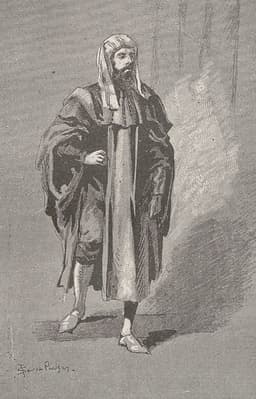
Ibn Tumart
Emperor · Medieval
55.6Total
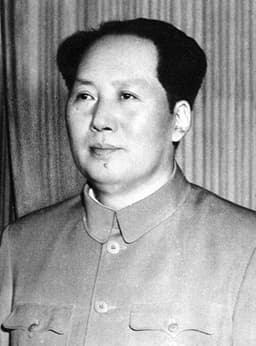
Mao Zedong
Politician · Modern
79.4Total
Basic Information
Born
1080
1893
Died
1130
1976
Era
Medieval
Modern
Nationality
Almohad Caliphate
China
Occupation
Emperor
Politician
Civilization
Middle Eastern
Eastern
Score Comparison
Military (10%)
55.0
75.0
Political (20%)
61.3
88.0
Influence (20%)
58.3
85.0
Legacy (20%)
56.0
70.0
Leadership (15%)
47.3
85.0
Strategy (15%)
52.5
72.0
TOTAL
55.6
79.4
Ibn Tumart — Complete Timeline
1121 AD
Proclamation as MahdiCultural
Ibn Tumart proclaimed himself the Mahdi, the guided one, after returning from the East. He began preaching a strict reformist message, condemning the Almoravids for their perceived religious laxity and calling for a return to the Quran and Sunnah.
Impact: regional
Establishment of the Almohad MovementPolitical Action◆ Major
Ibn Tumart founded the Almohad movement (al-Muwahhidun) in the Atlas Mountains of Morocco. He organized his followers into a disciplined religious and military community, rejecting the Almoravid interpretation of Islam and advocating for tawhid (strict monotheism).
Impact: regionalconstructive
1125 AD
Compilation of the Almohad DoctrineCultural
Ibn Tumart compiled his teachings into a book titled 'A'azz ma Yutlab' (The Most Precious of What is Sought). This work outlined the Almohad doctrine, emphasizing the unity of God and rejecting anthropomorphism, and became the foundation of the movement's ideology.
Impact: regionalconstructive
1130 AD
Battle of al-BuhayraWar◆ Major
Ibn Tumart's Almohad forces were defeated by the Almoravids at the Battle of al-Buhayra near Marrakech. This setback prevented the Almohads from capturing the Almoravid capital and forced them to retreat to the mountains.
Impact: regional
Death of Ibn TumartOther◆ Major
Ibn Tumart died shortly after the Battle of al-Buhayra, possibly from wounds or illness. His death was kept secret by his successor Abd al-Mu'min, who continued the Almohad movement and eventually overthrew the Almoravids.
Impact: regionaltragic
Mao Zedong — Complete Timeline
1934 AD
Long MarchWar
Mao Zedong led the Chinese Red Army on a strategic retreat from Nationalist forces, covering approximately 6,000 miles over 370 days. The march solidified Mao's leadership within the Chinese Communist Party and became a foundational myth of the Communist revolution.
Chinese Civil WarCommunist RevolutionRetreat
Impact: national
1949 AD
Proclamation of the People's Republic of ChinaPolitical Action
Mao Zedong declared the founding of the People's Republic of China from Tiananmen Gate in Beijing. This ended the Chinese Civil War and established Communist rule over mainland China, with Mao as Chairman of the Central People's Government.
Founding of PRCCommunist VictoryRevolution
Impact: global
1958 AD
Great Leap ForwardReform◆ Major
Mao launched a campaign to rapidly industrialize China and collectivize agriculture. The policy led to widespread mismanagement, resulting in a famine that caused an estimated 15-45 million deaths between 1959 and 1961.
FamineIndustrializationCollectivization
Impact: nationaldestructive
1960 AD
Sino-Soviet SplitPolitical Action◆ Major
Mao's ideological differences with Soviet leader Nikita Khrushchev led to a breakdown in relations between China and the Soviet Union. The split ended the Sino-Soviet alliance and reshaped global Cold War dynamics, with China pursuing an independent path.
Cold WarIdeological ConflictAlliance Breakdown
Impact: global
1966 AD
Cultural RevolutionPolitical Action
Mao initiated a sociopolitical movement to purge capitalist and traditional elements from Chinese society. The Red Guard youth groups attacked intellectuals and officials, leading to widespread violence, destruction of cultural artifacts, and an estimated 1-2 million deaths.
Political PurgeSocial UpheavalRed Guard
Impact: nationaldestructive
1971 AD
Ping-Pong DiplomacyCultural◆ Major
Mao approved an invitation for the U.S. table tennis team to visit China, initiating a thaw in Sino-American relations. This cultural exchange paved the way for President Nixon's visit to China in 1972 and the eventual normalization of diplomatic ties.
DiplomacyU.S.-China RelationsCultural Exchange
Impact: globalconstructive
Expert Analysis
Mao Zedong vs Ibn Tumart
# The Mahdi and the Helmsman: Two Visions of Revolutionary Transformation
In the winter of 1121, a gaunt Berber scholar stood before a crowd in the Atlas Mountains of Morocco and declared himself the Mahdi—the guided one sent to purify Islam. Eight hundred years later and half a world away, a young librarian from Hunan province watched peasants starve under warlord rule and began to see revolution as the only path forward. Both men would reshape entire civilizations, yet their journeys—and their legacies—could hardly be more different. What drove one toward theological purity and the other toward political transformation? The answer lies not just in their eras but in the very nature of their ambitions.
Origins
Ibn Tumart was born around 1080 into the Masmuda Berber tribe of the High Atlas. His world was one of tribal loyalties, desert caravans, and the fierce debates of Islamic jurisprudence that had flourished for centuries from Cordoba to Baghdad. After traveling east to study in Baghdad and Damascus, he returned to North Africa burning with a singular conviction: the Almoravid rulers who dominated the region had abandoned true monotheism. They worshipped saints, touched amulets, and followed a legal tradition that Ibn Tumart considered corrupt. For him, the crisis was not political but cosmic—a betrayal of God’s oneness that demanded purification.
Mao Zedong emerged from a very different soil. Born in 1893 to a prosperous farmer in Shaoshan, he grew up reading Chinese classics while watching his father exploit tenants. The collapse of the Qing dynasty in 1912 shattered the old order, and Mao found himself in a China humiliated by foreign powers, torn by warlords, and searching for a new identity. Where Ibn Tumart saw a crisis of faith, Mao saw a crisis of power. His library was not the Qur’an and hadith but the works of Marx, Lenin, and the history of peasant rebellions. The problem was not that China had forgotten God, but that it had forgotten how to fight.
Rise to Power
Ibn Tumart’s path was that of a prophet. After his proclamation as Mahdi in 1121, he retreated to the mountains and built a movement from scratch—organizing his followers into a disciplined hierarchy, compiling his teachings into a book called *A’azz ma Yutlab*, and waging a guerrilla war against the Almoravids. His power came not from armies but from the unshakable faith he inspired. When his forces were crushed at the Battle of al-Buhayra in 1130, he did not negotiate or adapt—he died shortly after, his death kept secret for years so the movement would not collapse.
Mao’s rise was more tortuous. He entered the Chinese Communist Party in 1921 as one voice among many, a provincial organizer whose ideas about peasant revolution were dismissed by Moscow-trained elites. His turning point came in 1934, when the Nationalist encirclement forced the Communists onto the Long March—a 6,000-mile retreat through some of China’s most brutal terrain. Mao used this crucible to seize control of the party, not by divine claim but by sheer strategic survival. He wrote poems about the snow-covered mountains and turned military defeat into political triumph. By the time the march ended, he was no longer a faction leader but the helmsman of a movement.
Leadership & Governance
Ibn Tumart ruled through the force of ideas. His Almohad movement was a theocracy in the strictest sense: every law, every battle, every decision flowed from his interpretation of tawhid—the absolute unity of God. He did not build factories or reform agriculture; he built mosques and schools, and he purged those who disagreed. His military strategy was simple: fight until the enemy submits or dies. The Almohads would eventually conquer North Africa and Spain, but Ibn Tumart himself never saw it. He was the spark, not the fire.
Mao governed through the force of will—and the machinery of state. After proclaiming the People’s Republic in 1949, he launched campaigns that touched every Chinese life: land reform, industrialization, collectivization. The Great Leap Forward of 1958 was an attempt to leap from agrarian poverty to industrial power overnight, but it ended in famine that killed tens of millions. Yet Mao did not retreat. He doubled down, launching the Cultural Revolution in 1966 to purge the party of anyone he deemed insufficiently revolutionary. His leadership was a paradox: visionary in its scope, catastrophic in its execution.
Triumph & Tragedy
Ibn Tumart’s greatest moment was his proclamation as Mahdi—a single act that gave birth to an empire. His tragedy was that he died before seeing it. The Battle of al-Buhayra was a defeat that might have destroyed a lesser movement, but his followers kept his death secret and eventually conquered Marrakech. His triumph was theological; his tragedy was that his pure vision was inevitably diluted by the compromises of power.
Mao’s triumph was the unification of China. In 1949, he stood on the Tiananmen Gate and declared a new nation—one that had expelled foreign powers, ended civil war, and reclaimed its dignity. His tragedy was that he could not stop. The same revolutionary energy that defeated the Nationalists destroyed the economy, the same ideological purity that inspired millions starved them. His greatest achievement—the creation of a sovereign China—came at a cost that still haunts the country.
Character & Destiny
Ibn Tumart was a man possessed by certainty. He did not doubt, he did not compromise, he did not fear death. His personality was that of a prophet: uncompromising, charismatic, and ultimately isolated. He died in obscurity, his body hidden, his movement carried forward by lieutenants who did not share his holiness. His destiny was to be a catalyst, not a ruler.
Mao was a man possessed by ambition—not for himself alone, but for China. He read history obsessively, studied the rise and fall of dynasties, and believed he could break the cycle. But his personality was also that of a tyrant: suspicious, ruthless, and incapable of admitting error. His destiny was to rule for twenty-seven years and leave behind a nation transformed—but also scarred.
Legacy
Ibn Tumart is remembered today as a religious reformer whose Almohad Caliphate reshaped North Africa and Spain. His influence on Islamic theology persists, but his name is known mainly to scholars. He did not build a nation; he built a faith.
Mao’s legacy is inescapable. His face still hangs in Tiananmen Square, his writings still studied, his name still invoked. He is both father of modern China and architect of its greatest tragedies. The scores that measure his impact—military 65, political 82, influence 80—capture his contradictions: a strategist who won wars but mismanaged peace, a leader who inspired devotion but demanded sacrifice.
Conclusion
What separates a prophet from a revolutionary? Ibn Tumart believed the world needed to be purified; Mao believed it needed to be remade. One sought to restore God’s order, the other to create man’s. Both succeeded beyond what seemed possible, and both failed in ways that remind us of the terrible cost of absolute conviction. In the end, Ibn Tumart’s followers built an empire that lasted a century; Mao’s built a nation that endures. But the question each man posed remains unanswered: Can a society be transformed without being destroyed? The mountains of Morocco and the plains of China still hold the echo of their answer.
Rankings
🥇
Mao ZedongLeader
Mil: 75.0Pol: 88.0Inf: 85.0
79.4
🥈
Ibn Tumart
Mil: 55.0Pol: 61.3Inf: 58.3
55.6
+23.8 behind
How This Comparison Works
Algorithm
Each figure is scored on 6 dimensions (0—100 scale) based on structured historical data: Military (10%), Political (20%), Influence (20%), Legacy (20%), Leadership (15%), Strategy (15%). The weighted total produces the final ranking.
Data Sources
Scores are computed from structured sub-indicators in the database. Scale factors adjust for era (Ancient ×0.85, Modern ×1.0) and civilization size (Eastern ×1.05, Other ×0.80) to account for differences in population and military scale.
Maximum 3 Figures
Comparisons are limited to 2—3 figures to ensure readability and statistical meaningfulness.
Error Margins
±5 points per dimension — Sub-scores are derived from historical records with inherent uncertainty. Two figures within 5 points on a dimension should be considered roughly equivalent in that area.
Total Score Accuracy
±3 points overall — The weighted combination of 6 dimensions produces a total score with approximately ±3 points of uncertainty. Differences of less than 3 points are not statistically significant— the figures are effectively tied.
Known Limitations
- Historical records are incomplete and uneven across civilizations
- Figures from oral-tradition societies may be underrepresented
- Occupation labels can misclassify multi-role figures
- Scores measure capability and impact, not moral character
- Quantitative scoring is a comparison tool, not absolute truth
Capability Radar
Military (10%) — Battles & Warfare
Battles
30
85
Win Rate
35
80
Expansion
40
85
Political (20%) — Governance & Reform
Reform
80
95
Diplomacy
30
80
Economy
20
70
Influence (20%) — Cultural & Global Reach
Cultural
60
90
Global
50
90
Legacy (20%) — Historical Impact
Historical
65
95
Longevity
55
85
Leadership (15%) — Power & Stability
Tenure
25
95
Stability
20
60
Strategy (15%) — Tactics & Innovation
Strategy
45
85
Tactics
40
75
Reform
70
90
Similar Comparisons
Comments & Discussion
Alhamdulillah Historian6/16/2026
As a scholar of Islamic history, I must defend Ibn Tumart’s theological rigor against Mao’s secular opportunism. The Mahdi didn’t just want power—he sought to restore tawhid (divine unity) by burning amulets and banning saint veneration. This is a puritanical vision that predates later reformers like Muhammad ibn Abd al-Wahhab. Mao, by contrast, borrowed Marxist jargon wholesale from Europe and applied it with brutal expedience. Which revolution was more authentic? Ibn Tumart’s was rooted in scr
史海钩沉迷6/16/2026
作为中国近代史爱好者,我认为把毛泽东跟一个12世纪北非神棍比较太荒谬了。毛泽东领导的是反封建、反帝国主义的民族解放运动,写《实践论》强调“实事求是”,而伊本·图马尔特整天在讲“真主独一”这种神秘主义空话。前者在延安整风中还批判过教条主义呢!后者呢?靠烧毁圣物和恐吓信徒来巩固权力,简直是宗教恐怖主义。这根本是两个维度的革命者。
Cynical Counterpoint6/16/2026
Both were ideological autocrats who used “pure doctrine” to justify terror and centralization. Ibn Tumart’s followers, the Almohads, massacred thousands of Almoravid sympathizers in Marrakesh (1147) in the name of monotheism. Mao’s Cultural Revolution (1966-1976) purged millions in the name of class struggle. Different faiths, same fanaticism. The real lesson? When a charismatic leader claims a monopoly on truth—whether divine or dialectical—the result is always state-sanctioned violence. Don’t
Historian9836/16/2026
As a military historian, I’m struck by how both men weaponized ideology to mobilize peasant armies, but with starkly different results. Ibn Tumart’s Almohad revolution succeeded spectacularly in forging a unified Berber-Arab force that smashed the Almoravids at the Battle of Al-Buhayra (1130). Mao’s Long March was a defensive retreat, yet his guerrilla tactics eventually won China. The difference? Ibn Tumart died before his empire peaked; Mao lived to see his vision become dogma—with all the sta