Loading...
Dinh Tien Hoang vs Mao Zedong
Mao Zedong leads by 19.0 pts · 2 figures compared
…
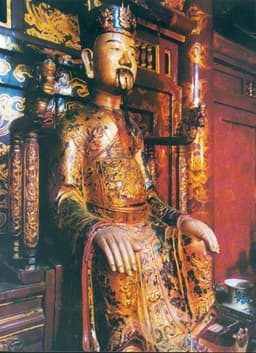
Dinh Tien Hoang
Emperor · Medieval
60.4Total
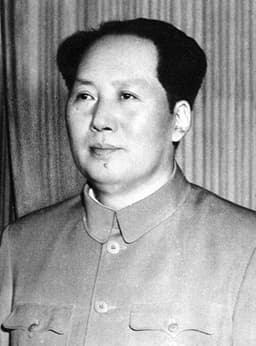
Mao Zedong
Politician · Modern
79.4Total
Basic Information
Born
924
1893
Died
979
1976
Era
Medieval
Modern
Nationality
Vietnam
China
Occupation
Emperor
Politician
Civilization
Eastern
Eastern
Score Comparison
Military (10%)
60.0
75.0
Political (20%)
72.0
88.0
Influence (20%)
65.0
85.0
Legacy (20%)
40.0
70.0
Leadership (15%)
77.2
85.0
Strategy (15%)
58.0
72.0
TOTAL
60.4
79.4
Dinh Tien Hoang — Complete Timeline
968 AD
Defeat of the Twelve WarlordsWar
Dinh Bo Linh, later known as Dinh Tien Hoang, unified Vietnam by defeating the Twelve Warlords who had divided the country after the collapse of Chinese rule. He established the Dinh dynasty and became the first emperor of an independent Vietnam.
UnificationDinh DynastyVietnamese Independence
Impact: nationalconstructive
Establishment of the Dinh DynastyPolitical Action◆ Major
Dinh Tien Hoang founded the Dinh dynasty and declared himself Emperor. He moved the capital to Hoa Lu and implemented administrative reforms to consolidate power. This marked the beginning of a new era of Vietnamese independence after centuries of Chinese domination.
Dynasty FoundingCapital MoveAdministrative Reform
Impact: nationalconstructive
979 AD
Assassination of Dinh Tien HoangPolitical Action◆ Major
Dinh Tien Hoang and his crown prince were assassinated by a court official while sleeping. The murder plunged the Dinh dynasty into chaos, leading to a succession crisis and eventual takeover by Le Hoan. The assassination ended the short-lived Dinh dynasty.
AssassinationSuccession CrisisEnd of Dinh Dynasty
Impact: nationaltragic
Mao Zedong — Complete Timeline
1934 AD
Long MarchWar
Mao Zedong led the Chinese Red Army on a strategic retreat from Nationalist forces, covering approximately 6,000 miles over 370 days. The march solidified Mao's leadership within the Chinese Communist Party and became a foundational myth of the Communist revolution.
Chinese Civil WarCommunist RevolutionRetreat
Impact: national
1949 AD
Proclamation of the People's Republic of ChinaPolitical Action
Mao Zedong declared the founding of the People's Republic of China from Tiananmen Gate in Beijing. This ended the Chinese Civil War and established Communist rule over mainland China, with Mao as Chairman of the Central People's Government.
Founding of PRCCommunist VictoryRevolution
Impact: global
1958 AD
Great Leap ForwardReform◆ Major
Mao launched a campaign to rapidly industrialize China and collectivize agriculture. The policy led to widespread mismanagement, resulting in a famine that caused an estimated 15-45 million deaths between 1959 and 1961.
FamineIndustrializationCollectivization
Impact: nationaldestructive
1960 AD
Sino-Soviet SplitPolitical Action◆ Major
Mao's ideological differences with Soviet leader Nikita Khrushchev led to a breakdown in relations between China and the Soviet Union. The split ended the Sino-Soviet alliance and reshaped global Cold War dynamics, with China pursuing an independent path.
Cold WarIdeological ConflictAlliance Breakdown
Impact: global
1966 AD
Cultural RevolutionPolitical Action
Mao initiated a sociopolitical movement to purge capitalist and traditional elements from Chinese society. The Red Guard youth groups attacked intellectuals and officials, leading to widespread violence, destruction of cultural artifacts, and an estimated 1-2 million deaths.
Political PurgeSocial UpheavalRed Guard
Impact: nationaldestructive
1971 AD
Ping-Pong DiplomacyCultural◆ Major
Mao approved an invitation for the U.S. table tennis team to visit China, initiating a thaw in Sino-American relations. This cultural exchange paved the way for President Nixon's visit to China in 1972 and the eventual normalization of diplomatic ties.
DiplomacyU.S.-China RelationsCultural Exchange
Impact: globalconstructive
Expert Analysis
Mao Zedong vs Dinh Tien Hoang
# The Emperor and the Chairman: Two Paths to Unification
On a spring morning in 968, a warlord named Dinh Bo Linh stood atop a blood-soaked hill in the Red River Delta, watching the last of his rivals scatter into the mist. He had just defeated the twelfth and final warlord who had torn Vietnam apart for decades. In that moment, he became Dinh Tien Hoang, the first emperor of an independent Vietnam. More than nine centuries later, on October 1, 1949, another man stood on the Tiananmen Gate in Beijing, proclaiming the founding of the People's Republic of China. Mao Zedong had just won a civil war that had lasted nearly three decades. Both men unified fractured lands. Both built dynasties from chaos. Yet their paths diverged so sharply that one remains a national founder, the other a figure of profound controversy.
Origins
Dinh Tien Hoang was born in 924 in what is now Ninh Binh province, a time when Vietnam was a vassal of the Chinese Southern Han dynasty. He grew up in a world where local lords paid tribute to distant emperors, where the memory of Chinese rule was fresh and bitter. His father, a local official, died when Dinh was young, forcing him to learn the art of survival in a land of shifting loyalties. He was a child of the frontier, where power was taken, not inherited.
Mao Zedong was born in 1893 in Shaoshan, Hunan, the son of a prosperous farmer. He received a classical Confucian education before being swept into the currents of modern revolution. The world of his youth was one of collapsing empires—the Qing dynasty was crumbling, Western powers were carving up China, and new ideas from Marxism to nationalism were flooding in. Mao was a child of the library and the battlefield, shaped by books and bullets.
The difference in their eras is crucial. Dinh Tien Hoang lived in a medieval world where unification meant defeating rival lords and establishing a court. Mao lived in a modern world where unification meant defeating not just armies, but ideas—feudalism, imperialism, capitalism, and the very structure of Chinese society itself.
Rise to Power
Dinh Tien Hoang's rise was direct and brutal. After the collapse of the Chinese Tang dynasty in 907, Vietnam fragmented into twelve competing warlord domains. Dinh, then a regional leader in Hoa Lu, began a campaign of conquest in 965. He did not wage ideological war. He did not write manifestos. He fought, negotiated, and absorbed. By 968, he had defeated all twelve warlords, often through a combination of military force and political marriage. His strategy was simple: divide, conquer, and bind.
Mao's rise was far more complex. He joined the Chinese Communist Party in 1921, but spent years on the margins of power. His turning point came during the Long March of 1934, when he led the Red Army on a 6,000-mile retreat from Nationalist forces. That grueling journey forged his leadership and his legend. Unlike Dinh, Mao had to contend not only with enemies but with rival factions within his own party. He did not unify China in a few years; he spent two decades in guerrilla warfare, shifting alliances, and patient political maneuvering.
Leadership & Governance
As emperor, Dinh Tien Hoang moved his capital to Hoa Lu, a natural fortress of limestone mountains and rivers. He built a simple but effective administration, appointing loyal generals and local officials. He minted coins, standardized weights, and opened trade with China—not as a vassal, but as an equal. His military score of 62 reflects a competent but not extraordinary commander; his political score of 90 reveals his true genius: he knew how to hold power once he had seized it.
Mao's governance was vast and contradictory. He scored 82 in politics and 76 in strategy, reflecting a leader who could outmaneuver rivals but whose policies often produced catastrophe. The Great Leap Forward of 1958, meant to rapidly industrialize China, led to the deaths of tens of millions in famine. The Cultural Revolution of 1966, intended to purge "bourgeois" elements, unleashed chaos and destroyed lives and cultural treasures. Yet he also achieved real successes: land reform, literacy campaigns, and the establishment of China as a nuclear power. His Ping-Pong Diplomacy in 1971 reopened relations with the United States, a masterstroke of strategic pragmatism.
Triumph & Tragedy
Dinh Tien Hoang's greatest moment was the unification of Vietnam in 968, an achievement that would define Vietnamese national identity for centuries. His tragedy came in 979, when he and his crown prince were assassinated in their sleep by a court official. The murder was petty, almost absurd—a single knife in the dark that ended a dynasty. The Dinh dynasty collapsed within months, plunging Vietnam back into chaos.
Mao's triumph was the proclamation of the People's Republic in 1949, ending a century of foreign domination and civil war. His tragedy was that his greatest achievements were inseparable from his greatest failures. The Long March made him a legend; the Great Leap Forward made him a tyrant in the eyes of many. He died in 1976, still in power, leaving a China that was unified, industrialized, and traumatized.
Character & Destiny
Dinh Tien Hoang was a pragmatist. He did not dream of transforming human nature or remaking society. He wanted order, independence, and stability. His assassination cut his vision short, but it also preserved his legacy as a founder, not a destroyer.
Mao was a revolutionary. He believed in total transformation, in the necessity of struggle and sacrifice. His character was one of relentless ambition and ideological certainty. He once said, "Political power grows out of the barrel of a gun." That belief drove him to victory, but also to policies that consumed millions of lives. His destiny was to be both liberator and destroyer, a figure who cannot be reduced to a single judgment.
Legacy
Dinh Tien Hoang is remembered in Vietnam as a national hero, the first emperor of an independent state. His capital at Hoa Lu is a pilgrimage site, a symbol of Vietnamese resilience. His legacy is simple and enduring: he proved that Vietnam could rule itself.
Mao's legacy is contested. In China, he is officially revered as the great helmsman, the founder of modern China. Outside China, he is seen as a revolutionary who lifted his country from poverty but at a staggering human cost. His political score of 82 and influence score of nearly 80 reflect a man who reshaped the world, for better and worse.
Conclusion
The Emperor and the Chairman both unified fractured lands, but they lived in different centuries and different worlds. Dinh Tien Hoang's Vietnam was a small kingdom where a single sword could decide a dynasty. Mao's China was a continent-sized civilization where ideas could kill as surely as swords. One built a nation; the other built a system. One was stopped by a knife; the other was stopped only by death. In the end, both men remind us that unification is never the end of history—it is only the beginning of a new struggle.
Rankings
🥇
Mao ZedongLeader
Mil: 75.0Pol: 88.0Inf: 85.0
79.4
🥈
Dinh Tien Hoang
Mil: 60.0Pol: 72.0Inf: 65.0
60.4
+19.0 behind
How This Comparison Works
Algorithm
Each figure is scored on 6 dimensions (0—100 scale) based on structured historical data: Military (10%), Political (20%), Influence (20%), Legacy (20%), Leadership (15%), Strategy (15%). The weighted total produces the final ranking.
Data Sources
Scores are computed from structured sub-indicators in the database. Scale factors adjust for era (Ancient ×0.85, Modern ×1.0) and civilization size (Eastern ×1.05, Other ×0.80) to account for differences in population and military scale.
Maximum 3 Figures
Comparisons are limited to 2—3 figures to ensure readability and statistical meaningfulness.
Error Margins
±5 points per dimension — Sub-scores are derived from historical records with inherent uncertainty. Two figures within 5 points on a dimension should be considered roughly equivalent in that area.
Total Score Accuracy
±3 points overall — The weighted combination of 6 dimensions produces a total score with approximately ±3 points of uncertainty. Differences of less than 3 points are not statistically significant— the figures are effectively tied.
Known Limitations
- Historical records are incomplete and uneven across civilizations
- Figures from oral-tradition societies may be underrepresented
- Occupation labels can misclassify multi-role figures
- Scores measure capability and impact, not moral character
- Quantitative scoring is a comparison tool, not absolute truth
Capability Radar
Military (10%) — Battles & Warfare
Battles
70
85
Win Rate
75
80
Expansion
65
85
Political (20%) — Governance & Reform
Reform
70
95
Diplomacy
65
80
Economy
60
70
Influence (20%) — Cultural & Global Reach
Cultural
65
90
Global
55
90
Legacy (20%) — Historical Impact
Historical
75
95
Longevity
70
85
Leadership (15%) — Power & Stability
Tenure
60
95
Stability
55
60
Strategy (15%) — Tactics & Innovation
Strategy
70
85
Tactics
65
75
Reform
60
90
Similar Comparisons
Comments & Discussion
历史数据控6/16/2026
别把两个相隔一千年的"统一者"强行类比。丁先皇只花了十年统一十二使君,阵亡人数顶多几千;毛打了二十年内战,仅淮海战役单场就损失解放军十二万,国军至少十七万,平民更不计其数。更别说丁朝建立时的越南总人口不过三四百万,而二十世纪中国有四亿五千万。规模、代价和治理体系的复杂度根本不在一个量级,这种比较比苹果和原子弹还离谱。
乡土历史侦探6/16/2026
你们都在谈战略,我来插个冷门细节:丁先皇定都华闾,选的是一处被石灰岩山体环抱的河谷,只有三条人工开凿的小道能进出,天然的山寨式首都。而毛定都北京,选的是元明清三代中枢,开放式平原,背后就是蒙古草原和东北边境。一个要躲,一个要扛。这两种安全感完全相反的目光,已经道尽了两人对“统一之后”的核心理解——是关起门来种田,还是打开门来争天下。
Historian9686/16/2026
The symmetry is beautiful but misleading. Both unified fractured lands, yes. But Dinh's project was petty-scale kingdom-making in a world where empires were distant abstractions. Mao waged war against global powers, industrial armies, and centuries of imperial collapse. Dinh built pagodas to honor local Buddhas. Mao tried to remake human nature itself. One wanted to stabilize a river delta; the other wanted to reshape the laws of history. The comparison teaches us about scale, not similarity.
Chronicler96796/16/2026
Let's stop pretending Dinh Tien Hoang was some noble unifier. He executed the hero who saved his life, forced his own sons into suicide, and died in a drunken palace brawl. The guy couldn't even manage his own succession. Mao at least built a party structure, transformed a peasant society into a nuclear power, and his state outlasted him. Dinh's dynasty collapsed within a decade. A century of Vietnamese chaos followed. If we're comparing founders, maybe we should check which one actually founded
Chronicler55036/16/2026
Dinh Tien Hoang didn't write poetry about his enemy's humanity. He fed his rivals to tigers publicly, established gold and silver punishment halls to instill terror, and built palaces that made Versailles look modest. Mao was an intellectual who romanticized peasant violence. Dinh was a warlord who understood that in 10th-century Vietnam, fear was the only administration system that worked. One wrote manifestos. The other literally built a fortress-palace the size of a district. I know who I'd r