Loading...
Mao Zedong vs Zhao Kuangyin
Mao Zedong leads by 7.9 pts · 2 figures compared
…
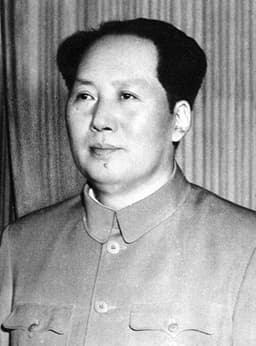
Mao Zedong
Politician · Modern
79.4Total
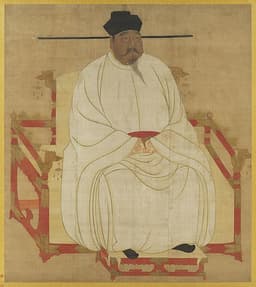
Zhao Kuangyin
Emperor · Medieval
71.5Total
Basic Information
Born
1893
927
Died
1976
976
Era
Modern
Medieval
Nationality
China
China
Occupation
Politician
Emperor
Civilization
Eastern
Eastern
Score Comparison
Military (10%)
75.0
78.0
Political (20%)
88.0
84.0
Influence (20%)
85.0
68.0
Legacy (20%)
70.0
65.0
Leadership (15%)
85.0
74.0
Strategy (15%)
72.0
68.0
TOTAL
79.4
71.5
Mao Zedong — Complete Timeline
1934 AD
Long MarchWar
Mao Zedong led the Chinese Red Army on a strategic retreat from Nationalist forces, covering approximately 6,000 miles over 370 days. The march solidified Mao's leadership within the Chinese Communist Party and became a foundational myth of the Communist revolution.
Chinese Civil WarCommunist RevolutionRetreat
Impact: national
1949 AD
Proclamation of the People's Republic of ChinaPolitical Action
Mao Zedong declared the founding of the People's Republic of China from Tiananmen Gate in Beijing. This ended the Chinese Civil War and established Communist rule over mainland China, with Mao as Chairman of the Central People's Government.
Founding of PRCCommunist VictoryRevolution
Impact: global
1958 AD
Great Leap ForwardReform◆ Major
Mao launched a campaign to rapidly industrialize China and collectivize agriculture. The policy led to widespread mismanagement, resulting in a famine that caused an estimated 15-45 million deaths between 1959 and 1961.
FamineIndustrializationCollectivization
Impact: nationaldestructive
1960 AD
Sino-Soviet SplitPolitical Action◆ Major
Mao's ideological differences with Soviet leader Nikita Khrushchev led to a breakdown in relations between China and the Soviet Union. The split ended the Sino-Soviet alliance and reshaped global Cold War dynamics, with China pursuing an independent path.
Cold WarIdeological ConflictAlliance Breakdown
Impact: global
1966 AD
Cultural RevolutionPolitical Action
Mao initiated a sociopolitical movement to purge capitalist and traditional elements from Chinese society. The Red Guard youth groups attacked intellectuals and officials, leading to widespread violence, destruction of cultural artifacts, and an estimated 1-2 million deaths.
Political PurgeSocial UpheavalRed Guard
Impact: nationaldestructive
1971 AD
Ping-Pong DiplomacyCultural◆ Major
Mao approved an invitation for the U.S. table tennis team to visit China, initiating a thaw in Sino-American relations. This cultural exchange paved the way for President Nixon's visit to China in 1972 and the eventual normalization of diplomatic ties.
DiplomacyU.S.-China RelationsCultural Exchange
Impact: globalconstructive
Zhao Kuangyin — Complete Timeline
960 AD
Founded Song dynastyPolitical Action
Zhao Kuangyin, a general of Later Zhou, was proclaimed emperor by his troops at Chenqiao. He established the Song dynasty, ending the Five Dynasties period and beginning a new era of Chinese history.
Song dynastyFoundingChenqiao
Impact: globalconstructive
961 AD
Removed military power from generalsPolitical Action◆ Major
Zhao Kuangyin invited senior generals to a banquet and persuaded them to retire peacefully. This 'removal of military power over wine' prevented military coups and centralized control.
Song dynastyMilitary reformCentralization
Impact: nationalconstructive
963 AD
Unified southern ChinaWar◆ Major
Zhao Kuangyin launched campaigns to conquer the southern kingdoms, including Jingnan, Later Shu, and Southern Tang. By his death, most of China was reunified under Song rule.
Song unificationConquestSouthern kingdoms
Impact: national
Expert Analysis
Zhao Kuangyin vs Mao Zedong
The Emperor and the Chairman: Two Paths to China’s Destiny
On a spring evening in 961, a Chinese emperor hosted a banquet for his most powerful generals. Wine flowed, laughter echoed through the palace halls, and then the host—Zhao Kuangyin, founder of the Song dynasty—grew serious. He told his old comrades that he could not sleep at night, fearing that one day their own troops might proclaim them emperor, just as his soldiers had proclaimed him. By dawn, the generals had resigned their commands and retired to comfortable estates, trading swords for silk. A thousand years later, another Chinese leader, Mao Zedong, would take the opposite approach: purging his rivals, mobilizing millions, and unleashing a revolution that would shake the world. Why did one unifier choose wine and persuasion, while the other chose fire and upheaval?
Origins
Zhao Kuangyin was born in 927, the son of a military officer serving the crumbling Tang dynasty. China had splintered into warring kingdoms—the Five Dynasties and Ten Kingdoms period—where generals seized power, ruled briefly, and were overthrown by the next strongman. Zhao grew up watching this cycle of violence, and it shaped his deepest conviction: military power, left unchecked, would destroy any state. He was a tall, broad-shouldered man who loved archery and horses, but he also studied history and understood that lasting peace required more than conquest.
Mao Zedong entered the world in 1893, a farmer’s son from Hunan province. China then was a wounded giant: humiliated by foreign powers, torn by warlords, and ruled by a decaying imperial court. Mao read voraciously—Chinese classics, Western philosophy, Marxist pamphlets—and came to believe that only total revolution could save his country. Where Zhao saw the dangers of military ambition, Mao saw the necessity of violent struggle. Their eras dictated their instincts: Zhao lived in a world of small kingdoms and personal loyalties; Mao lived in an age of empires, ideologies, and mass movements.
Rise to Power
Zhao Kuangyin’s path to power was almost accidental. He served as a general under the Later Zhou dynasty, and in 960, when the emperor died leaving a child heir, his troops mutinied at Chenqiao, draping a yellow robe over his shoulders. Zhao accepted the throne—reluctantly, according to legend—and immediately set about proving he would not be another short-lived warlord. He spared the child emperor, consolidated his rule through diplomacy, and began the patient work of reunification.
Mao’s rise was far more arduous. He was a founding member of the Chinese Communist Party in 1921, but spent years on the margins, his ideas often dismissed by Moscow-trained rivals. The Long March of 1934–35 was his turning point: as the Red Army retreated 6,000 miles through hostile terrain, Mao emerged as its strategic genius, winning support through sheer endurance and political acumen. By 1949, when he proclaimed the People’s Republic of China from Tiananmen Gate, he had fought a civil war, outmaneuvered the Nationalists, and forged a party in his own image.
Leadership & Governance
Zhao Kuangyin governed with a light hand and a clear vision. His “removal of military power over a cup of wine” in 961 was a masterpiece of political theater: he convinced his generals to retire peacefully, then replaced them with civilian officials chosen by examination. He unified southern China through a series of careful campaigns, absorbing kingdoms like Jingnan, Later Shu, and Southern Tang without the wholesale destruction that marked earlier conquests. His reforms emphasized tax collection, infrastructure, and education. Zhao’s strategy score of 69.8 reflects a man who preferred negotiation to battle; his leadership score of 82.3 highlights his ability to inspire loyalty without fear.
Mao Zedong governed with revolutionary intensity. The Great Leap Forward of 1958—a campaign to industrialize overnight—led to widespread famine and mismanagement, costing tens of millions of lives. The Cultural Revolution, launched in 1966, unleashed the Red Guard to purge “capitalist” elements, destroying families, temples, and institutions. Yet Mao also achieved genuine breakthroughs: land reform that broke the power of landlords, universal literacy campaigns, and the Sino-Soviet split of 1960 that asserted China’s independence. His political score of 82.0 and leadership score of 80.6 reflect a man who could mobilize a nation, but his military score of 65.0 and legacy score of 69.9 hint at the catastrophic costs.
Triumph & Tragedy
Zhao Kuangyin’s greatest triumph was creating a stable, unified China after decades of chaos. His Song dynasty would last three centuries, becoming an era of economic prosperity, artistic brilliance, and technological innovation—gunpowder, printing, paper money. His tragedy was that his pacifism left the northern frontier vulnerable; the Song would eventually fall to invaders from the steppes.
Mao’s greatest triumph was the Long March, which became the founding myth of Communist China, and the 1949 proclamation that ended a century of foreign domination. His Ping-Pong Diplomacy of 1971, inviting the U.S. table tennis team to China, thawed relations with the West and paved the way for China’s global reemergence. His tragedy was the human cost of his utopian dreams: the Great Leap Forward’s famine, the Cultural Revolution’s purges, the millions who died or suffered in the name of revolution.
Character & Destiny
Zhao Kuangyin was pragmatic, cautious, and humane. He once said, “I would rather the world be without war than have great achievements.” His personality drove him to seek consensus, to disarm his rivals with kindness, to build institutions that would outlast him. Mao was visionary, ruthless, and charismatic. He wrote, “Political power grows out of the barrel of a gun,” and he meant it. Where Zhao saw peace as the goal, Mao saw struggle as the engine of history. Their characters mirrored their times: Zhao’s China needed a healer; Mao’s China needed a destroyer.
Legacy
Zhao Kuangyin is remembered as Song Taizu, the “Grand Progenitor” of a golden age. His scores—military 74.6, political 75.9, influence 74.9, legacy 75.1—paint a portrait of a solid, respected founder who avoided extremes. He is honored in Chinese history as a unifier who used wisdom, not terror.
Mao Zedong is remembered as the Great Helmsman, a figure of immense complexity. His total score of 76.4 surpasses Zhao’s 75.5, but his legacy is bitterly contested. In China, he is officially revered as the founder of the modern state; abroad, he is condemned for the suffering he caused. His influence score of 79.7 reflects a man who reshaped not just China, but the global order.
Conclusion
Two men, one thousand years apart, each faced the same question: how to unify a fractured China? Zhao Kuangyin answered with a cup of wine; Mao Zedong answered with a revolution. The first built a dynasty; the second built a nation. Both succeeded, both failed, and both remind us that the path to power is shaped not just by ambition, but by the age one inhabits. In the end, perhaps the most telling difference is this: Zhao’s generals retired to their estates and lived out their days in peace; Mao’s rivals were purged, humiliated, or killed. History, like wine, can be shared—or it can burn.
Rankings
🥇
Mao ZedongLeader
Mil: 75.0Pol: 88.0Inf: 85.0
79.4
🥈
Zhao Kuangyin
Mil: 78.0Pol: 84.0Inf: 68.0
71.5
+7.9 behind
How This Comparison Works
Algorithm
Each figure is scored on 6 dimensions (0—100 scale) based on structured historical data: Military (10%), Political (20%), Influence (20%), Legacy (20%), Leadership (15%), Strategy (15%). The weighted total produces the final ranking.
Data Sources
Scores are computed from structured sub-indicators in the database. Scale factors adjust for era (Ancient ×0.85, Modern ×1.0) and civilization size (Eastern ×1.05, Other ×0.80) to account for differences in population and military scale.
Maximum 3 Figures
Comparisons are limited to 2—3 figures to ensure readability and statistical meaningfulness.
Error Margins
±5 points per dimension — Sub-scores are derived from historical records with inherent uncertainty. Two figures within 5 points on a dimension should be considered roughly equivalent in that area.
Total Score Accuracy
±3 points overall — The weighted combination of 6 dimensions produces a total score with approximately ±3 points of uncertainty. Differences of less than 3 points are not statistically significant— the figures are effectively tied.
Known Limitations
- Historical records are incomplete and uneven across civilizations
- Figures from oral-tradition societies may be underrepresented
- Occupation labels can misclassify multi-role figures
- Scores measure capability and impact, not moral character
- Quantitative scoring is a comparison tool, not absolute truth
Capability Radar
Military (10%) — Battles & Warfare
Battles
85
75
Win Rate
80
85
Expansion
85
75
Political (20%) — Governance & Reform
Reform
95
90
Diplomacy
80
85
Economy
70
80
Influence (20%) — Cultural & Global Reach
Cultural
90
70
Global
90
60
Legacy (20%) — Historical Impact
Historical
95
80
Longevity
85
75
Leadership (15%) — Power & Stability
Tenure
95
65
Stability
60
85
Strategy (15%) — Tactics & Innovation
Strategy
85
80
Tactics
75
70
Reform
90
90
Similar Comparisons
Comments & Discussion
No comments yet. Be the first to share your thoughts!