Loading...
Hyder Ali vs Yitzhak Rabin
Hyder Ali leads by 3.0 pts · 2 figures compared
…
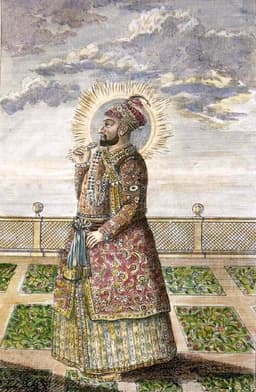
Hyder Ali
General · Modern
69.4Total
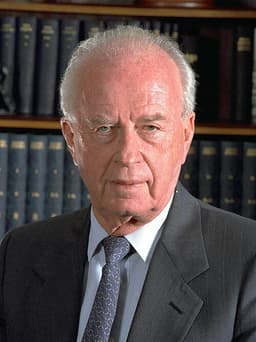
Yitzhak Rabin
General · Modern
66.4Total
Basic Information
Born
1720
1922
Died
1782
—
Era
Modern
Modern
Nationality
India
Israel
Occupation
General
General
Civilization
Indian
Middle Eastern
Score Comparison
Military (10%)
80.0
61.7
Political (20%)
65.7
82.0
Influence (20%)
82.0
68.0
Legacy (20%)
56.0
55.0
Leadership (15%)
68.0
78.0
Strategy (15%)
68.0
55.0
TOTAL
69.4
66.4
Hyder Ali — Complete Timeline
1757 AD
Battle of PlasseyWar◆ Major
Hyder Ali, as a commander under the Wodeyar dynasty, participated in the Battle of Plassey indirectly by supporting the French against the British. However, his major role came later. This battle marked the beginning of British dominance in Bengal, which Hyder Ali would later challenge in the Carnatic Wars.
Carnatic WarsBritish East India CompanyMysore
Impact: regional
1761 AD
Capture of the throne of MysorePolitical Action◆ Major
Hyder Ali, a military commander, overthrew the Wodeyar ruler Krishnaraja Wodeyar II and established himself as the de facto ruler of Mysore. He imprisoned the maharaja and assumed full control, transforming Mysore into a powerful state through military reforms and expansion.
CoupMysore KingdomWodeyar Dynasty
Impact: regionaldestructive
1767 AD
First Anglo-Mysore WarWar◆ Major
Hyder Ali led Mysore against the British East India Company in the First Anglo-Mysore War. He formed alliances with the Nizam of Hyderabad and the Marathas. The war ended with the Treaty of Madras in 1769, which restored conquered territories and established a defensive alliance between Mysore and the British.
Anglo-Mysore WarsTreaty of MadrasBritish India
Impact: regional
1780 AD
Second Anglo-Mysore WarWar◆ Major
Hyder Ali launched the Second Anglo-Mysore War, attacking British territories in the Carnatic. He captured Arcot and defeated British forces at Pollilur. The war continued after his death in 1782, with his son Tipu Sultan taking command. The conflict ended with the Treaty of Mangalore in 1784.
Anglo-Mysore WarsBattle of PollilurTipu Sultan
Impact: regional
Yitzhak Rabin — Complete Timeline
1967 AD
Chief of Staff during the Six-Day WarWar
As Chief of Staff of the Israel Defense Forces, Rabin commanded the Israeli military during the Six-Day War against Egypt, Jordan, and Syria. Israel captured the Sinai Peninsula, Gaza Strip, West Bank, East Jerusalem, and Golan Heights, reshaping the region.
Six-Day WarTerritorial ExpansionMilitary Victory
Impact: global
1993 AD
Signing of the Oslo AccordsPolitical Action
As prime minister, Rabin signed the Oslo Accords with PLO Chairman Yasser Arafat on the White House lawn. The agreement established the Palestinian Authority and set a framework for Palestinian self-governance in the West Bank and Gaza Strip.
Peace ProcessPalestiniansOslo
Impact: globalconstructive
1995 AD
Assassination at Peace RallyPolitical Action
Rabin was assassinated by Israeli extremist Yigal Amir after a peace rally in Tel Aviv. The assassination shocked Israel and the world, derailing the Oslo peace process and leading to a period of political instability.
AssassinationPeace ProcessPolitical Violence
Impact: globaltragic
Expert Analysis
Yitzhak Rabin vs Hyder Ali
# The Peacemaker and the Tiger of Mysore
On a balmy November evening in 1995, Yitzhak Rabin stood before a sea of 100,000 peace supporters in Tel Aviv, singing a song of hope. Moments later, three bullets fired by a fellow Israeli ended his life—and with it, a fragile dream of Middle Eastern peace. Two centuries earlier, in the scorching heat of southern India, another warrior-leader, Hyder Ali, lay dying in his tent, his body ravaged by cancer, his mind consumed by a war he had launched against the British East India Company. One man fell to an assassin’s bullet, the other to disease, but both left behind legacies that would shape their nations for generations. What drove these two men—one a general turned prime minister, the other a soldier who seized a throne—to such dramatically different fates?
Origins
Yitzhak Rabin was born in Jerusalem in 1922 to a family of Labor Zionist pioneers from Eastern Europe. His father, Nehemiah, had fought in the Jewish Legion during World War I; his mother, Rosa, was a passionate activist. Growing up in Tel Aviv, Rabin absorbed the ethos of self-defense and nation-building that defined the nascent Jewish state. The Holocaust was a fresh wound, and survival demanded strength. Hyder Ali, born in 1720 in the village of Budikote, Karnataka, came from a humbler background. His father was a military commander in the service of the Wodeyar dynasty of Mysore, and Hyder grew up in the chaos of a collapsing Mughal Empire, where local strongmen carved out fiefdoms. While Rabin’s world was shaped by the trauma of genocide and the urgency of creating a homeland, Hyder’s was defined by the ruthless calculus of Indian power politics, where the British East India Company was already tightening its grip.
Rise to Power
Rabin’s ascent was methodical, almost bureaucratic. He joined the Palmach, the elite strike force of the Haganah, in his twenties, and by 1964 had become Chief of Staff of the Israel Defense Forces. His defining moment came in June 1967, when he commanded the Six-Day War—a lightning campaign that crushed the armies of Egypt, Jordan, and Syria in six days. Rabin was not a flamboyant general; he was a planner, a manager of men and machines. His victory made him a national hero. Hyder Ali’s rise was far more brutal. In 1761, after years of maneuvering, he overthrew the Wodeyar ruler Krishnaraja Wodeyar II and declared himself de facto ruler of Mysore. He had no royal blood, only ambition and a talent for war. Where Rabin inherited a state and rose through its ranks, Hyder built one from the rubble of a dynasty.
Leadership & Governance
As prime minister, Rabin governed with a pragmatist’s touch. His military background gave him credibility, but his political wisdom shone in the Oslo Accords of 1993, when he shook hands with Yasser Arafat on the White House lawn—a gamble that earned him a Nobel Peace Prize and the hatred of extremists. “You don’t make peace with friends,” Rabin once said. “You make it with very unsavory enemies.” His leadership was about negotiation, not conquest. Hyder Ali, by contrast, ruled through the sword. He modernized Mysore’s army, introducing European-style drill and rocket artillery, and fought two wars against the British. In the First Anglo-Mysore War (1767–1769), he forced the British to sign a humiliating treaty. In the Second (1780–1782), he captured Arcot and threatened Madras itself. Hyder was a brilliant tactician, but his governance was autocratic, built on plunder and fear. Rabin sought to end a cycle of violence; Hyder perpetuated one.
Triumph & Tragedy
Rabin’s greatest triumph was also the seed of his tragedy. The Oslo Accords promised a two-state solution, but they unleashed a wave of suicide bombings by Palestinian militants and a backlash from Israeli settlers. On November 4, 1995, at a peace rally in Tel Aviv, Yigal Amir, a Jewish law student, shot Rabin dead. The assassin believed he was saving Israel from a traitor. Hyder Ali’s tragedy was less dramatic but equally final. In 1782, at the height of his campaign against the British, he died of cancer. His son Tipu Sultan inherited a war that would eventually destroy Mysore. Both men died in conflict—Rabin by a bullet from his own people, Hyder by a disease that cared nothing for his ambitions.
Character & Destiny
Rabin was a reluctant hero, a man of few words who carried the weight of a nation. His strategic mind was cautious; he preferred slow, deliberate steps toward peace. Hyder Ali was a firebrand, a commander who led from the front and inspired fierce loyalty. “It is better to live like a lion for a day than like a jackal for a hundred years,” he reportedly said. Their personalities mirrored their fates: Rabin’s caution made him a target for those who wanted faster change; Hyder’s aggression ensured he would die fighting. One sought to build a future; the other to defend a present.
Legacy
Today, Rabin is remembered as a martyr for peace, his name etched on streets and squares across Israel. His assassination remains a national trauma, a warning of how hatred can destroy hope. Hyder Ali is a more ambiguous figure—a hero to some Indians who see him as a resistance fighter against colonialism, a tyrant to others who recall his brutal campaigns. His legacy is overshadowed by his son Tipu, the “Tiger of Mysore,” but Hyder laid the foundation for that resistance. Both men left behind nations still grappling with their choices.
Conclusion
Standing in Tel Aviv’s Rabin Square, where the peace rally turned to tragedy, one feels the weight of a dream deferred. In the ruins of Srirangapatna, Hyder Ali’s capital, the silence speaks of a war that never ended. Two generals, two rulers, two worlds—yet both were consumed by the very forces they sought to master. Rabin’s assassin believed he was saving Israel; Hyder’s British enemies believed they were civilizing India. History, as always, is written by the survivors—and by the ghosts of those who dared to change it.
Rankings
🥇
Hyder AliLeader
Mil: 80.0Pol: 65.7Inf: 82.0
69.4
🥈
Yitzhak Rabin
Mil: 61.7Pol: 82.0Inf: 68.0
66.4
+3.0 behind
How This Comparison Works
Algorithm
Each figure is scored on 6 dimensions (0—100 scale) based on structured historical data: Military (10%), Political (20%), Influence (20%), Legacy (20%), Leadership (15%), Strategy (15%). The weighted total produces the final ranking.
Data Sources
Scores are computed from structured sub-indicators in the database. Scale factors adjust for era (Ancient ×0.85, Modern ×1.0) and civilization size (Eastern ×1.05, Other ×0.80) to account for differences in population and military scale.
Maximum 3 Figures
Comparisons are limited to 2—3 figures to ensure readability and statistical meaningfulness.
Error Margins
±5 points per dimension — Sub-scores are derived from historical records with inherent uncertainty. Two figures within 5 points on a dimension should be considered roughly equivalent in that area.
Total Score Accuracy
±3 points overall — The weighted combination of 6 dimensions produces a total score with approximately ±3 points of uncertainty. Differences of less than 3 points are not statistically significant— the figures are effectively tied.
Known Limitations
- Historical records are incomplete and uneven across civilizations
- Figures from oral-tradition societies may be underrepresented
- Occupation labels can misclassify multi-role figures
- Scores measure capability and impact, not moral character
- Quantitative scoring is a comparison tool, not absolute truth
Capability Radar
Military (10%) — Battles & Warfare
Battles
78
65
Win Rate
72
70
Expansion
70
50
Political (20%) — Governance & Reform
Reform
70
65
Diplomacy
68
85
Economy
60
60
Influence (20%) — Cultural & Global Reach
Cultural
50
55
Global
50
70
Legacy (20%) — Historical Impact
Historical
55
75
Longevity
45
60
Leadership (15%) — Power & Stability
Tenure
65
70
Stability
55
40
Strategy (15%) — Tactics & Innovation
Strategy
80
75
Tactics
85
60
Reform
75
55
Similar Comparisons
Comments & Discussion
No comments yet. Be the first to share your thoughts!