Loading...
This comparison has not been analyzed yet.
One-time AI generation (~1 minute). Scores and timeline are already available below.
Hussain Muhammad Ershad vs Pancho Villa
Pancho Villa leads by 2.0 pts · 2 figures compared
…

Hussain Muhammad Ershad
General · Modern
49.9Total
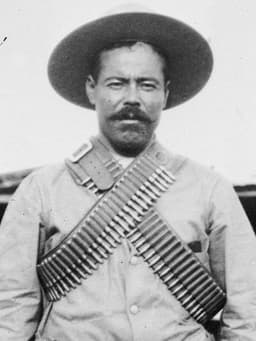
Pancho Villa
General · Modern
51.9Total
Basic Information
Born
1930
1878
Died
—
1923
Era
Modern
Modern
Nationality
Bangladesh
Mexico
Occupation
General
General
Civilization
Indian
Western
Score Comparison
Military (10%)
50.0
70.0
Political (20%)
48.0
35.1
Influence (20%)
51.8
55.0
Legacy (20%)
42.5
54.0
Leadership (15%)
65.0
47.3
Strategy (15%)
43.3
52.5
TOTAL
49.9
51.9
Hussain Muhammad Ershad — Complete Timeline
1982 AD
Seizure of Power in BangladeshPolitical Action
On March 24, 1982, Lieutenant General Hussain Muhammad Ershad seized power in a bloodless coup, suspending the constitution and imposing martial law. He cited corruption and economic mismanagement under the civilian government as justification.
CoupMartial LawBangladesh
Impact: nationaldestructive
1986 AD
Establishment of the Jatiya PartyPolitical Action◆ Major
Ershad founded the Jatiya Party in 1986 as his political vehicle to legitimize his rule. The party won parliamentary elections that year, though the polls were widely boycotted by opposition parties and criticized as rigged.
Political PartyJatiya PartyElection
Impact: national
1990 AD
Resignation Under Mass UprisingPolitical Action◆ Major
Faced with a massive pro-democracy uprising led by the Awami League and BNP, Ershad resigned on December 6, 1990. He handed power to a caretaker government, ending his eight-year military rule and restoring parliamentary democracy in Bangladesh.
ResignationPro-democracyBangladesh
Impact: nationalconstructive
Pancho Villa — Complete Timeline
1911 AD
Battle of Ciudad JuarezWar◆ Major
Villa's forces, under Madero's command, captured Ciudad Juarez, a key border city. The victory forced Porfirio Diaz to resign and sign the Treaty of Ciudad Juarez, ending the first phase of the revolution.
BattleRevolutionDiaz Resignation
Impact: national
1913 AD
Division of the North CommandWar◆ Major
After Victoriano Huerta's coup, Villa formed the Division of the North, a powerful military force. He led it to victories at Torreon and Zacatecas, becoming a dominant revolutionary general.
Military CommandRevolutionary ArmyVictories
Impact: regional
1914 AD
Battle of ZacatecasWar
Villa's Division of the North decisively defeated Huerta's federal forces at Zacatecas. The victory broke Huerta's military power and led to his resignation, but also caused a rift with Carranza.
BattleHuerta DefeatRevolutionary Victory
Impact: national
1916 AD
Columbus RaidWar◆ Major
Villa's forces attacked Columbus, New Mexico, killing 18 Americans. The raid prompted U.S. President Wilson to send a punitive expedition under General Pershing into Mexico, which failed to capture Villa.
Cross-Border RaidUS InterventionPunitive Expedition
Impact: regionaldestructive
1923 AD
Assassination of Pancho VillaPolitical Action◆ Major
Villa was assassinated by gunmen while driving in Parral, Chihuahua. The attack was likely ordered by political rivals, ending his post-revolutionary influence and securing the government's control.
AssassinationPolitical ViolenceEnd of Era
Impact: nationaltragic
This comparison has not been analyzed yet.
One-time AI generation (~1 minute). Scores and timeline are already available below.
Rankings
🥇
Pancho VillaLeader
Mil: 70.0Pol: 35.1Inf: 55.0
51.9
🥈
Hussain Muhammad Ershad
Mil: 50.0Pol: 48.0Inf: 51.8
49.9
+2.0 behind
How This Comparison Works
Algorithm
Each figure is scored on 6 dimensions (0—100 scale) based on structured historical data: Military (10%), Political (20%), Influence (20%), Legacy (20%), Leadership (15%), Strategy (15%). The weighted total produces the final ranking.
Data Sources
Scores are computed from structured sub-indicators in the database. Scale factors adjust for era (Ancient ×0.85, Modern ×1.0) and civilization size (Eastern ×1.05, Other ×0.80) to account for differences in population and military scale.
Maximum 3 Figures
Comparisons are limited to 2—3 figures to ensure readability and statistical meaningfulness.
Error Margins
±5 points per dimension — Sub-scores are derived from historical records with inherent uncertainty. Two figures within 5 points on a dimension should be considered roughly equivalent in that area.
Total Score Accuracy
±3 points overall — The weighted combination of 6 dimensions produces a total score with approximately ±3 points of uncertainty. Differences of less than 3 points are not statistically significant— the figures are effectively tied.
Known Limitations
- Historical records are incomplete and uneven across civilizations
- Figures from oral-tradition societies may be underrepresented
- Occupation labels can misclassify multi-role figures
- Scores measure capability and impact, not moral character
- Quantitative scoring is a comparison tool, not absolute truth
Capability Radar
Military (10%) — Battles & Warfare
Battles
20
65
Win Rate
25
60
Expansion
10
40
Political (20%) — Governance & Reform
Reform
40
20
Diplomacy
35
25
Economy
30
15
Influence (20%) — Cultural & Global Reach
Cultural
20
55
Global
20
50
Legacy (20%) — Historical Impact
Historical
30
60
Longevity
15
45
Leadership (15%) — Power & Stability
Tenure
55
35
Stability
25
10
Strategy (15%) — Tactics & Innovation
Strategy
35
55
Tactics
30
70
Reform
40
30
Similar Comparisons
Comments & Discussion
No comments yet. Be the first to share your thoughts!