Loading...
Huo Guang vs Julius Caesar
Julius Caesar leads by 19.2 pts · 2 figures compared
…
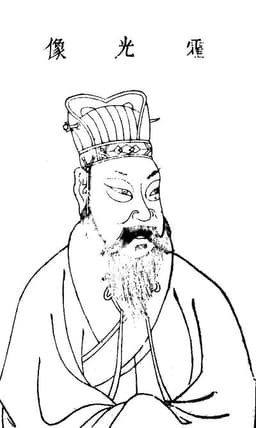
Huo Guang
Politician · Ancient
63.6Total

Julius Caesar
General · Ancient
82.8Total
Basic Information
Born
-120
-100
Died
-68
-44
Era
Ancient
Ancient
Nationality
China
Roman Republic
Occupation
Politician
General
Civilization
Eastern
Western
Score Comparison
Military (10%)
49.0
88.0
Political (20%)
78.0
78.0
Influence (20%)
60.0
85.0
Legacy (20%)
55.0
82.0
Leadership (15%)
81.7
80.0
Strategy (15%)
60.0
85.0
TOTAL
63.6
82.8
Huo Guang — Complete Timeline
87 BC
Regent for Emperor Zhao of HanPolitical Action◆ Major
Huo Guang was appointed regent for the young Emperor Zhao of Han after Emperor Wu's death. He effectively ruled the Han dynasty for over a decade, maintaining stability and continuing Wu's policies of centralization and expansion.
RegencyHan DynastyStability
Impact: nationalconstructive
74 BC
Deposed Emperor Liu HePolitical Action◆ Major
After Emperor Zhao's death, Huo Guang deposed the incompetent Emperor Liu He after only 27 days on the throne. He cited Liu He's debauchery and misrule as reasons. Huo Guang then installed Liu Xun as Emperor Xuan, ensuring competent leadership.
DepositionHan DynastyPolitical Crisis
Impact: nationalconstructive
73 BC
Consolidation of PowerPolitical Action◆ Major
Huo Guang's family and allies held key positions in the Han court. His wife poisoned Empress Xu to place her own daughter as empress. After Huo Guang's death, Emperor Xuan purged the Huo clan, executing thousands and ending their influence.
Power StrugglePurgeHan Dynasty
Impact: nationaldestructive
68 BC
Death and Posthumous PurgePolitical Action
Huo Guang died in 68 BC and was given a grand state funeral. However, within two years, Emperor Xuan ordered the execution of Huo Guang's family and stripped him of posthumous honors, accusing the Huo clan of treason and corruption.
PurgeHan DynastyLegacy
Impact: nationaldestructive
Julius Caesar — Complete Timeline
58 BC
Gallic WarsWar◆ Major
Caesar, as proconsul of Gaul, launched a series of campaigns that conquered all of Gaul (modern France, Belgium, and parts of Switzerland). He fought numerous battles, including against the Helvetii, the Belgae, and the Gallic chieftain Vercingetorix. The wars brought immense wealth and a loyal army to Caesar.
Gallic WarsConquestRoman Expansion
Impact: regional
49 BC
Crossing the RubiconPolitical Action◆ Major
Caesar led Legio XIII across the Rubicon River into Italy, defying the Roman Senate's order to disband his army. This act triggered a civil war against Pompey and the Optimates, ultimately leading to Caesar's dictatorship and the end of the Roman Republic.
Roman Civil WarEnd of RepublicPower Struggle
Impact: global
48 BC
Battle of PharsalusWar◆ Major
Caesar's outnumbered army defeated the larger forces of Pompey the Great at Pharsalus in Greece. Caesar's tactical use of a reserve line to counter Pompey's cavalry charge proved decisive. Pompey fled to Egypt, where he was assassinated, leaving Caesar as the undisputed master of the Roman world.
Roman Civil WarBattleDecisive Victory
Impact: regional
44 BC
Appointment as Dictator for LifePolitical Action◆ Major
The Roman Senate appointed Caesar dictator perpetuo (dictator for life), granting him unprecedented personal power. This move concentrated military, legislative, and judicial authority in one person, effectively ending the Roman Republic's traditional system of checks and balances and alarming many senators.
DictatorshipEnd of RepublicPower Consolidation
Impact: regionaldestructive
Assassination on the Ides of MarchPolitical Action◆ Major
A group of Roman senators, led by Marcus Junius Brutus and Gaius Cassius Longinus, stabbed Caesar to death at a meeting of the Senate in the Theatre of Pompey. The assassination was intended to restore the Republic, but instead triggered another civil war that led to the rise of the Roman Empire.
AssassinationRoman PoliticsEnd of Republic
Impact: globaldestructive
Expert Analysis
Origins
Huo Guang (c. 130–68 BC) was born into a modest family in the Han dynasty. His half-brother, Huo Qubing, was a famed general, which gave Huo Guang initial access to court circles. He served as a minor official under Emperor Wu, gaining trust through diligence and loyalty. His early career was marked by administrative competence rather than military exploits.
Julius Caesar (100–44 BC) was born into the patrician Julian clan in Rome, though his family was not wealthy. He received a privileged education in rhetoric and philosophy. His aunt married Gaius Marius, a populist general, exposing Caesar to political turbulence. He began his career as a military tribune and then a quaestor, building connections through debt and ambition.
Both men rose from backgrounds that provided some advantage—Huo through family connections, Caesar through patrician status—but neither inherited supreme power.
Rise to Power
Huo Guang’s rise came after Emperor Wu’s death in 87 BC. Wu appointed Huo as one of four regents for the young Emperor Zhao. Through political maneuvering, Huo eliminated rivals (e.g., Shangguan Jie and Sang Hongyang) and became sole regent by 80 BC. He maintained control through a network of family appointments and loyalists. His decisive moment came in 74 BC when he deposed Emperor Liu He after only 27 days, citing incompetence and debauchery. This act solidified Huo’s power as kingmaker.
Caesar’s rise was more dramatic. He gained fame through the Gallic Wars (58–50 BC), conquering Gaul and writing commentaries that boosted his reputation. His political career included consulship in 59 BC, where he formed the First Triumvirate with Pompey and Crassus. In 49 BC, he crossed the Rubicon River with his army, defying the Senate and triggering civil war. He defeated Pompey at Pharsalus in 48 BC and later consolidated power, becoming dictator for life in 44 BC. Caesar’s military scores (88.0) far exceed Huo’s (49.4), reflecting his direct command and conquests.
Leadership & Governance
Huo Guang governed as a regent, exercising authority behind the throne. He maintained stability by keeping the Han bureaucratic system intact, appointing competent officials, and avoiding major wars. His governance was conservative, focused on continuity. However, his use of spies and family nepotism created resentment. His wife’s poisoning of Empress Xu in 71 BC showed a willingness to eliminate threats through underhanded means.
Caesar centralized power, bypassing the Senate and implementing reforms: land redistribution, debt relief, calendar reform (Julian calendar), and granting citizenship to provincials. He appointed loyalists to key positions and reduced the Senate’s influence. His leadership style was autocratic but efficient, scoring 82.0 in leadership. Caesar’s political score (78.0) is higher than Huo’s (70.7), reflecting his transformative policies.
Triumph & Tragedy
Huo Guang’s triumph was stabilizing the Han dynasty after Emperor Wu’s costly wars. His deposition of Liu He prevented a potentially disastrous reign. His tragedy was his family’s downfall: after his death in 68 BC, Emperor Xuan purged the Huo clan, executing thousands. Huo’s legacy was tainted by the scandal, though his governance model endured.
Caesar’s triumphs: conquering Gaul (territory and wealth), winning the civil war, and initiating reforms that reshaped Rome. His tragedy was his assassination on the Ides of March 44 BC, leading to another civil war. Caesar’s influence score (85.0) reflects his lasting impact on Western history.
Character & Destiny
Huo Guang was cautious, methodical, and ruthless when necessary. His decision to depose an emperor showed political courage but also a willingness to overreach. His character, focused on stability, ultimately failed to secure his family’s future—a common fate for regents.
Caesar was ambitious, charismatic, and risk-taking. His crossing of the Rubicon was a gamble that paid off but also sealed his fate. His clemency toward opponents (e.g., Cicero) did not prevent his murder. Caesar’s character drove him to accumulate power, which provoked a backlash.
Legacy
Huo Guang’s legacy is mixed: he is remembered as a capable regent but also as a symbol of overmighty ministers. The Han dynasty continued for two centuries after him, partly due to his stabilization. His scores: legacy 75.4, influence 71.1.
Caesar’s legacy is monumental: his name became synonymous with autocracy, his reforms outlasted him, and his adopted heir Octavian founded the Roman Empire. Caesar’s legacy score (82.0) and influence (85.0) reflect his broader impact. His writings remain studied, and his life inspired Shakespeare’s play.
Conclusion
Julius Caesar had a greater impact on world history. His military conquests, political centralization, and assassination set the stage for the Roman Empire, influencing governance and culture for millennia. Huo Guang’s influence was confined to a single dynasty and is less known globally. Caesar’s total score of 83.3 versus Huo’s 66.4 underscores this difference. While Huo maintained stability, Caesar transformed a republic into an empire, shaping Western civilization’s trajectory.
Rankings
🥇
Julius CaesarLeader
Mil: 88.0Pol: 78.0Inf: 85.0
82.8
🥈
Huo Guang
Mil: 49.0Pol: 78.0Inf: 60.0
63.6
+19.2 behind
How This Comparison Works
Algorithm
Each figure is scored on 6 dimensions (0—100 scale) based on structured historical data: Military (10%), Political (20%), Influence (20%), Legacy (20%), Leadership (15%), Strategy (15%). The weighted total produces the final ranking.
Data Sources
Scores are computed from structured sub-indicators in the database. Scale factors adjust for era (Ancient ×0.85, Modern ×1.0) and civilization size (Eastern ×1.05, Other ×0.80) to account for differences in population and military scale.
Maximum 3 Figures
Comparisons are limited to 2—3 figures to ensure readability and statistical meaningfulness.
Error Margins
±5 points per dimension — Sub-scores are derived from historical records with inherent uncertainty. Two figures within 5 points on a dimension should be considered roughly equivalent in that area.
Total Score Accuracy
±3 points overall — The weighted combination of 6 dimensions produces a total score with approximately ±3 points of uncertainty. Differences of less than 3 points are not statistically significant— the figures are effectively tied.
Known Limitations
- Historical records are incomplete and uneven across civilizations
- Figures from oral-tradition societies may be underrepresented
- Occupation labels can misclassify multi-role figures
- Scores measure capability and impact, not moral character
- Quantitative scoring is a comparison tool, not absolute truth
Capability Radar
Military (10%) — Battles & Warfare
Battles
40
95
Win Rate
43
92
Expansion
44
97
Political (20%) — Governance & Reform
Reform
75
90
Diplomacy
70
85
Economy
70
82
Influence (20%) — Cultural & Global Reach
Cultural
40
88
Global
30
94
Legacy (20%) — Historical Impact
Historical
70
95
Longevity
60
96
Leadership (15%) — Power & Stability
Tenure
85
75
Stability
90
60
Strategy (15%) — Tactics & Innovation
Strategy
52
94
Tactics
50
96
Reform
58
88
Similar Comparisons
Comments & Discussion
No comments yet. Be the first to share your thoughts!