Loading...
This comparison has not been analyzed yet.
One-time AI generation (~1 minute). Scores and timeline are already available below.
Hugh Capet vs Sigismund I the Old
Hugh Capet leads by 10.2 pts · 2 figures compared
…
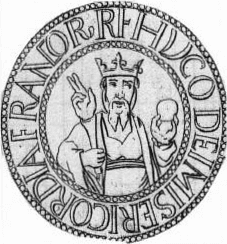
Hugh Capet
Emperor · Medieval
65.4Total

Sigismund I the Old
Emperor · Medieval
55.2Total
Basic Information
Born
941
1467
Died
996
1548
Era
Medieval
Medieval
Nationality
France
Poland
Occupation
Emperor
Emperor
Civilization
Western
Western
Score Comparison
Military (10%)
50.0
20.0
Political (20%)
68.0
62.7
Influence (20%)
68.0
55.0
Legacy (20%)
82.0
56.0
Leadership (15%)
68.0
78.0
Strategy (15%)
25.0
43.3
TOTAL
65.4
55.2
Hugh Capet — Complete Timeline
987 AD
Election as King of the FranksPolitical Action◆ Major
Hugh Capet was elected King of the Franks by the nobility after the death of Louis V, the last Carolingian king. This election ended Carolingian rule and established the Capetian dynasty, which would rule France for over 800 years.
ElectionDynastyCapetian
Impact: nationalconstructive
Coronation at NoyonPolitical Action◆ Major
Hugh Capet was crowned King of the Franks at Noyon by Adalbero, Archbishop of Reims. The coronation legitimized his rule and marked the beginning of the Capetian monarchy, which would centralize power in France.
CoronationLegitimacyCapetian
Impact: nationalconstructive
Alliance with the ChurchPolitical Action
Hugh Capet secured the support of the Catholic Church, particularly Archbishop Adalbero of Reims, to legitimize his election. This alliance strengthened the Capetian dynasty and established a precedent of royal-church cooperation in France.
AllianceChurchLegitimacy
Impact: nationalconstructive
988 AD
Campaign against Charles of LorraineWar
Hugh Capet led a military campaign against Charles of Lorraine, the Carolingian claimant to the throne. Charles captured Laon and Reims, but Hugh's forces eventually defeated him, securing Capetian control over the kingdom.
WarCarolingianSuccession
Impact: regional
Sigismund I the Old — Complete Timeline
1438 AD
Hussite Wars InvolvementWar
Sigismund I the Old, as a young prince, participated in the Hussite Wars, leading Polish forces in support of the Hussites. This involvement exposed him to military and religious conflicts that shaped his later policies.
HussitesMilitary ExperienceReligion
Impact: regional
1507 AD
Coronation as King of PolandPolitical Action◆ Major
Sigismund I the Old was crowned King of Poland after the death of his brother Alexander. His reign marked the beginning of the Polish Golden Age, characterized by cultural flourishing and political stability.
CoronationGolden AgeRenaissance
Impact: nationalconstructive
1518 AD
Patronage of the RenaissanceCultural◆ Major
Sigismund I the Old married Bona Sforza of Milan, bringing Italian Renaissance culture to Poland. He commissioned the renovation of Wawel Castle in Renaissance style and invited artists like Francesco Fiorentino, making Krakow a center of Renaissance art.
RenaissanceArt PatronageCultural Exchange
Impact: nationalprogressive
1519 AD
War with the Teutonic Order (1519-1521)War◆ Major
Sigismund I the Old fought a war against the Teutonic Order under Grand Master Albrecht von Hohenzollern. The conflict ended with a truce in 1521, leading to the secularization of the Order and the creation of the Duchy of Prussia as a Polish fief.
Teutonic OrderPrussiaSecularization
Impact: regionalconstructive
1530 AD
Execution of the Laws MovementReform
Sigismund I the Old faced the Execution of the Laws movement, which demanded the return of royal lands illegally held by nobles and the codification of laws. He resisted these demands, leading to tensions with the nobility that continued into his son's reign.
NobilityLegal ReformPolitical Conflict
Impact: national
This comparison has not been analyzed yet.
One-time AI generation (~1 minute). Scores and timeline are already available below.
Rankings
🥇
Hugh CapetLeader
Mil: 50.0Pol: 68.0Inf: 68.0
65.4
🥈
Sigismund I the Old
Mil: 20.0Pol: 62.7Inf: 55.0
55.2
+10.2 behind
How This Comparison Works
Algorithm
Each figure is scored on 6 dimensions (0—100 scale) based on structured historical data: Military (10%), Political (20%), Influence (20%), Legacy (20%), Leadership (15%), Strategy (15%). The weighted total produces the final ranking.
Data Sources
Scores are computed from structured sub-indicators in the database. Scale factors adjust for era (Ancient ×0.85, Modern ×1.0) and civilization size (Eastern ×1.05, Other ×0.80) to account for differences in population and military scale.
Maximum 3 Figures
Comparisons are limited to 2—3 figures to ensure readability and statistical meaningfulness.
Error Margins
±5 points per dimension — Sub-scores are derived from historical records with inherent uncertainty. Two figures within 5 points on a dimension should be considered roughly equivalent in that area.
Total Score Accuracy
±3 points overall — The weighted combination of 6 dimensions produces a total score with approximately ±3 points of uncertainty. Differences of less than 3 points are not statistically significant— the figures are effectively tied.
Known Limitations
- Historical records are incomplete and uneven across civilizations
- Figures from oral-tradition societies may be underrepresented
- Occupation labels can misclassify multi-role figures
- Scores measure capability and impact, not moral character
- Quantitative scoring is a comparison tool, not absolute truth
Capability Radar
Military (10%) — Battles & Warfare
Battles
15
45
Win Rate
20
50
Expansion
15
30
Political (20%) — Governance & Reform
Reform
60
65
Diplomacy
65
75
Economy
50
80
Influence (20%) — Cultural & Global Reach
Cultural
60
75
Global
70
55
Legacy (20%) — Historical Impact
Historical
85
70
Longevity
90
60
Leadership (15%) — Power & Stability
Tenure
70
70
Stability
55
70
Strategy (15%) — Tactics & Innovation
Strategy
15
45
Tactics
10
40
Reform
10
35
Similar Comparisons
Comments & Discussion
No comments yet. Be the first to share your thoughts!