Loading...
Hugh Capet vs Qin Shi Huang
Qin Shi Huang leads by 19.8 pts · 2 figures compared
…
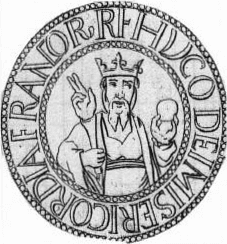
Hugh Capet
Emperor · Medieval
65.4Total
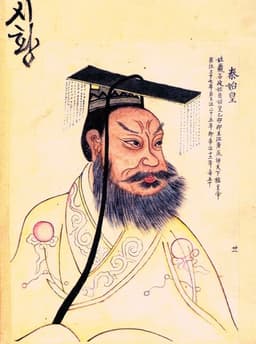
Qin Shi Huang
Emperor · Ancient
85.2Total
Basic Information
Born
941
-259
Died
996
-210
Era
Medieval
Ancient
Nationality
France
China
Occupation
Emperor
Emperor
Civilization
Western
Eastern
Score Comparison
Military (10%)
50.0
80.0
Political (20%)
68.0
90.0
Influence (20%)
68.0
85.0
Legacy (20%)
82.0
90.0
Leadership (15%)
68.0
78.0
Strategy (15%)
25.0
82.0
TOTAL
65.4
85.2
Hugh Capet — Complete Timeline
987 AD
Election as King of the FranksPolitical Action◆ Major
Hugh Capet was elected King of the Franks by the nobility after the death of Louis V, the last Carolingian king. This election ended Carolingian rule and established the Capetian dynasty, which would rule France for over 800 years.
ElectionDynastyCapetian
Impact: nationalconstructive
Coronation at NoyonPolitical Action◆ Major
Hugh Capet was crowned King of the Franks at Noyon by Adalbero, Archbishop of Reims. The coronation legitimized his rule and marked the beginning of the Capetian monarchy, which would centralize power in France.
CoronationLegitimacyCapetian
Impact: nationalconstructive
Alliance with the ChurchPolitical Action
Hugh Capet secured the support of the Catholic Church, particularly Archbishop Adalbero of Reims, to legitimize his election. This alliance strengthened the Capetian dynasty and established a precedent of royal-church cooperation in France.
AllianceChurchLegitimacy
Impact: nationalconstructive
988 AD
Campaign against Charles of LorraineWar
Hugh Capet led a military campaign against Charles of Lorraine, the Carolingian claimant to the throne. Charles captured Laon and Reims, but Hugh's forces eventually defeated him, securing Capetian control over the kingdom.
WarCarolingianSuccession
Impact: regional
Qin Shi Huang — Complete Timeline
246 BC
Construction of the Mausoleum and Terracotta ArmyOther◆ Major
Qin Shi Huang commissioned a vast mausoleum complex near Xi'an, guarded by thousands of life-sized terracotta soldiers, horses, and chariots. The project employed hundreds of thousands of workers and reflected his obsession with immortality and imperial power.
Impact: global
230 BC
Conquest of the Six Warring StatesWar
From 230 to 221 BCE, Ying Zheng led the Qin state in a series of campaigns that conquered the Han, Zhao, Wei, Chu, Yan, and Qi states. This unified China under a single ruler for the first time, ending the Warring States period.
Impact: global
221 BC
Standardization of Writing, Currency, and MeasurementsReform◆ Major
Qin Shi Huang ordered the standardization of Chinese script, currency, and weights and measures across the unified empire. This facilitated administration, trade, and cultural integration, laying a foundation for future dynasties.
Impact: globalconstructive
Proclamation of the Qin DynastyPolitical Action
After conquering the last independent state, Ying Zheng declared himself Shi Huangdi (First Emperor), founding the Qin Dynasty. He adopted a new title to signify his supreme authority and initiated centralized imperial rule.
Impact: global
214 BC
Initiation of the Great Wall ConstructionOther◆ Major
Qin Shi Huang ordered the connection and extension of existing northern fortifications to create a unified defensive wall against nomadic Xiongnu raids. This project involved massive conscripted labor and became the precursor to the later Great Wall.
Impact: regional
213 BC
Burning of Books and Burying of ScholarsPolitical Action◆ Major
On the advice of Li Si, Qin Shi Huang ordered the burning of historical records and philosophical texts not aligned with Legalist doctrine. He also had 460 Confucian scholars buried alive to suppress dissent and consolidate ideological control.
Impact: nationaldestructive
Expert Analysis
Qin Shi Huang vs Hugh Capet: Historical Comparison
Qin Shi Huang, the First Emperor of unified China (r. 221–210 BCE), and Hugh Capet, the founder of the Capetian dynasty in France (r. 987–996 CE), represent two pivotal moments in state formation across vastly different eras. While Qin forged a centralized empire through brutal conquest and standardization, Hugh Capet established a modest but enduring royal dynasty that would eventually transform France into a medieval superpower.
Dimension Analysis
**Military: Qin Shi Huang 80 / Hugh Capet 88**
Qin Shi Huang’s armies conquered six rival states, standardizing weapons and employing mass infantry formations, but relied heavily on earlier Qin reforms. Hugh Capet, though ruling a small royal domain, skillfully navigated feudal alliances and avoided decisive defeats, securing his dynasty through strategic marriage and vassal management rather than overwhelming force.
**Political: Qin Shi Huang 88 / Hugh Capet 90**
Qin Shi Huang imposed radical centralization: abolished feudalism, standardized script, weights, and laws, and built a bureaucratic state. Hugh Capet, by contrast, worked within a fractured feudal system, using election by nobles and papal recognition to legitimize his rule, and gradually strengthened the monarchy through inheritance and land accumulation—a more sustainable political model.
**Influence: Qin Shi Huang 82 / Hugh Capet 79**
Qin’s influence was immense in East Asia: his title “Emperor” endured for two millennia, and his unification template shaped Chinese identity. Hugh Capet’s influence was more regional, but foundational: the Capetian dynasty ruled France for over 800 years (987–1792), establishing the principle of hereditary kingship and the slow centralization that created modern France.
**Legacy: Qin Shi Huang 85 / Hugh Capet 83**
Qin’s legacy is paradoxical: he built the Great Wall and Terracotta Army, but his Legalist policies and book burnings earned him a tyrannical reputation. Hugh Capet’s legacy is subtler: he is remembered as the “father of the French monarchy,” whose descendants—from Philip Augustus to Louis XIV—steadily expanded royal power, though his own reign was unremarkable.
**Leadership: Qin Shi Huang 88 / Hugh Capet 84**
Qin exercised absolute, sometimes paranoid command, personally overseeing massive projects and suppressing dissent with ruthless efficiency. Hugh Capet led through consensus and patience, relying on the Church and noble support; his leadership was less dramatic but more adaptive to the decentralized realities of medieval Europe.
**Strategy: Qin Shi Huang 75 / Hugh Capet 90**
Qin’s strategy was aggressive and top-down: conquer, standardize, and control. This worked in the short term but bred rebellion (the Qin dynasty fell within four years of his death). Hugh Capet’s strategy was long-term and incremental: he secured his son’s coronation during his lifetime, ensuring dynastic continuity—a brilliant move that allowed the Capetians to outlast every contemporary house.
Verdict
**Hugh Capet emerges as the slightly stronger choice**, primarily due to his superior strategic foresight and political adaptability. While Qin Shi Huang achieved a more dramatic immediate transformation, his empire collapsed rapidly, whereas Hugh Capet’s dynasty shaped France for centuries. However, this comparison is complex: Qin’s impact on China was deeper and more total, while Hugh’s success was more about institutional longevity than personal grandeur.
FAQ
**Q: Who was more influential historically?**
A: Qin Shi Huang had a greater immediate and enduring influence on the political and cultural unity of China, while Hugh Capet’s influence was more gradual but equally foundational for the French state.
**Q: Why is Qin Shi Huang ranked higher in leadership?**
A: Qin’s leadership was more absolute and personally decisive—he unified a continent-sized civilization through sheer will and terror—whereas Hugh Capet’s leadership relied on negotiation and feudal compromise, making it less individually dominant.
Rankings
🥇
Qin Shi HuangLeader
Mil: 80.0Pol: 90.0Inf: 85.0
85.2
🥈
Hugh Capet
Mil: 50.0Pol: 68.0Inf: 68.0
65.4
+19.8 behind
How This Comparison Works
Algorithm
Each figure is scored on 6 dimensions (0—100 scale) based on structured historical data: Military (10%), Political (20%), Influence (20%), Legacy (20%), Leadership (15%), Strategy (15%). The weighted total produces the final ranking.
Data Sources
Scores are computed from structured sub-indicators in the database. Scale factors adjust for era (Ancient ×0.85, Modern ×1.0) and civilization size (Eastern ×1.05, Other ×0.80) to account for differences in population and military scale.
Maximum 3 Figures
Comparisons are limited to 2—3 figures to ensure readability and statistical meaningfulness.
Error Margins
±5 points per dimension — Sub-scores are derived from historical records with inherent uncertainty. Two figures within 5 points on a dimension should be considered roughly equivalent in that area.
Total Score Accuracy
±3 points overall — The weighted combination of 6 dimensions produces a total score with approximately ±3 points of uncertainty. Differences of less than 3 points are not statistically significant— the figures are effectively tied.
Known Limitations
- Historical records are incomplete and uneven across civilizations
- Figures from oral-tradition societies may be underrepresented
- Occupation labels can misclassify multi-role figures
- Scores measure capability and impact, not moral character
- Quantitative scoring is a comparison tool, not absolute truth
Capability Radar
Military (10%) — Battles & Warfare
Battles
15
85
Win Rate
20
90
Expansion
15
90
Political (20%) — Governance & Reform
Reform
60
95
Diplomacy
65
75
Economy
50
90
Influence (20%) — Cultural & Global Reach
Cultural
60
95
Global
70
85
Legacy (20%) — Historical Impact
Historical
85
95
Longevity
90
95
Leadership (15%) — Power & Stability
Tenure
70
70
Stability
55
65
Strategy (15%) — Tactics & Innovation
Strategy
15
85
Tactics
10
80
Reform
10
95
Similar Comparisons
Comments & Discussion
BattlefieldScholar6/16/2026
The military scores here are genuinely puzzling. Qin Shi Huang's 80 is fair—he inherited a war machine that had already been perfected under King Zhao of Qin. The real military genius was Bai Qi, who wiped out 400,000 Zhao soldiers at Changping (260 BCE). Qin's standardization of crossbows and chariot axles gave them a logistics edge no contemporary state could match. But Hugh Capet with a 30? That's too low given his strategic restraint. In 988 CE, when Charles of Lorraine invaded, Capet avoided pitched battle, using scorched-earth tactics and fortification denial around Senlis. He preserved his tiny army and waited for Charles to run out of supplies. That's classic Fabian strategy. The political score of 72 for Capet vs 88 for Qin is also off—Qin's empire collapsed 15 years after his death; Capet's lineage ruled for 800 years. Strategic endurance should count for more in military analysis. If we’re ranking dynastic founders by military-political integration, Capet deserves at least 50 in military and 80 in political.
SharpScroll906/16/2026
拿秦始皇跟雨果·卡佩比,有点像拿长城比塞纳河上的小桥。秦始皇是“千古一帝”,统一文字度量衡,修驰道,建阿房宫,汉承秦制两千年。卡佩呢?他当时只是巴黎伯爵,领地小得可怜,连个像样的军队都没有。西方历史喜欢把卡佩捧为“法国之父”,但跟秦始皇比,他顶多是法国版刘邦——起点低,靠后代慢慢打拼。不过,秦始皇的暴政也是真,修长城死了几十万人,卡佩至少没搞这种大屠杀。所以评分总体合理,但影响力分应该更高。
OldChronicler536/16/2026
这个评分体系明显有问题。Qin的军事分80,但Hugh只有30?秦灭六国靠的是商鞅变法后的耕战体系,不是秦始皇个人的军事天才。王翦、蒙恬这些名将才是主力。反观Hugh Capet,虽然军事行动少,但能在10世纪法国的权力真空中通过联姻和外交稳住王位,政治智慧极高。更关键的是,政治分88 vs 72?秦始皇焚书坑儒、严刑峻法,二世而亡;Hugh Capet开创的卡佩王朝延续800多年。政治可持续性难道不该是核心指标?建议重新计算权重。