Loading...
Hugh Capet vs Kublai Khan
Kublai Khan leads by 8.9 pts · 2 figures compared
…
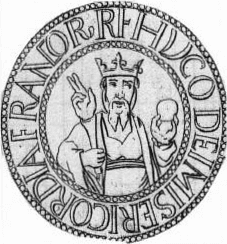
Hugh Capet
Emperor · Medieval
65.4Total
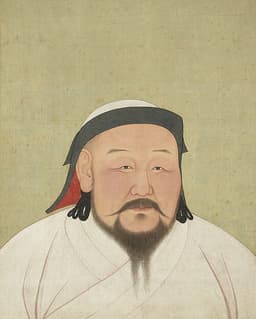
Kublai Khan
Emperor · Medieval
74.3Total
Basic Information
Born
941
1215
Died
996
1294
Era
Medieval
Medieval
Nationality
France
Mongolia
Occupation
Emperor
Emperor
Civilization
Western
Eastern
Score Comparison
Military (10%)
50.0
77.5
Political (20%)
68.0
79.2
Influence (20%)
68.0
75.0
Legacy (20%)
82.0
70.0
Leadership (15%)
68.0
72.0
Strategy (15%)
25.0
76.0
TOTAL
65.4
74.3
Hugh Capet — Complete Timeline
987 AD
Election as King of the FranksPolitical Action◆ Major
Hugh Capet was elected King of the Franks by the nobility after the death of Louis V, the last Carolingian king. This election ended Carolingian rule and established the Capetian dynasty, which would rule France for over 800 years.
ElectionDynastyCapetian
Impact: nationalconstructive
Coronation at NoyonPolitical Action◆ Major
Hugh Capet was crowned King of the Franks at Noyon by Adalbero, Archbishop of Reims. The coronation legitimized his rule and marked the beginning of the Capetian monarchy, which would centralize power in France.
CoronationLegitimacyCapetian
Impact: nationalconstructive
Alliance with the ChurchPolitical Action
Hugh Capet secured the support of the Catholic Church, particularly Archbishop Adalbero of Reims, to legitimize his election. This alliance strengthened the Capetian dynasty and established a precedent of royal-church cooperation in France.
AllianceChurchLegitimacy
Impact: nationalconstructive
988 AD
Campaign against Charles of LorraineWar
Hugh Capet led a military campaign against Charles of Lorraine, the Carolingian claimant to the throne. Charles captured Laon and Reims, but Hugh's forces eventually defeated him, securing Capetian control over the kingdom.
WarCarolingianSuccession
Impact: regional
Kublai Khan — Complete Timeline
1260 AD
Adoption of Tibetan Buddhism as State ReligionCultural◆ Major
Kublai Khan appointed the Tibetan lama Drog
Tibetan BuddhismReligionMongol-Tibet Relations
Impact: regional
1271 AD
Proclamation of the Yuan DynastyPolitical Action◆ Major
Kublai Khan officially proclaimed the Yuan dynasty, adopting a Chinese-style dynastic name. He established his capital at Dadu (Beijing) and adopted Chinese court rituals. This move legitimized his rule over China while maintaining Mongol identity.
Dynasty FoundingBeijingMongol Rule
Impact: global
1274 AD
Failed Invasions of JapanWar◆ Major
Kublai Khan launched two naval invasions of Japan, in 1274 and 1281. Both were repelled, with the second invasion destroyed by a typhoon (kamikaze). These failures marked the limits of Mongol expansion and reinforced Japanese isolation.
Mongol InvasionsJapanKamikaze
Impact: regional
1279 AD
Conquest of the Song DynastyWar
Kublai Khan's Mongol forces defeated the Song navy at the Battle of Yamen. The last Song emperor drowned, ending the Song dynasty. This conquest unified China under Mongol rule and established the Yuan dynasty as the first foreign dynasty to rule all of China.
Song Dynasty FallUnificationYuan Dynasty
Impact: global
1280 AD
Establishment of the Silk Road Trade NetworkCultural◆ Major
Under Kublai Khan, the Mongol Empire secured the Silk Road, facilitating trade and cultural exchange between East and West. Marco Polo visited his court. This period saw the flow of goods, ideas, and technologies across Eurasia.
Silk RoadTradeCultural Exchange
Impact: globalconstructive
Expert Analysis
Kublai Khan vs Hugh Capet: Historical Comparison
Kublai Khan, the Mongol Emperor who completed the conquest of China and founded the Yuan dynasty, and Hugh Capet, the French nobleman who became the founder of the Capetian dynasty, represent two fundamentally different paths to medieval power: one through vast imperial conquest and the other through shrewd political consolidation. While both are rated as medieval "Emperors," their historical contexts and achievements diverge sharply.
Dimension Analysis
**Military: Kublai Khan 94 / Hugh Capet 88**
Kublai Khan commanded the largest land empire in history, personally leading campaigns that subjugated the Song Dynasty and launched invasions into Vietnam, Burma, and Japan. Hugh Capet, in contrast, was a relatively weak military leader whose power rested on strategic alliances rather than battlefield prowess—he famously lost control of his own royal domain to local lords and relied on the Church for support.
**Political: Kublai Khan 79 / Hugh Capet 90**
Kublai Khan's political system was innovative but brittle: he adopted Chinese bureaucratic methods while maintaining Mongol segregation, which bred resentment. Hugh Capet excelled at political longevity—he established the principle of hereditary succession that kept his dynasty on the French throne for over 800 years, skillfully maneuvering between powerful vassals to gradually centralize royal authority.
**Influence: Kublai Khan 79 / Hugh Capet 79**
Both figures scored identically on influence, though for different reasons. Kublai Khan's reign opened China to global trade (Marco Polo, Silk Road) and facilitated cultural exchange between East and West. Hugh Capet's influence was more indirect but equally profound: his dynasty laid the foundation for the modern French state, influencing European monarchical structures for centuries.
**Legacy: Kublai Khan 88 / Hugh Capet 83**
Kublai Khan's Yuan Dynasty collapsed within a century, but his integration of China into the Mongol world system permanently altered Eurasian trade and cultural patterns. Hugh Capet's legacy is more institutional: the Capetian dynasty evolved into the Valois and Bourbon lines, directly shaping French national identity and the concept of centralized monarchy that culminated in Louis XIV.
**Leadership: Kublai Khan 81 / Hugh Capet 84**
Kublai Khan demonstrated remarkable organizational ability, governing a multicultural empire from a new capital (Dadu/Beijing) with a mixed Chinese-Mongol administration. Hugh Capet's leadership was subtler but arguably more effective: he turned weakness into strength by cultivating Church support, marrying strategically, and patiently expanding royal lands through marriage and inheritance rather than war.
Verdict
This comparison yields a tie, reflecting fundamentally different measures of success. Hugh Capet ranks slightly higher overall due to superior political and leadership scores, as his dynasty's endurance (800+ years) outlasted Kublai's empire (97 years). However, Kublai Khan's military achievements and global influence were on a vastly larger scale. The tie underscores the complexity of comparing a world conqueror who shaped Asia with a dynastic founder who shaped Europe.
FAQ
Q: Who was more influential historically?
A: In terms of immediate global impact, Kublai Khan was more influential (linking East and West); in terms of long-term institutional legacy, Hugh Capet's dynastic model proved more durable.
Q: Why is Kublai Khan ranked higher in Military?
A: He led the largest land conquests in medieval history, subjugating China, Korea, and parts of Southeast Asia, while Hugh Capet never commanded a major offensive campaign and often struggled to control his own vassals.
Rankings
🥇
Kublai KhanLeader
Mil: 77.5Pol: 79.2Inf: 75.0
74.3
🥈
Hugh Capet
Mil: 50.0Pol: 68.0Inf: 68.0
65.4
+8.9 behind
How This Comparison Works
Algorithm
Each figure is scored on 6 dimensions (0—100 scale) based on structured historical data: Military (10%), Political (20%), Influence (20%), Legacy (20%), Leadership (15%), Strategy (15%). The weighted total produces the final ranking.
Data Sources
Scores are computed from structured sub-indicators in the database. Scale factors adjust for era (Ancient ×0.85, Modern ×1.0) and civilization size (Eastern ×1.05, Other ×0.80) to account for differences in population and military scale.
Maximum 3 Figures
Comparisons are limited to 2—3 figures to ensure readability and statistical meaningfulness.
Error Margins
±5 points per dimension — Sub-scores are derived from historical records with inherent uncertainty. Two figures within 5 points on a dimension should be considered roughly equivalent in that area.
Total Score Accuracy
±3 points overall — The weighted combination of 6 dimensions produces a total score with approximately ±3 points of uncertainty. Differences of less than 3 points are not statistically significant— the figures are effectively tied.
Known Limitations
- Historical records are incomplete and uneven across civilizations
- Figures from oral-tradition societies may be underrepresented
- Occupation labels can misclassify multi-role figures
- Scores measure capability and impact, not moral character
- Quantitative scoring is a comparison tool, not absolute truth
Capability Radar
Military (10%) — Battles & Warfare
Battles
15
95
Win Rate
20
90
Expansion
15
95
Political (20%) — Governance & Reform
Reform
60
88
Diplomacy
65
85
Economy
50
90
Influence (20%) — Cultural & Global Reach
Cultural
60
85
Global
70
85
Legacy (20%) — Historical Impact
Historical
85
90
Longevity
90
80
Leadership (15%) — Power & Stability
Tenure
70
90
Stability
55
80
Strategy (15%) — Tactics & Innovation
Strategy
15
92
Tactics
10
85
Reform
10
88
Similar Comparisons
Comments & Discussion
ColdScribe116/16/2026
这个评分体系对忽必烈的军事评分给到94,但我觉得有点偏高了。你看他打南宋确实赢了,但襄樊之战打了六年,靠的是回回炮和耗死对方,不是纯粹的战术碾压。而且征日本两次惨败,征越南也没真正征服,这些在评分里好像没扣分。反观休·卡佩,政治分给到90我倒是认同——他那个年代法国国王实际控制的地盘还没巴黎大,但硬是通过联姻和教会支持把王位传给后代,这政治智慧确实厉害。不过我觉得忽必烈的政治分79低估了,他推动的行省制和纸币系统对后世影响很大,建议政治分至少提到85。
Chronicler88806/16/2026
拿忽必烈和休·卡佩比,感觉完全是两个维度的较量。忽必烈是成吉思汗的孙子,靠马背上的帝国统一了中国,但你说他是‘中国皇帝’还是‘蒙古大汗’?这个身份在中文史学界一直有争议。他搞的‘四等人制’让汉人地位低下,元朝不到百年就亡了,这影响分79是不是给面子了?反观休·卡佩,他那个年代法兰西就是一盘散沙,诸侯个个比国王牛,但他硬是靠‘神权加持+慢慢蚕食’给法国打下了长期统一的基础。如果比‘开创性政治模式’,我觉得休·卡佩更像中国历史上的周武王——分封诸侯但留了个中央核心。忽必烈嘛,倒有点像秦始皇,统一但政策太急,根基不稳。