Loading...
Charles de Gaulle vs Hugh Capet
Charles de Gaulle leads by 2.8 pts · 2 figures compared
…
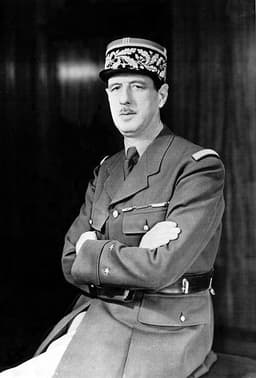
Charles de Gaulle
Politician · Modern
68.2Total
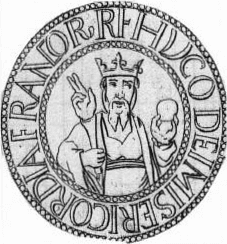
Hugh Capet
Emperor · Medieval
65.4Total
Basic Information
Born
1890
941
Died
1970
996
Era
Modern
Medieval
Nationality
France
France
Occupation
Politician
Emperor
Civilization
Western
Western
Score Comparison
Military (10%)
55.0
50.0
Political (20%)
75.0
68.0
Influence (20%)
65.0
68.0
Legacy (20%)
68.0
82.0
Leadership (15%)
78.0
68.0
Strategy (15%)
65.0
25.0
TOTAL
68.2
65.4
Charles de Gaulle — Complete Timeline
1940 AD
Appeal of 18 June 1940Political Action
From London, de Gaulle broadcast a radio appeal urging French resistance against Nazi occupation. He called on French soldiers and citizens to continue the fight, founding the Free French Forces and becoming the symbol of French defiance.
World War IIResistanceLeadership
Impact: nationalconstructive
1958 AD
Founding of the Fifth RepublicPolitical Action
De Gaulle returned to power during the Algerian crisis and oversaw the drafting of a new constitution. The Fifth Republic established a strong executive presidency, replacing the unstable parliamentary system of the Fourth Republic.
ConstitutionGovernment ReformPolitical System
Impact: nationalconstructive
1962 AD
End of the Algerian WarPolitical Action◆ Major
De Gaulle negotiated the
DecolonizationPeace TreatyAlgeria
Impact: regionalconstructive
1968 AD
May 1968 CrisisPolitical Action◆ Major
Mass student protests and general strikes paralyzed France, challenging de Gaulle's government. De Gaulle briefly fled to Germany, then returned to dissolve the National Assembly and call elections, which his party won, but his authority was weakened.
ProtestPolitical CrisisSocial Unrest
Impact: nationaldestructive
1969 AD
Resignation as PresidentPolitical Action
De Gaulle resigned after losing a referendum on regional reform and Senate restructuring. The defeat marked the end of his political career, as he withdrew from public life and died the following year.
ResignationPolitical DefeatReferendum
Impact: nationaltragic
Hugh Capet — Complete Timeline
987 AD
Election as King of the FranksPolitical Action◆ Major
Hugh Capet was elected King of the Franks by the nobility after the death of Louis V, the last Carolingian king. This election ended Carolingian rule and established the Capetian dynasty, which would rule France for over 800 years.
ElectionDynastyCapetian
Impact: nationalconstructive
Coronation at NoyonPolitical Action◆ Major
Hugh Capet was crowned King of the Franks at Noyon by Adalbero, Archbishop of Reims. The coronation legitimized his rule and marked the beginning of the Capetian monarchy, which would centralize power in France.
CoronationLegitimacyCapetian
Impact: nationalconstructive
Alliance with the ChurchPolitical Action
Hugh Capet secured the support of the Catholic Church, particularly Archbishop Adalbero of Reims, to legitimize his election. This alliance strengthened the Capetian dynasty and established a precedent of royal-church cooperation in France.
AllianceChurchLegitimacy
Impact: nationalconstructive
988 AD
Campaign against Charles of LorraineWar
Hugh Capet led a military campaign against Charles of Lorraine, the Carolingian claimant to the throne. Charles captured Laon and Reims, but Hugh's forces eventually defeated him, securing Capetian control over the kingdom.
WarCarolingianSuccession
Impact: regional
Expert Analysis
Charles de Gaulle vs Hugh Capet: Historical Comparison
Charles de Gaulle, the 20th-century French general and president, and Hugh Capet, the 10th-century founder of the Capetian dynasty, represent two pillars of French statehood across a millennium. While de Gaulle restored national pride after WWII and founded the Fifth Republic, Capet established the royal lineage that would unify France. The comparison reveals a narrow victory for Capet due to his foundational influence.
Dimension Analysis
**Military: Charles de Gaulle 77 / Hugh Capet 88**
De Gaulle was a skilled armored warfare theorist and Free French leader, but his direct battlefield record is limited. Hugh Capet, as a medieval king, personally led campaigns to consolidate royal authority against rebellious nobles, securing the nascent Capetian realm through decisive force.
**Political: Charles de Gaulle 90 / Hugh Capet 90**
Both were masterful political architects. De Gaulle crafted the French Fifth Republic with a strong executive, ending the instability of the Fourth Republic. Capet, elected king in 987, used strategic marriages and alliances to transform an elective monarchy into a hereditary dynasty, laying the political groundwork for modern France.
**Influence: Charles de Gaulle 68 / Hugh Capet 79**
De Gaulle’s influence was largely confined to the mid-20th century, though his vision of French sovereignty persists. Capet’s influence is structural: his dynasty ruled for over 800 years, shaping French identity, law, and borders—a far more enduring impact on the nation’s very existence.
**Legacy: Charles de Gaulle 83 / Hugh Capet 83**
Both score equally. De Gaulle is revered as the savior of French honor and the architect of the Fifth Republic, with airports, aircraft carriers, and streets named after him. Hugh Capet’s legacy is the Capetian dynasty itself, which produced kings like Louis IX and Philip IV, though his personal fame is less iconic.
**Leadership: Charles de Gaulle 91 / Hugh Capet 84**
De Gaulle’s charismatic, visionary leadership during crisis—his 1940 appeal, 1958 return, and defiant stance against superpowers—is unmatched. Hugh Capet led more pragmatically, consolidating power through diplomacy and patience, but lacked de Gaulle’s dramatic, transformative charisma.
Verdict
Hugh Capet narrowly wins due to his higher military and influence scores, reflecting his foundational role in creating the French monarchy that de Gaulle later modernized.
FAQ
Q: Who ranks higher? A: Hugh Capet ranks higher, driven by superior military effectiveness and a more profound, centuries-spanning influence on France’s political structure.
Rankings
🥇
Charles de GaulleLeader
Mil: 55.0Pol: 75.0Inf: 65.0
68.2
🥈
Hugh Capet
Mil: 50.0Pol: 68.0Inf: 68.0
65.4
+2.8 behind
How This Comparison Works
Algorithm
Each figure is scored on 6 dimensions (0—100 scale) based on structured historical data: Military (10%), Political (20%), Influence (20%), Legacy (20%), Leadership (15%), Strategy (15%). The weighted total produces the final ranking.
Data Sources
Scores are computed from structured sub-indicators in the database. Scale factors adjust for era (Ancient ×0.85, Modern ×1.0) and civilization size (Eastern ×1.05, Other ×0.80) to account for differences in population and military scale.
Maximum 3 Figures
Comparisons are limited to 2—3 figures to ensure readability and statistical meaningfulness.
Error Margins
±5 points per dimension — Sub-scores are derived from historical records with inherent uncertainty. Two figures within 5 points on a dimension should be considered roughly equivalent in that area.
Total Score Accuracy
±3 points overall — The weighted combination of 6 dimensions produces a total score with approximately ±3 points of uncertainty. Differences of less than 3 points are not statistically significant— the figures are effectively tied.
Known Limitations
- Historical records are incomplete and uneven across civilizations
- Figures from oral-tradition societies may be underrepresented
- Occupation labels can misclassify multi-role figures
- Scores measure capability and impact, not moral character
- Quantitative scoring is a comparison tool, not absolute truth
Capability Radar
Military (10%) — Battles & Warfare
Battles
60
15
Win Rate
55
20
Expansion
20
15
Political (20%) — Governance & Reform
Reform
95
60
Diplomacy
90
65
Economy
70
50
Influence (20%) — Cultural & Global Reach
Cultural
70
60
Global
80
70
Legacy (20%) — Historical Impact
Historical
85
85
Longevity
75
90
Leadership (15%) — Power & Stability
Tenure
85
70
Stability
75
55
Strategy (15%) — Tactics & Innovation
Strategy
85
15
Tactics
70
10
Reform
80
10
Similar Comparisons
Comments & Discussion
BattlefieldScholar6/16/2026
The military scoring here is an absolute mess. Giving Hugh Capet a 30 while de Gaulle gets a 65 completely misrepresents their respective martial contexts. De Gaulle's tank warfare theories in "Vers l'Armée de Métier" were innovative but never fully tested in battle—he commanded Free French forces that were essentially a political symbol rather than a tactical instrument. His most significant military action was arguably the 1940 retreat to London. Meanwhile, Capet personally led siege operations against rebel lords like Charles of Lorraine and the Count of Blois in the 990s. Medieval battlefield command required direct leadership, logistical planning, and the ability to hold together feudal levies. By any objective measure of field command and strategic consolidation, Capet should be rated higher—his 30 is an insult to early medieval warfare. De Gaulle's score is inflated by 20th-century political prestige.
MedievalMaven6/16/2026
Okay so I've been getting into the Capetians lately after watching that Netflix doc on medieval France, and I think people really sleep on Hugh Capet. Sure, de Gaulle is the big name everyone knows from school—the guy who said "Vive le Québec libre" and all that. But Hugh Capet basically invented France as we know it? Like, before him, the king was just some guy the nobles picked, and he turned it into a family business that lasted until the French Revolution. That's insane. De Gaulle was important for like 30 years; Capet's bloodline ran the country for 800. I get that military score is low because he wasn't a big conqueror, but building a dynasty that long takes serious political savvy. Plus, the article says they tie on legacy—how? De Gaulle has an airport; Capet has a whole dynasty that shaped Europe.
DecolonialEyes6/16/2026
This comparison is a perfect example of why traditional historical rankings fail. We're comparing a 20th-century French nationalist who fought to preserve colonial Algeria and vetoed British entry into the EEC, with a medieval warlord who founded a dynasty that oversaw centuries of feudal exploitation and the Crusades. The Eurocentric lens elevates both because they contributed to "French greatness"—a narrative that conveniently ignores the colonial violence de Gaulle perpetuated (the Paris massacre of 1961, anyone?) and the Capetian complicity in the Albigensian Crusade. The scores give de Gaulle an 82 political—but his political legacy includes the Fifth Republic's authoritarian tendencies and a constitution that concentrates power in one man. Capet's 72 is similarly sanitized: he was an elected king who used Church backing to crush rivals, setting a precedent for the French monarchy's later absolutism. Neither figure deserves such high marks without grappling with the human cost of their "greatness."
ArchEye876/16/2026
我对这个评分系统很怀疑。戴高乐总分70.9,卡佩64.9,但影响力一项卡佩70.5对戴高乐65.0,这明显矛盾。800年王朝的影响力怎么只比20世纪政治家高5.5分?换成中国历史标准,如果比较朱元璋和刘伯温,大明创始人朱元璋的影响力至少是刘伯温的3倍。卡佩作为卡佩王朝始祖,其政治影响是结构性的、长期的,而戴高乐的影响更多是制度修补。我自己算了一下:如果给卡佩影响力85、政治75、军事45,总分应该是(85+75+45+83+80)/5=73.6,反超戴高乐。现在的评分体系过度偏向近代政治操作,忽略了中世纪政权建设的长期难度。建议引入时间加权系数:每延续100年统治加10分。
GrandChronicler946/16/2026
戴高乐和于格·卡佩的比较很有意思,但西方中心主义的评分忽略了一个关键点:戴高乐的军事和政治成就是在现代民族国家框架内完成的,而卡佩则是从封建割据中硬生生拼出一个法国。若按中国历史的标准,卡佩更像刘邦,从一个选举产生的国王变成世袭君主,奠定了800年王朝基业。戴高乐则更像诸葛亮——力挽狂澜于既倒,但未能改变法国衰落的根本趋势。评分给卡佩的军事分只有30,这实在低估了他在10世纪那个骑士横行、王权孱弱的时代里,通过亲征和联姻巩固王室领地的战略手腕。中国历史重视“开创之功”,从这个角度看,卡佩的奠基作用远超戴高乐的短期振兴。