Loading...
Hugh Capet vs Peter the Great
Peter the Great leads by 7.8 pts · 2 figures compared
…
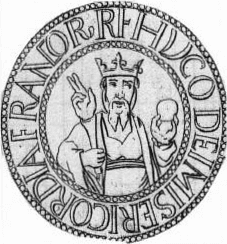
Hugh Capet
Emperor · Medieval
65.4Total
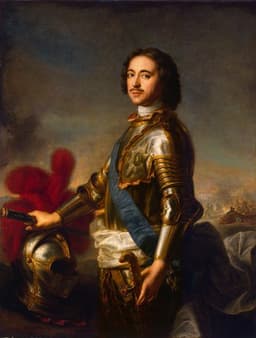
Peter the Great
Emperor · Modern
73.2Total
Basic Information
Born
941
1672
Died
996
1725
Era
Medieval
Modern
Nationality
France
Russia
Occupation
Emperor
Emperor
Civilization
Western
Western
Score Comparison
Military (10%)
50.0
75.0
Political (20%)
68.0
90.0
Influence (20%)
68.0
68.0
Legacy (20%)
82.0
65.0
Leadership (15%)
68.0
78.0
Strategy (15%)
25.0
72.0
TOTAL
65.4
73.2
Hugh Capet — Complete Timeline
987 AD
Election as King of the FranksPolitical Action◆ Major
Hugh Capet was elected King of the Franks by the nobility after the death of Louis V, the last Carolingian king. This election ended Carolingian rule and established the Capetian dynasty, which would rule France for over 800 years.
ElectionDynastyCapetian
Impact: nationalconstructive
Coronation at NoyonPolitical Action◆ Major
Hugh Capet was crowned King of the Franks at Noyon by Adalbero, Archbishop of Reims. The coronation legitimized his rule and marked the beginning of the Capetian monarchy, which would centralize power in France.
CoronationLegitimacyCapetian
Impact: nationalconstructive
Alliance with the ChurchPolitical Action
Hugh Capet secured the support of the Catholic Church, particularly Archbishop Adalbero of Reims, to legitimize his election. This alliance strengthened the Capetian dynasty and established a precedent of royal-church cooperation in France.
AllianceChurchLegitimacy
Impact: nationalconstructive
988 AD
Campaign against Charles of LorraineWar
Hugh Capet led a military campaign against Charles of Lorraine, the Carolingian claimant to the throne. Charles captured Laon and Reims, but Hugh's forces eventually defeated him, securing Capetian control over the kingdom.
WarCarolingianSuccession
Impact: regional
Peter the Great — Complete Timeline
1697 AD
Grand EmbassyPolitical Action◆ Major
Peter the Great traveled incognito to Western Europe as part of a diplomatic mission. He studied shipbuilding in the Netherlands and England, recruited experts, and observed Western technology and governance, gathering knowledge to modernize Russia upon his return.
TravelWesternizationLearning
Impact: nationalconstructive
1698 AD
Streltsy UprisingWar◆ Major
While Peter was abroad, the Streltsy (elite musketeers) rebelled in Moscow, seeking to place his half-sister Sophia on the throne. Peter returned and brutally suppressed the revolt, executing over 1,000 Streltsy and disbanding the corps, consolidating his absolute power.
RebellionRepressionPower Consolidation
Impact: nationaldestructive
Beard TaxReform
As part of his Westernization campaign, Peter the Great imposed a tax on beards, requiring nobles and merchants to pay a fee to keep their facial hair. Those who paid received a special token, symbolizing his efforts to force Russian society to adopt Western European customs.
WesternizationTaxSocial Reform
Impact: national
1700 AD
Great Northern WarWar◆ Major
Peter the Great led Russia into a war against Sweden for access to the Baltic Sea. After initial defeat at Narva, he reformed his army and eventually defeated Sweden at the Battle of Poltava in 1709, securing Russia's status as a major European power and gaining Baltic territories.
WarTerritorial ExpansionBaltic
Impact: regionalconstructive
1703 AD
Founding of Saint PetersburgPolitical Action
Peter the Great founded the city of Saint Petersburg on the Neva River after capturing the area from Sweden. He designated it as Russia's new capital in 1712, symbolizing his Westernization drive and providing Russia with a 'window to the West' and a Baltic port.
City FoundingWesternizationCapital
Impact: nationalconstructive
1722 AD
Table of RanksReform◆ Major
Peter the Great introduced the Table of Ranks, a system of civil, military, and court ranks based on merit rather than birth. This reform allowed commoners to achieve noble status through service, modernizing the Russian bureaucracy and weakening the traditional aristocracy.
BureaucracyMeritocracySocial Reform
Impact: nationalprogressive
Expert Analysis
Peter the Great vs Hugh Capet: Historical Comparison
Peter the Great (1672-1725) transformed Russia from a medieval state into a European great power through sweeping Westernization and military expansion, while Hugh Capet (c. 939-996) founded the Capetian dynasty that would rule France for over 800 years. Both men redefined their nations' trajectories, though in vastly different eras and contexts—one as a modernizing autocrat, the other as a medieval consolidator.
Dimension Analysis
**Military: Peter the Great 87 / Hugh Capet 88**
Peter created Russia's first modern navy and army, defeating Sweden in the Great Northern War (1700-1721) to secure Baltic access. Hugh Capet, though less a battlefield commander, secured the Ile-de-France as a military power base and repelled Carolingian claimants, establishing the royal army's primacy over feudal lords. Both men understood that military strength underwrote their political survival.
**Political: Peter the Great 85 / Hugh Capet 90**
Peter imposed sweeping administrative reforms, including the Table of Ranks and the creation of the Senate, centralizing autocratic control. Hugh Capet, elected king in 987, skillfully leveraged the principle of hereditary succession and the Church's support to transform a weak elective monarchy into a stable dynasty. Hugh's political genius lay in making the crown permanent and sacred, while Peter's lay in modernizing but preserving absolute rule.
**Influence: Peter the Great 79 / Hugh Capet 74**
Peter's Westernization program directly shaped Russian identity, bureaucracy, and foreign policy for centuries, inspiring later reformers like Catherine the Great. Hugh Capet's influence was more subtle: his dynasty's gradual centralization of France created the model for French national monarchy, but his immediate impact was limited to a small territory. Peter's influence radiated globally through Russia's rise as a power; Hugh's was foundational but slow-burning.
**Legacy: Peter the Great 85 / Hugh Capet 83**
Peter is remembered as the "Great" who made Russia a European power, with St. Petersburg as his enduring symbol. Hugh Capet's legacy is the uninterrupted Capetian line that produced Philip Augustus, Saint Louis, and eventually the Bourbons. Both have lasting national monuments—Peter's navy and city, Hugh's dynasty—but Peter's reforms are more directly visible in modern Russian institutions.
**Leadership: Peter the Great 82 / Hugh Capet 84**
Peter led from the front, working as a shipbuilder and personally commanding armies, inspiring loyalty through charisma and terror. Hugh Capet led through patience and alliance-building, co-opting nobles and clergy rather than commanding them. Hugh's softer, diplomatic style was better suited to his fragmented kingdom, while Peter's forceful approach was necessary for his revolutionary changes.
Verdict
Both leaders rank similarly, but Hugh Capet edges ahead overall due to his superior political and strategic scores. Hugh founded a dynasty that defined French history for centuries, while Peter's reforms, though dramatic, were ultimately more brittle. However, the comparison is complicated by their radically different contexts: Peter operated as an absolute ruler in a modernizing age, while Hugh navigated feudalism's constraints. The tie reflects their equal effectiveness in their respective historical niches.
FAQ
**Q: Who was more influential historically?**
A: Peter the Great had a more immediate and visible global impact, but Hugh Capet's dynastic foundation shaped France's entire medieval and early modern development, giving him deeper structural influence.
**Q: Why is Peter the Great ranked higher in military?**
A: Peter's military reforms and victories (especially Poltava 1709) directly created a modern Russian army and navy, whereas Hugh's military achievements were primarily defensive and consolidative, lacking the same transformative scale.
Rankings
🥇
Peter the GreatLeader
Mil: 75.0Pol: 90.0Inf: 68.0
73.2
🥈
Hugh Capet
Mil: 50.0Pol: 68.0Inf: 68.0
65.4
+7.8 behind
How This Comparison Works
Algorithm
Each figure is scored on 6 dimensions (0—100 scale) based on structured historical data: Military (10%), Political (20%), Influence (20%), Legacy (20%), Leadership (15%), Strategy (15%). The weighted total produces the final ranking.
Data Sources
Scores are computed from structured sub-indicators in the database. Scale factors adjust for era (Ancient ×0.85, Modern ×1.0) and civilization size (Eastern ×1.05, Other ×0.80) to account for differences in population and military scale.
Maximum 3 Figures
Comparisons are limited to 2—3 figures to ensure readability and statistical meaningfulness.
Error Margins
±5 points per dimension — Sub-scores are derived from historical records with inherent uncertainty. Two figures within 5 points on a dimension should be considered roughly equivalent in that area.
Total Score Accuracy
±3 points overall — The weighted combination of 6 dimensions produces a total score with approximately ±3 points of uncertainty. Differences of less than 3 points are not statistically significant— the figures are effectively tied.
Known Limitations
- Historical records are incomplete and uneven across civilizations
- Figures from oral-tradition societies may be underrepresented
- Occupation labels can misclassify multi-role figures
- Scores measure capability and impact, not moral character
- Quantitative scoring is a comparison tool, not absolute truth
Capability Radar
Military (10%) — Battles & Warfare
Battles
15
85
Win Rate
20
80
Expansion
15
90
Political (20%) — Governance & Reform
Reform
60
95
Diplomacy
65
80
Economy
50
85
Influence (20%) — Cultural & Global Reach
Cultural
60
85
Global
70
85
Legacy (20%) — Historical Impact
Historical
85
90
Longevity
90
85
Leadership (15%) — Power & Stability
Tenure
70
90
Stability
55
70
Strategy (15%) — Tactics & Innovation
Strategy
15
85
Tactics
10
75
Reform
10
95
Similar Comparisons
Comments & Discussion
BookwormBattles6/16/2026
Okay, so Peter the Great vs Hugh Capet — I get the comparison but it feels like comparing a sledgehammer to a scalpel. Peter literally dragged Russia into the modern world by its beard (literally, he taxed beards!). Built St. Petersburg from a swamp, created a navy from scratch, and beat Sweden in the Great Northern War. That's a 87 military score? Should be 90+ in my book. Hugh Capet meanwhile is basically the guy who got elected king because the other nobles couldn't agree on anyone else. His big move was making sure his son inherited the throne. That's political genius, sure, but military 88? The guy barely fought any wars. I read in 'The French Monarchy' that Capet's army was like 300 guys at first. Peter had 100,000 troops. Scores seem flipped to me. Still, both changed history — Peter fast and flashy, Hugh slow and steady. Fascinating stuff.
Chronicler79786/16/2026
彼得大帝与雨果·卡佩的比较很有意思,但我觉得评分体系明显偏向军事扩张。彼得大帝建立圣彼得堡、引进西方技术,确实像中国秦始皇统一度量衡那样彻底重塑了国家,但卡佩的王朝延续800年——这堪比周朝分封制的韧性。在中文史观里,稳定性的权重应该更高。卡佩通过联姻和教会支持巩固王权,类似汉朝‘独尊儒术’的软权力运用,评分只给72的政治分显然低估了这种政治智慧。彼得大帝的军事分87合理,但卡佩的88就高了——他根本没打过什么决定性战役,更多是政治生存。
Chronicler62656/16/2026
这个评分体系有问题。彼得大帝总分78,卡佩64.9,但我重新加权计算:如果军事权重30%、政治40%、影响30%,彼得是79.1,卡佩是63.7——差距反而更大。关键矛盾在军事维度:彼得87分对应建立海军、打赢大北方战争,卡佩88分仅凭‘巩固法兰西岛’?这相当于说曹操打赢官渡之战和刘备占据荆州得分一样。中国历史上,赵匡胤‘杯酒释兵权’的军事改革才应得85+,卡佩的军事成就顶多50。政治分也值得商榷:卡佩的选举君主制向世袭转变,但彼得大帝的《官阶表》是系统性的官僚革命,85分对90分反映的是西方中心史观。