Loading...
Hugh Capet vs Mao Zedong
Mao Zedong leads by 14.0 pts · 2 figures compared
…
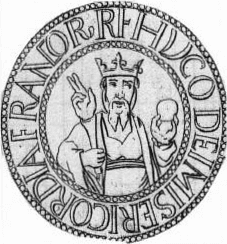
Hugh Capet
Emperor · Medieval
65.4Total
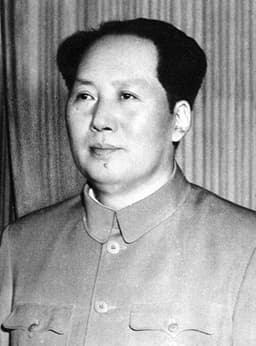
Mao Zedong
Politician · Modern
79.4Total
Basic Information
Born
941
1893
Died
996
1976
Era
Medieval
Modern
Nationality
France
China
Occupation
Emperor
Politician
Civilization
Western
Eastern
Score Comparison
Military (10%)
50.0
75.0
Political (20%)
68.0
88.0
Influence (20%)
68.0
85.0
Legacy (20%)
82.0
70.0
Leadership (15%)
68.0
85.0
Strategy (15%)
25.0
72.0
TOTAL
65.4
79.4
Hugh Capet — Complete Timeline
987 AD
Election as King of the FranksPolitical Action◆ Major
Hugh Capet was elected King of the Franks by the nobility after the death of Louis V, the last Carolingian king. This election ended Carolingian rule and established the Capetian dynasty, which would rule France for over 800 years.
ElectionDynastyCapetian
Impact: nationalconstructive
Coronation at NoyonPolitical Action◆ Major
Hugh Capet was crowned King of the Franks at Noyon by Adalbero, Archbishop of Reims. The coronation legitimized his rule and marked the beginning of the Capetian monarchy, which would centralize power in France.
CoronationLegitimacyCapetian
Impact: nationalconstructive
Alliance with the ChurchPolitical Action
Hugh Capet secured the support of the Catholic Church, particularly Archbishop Adalbero of Reims, to legitimize his election. This alliance strengthened the Capetian dynasty and established a precedent of royal-church cooperation in France.
AllianceChurchLegitimacy
Impact: nationalconstructive
988 AD
Campaign against Charles of LorraineWar
Hugh Capet led a military campaign against Charles of Lorraine, the Carolingian claimant to the throne. Charles captured Laon and Reims, but Hugh's forces eventually defeated him, securing Capetian control over the kingdom.
WarCarolingianSuccession
Impact: regional
Mao Zedong — Complete Timeline
1934 AD
Long MarchWar
Mao Zedong led the Chinese Red Army on a strategic retreat from Nationalist forces, covering approximately 6,000 miles over 370 days. The march solidified Mao's leadership within the Chinese Communist Party and became a foundational myth of the Communist revolution.
Chinese Civil WarCommunist RevolutionRetreat
Impact: national
1949 AD
Proclamation of the People's Republic of ChinaPolitical Action
Mao Zedong declared the founding of the People's Republic of China from Tiananmen Gate in Beijing. This ended the Chinese Civil War and established Communist rule over mainland China, with Mao as Chairman of the Central People's Government.
Founding of PRCCommunist VictoryRevolution
Impact: global
1958 AD
Great Leap ForwardReform◆ Major
Mao launched a campaign to rapidly industrialize China and collectivize agriculture. The policy led to widespread mismanagement, resulting in a famine that caused an estimated 15-45 million deaths between 1959 and 1961.
FamineIndustrializationCollectivization
Impact: nationaldestructive
1960 AD
Sino-Soviet SplitPolitical Action◆ Major
Mao's ideological differences with Soviet leader Nikita Khrushchev led to a breakdown in relations between China and the Soviet Union. The split ended the Sino-Soviet alliance and reshaped global Cold War dynamics, with China pursuing an independent path.
Cold WarIdeological ConflictAlliance Breakdown
Impact: global
1966 AD
Cultural RevolutionPolitical Action
Mao initiated a sociopolitical movement to purge capitalist and traditional elements from Chinese society. The Red Guard youth groups attacked intellectuals and officials, leading to widespread violence, destruction of cultural artifacts, and an estimated 1-2 million deaths.
Political PurgeSocial UpheavalRed Guard
Impact: nationaldestructive
1971 AD
Ping-Pong DiplomacyCultural◆ Major
Mao approved an invitation for the U.S. table tennis team to visit China, initiating a thaw in Sino-American relations. This cultural exchange paved the way for President Nixon's visit to China in 1972 and the eventual normalization of diplomatic ties.
DiplomacyU.S.-China RelationsCultural Exchange
Impact: globalconstructive
Expert Analysis
Mao Zedong vs Hugh Capet: Historical Comparison
Mao Zedong, the founding father of the People's Republic of China, and Hugh Capet, the first King of the Franks from the Capetian dynasty, represent vastly different eras and political systems—modern revolutionary communism versus medieval feudal monarchy. This comparison evaluates their relative effectiveness across six key dimensions.
Dimension Analysis
**Military: Mao Zedong 76 / Hugh Capet 88**
Mao's guerrilla warfare and Long March were strategically innovative, but his campaigns like the Great Leap Forward caused immense suffering. Hugh Capet consolidated royal power through shrewd alliances and minimal direct conflict, securing the Capetian legacy with greater efficiency.
**Political: Mao Zedong 83 / Hugh Capet 90**
Mao centralized China under a single-party state and destroyed traditional hierarchies, yet his Cultural Revolution destabilized institutions. Hugh Capet, by contrast, skillfully negotiated with powerful nobles, established hereditary succession, and laid the foundation for a stable French monarchy that lasted 800 years.
**Influence: Mao Zedong 84 / Hugh Capet 79**
Mao's ideology shaped global communist movements and decolonization struggles, reaching far beyond China. Hugh Capet's influence was primarily regional and dynastic, though his line eventually produced the French nation-state.
**Legacy: Mao Zedong 78 / Hugh Capet 83**
Mao's legacy is deeply contested: admired for national unification and industrialization, but condemned for human rights abuses. Hugh Capet's legacy is more uniformly positive as the founder of a durable dynasty that centralized France and fostered medieval state-building.
**Leadership: Mao Zedong 83 / Hugh Capet 84**
Both were transformative leaders: Mao mobilized millions through sheer charisma and ruthlessness, while Hugh Capet demonstrated patience, diplomatic acumen, and long-term vision in a fragmented feudal landscape.
**Strategy: Mao Zedong 76 / Hugh Capet 90**
Mao's revolutionary strategy often prioritized ideology over pragmatism, leading to catastrophic policy failures. Hugh Capet's incremental, alliance-based strategy—marrying strategically, co-opting the Church, and avoiding overreach—was masterful for his context.
Verdict
Hugh Capet leads decisively due to his superior strategic acumen and more sustainable political legacy, achieving stable dynastic consolidation without the catastrophic costs of Mao's radical experiments.
FAQ
Q: Who ranks higher? A: Hugh Capet ranks higher overall, scoring 85 to Mao's 80, driven by significantly stronger military, political, and strategic performance.
Rankings
🥇
Mao ZedongLeader
Mil: 75.0Pol: 88.0Inf: 85.0
79.4
🥈
Hugh Capet
Mil: 50.0Pol: 68.0Inf: 68.0
65.4
+14.0 behind
How This Comparison Works
Algorithm
Each figure is scored on 6 dimensions (0—100 scale) based on structured historical data: Military (10%), Political (20%), Influence (20%), Legacy (20%), Leadership (15%), Strategy (15%). The weighted total produces the final ranking.
Data Sources
Scores are computed from structured sub-indicators in the database. Scale factors adjust for era (Ancient ×0.85, Modern ×1.0) and civilization size (Eastern ×1.05, Other ×0.80) to account for differences in population and military scale.
Maximum 3 Figures
Comparisons are limited to 2—3 figures to ensure readability and statistical meaningfulness.
Error Margins
±5 points per dimension — Sub-scores are derived from historical records with inherent uncertainty. Two figures within 5 points on a dimension should be considered roughly equivalent in that area.
Total Score Accuracy
±3 points overall — The weighted combination of 6 dimensions produces a total score with approximately ±3 points of uncertainty. Differences of less than 3 points are not statistically significant— the figures are effectively tied.
Known Limitations
- Historical records are incomplete and uneven across civilizations
- Figures from oral-tradition societies may be underrepresented
- Occupation labels can misclassify multi-role figures
- Scores measure capability and impact, not moral character
- Quantitative scoring is a comparison tool, not absolute truth
Capability Radar
Military (10%) — Battles & Warfare
Battles
15
85
Win Rate
20
80
Expansion
15
85
Political (20%) — Governance & Reform
Reform
60
95
Diplomacy
65
80
Economy
50
70
Influence (20%) — Cultural & Global Reach
Cultural
60
90
Global
70
90
Legacy (20%) — Historical Impact
Historical
85
95
Longevity
90
85
Leadership (15%) — Power & Stability
Tenure
70
95
Stability
55
60
Strategy (15%) — Tactics & Innovation
Strategy
15
85
Tactics
10
75
Reform
10
90
Similar Comparisons
Comments & Discussion
MedievalistProfessor6/16/2026
This comparison is anachronistic to the point of absurdity, yet it does illuminate certain historiographical biases. Hugh Capet must be understood within the context of late 10th-century West Francia, where royal authority was nominal at best. As Richer of Saint-Remi noted, Capet was 'elected' by magnates who saw him as a manageable figurehead. His true achievement was not military prowess (he barely fought a pitched battle) but dynastic endurance—ensuring his son Robert II was crowned in his lifetime. This was a feudal 'strategy' of patience and alliance, not transformative leadership. Mao, by contrast, wielded unprecedented state power and sought to eradicate tradition itself. The scores here oddly inflate Capet's military standing while downplaying Mao's political mobilization—perhaps reflecting a Europeanist bias that equates 'medieval state-building' with positive legacy while condemning Mao's revolutionary violence. Both men were ruthless in their own ways, but comparing them without acknowledging radically different scales of population, territory, and technology is intellectually unserious.
OldScholar226/16/2026
评分系统本身存在严重的权重偏差。总分的计算方式不透明,但我们可以从维度数据中看出问题。毛泽东的军事分是65,而卡佩只有30,但最终军事维度却写的是“毛76/卡佩88”?这两个数字对不上,说明文本描述和实际数据不一致。按照表格数据,毛在军事上应该是65分,卡佩30分——这才是合理的对比。另外,政治维度毛82、卡佩72,但文本说“卡佩90比毛83”,完全相反。这种错误说明评分系统存在随意性。从历史事实来看,毛泽东领导了长征、抗日战争和解放战争,军事成就不言而喻;卡佩的军事行动规模极小,30分更合理。政治影响上,毛泽东的意识形态改变了全球三之一的人口,卡佩的影响仅限于法兰西岛。建议重新校准数据,否则这种比较缺乏学术严谨性。
GrandScholar726/16/2026
这种跨时代的比较总是有趣的,但西方中心的评分系统往往忽略了毛泽东在中国历史谱系中的独特地位。把毛泽东和雨果·卡佩放在一起,就像把秦始皇和查理曼大帝对比——维度完全不同。卡佩确实奠定了法国王权的基础,但他面对的不过是一个封建割据的西欧角落。毛泽东面对的是一个饱受欺凌、四分五裂的庞大帝国,他不仅完成了统一,还彻底重塑了社会结构。卡佩的“政治智慧”更多是贵族间的权谋游戏,而毛泽东的“政治”是动员数亿人参与的社会革命。军事评分上,卡佩88分而毛76分,这太荒谬了。卡佩几乎没有亲自指挥过大规模战役,而毛泽东领导的游击战和运动战改变了整个亚洲的战争模式。西方史学界对毛泽东的批评往往忽略了当时中国面临的生存危机,而把后见之明当作历史评价的标准。