Loading...
Huan Wen vs Jiang Wei
Huan Wen leads by 3.6 pts · 2 figures compared
…
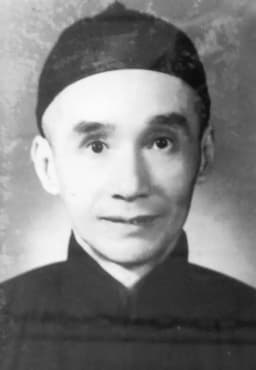
Huan Wen
General · Ancient
57.1Total

Jiang Wei
General · Ancient
53.5Total
Basic Information
Born
312
202
Died
373
264
Era
Ancient
Ancient
Nationality
China
China
Occupation
General
General
Civilization
Eastern
Eastern
Score Comparison
Military (10%)
85.0
70.0
Political (20%)
43.7
35.1
Influence (20%)
54.1
55.7
Legacy (20%)
47.5
50.0
Leadership (15%)
61.1
54.2
Strategy (15%)
75.0
66.3
TOTAL
57.1
53.5
Huan Wen — Complete Timeline
346 AD
Conquest of ShuWar
Huan Wen led a campaign to conquer the Cheng Han state in Sichuan. He defeated the Cheng Han army and captured its capital Chengdu, annexing the region into the Jin Dynasty and expanding Jin territory.
Jin DynastyCheng HanConquestSichuan
Impact: regionalconstructive
354 AD
Northern ExpeditionsWar◆ Major
Huan Wen launched a series of northern expeditions against the Former Qin and other states. He achieved initial victories but failed to hold territory, ultimately retreating due to lack of supplies and political opposition at court.
Jin DynastyNorthern ExpeditionFormer Qin
Impact: regional
371 AD
Attempted UsurpationPolitical Action
Huan Wen deposed Emperor Fei of Jin and installed Emperor Jianwen, a puppet ruler. He sought to usurp the throne but died in 373 before completing his plans, leaving his son Huan Xuan to later attempt the same.
Jin DynastyUsurpationCoupHuan Xuan
Impact: nationaldestructive
Jiang Wei — Complete Timeline
234 AD
Became successor to Zhuge LiangPolitical Action◆ Major
After Zhuge Liang's death, Jiang Wei was appointed as the commander of Shu Han's military forces, tasked with continuing the Northern Expeditions against Wei. He was given command of the remaining troops.
Shu HanZhuge LiangSuccession
Impact: nationalconstructive
238 AD
Led the first Northern ExpeditionWar
Jiang Wei launched his first major campaign against Wei, attacking the Wei-held territories of Longxi and Nan'an. The campaign achieved limited gains but failed to capture key cities.
Northern ExpeditionsShu HanMilitary Campaign
Impact: regional
Conducted eleven Northern ExpeditionsWar◆ Major
Over the course of his career, Jiang Wei launched eleven separate campaigns against Wei, each with varying degrees of success. These campaigns drained Shu Han's resources and manpower without achieving a decisive breakthrough.
Northern ExpeditionsShu HanMilitary Strategy
Impact: nationaldestructive
255 AD
Defeated by Deng Ai at the Battle of TaoxiWar◆ Major
Jiang Wei's forces were decisively defeated by Deng Ai at Taoxi. The defeat forced Jiang Wei to retreat and weakened Shu Han's military position.
Northern ExpeditionsDeng AiBattle
Impact: regionaldestructive
263 AD
Surrendered to Deng Ai after the fall of ShuPolitical Action
After Deng Ai's surprise attack on Chengdu, Jiang Wei surrendered to the Wei general. He later attempted to restore Shu by conspiring with Zhong Hui, but the plot failed and he was killed.
Shu HanFall of ShuSurrender
Impact: nationaltragic
Expert Analysis
Origins
**Huan Wen** was born in 312 in Qiaoguo (modern Anhui) to a prominent family of the Jin dynasty. His father, Huan Yi, served as a general, providing Huan Wen with early military exposure. Huan Wen married Emperor Kang's sister, Princess Nankang, which elevated his status. He began his career as a cavalry commander, but his rise accelerated after suppressing local rebellions.
**Jiang Wei** was born in 202 in Tianshui (modern Gansu) to a minor official family. He served as a military officer under the Wei kingdom, but when Zhuge Liang invaded in 228, Jiang Wei was suspected of collusion and forced to defect to Shu Han. Zhuge Liang immediately recognized his talent and appointed him as a general, eventually naming him his successor.
Rise to Power
Huan Wen's turning point came in 346 when he led a campaign against the Cheng Han state. With a force of 10,000 men, he marched through difficult terrain and defeated the Cheng Han army at the Battle of Jianwei, capturing the capital Chengdu and annexing the region. This victory made him a national hero and gave him control over the vital Yangtze River region. By 354, he launched his first Northern Expedition against Former Qin, capturing Chang'an briefly but failing to hold it. In 369, he attempted a major expedition but was defeated at Fangtou by the Former Yan general Murong Chui.
Jiang Wei's rise was solely due to Zhuge Liang's patronage. After Zhuge Liang's death in 234, Jiang Wei became the commander of Shu Han's military forces. He spent the next 30 years leading eleven Northern Expeditions against Wei, beginning in 238. His first campaign achieved limited gains in Longxi and Nan'an, but he never replicated Zhuge Liang's success. His repeated failures drained Shu's resources and manpower.
Leadership & Governance
Huan Wen was a shrewd and pragmatic leader. He focused on consolidating his power base in the south, using military victories to gain political leverage. He implemented administrative reforms in the conquered territories, but his governance was marred by corruption and nepotism. He scored 61.1 in leadership, reflecting his ability to command loyalty but also his ruthless ambition. In 371, he deposed Emperor Fei and installed Emperor Jianwen as a puppet, effectively ruling the Jin court.
Jiang Wei was a dedicated but inflexible commander. He adhered strictly to Zhuge Liang's strategy of northern expeditions, despite changing circumstances. His leadership score of 54.2 reflects his inability to adapt and his poor political acumen. He failed to build alliances within Shu's court, leading to conflict with the eunuch Huang Hao. His governance was focused solely on military campaigns, neglecting economic development and internal stability.
Triumph & Tragedy
Huan Wen's greatest triumph was the conquest of Shu in 346, which expanded Jin's territory and secured the southern frontier. His greatest failure was his failed usurpation attempt. He died in 373 before seizing the throne, leaving his son Huan Xuan to eventually declare a short-lived dynasty. His political score of 43.7 reflects his inability to consolidate power at the highest level.
Jiang Wei's greatest triumph was becoming Zhuge Liang's successor and leading Shu's military for three decades. His greatest failure was the collapse of Shu in 263. After Deng Ai's surprise attack on Chengdu, Jiang Wei surrendered but conspired with Wei general Zhong Hui to restore Shu. The plot failed, and Jiang Wei was killed along with Zhong Hui. His political score of 35.1 shows his lack of strategic planning beyond military tactics.
Character & Destiny
Huan Wen was ambitious and calculating. He used his military success as a stepping stone to political power, but his impatience and overreach led to his downfall. Historical records describe him as 'stern and decisive but lacking in magnanimity.' His total score of 57.1 reflects his mixed legacy.
Jiang Wei was loyal and persistent but strategically flawed. He continued Zhuge Liang's policies without adapting to new realities, leading to Shu's exhaustion. The Book of Jin criticizes him for 'wasting the nation's strength on futile campaigns.' His total score of 53.5 is slightly lower than Huan Wen's.
Legacy
Huan Wen's legacy is complex. He expanded Jin's territory but his usurpation attempts weakened the dynasty. His military reforms influenced later generals, but his reputation is tainted by ambition. He scored 54.1 in influence and 47.5 in legacy.
Jiang Wei is remembered as a tragic figure who remained loyal to Shu Han's ideals. His eleven expeditions are studied as examples of strategic overextension. His influence score of 55.7 and legacy of 50.0 reflect his symbolic importance in Chinese history.
Conclusion
Huan Wen had a greater impact than Jiang Wei. His conquest of Shu was a concrete achievement that expanded Jin's territory, while Jiang Wei's campaigns ultimately failed to achieve any lasting gains. Huan Wen's military score of 85.0 dwarfs Jiang Wei's 70.0, and his political maneuvering, though flawed, was more effective than Jiang Wei's isolation. While both were ultimately unsuccessful in their grand ambitions, Huan Wen's actions reshaped the political landscape of his era, whereas Jiang Wei merely prolonged Shu's decline. Therefore, Huan Wen's overall score of 57.1 versus Jiang Wei's 53.5 is justified.
Rankings
🥇
Huan WenLeader
Mil: 85.0Pol: 43.7Inf: 54.1
57.1
🥈
Jiang Wei
Mil: 70.0Pol: 35.1Inf: 55.7
53.5
+3.6 behind
How This Comparison Works
Algorithm
Each figure is scored on 6 dimensions (0—100 scale) based on structured historical data: Military (10%), Political (20%), Influence (20%), Legacy (20%), Leadership (15%), Strategy (15%). The weighted total produces the final ranking.
Data Sources
Scores are computed from structured sub-indicators in the database. Scale factors adjust for era (Ancient ×0.85, Modern ×1.0) and civilization size (Eastern ×1.05, Other ×0.80) to account for differences in population and military scale.
Maximum 3 Figures
Comparisons are limited to 2—3 figures to ensure readability and statistical meaningfulness.
Error Margins
±5 points per dimension — Sub-scores are derived from historical records with inherent uncertainty. Two figures within 5 points on a dimension should be considered roughly equivalent in that area.
Total Score Accuracy
±3 points overall — The weighted combination of 6 dimensions produces a total score with approximately ±3 points of uncertainty. Differences of less than 3 points are not statistically significant— the figures are effectively tied.
Known Limitations
- Historical records are incomplete and uneven across civilizations
- Figures from oral-tradition societies may be underrepresented
- Occupation labels can misclassify multi-role figures
- Scores measure capability and impact, not moral character
- Quantitative scoring is a comparison tool, not absolute truth
Capability Radar
Military (10%) — Battles & Warfare
Battles
75
65
Win Rate
70
40
Expansion
70
30
Political (20%) — Governance & Reform
Reform
55
50
Diplomacy
60
45
Economy
50
40
Influence (20%) — Cultural & Global Reach
Cultural
45
55
Global
30
30
Legacy (20%) — Historical Impact
Historical
55
60
Longevity
40
55
Leadership (15%) — Power & Stability
Tenure
65
60
Stability
40
35
Strategy (15%) — Tactics & Innovation
Strategy
75
60
Tactics
80
70
Reform
60
55
Similar Comparisons
Comments & Discussion
No comments yet. Be the first to share your thoughts!