Loading...
Arthur Wellesley vs Qin Shi Huang
Qin Shi Huang leads by 13.0 pts · 2 figures compared
…

Arthur Wellesley
General · Modern
72.2Total
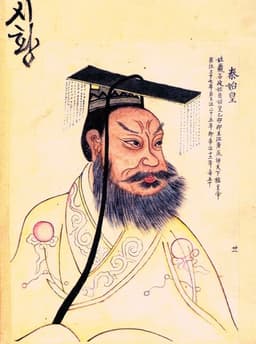
Qin Shi Huang
Emperor · Ancient
85.2Total
Basic Information
Born
1769
-259
Died
1852
-210
Era
Modern
Ancient
Nationality
United Kingdom
China
Occupation
General
Emperor
Civilization
Western
Eastern
Score Comparison
Military (10%)
78.0
80.0
Political (20%)
55.0
90.0
Influence (20%)
65.0
85.0
Legacy (20%)
80.0
90.0
Leadership (15%)
85.0
78.0
Strategy (15%)
72.0
82.0
TOTAL
72.2
85.2
Arthur Wellesley — Complete Timeline
1803 AD
Battle of AssayeWar◆ Major
Wellesley commanded a British-Indian force against the Maratha Confederacy at Assaye. Despite being outnumbered, he achieved a decisive victory, capturing 98 guns and breaking Maratha power in the Deccan. This battle established his military reputation.
Second Anglo-Maratha WarBattleIndia
Impact: regionalconstructive
1809 AD
Battle of TalaveraWar◆ Major
Wellesley commanded the Anglo-Spanish army at the Battle of Talavera. His forces repelled French attacks, but the victory was inconclusive as the French withdrew in good order. He was subsequently created Viscount Wellington.
Peninsular WarBattleCommand
Impact: regional
1812 AD
Battle of SalamancaWar
Wellington defeated Marshal Marmont's French army at Salamanca in a decisive battle. The victory allowed the British to liberate Madrid and forced the French to abandon Andalusia. It was a turning point in the Peninsular War.
Peninsular WarBattleTurning Point
Impact: regionalconstructive
1815 AD
Battle of WaterlooWar
Wellington commanded the Anglo-Allied army at Waterloo, defeating Napoleon's French army. The battle ended the Napoleonic Wars and Napoleon's rule. Wellington's defensive tactics on the ridge and coordination with Prussian forces were decisive.
Napoleonic WarsBattleDecisive Victory
Impact: globalconstructive
1828 AD
Prime Minister of the United KingdomPolitical Action◆ Major
Wellington became Prime Minister of the United Kingdom. His government passed the Catholic Relief Act 1829, granting Catholic emancipation, but he opposed parliamentary reform, leading to his resignation in 1830.
PoliticsCatholic EmancipationReform
Impact: national
Qin Shi Huang — Complete Timeline
246 BC
Construction of the Mausoleum and Terracotta ArmyOther◆ Major
Qin Shi Huang commissioned a vast mausoleum complex near Xi'an, guarded by thousands of life-sized terracotta soldiers, horses, and chariots. The project employed hundreds of thousands of workers and reflected his obsession with immortality and imperial power.
Impact: global
230 BC
Conquest of the Six Warring StatesWar
From 230 to 221 BCE, Ying Zheng led the Qin state in a series of campaigns that conquered the Han, Zhao, Wei, Chu, Yan, and Qi states. This unified China under a single ruler for the first time, ending the Warring States period.
Impact: global
221 BC
Standardization of Writing, Currency, and MeasurementsReform◆ Major
Qin Shi Huang ordered the standardization of Chinese script, currency, and weights and measures across the unified empire. This facilitated administration, trade, and cultural integration, laying a foundation for future dynasties.
Impact: globalconstructive
Proclamation of the Qin DynastyPolitical Action
After conquering the last independent state, Ying Zheng declared himself Shi Huangdi (First Emperor), founding the Qin Dynasty. He adopted a new title to signify his supreme authority and initiated centralized imperial rule.
Impact: global
214 BC
Initiation of the Great Wall ConstructionOther◆ Major
Qin Shi Huang ordered the connection and extension of existing northern fortifications to create a unified defensive wall against nomadic Xiongnu raids. This project involved massive conscripted labor and became the precursor to the later Great Wall.
Impact: regional
213 BC
Burning of Books and Burying of ScholarsPolitical Action◆ Major
On the advice of Li Si, Qin Shi Huang ordered the burning of historical records and philosophical texts not aligned with Legalist doctrine. He also had 460 Confucian scholars buried alive to suppress dissent and consolidate ideological control.
Impact: nationaldestructive
Expert Analysis
arthur-wellesley-vs-qin-shi-huang
### The Emperor and the Iron Duke: Two Paths to Immortality
On a June morning in 1815, the Duke of Wellington stood on a muddy ridge near a small Belgian village called Waterloo, watching the greatest military mind of the age hurl his legions against the British line. The fate of Europe hung on a few hours of desperate musketry. Two thousand years earlier, on a dusty plain in central China, another man had watched his own armies crush the last independent kingdom of a warring continent. Both men unified what had been divided. Both men reshaped history. Yet the Qin Emperor was hailed as a god and died a tyrant, while the Iron Duke became a reluctant statesman and died a national hero. What drove these two architects of order down such different roads?
**Origins**
Ying Zheng was born into chaos. The Warring States period had torn China apart for centuries, a brutal age of shifting alliances and endless conflict. His father was a king, but a weak one; his mother was a concubine, and his early years were spent as a hostage in a rival state. This childhood of instability and danger forged a mind that saw peace only in absolute control. He came to power at thirteen, inheriting a state built on Legalist philosophy—a ruthless doctrine that valued order above all, enforced by harsh laws and collective punishment.
Arthur Wellesley, by contrast, was born into the quiet certainties of the Anglo-Irish aristocracy. His family was titled but not wealthy; he was the third son, expected to make his own way. Sent to a military academy in France, he learned the craft of war as a profession, not a calling. His early career was unremarkable, marked by debt and a lack of direction. The difference is stark: Zheng was shaped by a world falling apart, Wellesley by a world that expected him to find his place within it.
**Rise to Power**
The Qin Emperor’s ascent was a project of annihilation. Between 230 and 221 BC, he unleashed his armies in a series of campaigns that swallowed the six rival kingdoms one by one. He did not negotiate; he conquered. When the last king surrendered, Ying Zheng did not simply take a throne—he invented one. He proclaimed himself *Shi Huangdi*, the First Emperor, and declared a new dynasty that would last ten thousand generations. The name itself was a claim on eternity.
Wellesley’s rise was slower, and more accidental. He made his name not in Europe but in India, at the Battle of Assaye in 1803. Outnumbered and facing a well-drilled Maratha army, he seized the initiative with a daring frontal assault that broke the enemy line. It was a victory of pure tactical nerve. But his real turning point came in the Peninsular War, where he was sent to fight Napoleon’s marshals in Spain and Portugal. There, he learned that victory was not about glory but logistics: securing supply lines, fortifying positions, and waiting for the enemy to make a mistake. He was the anti-Napoleon—patient, defensive, calculating.
**Leadership & Governance**
Qin Shi Huang governed as he conquered: with absolute authority. He standardized the written script across his empire, so that a man in the south could read a decree issued in the north. He unified currency and weights and measures, turning a patchwork of local economies into a single market. He built roads and canals, and he began linking the scattered northern walls into what would become the Great Wall. But his rule had a dark core. On the advice of his chancellor Li Si, he ordered the burning of all books not approved by the state—philosophical works, historical records, the wisdom of Confucius—and the burying alive of scholars who resisted. He believed that the past had to be erased for the future to be born.
Wellington, as a politician, was far less ambitious. As Prime Minister from 1828, he passed the Catholic Relief Act, which granted Catholics the right to sit in Parliament—a deeply unpopular move among his own Tory party. He did it not out of conviction but because he saw it as necessary to prevent civil war in Ireland. He was a conservative who reformed reluctantly, always trying to preserve the old order by making the smallest possible concessions. Where the Emperor sought to remake the world, the Duke sought only to steady it.
**Triumph & Tragedy**
The Emperor’s greatest triumph was the unification itself. For the first time, China was one. His greatest tragedy was the fragility of that unity. He died in 210 BC while on a tour of his empire, and within three years, his dynasty had collapsed in rebellion. His mausoleum, guarded by the Terracotta Army, was his monument to eternity, but the empire he built lasted only fourteen years after his death.
Wellington’s triumph was Waterloo—a defensive masterstroke where he held the line against Napoleon’s attacks until the Prussian army arrived to seal the victory. The battle made him a living legend. His tragedy was political: as Prime Minister, he was stubborn and aloof, and his government fell after he opposed parliamentary reform. A mob smashed his windows. He was booed in the streets. The hero of Waterloo became the symbol of reaction.
**Character & Destiny**
Qin Shi Huang was driven by a terror of death. He spent his final years searching for an elixir of immortality, sending expeditions to find mythical islands and consuming mercury pills that likely killed him. His obsession with control was a mask for a deep fear of chaos. He could not imagine a world without him.
Wellington was driven by duty, not fear. He was cold, efficient, and famously unromantic. When asked what he thought of Waterloo, he replied, “It was a damned nice thing—the nearest run thing you ever saw in your life.” He saw history as a series of problems to be solved, not a destiny to be fulfilled. He did not want to be remembered; he wanted to be finished.
**Legacy**
Qin Shi Huang’s legacy is the structure of China itself. The administrative system he created—provinces, standardized laws, a unified script—outlasted his dynasty and became the template for every imperial regime that followed. He is remembered as both a unifier and a tyrant, the man who made China and the man who burned its books.
Wellington’s legacy is narrower but deeper. He is remembered primarily as a soldier, the man who defeated Napoleon. His political career is largely forgotten. But his real contribution was institutional: he showed that a liberal empire could be defended, and that victory did not require the annihilation of one’s enemies.
**Conclusion**
Two men, two empires, two kinds of immortality. The Emperor tried to conquer time itself and failed, leaving behind a tomb of clay soldiers and a name that still stirs awe and fear. The Duke tried only to do his duty and succeeded, leaving behind a reputation for steadiness in an age of upheaval. One wanted to be a god; the other was content to be a man. History, in the end, remembered them both—but for very different reasons. The Qin Emperor’s story is a warning about the price of order. Wellington’s is a reminder that sometimes, holding the line is enough.
Rankings
🥇
Qin Shi HuangLeader
Mil: 80.0Pol: 90.0Inf: 85.0
85.2
🥈
Arthur Wellesley
Mil: 78.0Pol: 55.0Inf: 65.0
72.2
+13.0 behind
How This Comparison Works
Algorithm
Each figure is scored on 6 dimensions (0—100 scale) based on structured historical data: Military (10%), Political (20%), Influence (20%), Legacy (20%), Leadership (15%), Strategy (15%). The weighted total produces the final ranking.
Data Sources
Scores are computed from structured sub-indicators in the database. Scale factors adjust for era (Ancient ×0.85, Modern ×1.0) and civilization size (Eastern ×1.05, Other ×0.80) to account for differences in population and military scale.
Maximum 3 Figures
Comparisons are limited to 2—3 figures to ensure readability and statistical meaningfulness.
Error Margins
±5 points per dimension — Sub-scores are derived from historical records with inherent uncertainty. Two figures within 5 points on a dimension should be considered roughly equivalent in that area.
Total Score Accuracy
±3 points overall — The weighted combination of 6 dimensions produces a total score with approximately ±3 points of uncertainty. Differences of less than 3 points are not statistically significant— the figures are effectively tied.
Known Limitations
- Historical records are incomplete and uneven across civilizations
- Figures from oral-tradition societies may be underrepresented
- Occupation labels can misclassify multi-role figures
- Scores measure capability and impact, not moral character
- Quantitative scoring is a comparison tool, not absolute truth
Capability Radar
Military (10%) — Battles & Warfare
Battles
85
85
Win Rate
95
90
Expansion
70
90
Political (20%) — Governance & Reform
Reform
55
95
Diplomacy
70
75
Economy
60
90
Influence (20%) — Cultural & Global Reach
Cultural
70
95
Global
75
85
Legacy (20%) — Historical Impact
Historical
85
95
Longevity
80
95
Leadership (15%) — Power & Stability
Tenure
65
70
Stability
65
65
Strategy (15%) — Tactics & Innovation
Strategy
90
85
Tactics
92
80
Reform
75
95
Similar Comparisons
Comments & Discussion
IronSceptic6/17/2026
Let's stop pretending Qin "unified" China the way Wellington united Europe. Qin's unification was genocide with paperwork—mass executions of intellectuals, book burnings, forced labor on a scale that makes Napoleon look like a minor warlord. Wellington fought at Waterloo with about 68,000 multinational troops against Napoleon's 72,000. Qin mobilized millions. The numbers don't lie: one was a general, the other was a destroyer.
铁证书生6/17/2026
别拿数据忽悠人。秦朝修长城死了百万劳工,但那叫"统一成本";滑铁卢死伤五万,双方打得有来有回。可结果呢?秦国统一文字度量衡,建立郡县制,撑了两千年;威灵顿联合反法同盟,欧洲在维也纳体系下却只和平了四十年。谁的"统一"更持久?一清二楚。数据不会说谎,但史料会断章取义。
LegionArchitect6/17/2026
Wellington's genius was defensive—he never conquered, he resisted. Think Torres Vedras in 1810: scorched earth, starvation, guerrilla tactics. Qin Shi Huang was the opposite—offensive, crushing six states with cavalry, crossbows, and iron weaponry that were centuries ahead of European military tech. One man built walls; the other broke them. I'd rather fight beside the Iron Duke, but I'd rather study the First Emperor.
铁血史官6/17/2026
你们忽略了一个关键差别:威灵顿是政治家将军,秦始皇是哲学王。威灵顿打滑铁卢前,已经在印度指挥过一万多英印联军,靠的是纪律和后勤;秦始皇灭六国时,主力是农民和罪犯,靠的是冷酷的奖励刑赏制度。前者治理欧洲靠会议,后者统治中国靠雕刻在石头上的法律。一个是战术家,一个是文明塑造者。谁更伟大?看你是要权术还是秩序。
CounterfactualCelt6/17/2026
Neither unified anything real. Qin's "empire" lasted fifteen years before rebellion tore it apart. Wellington's peace at Waterloo didn't end war in Europe—it just shifted it to the colonies and the Balkans. If you measure success by legacy, how about this: Wellington's name is a boot, Qin's a Netflix drama. That tells you who still haunts the imagination. History isn't won by battles—it's won by stories.
跨时间吐槽6/17/2026
非要分高下?这两人根本不在一个量级。秦始皇面对的是金属农具刚普及的农业社会,人口约两千万;威灵顿打的是工业革命早期的欧洲,人口数以亿计。前者统一靠的是青铜剑和战车,后者靠的是燧发枪和刺刀。拿滑铁卢比灭六国,如同拿冷兵器和蒸汽机比较。我投威灵顿