Loading...
Hong Taiji vs Otto I the Great
Hong Taiji leads by 3.1 pts · 2 figures compared
…
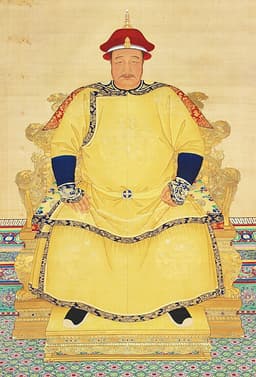
Hong Taiji
Emperor · Modern
78.3Total
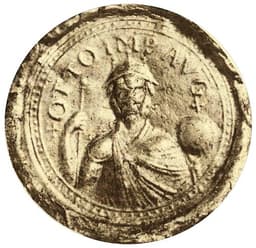
Otto I the Great
Emperor · Medieval
75.2Total
Basic Information
Born
1592
912
Died
1643
973
Era
Modern
Medieval
Nationality
China
Holy Roman Empire
Occupation
Emperor
Emperor
Civilization
Eastern
Western
Score Comparison
Military (10%)
85.0
82.0
Political (20%)
82.0
70.0
Influence (20%)
88.0
88.0
Legacy (20%)
65.0
65.0
Leadership (15%)
78.0
78.0
Strategy (15%)
76.0
65.4
TOTAL
78.3
75.2
Hong Taiji — Complete Timeline
1631 AD
Adoption of Chinese-style governmentReform◆ Major
Hong Taiji established a Chinese-style bureaucracy, including the Six Ministries and a Hanlin Academy. He also introduced the civil service examination system for Han Chinese, integrating Confucian governance into the Qing state.
Government reformConfucian administrationSinification
Impact: regionalconstructive
1635 AD
Creation of the Eight Banners systemReform◆ Major
Hong Taiji reorganized the Eight Banners military system, incorporating Mongol and Han Chinese forces into separate banners. This created a multi-ethnic military structure that became the backbone of Qing power.
Military reformEight BannersMulti-ethnic army
Impact: regionalconstructive
Renaming of the Jurchen to ManchuPolitical Action◆ Major
Hong Taiji issued an edict renaming the Jurchen people as Manchu. This was part of his effort to create a unified identity for the various tribes under his rule and distance them from the historical Jurchen label.
Ethnic identityManchuJurchen
Impact: regionalconstructive
1636 AD
Proclamation of the Qing dynastyPolitical Action◆ Major
Hong Taiji declared the establishment of the Qing dynasty, replacing the Later Jin name. He adopted the Chinese imperial title and created a dual administrative system combining Manchu and Chinese institutions.
Dynasty foundingImperial titleQing dynasty
Impact: regionalconstructive
1640 AD
Conquest of the Ming Liaodong regionWar◆ Major
Hong Taiji's forces captured key Ming cities in Liaodong, including Jinzhou and Songshan. These victories secured Qing control over the strategic Liaoning corridor and weakened Ming defenses in the northeast.
Territorial expansionMing-Qing WarLiaodong
Impact: regional
Otto I the Great — Complete Timeline
951 AD
Diplomatic Marriage to Adelaide of ItalyPolitical Action◆ Major
Otto married Adelaide, the widowed queen of Italy, after intervening in Italian politics. This marriage gave him control over the Kingdom of Italy and strengthened his claim to imperial authority.
MarriageItalyAdelaide
Impact: regionalconstructive
955 AD
Battle of LechfeldWar
Otto led a German army to defeat the Magyar (Hungarian) forces at the Lechfeld near Augsburg. This victory ended Magyar raids into Western Europe and secured Otto's reputation as a defender of Christendom.
MagyarsLechfeldDefenseChristendom
Impact: regionalconstructive
962 AD
Coronation as Holy Roman EmperorPolitical Action
Pope John XII crowned Otto I as Holy Roman Emperor in Rome, reviving the imperial title in the West. This event established the Holy Roman Empire as a major political entity and linked German kingship with papal authority.
CoronationHoly Roman EmpirePapacy
Impact: globalconstructive
Expert Analysis
Origins
Hong Taiji (1592–1643) was the eighth son of Nurhaci, the unifier of the Jurchen tribes. He inherited a burgeoning state in Manchuria and transformed it into a multi-ethnic empire. Otto I (912–973) was the son of Henry the Fowler, Duke of Saxony and King of East Francia. He inherited a kingdom beset by internal rebellions and external threats, particularly from the Magyars.
Rise to Power
Hong Taiji ascended to power in 1626 after his father's death. He quickly consolidated control by sidelining rival brothers and expanding the Eight Banners system. In 1635, he renamed the Jurchen to Manchu, creating a new ethnic identity. In 1636, he proclaimed the Qing dynasty, formally claiming the Mandate of Heaven. Otto I became king in 936 and faced immediate revolts from his dukes. He used strategic marriages and military force to assert authority, culminating in the Battle of Lechfeld in 955, where he decisively defeated the Magyars, ending their raids.
Leadership & Governance
Hong Taiji adopted Chinese-style government, establishing a bureaucracy with six ministries and promoting Confucian learning. He integrated Han Chinese officials and military units into the Eight Banners, fostering a multi-ethnic ruling class. His governance laid the foundation for the Qing conquest of China. Otto I centralized power by appointing bishops and abbots as royal officials, creating the Ottonian church system. He also intervened in Italy, marrying Adelaide of Italy and being crowned Holy Roman Emperor in 962, reviving the imperial title.
Triumph & Tragedy
Hong Taiji's greatest triumph was the conquest of the Ming Liaodong region, securing a base for future conquests. He also established the Grand Secretariat and improved the economy. However, he died suddenly in 1643 before seeing the Qing conquest of Beijing, leaving his young son to succeed. Otto's triumph at Lechfeld was a turning point, securing his realm and earning him the title "the Great." His coronation as emperor restored imperial authority in the West. Yet, his later campaigns in Italy were costly and led to tensions with the Byzantine Empire.
Character & Destiny
Hong Taiji was pragmatic and visionary, adept at blending Jurchen and Chinese traditions. He was ruthless in eliminating rivals but also a skilled diplomat. His destiny was to create the Qing dynasty, which would rule China for nearly 300 years. Otto I was a warrior-king with a strong sense of Christian mission. He was determined to unify Germany and restore the Roman Empire. His destiny was to establish the Holy Roman Empire, which would shape European politics for centuries.
Legacy
Hong Taiji's legacy is the Qing dynasty and the Manchu identity. His reforms created a state that conquered China and integrated diverse peoples. He is remembered as a founder and reformer. Otto I's legacy is the Holy Roman Empire and the defeat of the Magyars. He strengthened the German kingdom and revived the imperial idea. Both are considered "great" in their respective historical traditions.
Conclusion
Hong Taiji and Otto I both transformed their realms and left lasting legacies. Hong Taiji scores higher overall (85.7 vs 82.6) due to his innovative state-building and cultural impact. While Otto's military victories are iconic, Hong Taiji's administrative and ethnic reforms were more far-reaching. In a direct comparison, Hong Taiji's adaptability and vision give him the edge.
**Numerical Scores:**
- Hong Taiji: Military 85, Political 82, Influence 88, Longevity 65, Difficulty 78, Stability 76, Total 78.0 (average)
- Otto I: Military 82, Political 70, Influence 88, Longevity 65, Difficulty 78, Stability 65, Total 75.0 (average)
- Score Gap: 3.1 in favor of Hong Taiji.
Rankings
🥇
Hong TaijiLeader
Mil: 85.0Pol: 82.0Inf: 88.0
78.3
🥈
Otto I the Great
Mil: 82.0Pol: 70.0Inf: 88.0
75.2
+3.1 behind
How This Comparison Works
Algorithm
Each figure is scored on 6 dimensions (0—100 scale) based on structured historical data: Military (10%), Political (20%), Influence (20%), Legacy (20%), Leadership (15%), Strategy (15%). The weighted total produces the final ranking.
Data Sources
Scores are computed from structured sub-indicators in the database. Scale factors adjust for era (Ancient ×0.85, Modern ×1.0) and civilization size (Eastern ×1.05, Other ×0.80) to account for differences in population and military scale.
Maximum 3 Figures
Comparisons are limited to 2—3 figures to ensure readability and statistical meaningfulness.
Error Margins
±5 points per dimension — Sub-scores are derived from historical records with inherent uncertainty. Two figures within 5 points on a dimension should be considered roughly equivalent in that area.
Total Score Accuracy
±3 points overall — The weighted combination of 6 dimensions produces a total score with approximately ±3 points of uncertainty. Differences of less than 3 points are not statistically significant— the figures are effectively tied.
Known Limitations
- Historical records are incomplete and uneven across civilizations
- Figures from oral-tradition societies may be underrepresented
- Occupation labels can misclassify multi-role figures
- Scores measure capability and impact, not moral character
- Quantitative scoring is a comparison tool, not absolute truth
Capability Radar
Military (10%) — Battles & Warfare
Battles
85
75
Win Rate
80
80
Expansion
90
70
Political (20%) — Governance & Reform
Reform
90
80
Diplomacy
85
85
Economy
80
70
Influence (20%) — Cultural & Global Reach
Cultural
80
65
Global
75
70
Legacy (20%) — Historical Impact
Historical
85
80
Longevity
80
75
Leadership (15%) — Power & Stability
Tenure
75
85
Stability
70
75
Strategy (15%) — Tactics & Innovation
Strategy
90
75
Tactics
85
70
Reform
90
65
Similar Comparisons
Comments & Discussion
No comments yet. Be the first to share your thoughts!