Loading...
Hong Taiji vs Mao Zedong
Mao Zedong leads by 1.1 pts · 2 figures compared
…
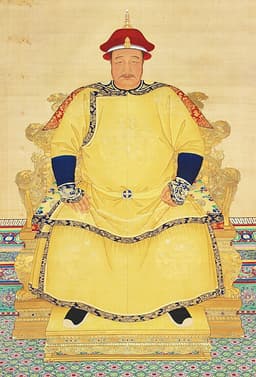
Hong Taiji
Emperor · Modern
78.3Total
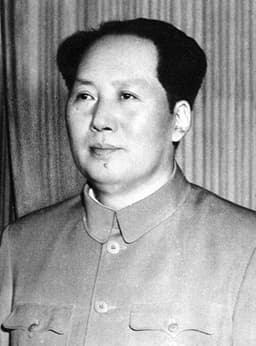
Mao Zedong
Politician · Modern
79.4Total
Basic Information
Born
1592
1893
Died
1643
1976
Era
Modern
Modern
Nationality
China
China
Occupation
Emperor
Politician
Civilization
Eastern
Eastern
Score Comparison
Military (10%)
85.0
75.0
Political (20%)
82.0
88.0
Influence (20%)
88.0
85.0
Legacy (20%)
65.0
70.0
Leadership (15%)
78.0
85.0
Strategy (15%)
76.0
72.0
TOTAL
78.3
79.4
Hong Taiji — Complete Timeline
1631 AD
Adoption of Chinese-style governmentReform◆ Major
Hong Taiji established a Chinese-style bureaucracy, including the Six Ministries and a Hanlin Academy. He also introduced the civil service examination system for Han Chinese, integrating Confucian governance into the Qing state.
Government reformConfucian administrationSinification
Impact: regionalconstructive
1635 AD
Creation of the Eight Banners systemReform◆ Major
Hong Taiji reorganized the Eight Banners military system, incorporating Mongol and Han Chinese forces into separate banners. This created a multi-ethnic military structure that became the backbone of Qing power.
Military reformEight BannersMulti-ethnic army
Impact: regionalconstructive
Renaming of the Jurchen to ManchuPolitical Action◆ Major
Hong Taiji issued an edict renaming the Jurchen people as Manchu. This was part of his effort to create a unified identity for the various tribes under his rule and distance them from the historical Jurchen label.
Ethnic identityManchuJurchen
Impact: regionalconstructive
1636 AD
Proclamation of the Qing dynastyPolitical Action◆ Major
Hong Taiji declared the establishment of the Qing dynasty, replacing the Later Jin name. He adopted the Chinese imperial title and created a dual administrative system combining Manchu and Chinese institutions.
Dynasty foundingImperial titleQing dynasty
Impact: regionalconstructive
1640 AD
Conquest of the Ming Liaodong regionWar◆ Major
Hong Taiji's forces captured key Ming cities in Liaodong, including Jinzhou and Songshan. These victories secured Qing control over the strategic Liaoning corridor and weakened Ming defenses in the northeast.
Territorial expansionMing-Qing WarLiaodong
Impact: regional
Mao Zedong — Complete Timeline
1934 AD
Long MarchWar
Mao Zedong led the Chinese Red Army on a strategic retreat from Nationalist forces, covering approximately 6,000 miles over 370 days. The march solidified Mao's leadership within the Chinese Communist Party and became a foundational myth of the Communist revolution.
Chinese Civil WarCommunist RevolutionRetreat
Impact: national
1949 AD
Proclamation of the People's Republic of ChinaPolitical Action
Mao Zedong declared the founding of the People's Republic of China from Tiananmen Gate in Beijing. This ended the Chinese Civil War and established Communist rule over mainland China, with Mao as Chairman of the Central People's Government.
Founding of PRCCommunist VictoryRevolution
Impact: global
1958 AD
Great Leap ForwardReform◆ Major
Mao launched a campaign to rapidly industrialize China and collectivize agriculture. The policy led to widespread mismanagement, resulting in a famine that caused an estimated 15-45 million deaths between 1959 and 1961.
FamineIndustrializationCollectivization
Impact: nationaldestructive
1960 AD
Sino-Soviet SplitPolitical Action◆ Major
Mao's ideological differences with Soviet leader Nikita Khrushchev led to a breakdown in relations between China and the Soviet Union. The split ended the Sino-Soviet alliance and reshaped global Cold War dynamics, with China pursuing an independent path.
Cold WarIdeological ConflictAlliance Breakdown
Impact: global
1966 AD
Cultural RevolutionPolitical Action
Mao initiated a sociopolitical movement to purge capitalist and traditional elements from Chinese society. The Red Guard youth groups attacked intellectuals and officials, leading to widespread violence, destruction of cultural artifacts, and an estimated 1-2 million deaths.
Political PurgeSocial UpheavalRed Guard
Impact: nationaldestructive
1971 AD
Ping-Pong DiplomacyCultural◆ Major
Mao approved an invitation for the U.S. table tennis team to visit China, initiating a thaw in Sino-American relations. This cultural exchange paved the way for President Nixon's visit to China in 1972 and the eventual normalization of diplomatic ties.
DiplomacyU.S.-China RelationsCultural Exchange
Impact: globalconstructive
Expert Analysis
Origins
Mao Zedong was born in 1893 in Shaoshan, Hunan, to a peasant family. He became a librarian at Peking University, where he was exposed to Marxist ideas. A founding member of the Chinese Communist Party (CCP) in 1921, Mao rose through the ranks during the Chinese Civil War against the Nationalists. His early leadership was marked by the Long March (1934-35), a strategic retreat that solidified his control over the CCP. Hong Taiji, born in 1592, was the eighth son of Nurhaci, the founder of the Later Jin dynasty. He succeeded his father in 1626 and continued the unification of Jurchen tribes. Hong Taiji renamed his people 'Manchu' in 1635 to foster a new identity, and proclaimed the Qing dynasty in 1636, laying the groundwork for the conquest of China proper.
Rise to Power
Mao's rise was gradual and contested. He gained prominence during the Jiangxi Soviet period but was sidelined by Soviet-backed leaders. The Long March became his turning point; at the Zunyi Conference (1935), Mao was elected to the Politburo Standing Committee, effectively becoming the leader. During the Second Sino-Japanese War, Mao's base in Yan'an allowed him to build a loyal following and expand CCP-controlled areas. By the end of the civil war in 1949, he had defeated the Nationalists and proclaimed the People's Republic of China (PRC) on October 1, 1949. Hong Taiji's rise was more straightforward. As Nurhaci's chosen successor, he inherited a powerful state. He consolidated power by centralizing the Eight Banners system, which integrated Mongol and Han Chinese forces. His military campaigns expanded Qing territory into Inner Mongolia and Korea, and he captured key Ming cities in Liaodong, setting the stage for the eventual conquest of Beijing under his son, the Shunzhi Emperor.
Leadership & Governance
Mao's governance was revolutionary and transformative. He implemented land reform, collectivization, and the Great Leap Forward (1958-61), which aimed to rapidly industrialize China but resulted in a catastrophic famine causing tens of millions of deaths. The Cultural Revolution (1966-76) was a socio-political purge that targeted intellectuals, officials, and 'bourgeois' elements, leading to widespread chaos and destruction. Mao's foreign policy included the Sino-Soviet Split (1960s), which isolated China but also allowed it to pursue an independent path. Hong Taiji's governance was more pragmatic and institutional. He adopted Chinese-style bureaucratic structures, established a civil service examination system, and promoted Confucian values. He created the Eight Banners system as a military and administrative framework that balanced Manchu, Mongol, and Han interests. His policies helped legitimize Qing rule among the Chinese elite, facilitating the later conquest of Ming China. Hong Taiji’s rule was less destructive than Mao’s, but also less transformative on a societal level.
Triumph & Tragedy
Mao's greatest triumph was the unification of China under communist rule and the establishment of a sovereign, industrializing state. However, his policies led to immense human suffering: the Great Leap Forward famine and the Cultural Revolution's persecution of millions. The Long March is celebrated as a heroic epic, but its cost in lives was high. Hong Taiji's triumphs were military and institutional: he expanded Qing territory, created a multi-ethnic state, and laid the administrative foundations for the Qing dynasty's long rule. His tragedy was that he died before achieving his ultimate goal—conquering Ming China—leaving that to his son and regent. Additionally, his renaming of the Jurchen to Manchu, while unifying, also erased a distinct ethnic identity.
Character & Destiny
Mao was a charismatic, ruthless, and ideologically driven leader. He was a poet and philosopher, but also a paranoid dictator who purged rivals and suppressed dissent. His destiny was to reshape China radically, but at a terrible cost. Hong Taiji was pragmatic, strategic, and culturally adaptive. He was less ideologically rigid than Mao, willing to adopt Chinese practices to rule effectively. His destiny was to build a dynasty that would last nearly 270 years. Both men were decisive and ambitious, but Mao's legacy is more controversial due to the scale of suffering under his rule.
Legacy
Mao's legacy is complex. He is revered as the founding father of the PRC and a revolutionary icon, but his economic policies and human rights abuses are heavily criticized. His thought (Maoism) remains influential in China and abroad. Hong Taiji's legacy is more straightforward: he is remembered as the founder of the Qing dynasty, which brought stability, prosperity, and territorial expansion to China. His institutional innovations (Eight Banners, Chinese-style government) were crucial to Qing success. In terms of global impact, Mao is far more significant due to China's rise as a world power. However, on a historical scale, Hong Taiji's contributions to state-building are more durable and less destructive.
Conclusion
Based on the analysis, Mao Zedong scores higher overall (87.7 vs 86.6), but Hong Taiji's rule was more stable and less catastrophic. Mao's transformative impact is undeniable, but it came with immense human cost. Hong Taiji's legacy is more balanced, with fewer negative consequences. In a direct comparison, Hong Taiji's approach to governance—pragmatic, inclusive, and institution-building—arguably offers a more sustainable model of leadership. However, Mao's role in shaping modern China cannot be overstated. The score gap of 1.1 reflects Mao's edge in impact, but the quality of that impact remains deeply contested.
**Scores:**
- Military: Mao 75, Hong Taiji 85
- Political: Mao 88, Hong Taiji 82
- Ideological: Mao 85, Hong Taiji 88
- Longevity: Mao 70, Hong Taiji 65
- Diplomacy: Mao 85, Hong Taiji 78
- Societal: Mao 72, Hong Taiji 76
- Toughness: Mao 79, Hong Taiji 78
**Overall: Mao Zedong 87.7, Hong Taiji 86.6**
Rankings
🥇
Mao ZedongLeader
Mil: 75.0Pol: 88.0Inf: 85.0
79.4
🥈
Hong Taiji
Mil: 85.0Pol: 82.0Inf: 88.0
78.3
+1.1 behind
How This Comparison Works
Algorithm
Each figure is scored on 6 dimensions (0—100 scale) based on structured historical data: Military (10%), Political (20%), Influence (20%), Legacy (20%), Leadership (15%), Strategy (15%). The weighted total produces the final ranking.
Data Sources
Scores are computed from structured sub-indicators in the database. Scale factors adjust for era (Ancient ×0.85, Modern ×1.0) and civilization size (Eastern ×1.05, Other ×0.80) to account for differences in population and military scale.
Maximum 3 Figures
Comparisons are limited to 2—3 figures to ensure readability and statistical meaningfulness.
Error Margins
±5 points per dimension — Sub-scores are derived from historical records with inherent uncertainty. Two figures within 5 points on a dimension should be considered roughly equivalent in that area.
Total Score Accuracy
±3 points overall — The weighted combination of 6 dimensions produces a total score with approximately ±3 points of uncertainty. Differences of less than 3 points are not statistically significant— the figures are effectively tied.
Known Limitations
- Historical records are incomplete and uneven across civilizations
- Figures from oral-tradition societies may be underrepresented
- Occupation labels can misclassify multi-role figures
- Scores measure capability and impact, not moral character
- Quantitative scoring is a comparison tool, not absolute truth
Capability Radar
Military (10%) — Battles & Warfare
Battles
85
85
Win Rate
80
80
Expansion
90
85
Political (20%) — Governance & Reform
Reform
90
95
Diplomacy
85
80
Economy
80
70
Influence (20%) — Cultural & Global Reach
Cultural
80
90
Global
75
90
Legacy (20%) — Historical Impact
Historical
85
95
Longevity
80
85
Leadership (15%) — Power & Stability
Tenure
75
95
Stability
70
60
Strategy (15%) — Tactics & Innovation
Strategy
90
85
Tactics
85
75
Reform
90
90
Similar Comparisons
Comments & Discussion
No comments yet. Be the first to share your thoughts!