Loading...
Hirota Koki vs Julius Caesar
Julius Caesar leads by 39.0 pts · 2 figures compared
…
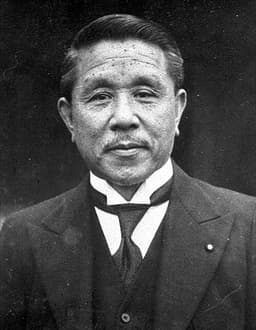
Hirota Koki
Politician · Modern
43.8Total

Julius Caesar
General · Ancient
82.8Total
Basic Information
Born
1878
-100
Died
1948
-44
Era
Modern
Ancient
Nationality
Japan
Roman Republic
Occupation
Politician
General
Civilization
Eastern
Western
Score Comparison
Military (10%)
11.4
88.0
Political (20%)
42.3
78.0
Influence (20%)
48.6
85.0
Legacy (20%)
40.0
82.0
Leadership (15%)
65.0
80.0
Strategy (15%)
44.2
85.0
TOTAL
43.8
82.8
Hirota Koki — Complete Timeline
1936 AD
Service as Prime MinisterPolitical Action◆ Major
Hirota Koki became Prime Minister in March 1936, forming a cabinet after the February 26 Incident. As a civilian, he was seen as a compromise candidate, but his government was dominated by the military and pursued expansionist policies.
Prime MinisterCivilian Government
Impact: national
Signing of the Anti-Comintern PactPolitical Action◆ Major
Hirota's government signed the Anti-Comintern Pact with Nazi Germany in November 1936, forming an alliance against the Soviet Union and international communism. This pact aligned Japan with Germany and Italy, leading to the Axis alliance.
Axis AllianceForeign PolicyAnti-Comintern
Impact: globaldestructive
1937 AD
Foreign Minister During the Nanking MassacrePolitical Action◆ Major
As Foreign Minister in 1937, Hirota was responsible for diplomatic relations during the Nanking Massacre. The Tokyo Tribunal found that he failed to take adequate steps to stop the atrocities despite receiving reports, contributing to his war crimes conviction.
Nanking MassacreWar CrimesDiplomacy
Impact: globaldestructive
1948 AD
Execution as a War CriminalOther◆ Major
Hirota Koki was executed by hanging on December 23, 1948, after being convicted by the International Military Tribunal for the Far East. He was found guilty of conspiracy to wage aggressive war and for atrocities committed by Japanese forces in China, including the Nanking Massacre.
War CrimesExecutionTokyo Trials
Impact: globaltragic
Julius Caesar — Complete Timeline
58 BC
Gallic WarsWar◆ Major
Caesar, as proconsul of Gaul, launched a series of campaigns that conquered all of Gaul (modern France, Belgium, and parts of Switzerland). He fought numerous battles, including against the Helvetii, the Belgae, and the Gallic chieftain Vercingetorix. The wars brought immense wealth and a loyal army to Caesar.
Gallic WarsConquestRoman Expansion
Impact: regional
49 BC
Crossing the RubiconPolitical Action◆ Major
Caesar led Legio XIII across the Rubicon River into Italy, defying the Roman Senate's order to disband his army. This act triggered a civil war against Pompey and the Optimates, ultimately leading to Caesar's dictatorship and the end of the Roman Republic.
Roman Civil WarEnd of RepublicPower Struggle
Impact: global
48 BC
Battle of PharsalusWar◆ Major
Caesar's outnumbered army defeated the larger forces of Pompey the Great at Pharsalus in Greece. Caesar's tactical use of a reserve line to counter Pompey's cavalry charge proved decisive. Pompey fled to Egypt, where he was assassinated, leaving Caesar as the undisputed master of the Roman world.
Roman Civil WarBattleDecisive Victory
Impact: regional
44 BC
Appointment as Dictator for LifePolitical Action◆ Major
The Roman Senate appointed Caesar dictator perpetuo (dictator for life), granting him unprecedented personal power. This move concentrated military, legislative, and judicial authority in one person, effectively ending the Roman Republic's traditional system of checks and balances and alarming many senators.
DictatorshipEnd of RepublicPower Consolidation
Impact: regionaldestructive
Assassination on the Ides of MarchPolitical Action◆ Major
A group of Roman senators, led by Marcus Junius Brutus and Gaius Cassius Longinus, stabbed Caesar to death at a meeting of the Senate in the Theatre of Pompey. The assassination was intended to restore the Republic, but instead triggered another civil war that led to the rise of the Roman Empire.
AssassinationRoman PoliticsEnd of Republic
Impact: globaldestructive
Expert Analysis
hirota-koki-vs-julius-caesar
The Crossing and the Compromise
On a winter day in 49 BCE, a Roman general stood at the banks of a small river, the Rubicon, knowing that the step he was about to take would either make him master of the world or destroy him. Two thousand years later, on a cold December morning in 1948, a Japanese politician stood on a scaffold in Sugamo Prison, knowing that the steps he had taken had led him to a hangman's noose. Julius Caesar and Hirota Koki—one a conqueror who built an empire, the other a bureaucrat who helped destroy one—seem to inhabit different universes. Yet both men faced the same fundamental choice that haunts every leader: when do ambition and duty become betrayal? Their answers, shaped by radically different eras and temperaments, produced vastly different outcomes, and their stories reveal how the same historical forces can elevate one man to legend and condemn another to infamy.
Origins
Caesar was born into the dying embers of the Roman Republic, a world of aristocratic competition where a man's worth was measured by his military glory, his oratory, and his ability to bend the Senate to his will. His family, the Julii, claimed descent from the goddess Venus, but they were not among the ruling elite. From his youth, Caesar learned to navigate a treacherous political landscape: he was exiled, captured by pirates (whom he later crucified), and forced to borrow heavily to fund his ambitions. The Republic was already decaying—corruption was rampant, the gap between rich and poor was widening, and generals were beginning to command personal loyalty over state loyalty. Caesar was a product of this chaos, and he would become its master.
Hirota Koki was born in 1878 in Fukuoka, Japan, into a world being violently remade. The Meiji Restoration had ended the samurai era just a decade before his birth, and Japan was racing to modernize, industrialize, and militarize. Unlike Caesar, Hirota came from a humble farming family. He clawed his way up through education, becoming a diplomat and bureaucrat—a man of meetings and memoranda, not battlefields. His Japan was a nation of rigid hierarchy, where consensus was prized over individual brilliance, and where the military increasingly dictated policy. Hirota was a civilian navigating a system where the generals held the real power.
Rise to Power
Caesar’s rise was a masterpiece of calculated risk. He climbed the political ladder—quaestor, aedile, praetor—but his true breakthrough came when he secured command of Gaul in 58 BCE. Over eight years, he conquered a territory larger than Italy itself, writing his own propaganda in the *Commentaries* to ensure Rome knew his name. His army became his instrument, his fortune, and his family. When the Senate ordered him to disband his legions and return to Rome as a private citizen—a death sentence for a man with so many enemies—he chose war. Crossing the Rubicon was not a impulsive act; it was the logical conclusion of a life spent accumulating power until there was no other path.
Hirota’s rise was quieter, more bureaucratic. He served as ambassador to the Netherlands and the Soviet Union, earning a reputation as a pragmatic diplomat. In March 1936, after the February 26 Incident—a coup attempt by radical army officers—the military allowed a civilian to become Prime Minister as a fig leaf for their control. Hirota was that civilian. His appointment was not a conquest but a concession. He did not seize power; it was handed to him, with strings attached.
Leadership & Governance
Caesar ruled as a dictator, but he was a reformer. He reduced debt, reformed the calendar (the Julian calendar we still use), extended citizenship to provinces, and began massive public works. His military genius was undeniable—he won battles against overwhelming odds at Alesia and Pharsalus—but his political wisdom was more fragile. He centralized power, packed the Senate with his supporters, and accepted the title "dictator for life." He believed that only he could save Rome, and he may have been right. But he never solved the Republic’s core problem: how to transfer power peacefully.
Hirota, by contrast, was a civilian trapped in a military machine. As Prime Minister, he signed the Anti-Comintern Pact with Nazi Germany in November 1936, an alliance that tied Japan’s fate to Hitler’s. As Foreign Minister during the Nanking Massacre in 1937, he received reports of atrocities but failed to stop them or resign in protest. The Tokyo Tribunal later judged that he knew of the horrors and did nothing effective. His governance was not about reform but survival—keeping his seat, appeasing the army, avoiding confrontation. Where Caesar broke laws to build a new order, Hirota followed orders to sustain a broken one.
Triumph & Tragedy
Caesar’s greatest triumph was his conquest of Gaul, which doubled Rome’s territory and made him a legend. His tragedy was the Ides of March, 44 BCE, when sixty senators stabbed him to death in the Theatre of Pompey. He died at the peak of his power, leaving a Republic that could not function without him. His assassins thought they were saving Rome; instead, they plunged it into civil war and eventual empire.
Hirota’s greatest moment was perhaps his execution. On December 23, 1948, he was hanged as a Class A war criminal—the only civilian among seven men condemned by the Tokyo Tribunal. He went to his death reciting a Buddhist sutra, insisting he had acted for peace. His tragedy was not a dramatic assassination but a slow, bureaucratic descent into complicity. He did not order the Nanking Massacre, but he did not stop it. He did not start the war, but he enabled those who did. His greatest failure was his success in staying in power.
Character & Destiny
Caesar was audacious, charismatic, and ruthless. He pardoned his enemies, slept with their wives, and crushed their armies. He believed in his own star—literally, as he claimed descent from Venus. His personality forged his destiny: he could not imagine a world where he was not in control, and so he took control, until the day his friends proved him wrong.
Hirota was cautious, diplomatic, and ultimately passive. He was a man of the system, not a breaker of it. In a Japan where the military could assassinate prime ministers with impunity, he chose accommodation over confrontation. His personality sealed his fate: he could not imagine a world where he could defy the generals, and so he obeyed, until the day the Allies proved him wrong.
Legacy
Caesar’s legacy is the Roman Empire itself. His name became a title—Kaiser, Tsar—and his reforms outlasted him. He is remembered as a genius, a tyrant, a martyr, and a conqueror. Historians give him a total score of 83.3, with military and strategy at 88—testament to his dominance on the battlefield. But his political score of 78 reflects the fatal flaw: he could seize power, but he could not consolidate it without destroying the system.
Hirota’s legacy is a cautionary tale. He is remembered as the civilian who signed the pact with Hitler, who failed to stop the massacre, who was hanged for crimes he did not commit with his own hands. His total score of 63.3 is a shadow of Caesar’s, with military at 22.8—a reminder that he was not a warrior but a functionary. His political score of 82.9, higher than Caesar’s, is a bitter irony: he was skilled at politics, but his skills served a monstrous cause.
Conclusion
The Rubicon and the scaffold—these are the endpoints of two very different journeys. Caesar crossed his river and changed the world. Hirota climbed his steps and was erased by it. But both men reveal a uncomfortable truth about historical power: it rewards those who act decisively, but it punishes those who act wrongly. Caesar’s ambition, for all its destructiveness, built something that lasted centuries. Hirota’s caution, for all its good intentions, enabled something that destroyed millions. In the end, the difference between a legend and a war criminal is not just character or circumstance—it is the terrible weight of what one is willing to do, and what one is unwilling to stop.
Rankings
🥇
Julius CaesarLeader
Mil: 88.0Pol: 78.0Inf: 85.0
82.8
🥈
Hirota Koki
Mil: 11.4Pol: 42.3Inf: 48.6
43.8
+39.0 behind
How This Comparison Works
Algorithm
Each figure is scored on 6 dimensions (0—100 scale) based on structured historical data: Military (10%), Political (20%), Influence (20%), Legacy (20%), Leadership (15%), Strategy (15%). The weighted total produces the final ranking.
Data Sources
Scores are computed from structured sub-indicators in the database. Scale factors adjust for era (Ancient ×0.85, Modern ×1.0) and civilization size (Eastern ×1.05, Other ×0.80) to account for differences in population and military scale.
Maximum 3 Figures
Comparisons are limited to 2—3 figures to ensure readability and statistical meaningfulness.
Error Margins
±5 points per dimension — Sub-scores are derived from historical records with inherent uncertainty. Two figures within 5 points on a dimension should be considered roughly equivalent in that area.
Total Score Accuracy
±3 points overall — The weighted combination of 6 dimensions produces a total score with approximately ±3 points of uncertainty. Differences of less than 3 points are not statistically significant— the figures are effectively tied.
Known Limitations
- Historical records are incomplete and uneven across civilizations
- Figures from oral-tradition societies may be underrepresented
- Occupation labels can misclassify multi-role figures
- Scores measure capability and impact, not moral character
- Quantitative scoring is a comparison tool, not absolute truth
Capability Radar
Military (10%) — Battles & Warfare
Battles
16
95
Win Rate
19
92
Expansion
19
97
Political (20%) — Governance & Reform
Reform
30
90
Diplomacy
40
85
Economy
30
82
Influence (20%) — Cultural & Global Reach
Cultural
10
88
Global
20
94
Legacy (20%) — Historical Impact
Historical
30
95
Longevity
10
96
Leadership (15%) — Power & Stability
Tenure
60
75
Stability
20
60
Strategy (15%) — Tactics & Innovation
Strategy
25
94
Tactics
28
96
Reform
32
88
Similar Comparisons
Comments & Discussion
No comments yet. Be the first to share your thoughts!