Loading...
Hirohito vs Maria Kazimiera Sobieska
Hirohito leads by 10.9 pts · 2 figures compared
…
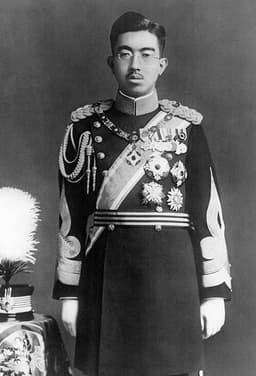
Hirohito
Emperor · Modern
58.0Total
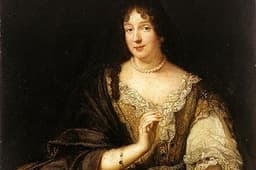
Maria Kazimiera Sobieska
Emperor · Modern
47.1Total
Basic Information
Born
1901
1641
Died
1989
1716
Era
Modern
Modern
Nationality
Japan
Poland-Lithuania
Occupation
Emperor
Emperor
Civilization
Eastern
Western
Score Comparison
Military (10%)
51.1
20.2
Political (20%)
60.0
43.7
Influence (20%)
55.0
53.3
Legacy (20%)
55.0
41.7
Leadership (15%)
72.0
58.8
Strategy (15%)
55.9
60.0
TOTAL
58.0
47.1
Hirohito — Complete Timeline
1926 AD
Accession to the ThronePolitical Action◆ Major
Hirohito became Emperor of Japan upon the death of his father, Emperor Taisho. His reign was designated the Showa era. As emperor, he held a symbolic and constitutional role, but his actual political power was limited by the Meiji Constitution.
Japanese MonarchyShowa EraSuccession
Impact: national
1931 AD
Japanese Invasion of ManchuriaWar◆ Major
The Japanese Kwantung Army invaded Manchuria without explicit approval from the civilian government. Hirohito's role in the invasion is debated, but he was informed and did not oppose it. The invasion led to the establishment of the puppet state of Manchukuo and increased militarism in Japan.
World War IIJapanese ExpansionManchuria
Impact: regionaldestructive
1945 AD
Decision to Surrender in World War IIPolitical Action
After the atomic bombings of Hiroshima and Nagasaki and the Soviet invasion of Manchuria, Hirohito intervened in a deadlocked cabinet to accept the Potsdam Declaration. He made a radio broadcast announcing Japan's surrender, the first time the Japanese people heard his voice. This ended World War II.
World War IISurrenderAtomic Bomb
Impact: global
1946 AD
Renunciation of DivinityCultural◆ Major
Under pressure from the Allied occupation, Hirohito issued the Humanity Declaration, in which he denied the traditional claim that the Japanese emperor was a living god. This was a key step in the transformation of Japan into a constitutional monarchy with a symbolic emperor.
Post-War JapanConstitutional MonarchyOccupation
Impact: nationalconstructive
1947 AD
Post-War Reign and Symbolic RolePolitical Action◆ Major
Under the new Japanese Constitution, Hirohito became a symbol of the state with no political power. He focused on ceremonial duties and public appearances, helping to stabilize Japan during its post-war reconstruction. He reigned until his death in 1989, overseeing Japan's economic recovery.
Post-War JapanConstitutional MonarchyReconstruction
Impact: nationalconstructive
Maria Kazimiera Sobieska — Complete Timeline
1665 AD
Marriage to Jan III SobieskiPolitical Action◆ Major
Maria Kazimiera married Jan Sobieski, then a military commander. The marriage was politically advantageous, uniting two powerful families and strengthening Sobieski's position for the throne.
MarriagePolitical AllianceSobieski
Impact: nationalconstructive
1676 AD
Coronation as Queen of PolandPolitical Action◆ Major
Maria Kazimiera was crowned Queen of Poland alongside her husband Jan III Sobieski in Krakow. The coronation formalized her role as queen consort and political partner.
CoronationRoyaltySobieski
Impact: nationalconstructive
1683 AD
Influence on Polish-French RelationsPolitical Action
Maria Kazimiera, a French-born queen, used her influence to promote French interests in Poland. She corresponded with French courtiers and advocated for a pro-French foreign policy, affecting the Commonwealth's alliances.
DiplomacyFrench InfluenceForeign Policy
Impact: regional
1699 AD
Exile in FrancePolitical Action◆ Major
After Jan III Sobieski's death, Maria Kazimiera left Poland and settled in France. She lived in Paris and later in Blois, where she remained until her death, maintaining contact with Polish exiles.
ExileSobieskiFrance
Impact: nationaltragic
Expert Analysis
Origins
Hirohito was born on April 29, 1901, in Tokyo, Japan, as the eldest son of Crown Prince Yoshihito (later Emperor Taisho) and Princess Sadako. He was educated in a strict imperial environment, studying at the Gakushuin Peers' School and later receiving private tutoring in constitutional law, history, and military matters. His grandfather, Emperor Meiji, had transformed Japan into a modern power, and Hirohito was groomed to uphold that legacy. He traveled to Europe in 1921, becoming the first Japanese crown prince to do so, which broadened his perspective on constitutional monarchy.
Maria Kazimiera Sobieska, born Marie Casimire Louise de La Grange d'Arquien on June 28, 1641, in Nevers, France, was the daughter of Henri Albert de La Grange d'Arquien, a French nobleman, and Françoise de La Châtre. She grew up in the French court, receiving an education typical for noblewomen of the time, focusing on languages, literature, and courtly manners. In 1658, she married Jan Sobiepan Zamoyski, a Polish magnate, and moved to Poland. After his death in 1665, she married Jan Sobieski in 1665, who later became King John III of Poland.
Rise to Power
Hirohito became emperor on December 25, 1926, upon his father's death. His reign, the Showa era, began during a period of rising militarism and economic instability. He was a constitutional monarch, but his role was ambiguous. He supported the invasion of Manchuria in 1931 and the expansion of Japanese influence in Asia, though his exact level of involvement in military decisions is debated. His regime saw the rise of ultranationalist factions that gradually sidelined civilian government.
Maria Kazimiera's rise was tied to her husband's military successes. Jan Sobieski gained fame for his victory over the Ottoman Empire at the Battle of Khotyn in 1673 and was elected King of Poland in 1674. She was crowned queen in 1676. As queen, she exerted considerable influence over appointments and policy, often promoting French interests. She was known for her political acumen and maintained a network of correspondents in France.
Leadership & Governance
Hirohito's leadership style was passive and detached from direct governance. He rarely overruled his ministers, preferring to remain a symbol of national unity. During World War II, he was kept informed of military operations but did not initiate policy. His intervention in the surrender decision in August 1945 was a rare example of direct action. After the war, he accepted the new constitution that stripped him of all political power, becoming a figurehead. His governance score of 60.0 reflects his limited but crucial role.
Maria Kazimiera was more hands-on. She used her influence to secure positions for her allies and to advocate for a French-oriented foreign policy. She was criticized for her meddling and for favoring French interests over Polish ones. Her leadership score of 58.8 indicates her active but controversial role. She was not a formal ruler but a queen consort, yet her political influence was significant.
Triumph & Tragedy
Hirohito's greatest triumph was his decision to surrender, which ended World War II and allowed Japan to rebuild under Allied occupation. This act saved countless lives and set the stage for Japan's economic miracle. His tragedy was his complicity in Japan's militaristic expansion, which led to immense suffering across Asia. His legacy is tainted by his failure to prevent atrocities committed by his military. His military score of 51.1 reflects his indirect responsibility.
Maria Kazimiera's triumph was her role in the Battle of Vienna in 1683, where her husband's victory broke the Ottoman siege. She was a symbol of Polish resilience. Her tragedy came after her husband's death in 1696; she lost influence and was forced into exile in France, where she lived in relative obscurity until her death in 1716. Her influence score of 53.3 highlights her impact but also its limitations.
Character & Destiny
Hirohito was reserved, cautious, and bound by tradition. His personality was shaped by the imperial institution, which discouraged initiative. He was a marine biologist by hobby, reflecting a scientific mind, but his political decisions were often reactive. His destiny was to preside over Japan's transformation from imperial power to peaceful democracy. His total score of 58.0 reflects a balanced but not exceptional impact.
Maria Kazimiera was ambitious, charismatic, and politically savvy. She was known for her beauty and intelligence but also for her contentious relationships with Polish nobles. Her French origins made her an outsider, and her favoritism toward France limited her effectiveness. Her destiny was to be remembered as a controversial queen who influenced Polish politics but failed to secure a lasting legacy.
Legacy
Hirohito's legacy is complex. He is remembered as a symbol of Japan's wartime past and postwar peace. The Showa era saw Japan's rise and fall and rise again. His renunciation of divinity in 1946 redefined the monarchy. He remains a figure of debate: some see him as a victim of militarists, others as a war criminal. His legacy score of 55.0 reflects this ambiguity.
Maria Kazimiera's legacy is more limited. She is remembered as a queen consort who influenced Polish-French relations, but her impact did not extend beyond her lifetime. Her name is not widely known outside Poland. Her legacy score of 41.7 indicates a minor historical footprint.
Conclusion
Hirohito had a greater impact on history than Maria Kazimiera Sobieska. His decisions during World War II and the postwar era shaped the course of Japan and East Asia. While his direct power was limited, his symbolic role and his intervention in the surrender gave him a pivotal position. Maria Kazimiera, though influential in her own right, operated within a narrower sphere and left no lasting structural changes. The score gap of 10.9 points supports this assessment. Hirohito's total score of 58.0 versus Maria Kazimiera's 47.1 reflects his broader historical significance.
Rankings
🥇
HirohitoLeader
Mil: 51.1Pol: 60.0Inf: 55.0
58.0
🥈
Maria Kazimiera Sobieska
Mil: 20.2Pol: 43.7Inf: 53.3
47.1
+10.9 behind
How This Comparison Works
Algorithm
Each figure is scored on 6 dimensions (0—100 scale) based on structured historical data: Military (10%), Political (20%), Influence (20%), Legacy (20%), Leadership (15%), Strategy (15%). The weighted total produces the final ranking.
Data Sources
Scores are computed from structured sub-indicators in the database. Scale factors adjust for era (Ancient ×0.85, Modern ×1.0) and civilization size (Eastern ×1.05, Other ×0.80) to account for differences in population and military scale.
Maximum 3 Figures
Comparisons are limited to 2—3 figures to ensure readability and statistical meaningfulness.
Error Margins
±5 points per dimension — Sub-scores are derived from historical records with inherent uncertainty. Two figures within 5 points on a dimension should be considered roughly equivalent in that area.
Total Score Accuracy
±3 points overall — The weighted combination of 6 dimensions produces a total score with approximately ±3 points of uncertainty. Differences of less than 3 points are not statistically significant— the figures are effectively tied.
Known Limitations
- Historical records are incomplete and uneven across civilizations
- Figures from oral-tradition societies may be underrepresented
- Occupation labels can misclassify multi-role figures
- Scores measure capability and impact, not moral character
- Quantitative scoring is a comparison tool, not absolute truth
Capability Radar
Military (10%) — Battles & Warfare
Battles
51
38
Win Rate
56
36
Expansion
55
43
Political (20%) — Governance & Reform
Reform
70
20
Diplomacy
60
50
Economy
50
20
Influence (20%) — Cultural & Global Reach
Cultural
55
30
Global
65
20
Legacy (20%) — Historical Impact
Historical
75
30
Longevity
70
20
Leadership (15%) — Power & Stability
Tenure
85
30
Stability
40
25
Strategy (15%) — Tactics & Innovation
Strategy
62
43
Tactics
65
49
Reform
64
52
Similar Comparisons
Comments & Discussion
No comments yet. Be the first to share your thoughts!