Loading...
Hirohito vs King Faisal of Saudi Arabia
King Faisal of Saudi Arabia leads by 0.6 pts · 2 figures compared
…
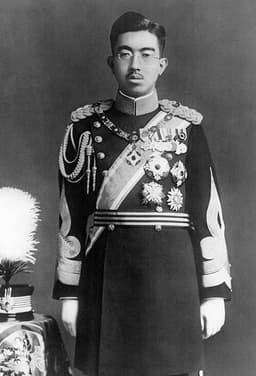
Hirohito
Emperor · Modern
58.0Total

King Faisal of Saudi Arabia
Emperor · Modern
58.6Total
Basic Information
Born
1901
1906
Died
1989
1975
Era
Modern
Modern
Nationality
Japan
Saudi Arabia
Occupation
Emperor
Emperor
Civilization
Eastern
Middle Eastern
Score Comparison
Military (10%)
51.1
14.9
Political (20%)
60.0
70.3
Influence (20%)
55.0
72.0
Legacy (20%)
55.0
54.0
Leadership (15%)
72.0
80.0
Strategy (15%)
55.9
30.3
TOTAL
58.0
58.6
Hirohito — Complete Timeline
1926 AD
Accession to the ThronePolitical Action◆ Major
Hirohito became Emperor of Japan upon the death of his father, Emperor Taisho. His reign was designated the Showa era. As emperor, he held a symbolic and constitutional role, but his actual political power was limited by the Meiji Constitution.
Japanese MonarchyShowa EraSuccession
Impact: national
1931 AD
Japanese Invasion of ManchuriaWar◆ Major
The Japanese Kwantung Army invaded Manchuria without explicit approval from the civilian government. Hirohito's role in the invasion is debated, but he was informed and did not oppose it. The invasion led to the establishment of the puppet state of Manchukuo and increased militarism in Japan.
World War IIJapanese ExpansionManchuria
Impact: regionaldestructive
1945 AD
Decision to Surrender in World War IIPolitical Action
After the atomic bombings of Hiroshima and Nagasaki and the Soviet invasion of Manchuria, Hirohito intervened in a deadlocked cabinet to accept the Potsdam Declaration. He made a radio broadcast announcing Japan's surrender, the first time the Japanese people heard his voice. This ended World War II.
World War IISurrenderAtomic Bomb
Impact: global
1946 AD
Renunciation of DivinityCultural◆ Major
Under pressure from the Allied occupation, Hirohito issued the Humanity Declaration, in which he denied the traditional claim that the Japanese emperor was a living god. This was a key step in the transformation of Japan into a constitutional monarchy with a symbolic emperor.
Post-War JapanConstitutional MonarchyOccupation
Impact: nationalconstructive
1947 AD
Post-War Reign and Symbolic RolePolitical Action◆ Major
Under the new Japanese Constitution, Hirohito became a symbol of the state with no political power. He focused on ceremonial duties and public appearances, helping to stabilize Japan during its post-war reconstruction. He reigned until his death in 1989, overseeing Japan's economic recovery.
Post-War JapanConstitutional MonarchyReconstruction
Impact: nationalconstructive
King Faisal of Saudi Arabia — Complete Timeline
1960 AD
Modernization of Saudi educationReform◆ Major
King Faisal expanded education for both boys and girls, building schools and universities. He also sent students abroad for higher education, modernizing the Saudi workforce while maintaining conservative Islamic values.
EducationModernizationSaudi Arabia
Impact: nationalconstructive
1962 AD
Abolition of slavery in Saudi ArabiaReform◆ Major
King Faisal issued a decree abolishing slavery in Saudi Arabia. The move was part of his modernization efforts and was influenced by international pressure, though enforcement was gradual and faced resistance from traditional elites.
Human RightsReformSlavery
Impact: nationalconstructive
1973 AD
1973 oil embargoPolitical Action
King Faisal led OPEC's oil embargo against the US and other allies of Israel during the Yom Kippur War. The embargo caused a global energy crisis, quadrupling oil prices and demonstrating the political power of oil-producing nations.
OilOPECArab-Israeli Conflict
Impact: global
1975 AD
Assassination of King FaisalPolitical Action◆ Major
King Faisal was assassinated by his nephew, Prince Faisal bin Musaid, at a royal audience. The assassin was later executed. Faisal's death shocked the world and led to the succession of his brother, King Khalid.
AssassinationRoyal FamilySuccession
Impact: regionaltragic
Expert Analysis
Origins
Hirohito was born on April 29, 1901, in Tokyo, Japan, as the eldest son of Crown Prince Yoshihito (later Emperor Taisho) and Princess Sadako. He was educated at the Gakushuin Peer's School and later studied under private tutors, including Admiral Togo Heihachiro. His upbringing emphasized imperial tradition and military discipline. Hirohito became regent in 1921 due to his father's illness and ascended the throne on December 25, 1926, beginning the Showa era.
King Faisal bin Abdulaziz Al Saud was born in 1906 in Riyadh, then part of the Emirate of Nejd. He was the third son of Ibn Saud, founder of modern Saudi Arabia. Faisal's mother was from the Al Sheikh family, linking him to religious authority. He was educated in Islamic studies and politics at his father's court, accompanying him on military campaigns. Faisal served as viceroy of Hejaz and foreign minister, gaining diplomatic experience.
Rise to Power
Hirohito became emperor at age 25, inheriting a constitutional monarchy where the emperor held supreme command over the military. During the 1930s, the military expanded its influence, leading to the invasion of Manchuria in 1931 and war with China in 1937. Hirohito's role remains debated: he approved military actions and received briefings, but his power was constrained by advisors. He did not prevent the militarists' rise, a key turning point.
Faisal's rise was gradual. He was appointed foreign minister in 1930 and represented Saudi Arabia at the UN founding in 1945. He served as prime minister briefly in 1954 but resigned due to conflicts with his brother King Saud. In 1962, Faisal became prime minister and de facto ruler, implementing reforms. He formally became king on November 2, 1964, after Saud was deposed by the royal family. Faisal consolidated power by centralizing authority and reducing corruption.
Leadership & Governance
Hirohito's leadership was largely symbolic and ceremonial, especially after WWII. Before and during the war, he sanctioned military decisions, including the attack on Pearl Harbor. He rarely overruled his ministers, contributing to disastrous policies. After Japan's defeat, he cooperated with the US occupation, issuing the Humanity Declaration in 1946 to renounce divinity. He then focused on public duties, embodying Japan's peaceful reconstruction.
Faisal was an active reformer. He modernized education, building schools and universities, including the University of Riyadh. He abolished slavery in 1962, a significant social reform. His governance was authoritarian but purposeful; he used oil wealth for infrastructure and welfare. Faisal's strategic acumen scored 30.3, but his political score of 70.3 reflects his effective statecraft.
Triumph & Tragedy
Hirohito's greatest triumph was his decision to surrender in August 1945, ending WWII. He intervened in a deadlocked cabinet to accept the Potsdam Declaration, saving millions of lives. His postwar role as a symbol of unity helped Japan's recovery. However, his failure to curb militarism before 1941 led to catastrophic war and occupation. His legacy is tainted by complicity in war crimes, though he escaped prosecution.
Faisal's triumph was the 1973 oil embargo, which demonstrated Arab economic power and reshaped global energy politics. It scored 72.0 in influence. He also modernized Saudi infrastructure and education. His tragedy was his assassination on March 25, 1975, by his nephew, which shocked the nation and ended his reforms prematurely. His military score of 14.9 reflects Saudi Arabia's reliance on alliances rather than force.
Character & Destiny
Hirohito was reserved and cautious, often deferring to advisors. His scientific interests (marine biology) contrasted with his wartime role. His character—indecisive when confronting militarists—shaped Japan's aggressive path. After the war, he adapted to a symbolic role, showing resilience. Historians assess him as a figure constrained by system and tradition.
Faisal was determined and pious, combining religious conservatism with pragmatic reform. He was known for his austerity and directness. His character drove modernization while maintaining traditional values. His assassination underscores the risks of reform in a conservative society. Leadership scores: Hirohito 72.0, Faisal 80.0.
Legacy
Hirohito's legacy is dual: he presided over Japan's imperial aggression and its peaceful rebirth. The Showa era saw transformation from militarism to democracy. Japan's postwar constitution and pacifism stem partly from his acceptance of change. His total score is 58.0.
Faisal's legacy includes modern Saudi education, abolition of slavery, and the oil weapon. He positioned Saudi Arabia as a key player in OPEC and the Islamic world. His reforms laid groundwork for future development, though his assassination cut short his impact. His total score is 58.6.
Conclusion
King Faisal had greater impact in terms of direct influence on global events and domestic transformation. His oil embargo changed international relations, while his reforms modernized Saudi Arabia. Hirohito's role was more reactive, and his legacy is overshadowed by war. Faisal's political and influence scores (70.3 and 72.0) exceed Hirohito's (60.0 and 55.0). Despite the narrow score gap, Faisal's proactive leadership and lasting changes give him the edge.
Rankings
🥇
King Faisal of Saudi ArabiaLeader
Mil: 14.9Pol: 70.3Inf: 72.0
58.6
🥈
Hirohito
Mil: 51.1Pol: 60.0Inf: 55.0
58.0
+0.6 behind
How This Comparison Works
Algorithm
Each figure is scored on 6 dimensions (0—100 scale) based on structured historical data: Military (10%), Political (20%), Influence (20%), Legacy (20%), Leadership (15%), Strategy (15%). The weighted total produces the final ranking.
Data Sources
Scores are computed from structured sub-indicators in the database. Scale factors adjust for era (Ancient ×0.85, Modern ×1.0) and civilization size (Eastern ×1.05, Other ×0.80) to account for differences in population and military scale.
Maximum 3 Figures
Comparisons are limited to 2—3 figures to ensure readability and statistical meaningfulness.
Error Margins
±5 points per dimension — Sub-scores are derived from historical records with inherent uncertainty. Two figures within 5 points on a dimension should be considered roughly equivalent in that area.
Total Score Accuracy
±3 points overall — The weighted combination of 6 dimensions produces a total score with approximately ±3 points of uncertainty. Differences of less than 3 points are not statistically significant— the figures are effectively tied.
Known Limitations
- Historical records are incomplete and uneven across civilizations
- Figures from oral-tradition societies may be underrepresented
- Occupation labels can misclassify multi-role figures
- Scores measure capability and impact, not moral character
- Quantitative scoring is a comparison tool, not absolute truth
Capability Radar
Military (10%) — Battles & Warfare
Battles
51
10
Win Rate
56
10
Expansion
55
10
Political (20%) — Governance & Reform
Reform
70
75
Diplomacy
60
85
Economy
50
80
Influence (20%) — Cultural & Global Reach
Cultural
55
60
Global
65
75
Legacy (20%) — Historical Impact
Historical
75
70
Longevity
70
55
Leadership (15%) — Power & Stability
Tenure
85
70
Stability
40
65
Strategy (15%) — Tactics & Innovation
Strategy
62
15
Tactics
65
10
Reform
64
30
Similar Comparisons
Comments & Discussion
No comments yet. Be the first to share your thoughts!