Loading...
Hirohito vs Mahendra
Mahendra leads by 0.3 pts · 2 figures compared
…
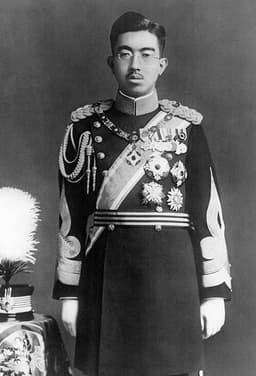
Hirohito
Emperor · Modern
58.0Total

Mahendra
Emperor · Modern
58.3Total
Basic Information
Born
1901
1920
Died
1989
—
Era
Modern
Modern
Nationality
Japan
Nepal
Occupation
Emperor
Emperor
Civilization
Eastern
Indian
Score Comparison
Military (10%)
51.1
43.3
Political (20%)
60.0
72.0
Influence (20%)
55.0
54.9
Legacy (20%)
55.0
50.0
Leadership (15%)
72.0
80.0
Strategy (15%)
55.9
49.3
TOTAL
58.0
58.3
Hirohito — Complete Timeline
1926 AD
Accession to the ThronePolitical Action◆ Major
Hirohito became Emperor of Japan upon the death of his father, Emperor Taisho. His reign was designated the Showa era. As emperor, he held a symbolic and constitutional role, but his actual political power was limited by the Meiji Constitution.
Japanese MonarchyShowa EraSuccession
Impact: national
1931 AD
Japanese Invasion of ManchuriaWar◆ Major
The Japanese Kwantung Army invaded Manchuria without explicit approval from the civilian government. Hirohito's role in the invasion is debated, but he was informed and did not oppose it. The invasion led to the establishment of the puppet state of Manchukuo and increased militarism in Japan.
World War IIJapanese ExpansionManchuria
Impact: regionaldestructive
1945 AD
Decision to Surrender in World War IIPolitical Action
After the atomic bombings of Hiroshima and Nagasaki and the Soviet invasion of Manchuria, Hirohito intervened in a deadlocked cabinet to accept the Potsdam Declaration. He made a radio broadcast announcing Japan's surrender, the first time the Japanese people heard his voice. This ended World War II.
World War IISurrenderAtomic Bomb
Impact: global
1946 AD
Renunciation of DivinityCultural◆ Major
Under pressure from the Allied occupation, Hirohito issued the Humanity Declaration, in which he denied the traditional claim that the Japanese emperor was a living god. This was a key step in the transformation of Japan into a constitutional monarchy with a symbolic emperor.
Post-War JapanConstitutional MonarchyOccupation
Impact: nationalconstructive
1947 AD
Post-War Reign and Symbolic RolePolitical Action◆ Major
Under the new Japanese Constitution, Hirohito became a symbol of the state with no political power. He focused on ceremonial duties and public appearances, helping to stabilize Japan during its post-war reconstruction. He reigned until his death in 1989, overseeing Japan's economic recovery.
Post-War JapanConstitutional MonarchyReconstruction
Impact: nationalconstructive
Mahendra — Complete Timeline
1960 AD
1960 Royal CoupPolitical Action◆ Major
Mahendra dismissed the elected government of B.P. Koirala, arrested political leaders, and assumed direct executive power. This coup ended Nepal's brief experiment with parliamentary democracy and established absolute monarchy.
CoupDemocracyMonarchy
Impact: nationaldestructive
1962 AD
Introduction of Panchayat SystemReform
King Mahendra dissolved the elected parliament and banned political parties. He introduced the Panchayat system, a partyless council-based governance model, centralizing power in the monarchy and suppressing democratic movements.
Political SystemAuthoritarianismNepal
Impact: nationaldestructive
Promulgation of 1962 ConstitutionReform◆ Major
Mahendra enacted a new constitution that institutionalized the Panchayat system. It granted the king supreme authority over all branches of government, including the power to appoint and dismiss the prime minister and cabinet.
ConstitutionGovernmentLaw
Impact: national
Expert Analysis
Origins
Hirohito was born on April 29, 1901, in Tokyo, as the eldest son of Crown Prince Yoshihito (later Emperor Taisho). His upbringing was strictly imperial, with education from tutors like Admiral Togo Heihachiro. He studied biology and marine biology, a lifelong interest. Mahendra was born on June 11, 1920, in Kathmandu, as the eldest son of King Tribhuvan. Educated at Durbar High School and later at Hindu University in Varanasi, he was groomed for kingship. His early exposure to political instability shaped his authoritarian tendencies.
Rise to Power
Hirohito ascended the throne on December 25, 1926, after his father's death. His early reign saw rising militarism; he was kept informed but his exact role in decisions like the invasion of Manchuria (1931) remains debated. Mahendra became king on March 13, 1955, after his father's death. He initially allowed parliamentary democracy but grew dissatisfied with the Nepali Congress government. On December 15, 1960, he staged a coup, dismissing Prime Minister B.P. Koirala and banning political parties.
Leadership & Governance
Hirohito's leadership during WWII was largely ceremonial, but he broke precedent in August 1945 by intervening to accept the Potsdam Declaration, ending the war. Post-war, he renounced his divinity (January 1, 1946) and became a constitutional symbol. Mahendra centralized power through the Panchayat system (1962), a partyless council structure that gave him absolute control. He suppressed dissent, jailed opponents, and controlled the military. Hirohito scored 72.0 in leadership, Mahendra 80.0, but Mahendra's strategy score was lower (49.3 vs 55.9).
Triumph & Tragedy
Hirohito's greatest triumph was his role in Japan's peaceful post-war transformation, becoming a symbol of unity. His tragedy was his association with wartime atrocities; his failure to prevent the war or take responsibility stained his legacy. Mahendra's triumph was establishing stability and national identity through Panchayat, which lasted until 1990. His tragedy was stifling democracy and human rights; his system created deep political divisions and economic stagnation.
Character & Destiny
Hirohito was cautious, formal, and bound by tradition. His decision to surrender showed strategic pragmatism. Mahendra was ambitious, decisive, and ruthless. He believed strong monarchy was essential for Nepal's development. Their characters shaped their nations' paths: Hirohito enabled Japan's recovery; Mahendra set Nepal back decades.
Legacy
Hirohito's legacy is mixed: he is both the emperor who led Japan into war and the symbol of its peace. Japan's post-war constitution, which he accepted, remains. Mahendra's legacy is the Panchayat system, which was abolished in 1990. His authoritarian model delayed democracy and is remembered negatively in Nepal. Hirohito's influence score is 55.0, Mahendra's 54.9.
Conclusion
Mahendra scores marginally higher overall (58.3 vs 58.0), but Hirohito's impact on global history is greater. Hirohito's role in Japan's surrender and post-war transformation affected millions and shaped modern East Asia. Mahendra's impact was confined to Nepal and ultimately reversed. Thus, Hirohito had a more significant and lasting influence on world history.
Rankings
🥇
MahendraLeader
Mil: 43.3Pol: 72.0Inf: 54.9
58.3
🥈
Hirohito
Mil: 51.1Pol: 60.0Inf: 55.0
58.0
+0.3 behind
How This Comparison Works
Algorithm
Each figure is scored on 6 dimensions (0—100 scale) based on structured historical data: Military (10%), Political (20%), Influence (20%), Legacy (20%), Leadership (15%), Strategy (15%). The weighted total produces the final ranking.
Data Sources
Scores are computed from structured sub-indicators in the database. Scale factors adjust for era (Ancient ×0.85, Modern ×1.0) and civilization size (Eastern ×1.05, Other ×0.80) to account for differences in population and military scale.
Maximum 3 Figures
Comparisons are limited to 2—3 figures to ensure readability and statistical meaningfulness.
Error Margins
±5 points per dimension — Sub-scores are derived from historical records with inherent uncertainty. Two figures within 5 points on a dimension should be considered roughly equivalent in that area.
Total Score Accuracy
±3 points overall — The weighted combination of 6 dimensions produces a total score with approximately ±3 points of uncertainty. Differences of less than 3 points are not statistically significant— the figures are effectively tied.
Known Limitations
- Historical records are incomplete and uneven across civilizations
- Figures from oral-tradition societies may be underrepresented
- Occupation labels can misclassify multi-role figures
- Scores measure capability and impact, not moral character
- Quantitative scoring is a comparison tool, not absolute truth
Capability Radar
Military (10%) — Battles & Warfare
Battles
51
30
Win Rate
56
34
Expansion
55
34
Political (20%) — Governance & Reform
Reform
70
75
Diplomacy
60
60
Economy
50
55
Influence (20%) — Cultural & Global Reach
Cultural
55
40
Global
65
30
Legacy (20%) — Historical Impact
Historical
75
55
Longevity
70
50
Leadership (15%) — Power & Stability
Tenure
85
70
Stability
40
65
Strategy (15%) — Tactics & Innovation
Strategy
62
36
Tactics
65
43
Reform
64
45
Similar Comparisons
Comments & Discussion
No comments yet. Be the first to share your thoughts!