Loading...
Hirohito vs King Hussein of Jordan
King Hussein of Jordan leads by 3.0 pts · 2 figures compared
…
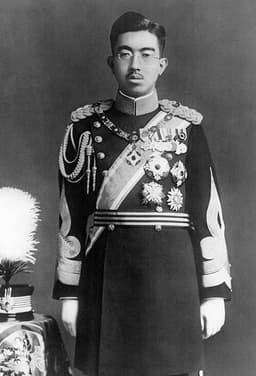
Hirohito
Emperor · Modern
58.0Total

King Hussein of Jordan
Emperor · Modern
61.0Total
Basic Information
Born
1901
1935
Died
1989
—
Era
Modern
Modern
Nationality
Japan
Jordan
Occupation
Emperor
Emperor
Civilization
Eastern
Middle Eastern
Score Comparison
Military (10%)
51.1
50.0
Political (20%)
60.0
70.0
Influence (20%)
55.0
61.0
Legacy (20%)
55.0
50.0
Leadership (15%)
72.0
78.0
Strategy (15%)
55.9
60.0
TOTAL
58.0
61.0
Hirohito — Complete Timeline
1926 AD
Accession to the ThronePolitical Action◆ Major
Hirohito became Emperor of Japan upon the death of his father, Emperor Taisho. His reign was designated the Showa era. As emperor, he held a symbolic and constitutional role, but his actual political power was limited by the Meiji Constitution.
Japanese MonarchyShowa EraSuccession
Impact: national
1931 AD
Japanese Invasion of ManchuriaWar◆ Major
The Japanese Kwantung Army invaded Manchuria without explicit approval from the civilian government. Hirohito's role in the invasion is debated, but he was informed and did not oppose it. The invasion led to the establishment of the puppet state of Manchukuo and increased militarism in Japan.
World War IIJapanese ExpansionManchuria
Impact: regionaldestructive
1945 AD
Decision to Surrender in World War IIPolitical Action
After the atomic bombings of Hiroshima and Nagasaki and the Soviet invasion of Manchuria, Hirohito intervened in a deadlocked cabinet to accept the Potsdam Declaration. He made a radio broadcast announcing Japan's surrender, the first time the Japanese people heard his voice. This ended World War II.
World War IISurrenderAtomic Bomb
Impact: global
1946 AD
Renunciation of DivinityCultural◆ Major
Under pressure from the Allied occupation, Hirohito issued the Humanity Declaration, in which he denied the traditional claim that the Japanese emperor was a living god. This was a key step in the transformation of Japan into a constitutional monarchy with a symbolic emperor.
Post-War JapanConstitutional MonarchyOccupation
Impact: nationalconstructive
1947 AD
Post-War Reign and Symbolic RolePolitical Action◆ Major
Under the new Japanese Constitution, Hirohito became a symbol of the state with no political power. He focused on ceremonial duties and public appearances, helping to stabilize Japan during its post-war reconstruction. He reigned until his death in 1989, overseeing Japan's economic recovery.
Post-War JapanConstitutional MonarchyReconstruction
Impact: nationalconstructive
King Hussein of Jordan — Complete Timeline
1952 AD
Assumed the throne of JordanPolitical Action◆ Major
Hussein became King of Jordan at age 17 after his father King Talal was declared unfit to rule due to mental illness. He was formally crowned on May 2, 1953, beginning a reign that would last until 1999.
SuccessionMonarchy
Impact: national
1960 AD
Survived multiple assassination attemptsOther
King Hussein survived several assassination attempts, including a 1960 plot by Syrian intelligence to poison his nose drops. He also survived attacks by the Muslim Brotherhood and other groups, maintaining his rule through periods of regional instability.
AssassinationSecuritySurvival
Impact: national
1970 AD
Black September conflictWar◆ Major
King Hussein ordered the Jordanian military to suppress Palestinian factions led by the PLO after they attempted to overthrow his monarchy. The conflict resulted in thousands of casualties and the expulsion of the PLO from Jordan to Lebanon.
Civil WarPalestinian ConflictPLO
Impact: regionaldestructive
1988 AD
Jordan disengaged from the West BankPolitical Action◆ Major
King Hussein announced Jordan's administrative and legal disengagement from the West Bank, severing ties with the territory that Jordan had controlled since 1948. This move allowed the PLO to claim sole representation of Palestinians.
West BankPalestinian AuthorityTerritory
Impact: regional
1994 AD
Signing of the Israel-Jordan Peace TreatyPolitical Action
King Hussein signed a peace treaty with Israeli Prime Minister Yitzhak Rabin at the Arava border crossing. The treaty normalized relations between Jordan and Israel, ending a 46-year state of war and establishing diplomatic ties.
Peace ProcessIsraelDiplomacy
Impact: regionalconstructive
Expert Analysis
Origins
Hirohito was born on April 29, 1901, in Tokyo, the first son of Crown Prince Yoshihito (later Emperor Taisho) and Princess Sadako. He was educated at the Gakushuin Peer's School and later studied under scholars like Kimmochi Saionji. His grandfather, Emperor Meiji, had transformed Japan into a modern power. Hirohito was groomed for a constitutional role, but his upbringing emphasized imperial divinity.
King Hussein bin Talal was born on November 14, 1935, in Amman, Jordan, into the Hashemite dynasty, which claims descent from the Prophet Muhammad. His grandfather, King Abdullah I, was assassinated in 1951, an event Hussein witnessed. He was educated at Victoria College in Alexandria and Harrow in England, then trained at the Royal Military Academy Sandhurst. His father, King Talal, reigned briefly before being deposed due to mental illness.
Rise to Power
Hirohito became emperor on December 25, 1926, upon his father's death. His reign, Showa, began during a period of economic turmoil and militarism. He was a constitutional monarch but increasingly involved in political decisions, especially after the 1930s. The Kwantung Army's invasion of Manchuria in 1931 occurred with his tacit approval, though his exact role remains debated. By the late 1930s, Japan's military dominated policy, and Hirohito's position as supreme commander was invoked to justify aggression.
King Hussein assumed the throne at age 17 on May 2, 1953, after his father's deposition. He faced immediate challenges: a young king in a fragile kingdom surrounded by hostile neighbors. He survived a coup attempt by Arab nationalists in 1957, dissolving political parties and consolidating power. His survival skills were honed early: in 1960, Syrian intelligence plotted to poison his nose drops, and he faced numerous assassination attempts.
Leadership & Governance
Hirohito's leadership style was passive yet influential. He rarely vetoed decisions but used his authority to break deadlocks. His most decisive act was on August 14, 1945, when he accepted the Potsdam Declaration, ending World War II. Before that, he had supported military expansion, approving the attack on Pearl Harbor. After the war, he transformed into a symbol of state under the 1947 constitution, renouncing his divinity. His governance score of 60.0 reflects this dual role.
King Hussein was a hands-on ruler, navigating Jordan through regional turmoil. He maintained stability by balancing alliances with the West, Israel, and Arab states. In 1970, during Black September, he ordered the military to crush Palestinian factions that threatened his rule. He also made peace with Israel in 1994, signing a treaty that normalized relations. His political score of 70.0 and leadership score of 78.0 underscore his pragmatic and resilient governance.
Triumph & Tragedy
Hirohito's greatest triumph was overseeing Japan's post-war reconstruction and renouncing divinity, which allowed the monarchy to survive. However, his greatest failure was his complicity in Japan's aggressive war, which led to millions of deaths. He scored 51.1 in military and 55.9 in strategy, reflecting his limited direct role but immense symbolic responsibility.
King Hussein's triumph was the 1994 peace treaty with Israel, securing Jordan's borders and American aid. He also survived multiple crises, including the 1967 Six-Day War, where Jordan lost the West Bank. His tragedy was the loss of Jerusalem and the West Bank, and the bloody legacy of Black September, which killed thousands. His military score of 50.0 is low, but his strategic score of 60.0 shows his diplomatic acumen.
Character & Destiny
Hirohito was reserved, cautious, and bound by tradition. He believed in his divine role but adapted to post-war reality. His character shaped his destiny: his reluctance to confront militarists allowed war, but his eventual intervention saved Japan from destruction. Historians debate his responsibility: some see him as a puppet, others as a war criminal.
King Hussein was charismatic, pragmatic, and resilient. He often said, 'I am a Bedouin,' emphasizing his connection to his people. His character—combining humility with authority—allowed him to survive assassination attempts and regional upheavals. He built a legacy of stability in a volatile region.
Legacy
Hirohito's legacy is mixed: he is remembered as a symbol of Japan's imperial past and its peaceful transformation. The Showa era saw Japan rise as an economic superpower, but also commit atrocities. His renunciation of divinity (1946) redefined the monarchy. Today, he is a figure of controversy, with scores of 55.0 for influence and legacy.
King Hussein's legacy is more positive: he is revered as the father of modern Jordan, a peacemaker, and a survivor. His 1994 peace treaty with Israel remains a cornerstone of Jordanian foreign policy. He died in 1999, leaving a stable monarchy. His legacy score of 50.0 reflects Jordan's limited global influence, but his impact on Middle East peace is significant.
Conclusion
While both leaders faced immense challenges, King Hussein of Jordan had a greater impact on his nation's survival and regional peace. His leadership score of 78.0 and political score of 70.0 outpace Hirohito's 72.0 and 60.0. Hirohito's role was largely symbolic, and his passive complicity in war crimes taints his legacy. Hussein actively shaped Jordan's destiny, securing peace and stability. In a direct comparison, King Hussein's pragmatic leadership and lasting peace treaty give him the edge over Hirohito's constrained influence.
Rankings
🥇
King Hussein of JordanLeader
Mil: 50.0Pol: 70.0Inf: 61.0
61.0
🥈
Hirohito
Mil: 51.1Pol: 60.0Inf: 55.0
58.0
+3.0 behind
How This Comparison Works
Algorithm
Each figure is scored on 6 dimensions (0—100 scale) based on structured historical data: Military (10%), Political (20%), Influence (20%), Legacy (20%), Leadership (15%), Strategy (15%). The weighted total produces the final ranking.
Data Sources
Scores are computed from structured sub-indicators in the database. Scale factors adjust for era (Ancient ×0.85, Modern ×1.0) and civilization size (Eastern ×1.05, Other ×0.80) to account for differences in population and military scale.
Maximum 3 Figures
Comparisons are limited to 2—3 figures to ensure readability and statistical meaningfulness.
Error Margins
±5 points per dimension — Sub-scores are derived from historical records with inherent uncertainty. Two figures within 5 points on a dimension should be considered roughly equivalent in that area.
Total Score Accuracy
±3 points overall — The weighted combination of 6 dimensions produces a total score with approximately ±3 points of uncertainty. Differences of less than 3 points are not statistically significant— the figures are effectively tied.
Known Limitations
- Historical records are incomplete and uneven across civilizations
- Figures from oral-tradition societies may be underrepresented
- Occupation labels can misclassify multi-role figures
- Scores measure capability and impact, not moral character
- Quantitative scoring is a comparison tool, not absolute truth
Capability Radar
Military (10%) — Battles & Warfare
Battles
51
15
Win Rate
56
20
Expansion
55
10
Political (20%) — Governance & Reform
Reform
70
65
Diplomacy
60
85
Economy
50
55
Influence (20%) — Cultural & Global Reach
Cultural
55
45
Global
65
60
Legacy (20%) — Historical Impact
Historical
75
60
Longevity
70
55
Leadership (15%) — Power & Stability
Tenure
85
90
Stability
40
70
Strategy (15%) — Tactics & Innovation
Strategy
62
30
Tactics
65
25
Reform
64
40
Similar Comparisons
Comments & Discussion
No comments yet. Be the first to share your thoughts!