Loading...
This comparison has not been analyzed yet.
One-time AI generation (~1 minute). Scores and timeline are already available below.
Hermann von Wissmann vs Ota Minoru
Hermann von Wissmann leads by 1.9 pts · 2 figures compared
…

Hermann von Wissmann
General · Modern
43.9Total
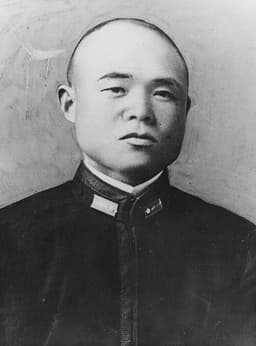
Ota Minoru
General · Modern
42.0Total
Basic Information
Born
1853
1891
Died
1905
1945
Era
Modern
Modern
Nationality
Germany
Japan
Occupation
General
General
Civilization
Western
Eastern
Score Comparison
Military (10%)
30.0
50.0
Political (20%)
35.1
26.4
Influence (20%)
56.4
50.2
Legacy (20%)
43.3
41.7
Leadership (15%)
43.8
36.9
Strategy (15%)
41.7
45.0
TOTAL
43.9
42.0
Hermann von Wissmann — Complete Timeline
1880 AD
Exploration of the Congo BasinOther◆ Major
Wissmann led an expedition across central Africa from the west coast to the east coast, crossing the Congo Basin. He mapped large areas of the Kasai River region and collected scientific data on geography and ethnography.
ExplorationAfricaCongo
Impact: regional
1889 AD
Suppressed the Abushiri RevoltWar◆ Major
Wissmann was appointed Reichskommissar and led a military campaign to suppress the Abushiri Revolt against German rule in East Africa. He used a force of African soldiers (askaris) and German officers to defeat the rebels, securing German control.
Colonial WarEast AfricaRevolt
Impact: regionaldestructive
1895 AD
Appointed Governor of German East AfricaPolitical Action◆ Major
Wissmann was appointed Governor of German East Africa, the highest colonial authority in the territory. He implemented administrative reforms, expanded infrastructure, and continued military campaigns to pacify the colony.
ColonialismAdministrationEast Africa
Impact: regional
Ota Minoru — Complete Timeline
1945 AD
Assumed command of the Okinawa Naval BaseWar◆ Major
In early 1945, Rear Admiral Ota Minoru was placed in command of the Imperial Japanese Navy's forces on Okinawa. He was responsible for defending the island against the impending American invasion, leading a mixed force of naval personnel and base troops.
World War IIPacific WarOkinawa
Impact: regional
Led the defense of the Oroku PeninsulaWar◆ Major
During the Battle of Okinawa, Ota commanded the defense of the Oroku Peninsula from May to June 1945. His forces, numbering about 10,000 men, held out against the U.S. 6th Marine Division for ten days of intense fighting before being overwhelmed.
World War IIBattle of OkinawaLast Stand
Impact: regionaltragic
Committed suicide with staff officersOther◆ Major
On June 13, 1945, with his position overrun and defeat imminent, Rear Admiral Ota Minoru committed suicide by pistol along with his senior staff officers in his command cave on the Oroku Peninsula. This act followed the Japanese military code of honor.
World War IISuicideBushido
tragic
This comparison has not been analyzed yet.
One-time AI generation (~1 minute). Scores and timeline are already available below.
Rankings
🥇
Hermann von WissmannLeader
Mil: 30.0Pol: 35.1Inf: 56.4
43.9
🥈
Ota Minoru
Mil: 50.0Pol: 26.4Inf: 50.2
42.0
+1.9 behind
How This Comparison Works
Algorithm
Each figure is scored on 6 dimensions (0—100 scale) based on structured historical data: Military (10%), Political (20%), Influence (20%), Legacy (20%), Leadership (15%), Strategy (15%). The weighted total produces the final ranking.
Data Sources
Scores are computed from structured sub-indicators in the database. Scale factors adjust for era (Ancient ×0.85, Modern ×1.0) and civilization size (Eastern ×1.05, Other ×0.80) to account for differences in population and military scale.
Maximum 3 Figures
Comparisons are limited to 2—3 figures to ensure readability and statistical meaningfulness.
Error Margins
±5 points per dimension — Sub-scores are derived from historical records with inherent uncertainty. Two figures within 5 points on a dimension should be considered roughly equivalent in that area.
Total Score Accuracy
±3 points overall — The weighted combination of 6 dimensions produces a total score with approximately ±3 points of uncertainty. Differences of less than 3 points are not statistically significant— the figures are effectively tied.
Known Limitations
- Historical records are incomplete and uneven across civilizations
- Figures from oral-tradition societies may be underrepresented
- Occupation labels can misclassify multi-role figures
- Scores measure capability and impact, not moral character
- Quantitative scoring is a comparison tool, not absolute truth
Capability Radar
Military (10%) — Battles & Warfare
Battles
35
30
Win Rate
40
10
Expansion
45
10
Political (20%) — Governance & Reform
Reform
25
10
Diplomacy
20
10
Economy
15
10
Influence (20%) — Cultural & Global Reach
Cultural
20
20
Global
20
10
Legacy (20%) — Historical Impact
Historical
25
25
Longevity
15
15
Leadership (15%) — Power & Stability
Tenure
30
20
Stability
10
10
Strategy (15%) — Tactics & Innovation
Strategy
25
35
Tactics
30
40
Reform
20
10
Similar Comparisons
Comments & Discussion
No comments yet. Be the first to share your thoughts!