Loading...
Ota Minoru vs Phibun
Phibun leads by 10.5 pts · 2 figures compared
…
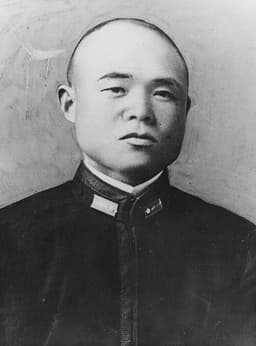
Ota Minoru
General · Modern
42.0Total

Phibun
General · Modern
52.5Total
Basic Information
Born
1891
1897
Died
1945
1964
Era
Modern
Modern
Nationality
Japan
Thailand
Occupation
General
General
Civilization
Eastern
Eastern
Score Comparison
Military (10%)
50.0
47.5
Political (20%)
26.4
48.0
Influence (20%)
50.2
58.0
Legacy (20%)
41.7
45.0
Leadership (15%)
36.9
71.0
Strategy (15%)
45.0
41.7
TOTAL
42.0
52.5
Ota Minoru — Complete Timeline
1945 AD
Assumed command of the Okinawa Naval BaseWar◆ Major
In early 1945, Rear Admiral Ota Minoru was placed in command of the Imperial Japanese Navy's forces on Okinawa. He was responsible for defending the island against the impending American invasion, leading a mixed force of naval personnel and base troops.
World War IIPacific WarOkinawa
Impact: regional
Led the defense of the Oroku PeninsulaWar◆ Major
During the Battle of Okinawa, Ota commanded the defense of the Oroku Peninsula from May to June 1945. His forces, numbering about 10,000 men, held out against the U.S. 6th Marine Division for ten days of intense fighting before being overwhelmed.
World War IIBattle of OkinawaLast Stand
Impact: regionaltragic
Committed suicide with staff officersOther◆ Major
On June 13, 1945, with his position overrun and defeat imminent, Rear Admiral Ota Minoru committed suicide by pistol along with his senior staff officers in his command cave on the Oroku Peninsula. This act followed the Japanese military code of honor.
World War IISuicideBushido
tragic
Phibun — Complete Timeline
1938 AD
Led a coup to become Prime MinisterPolitical Action◆ Major
Phibun (Plaek Phibunsongkhram) became Prime Minister of Thailand after a coup that ousted the previous government. He established a military dictatorship and promoted Thai nationalism.
CoupDictatorshipNationalism
Impact: national
1939 AD
Renamed Siam to ThailandPolitical Action◆ Major
Phibun officially changed the country's name from Siam to Thailand (Prathet Thai), meaning 'Land of the Free'. This was part of his nationalist campaign to unify the Thai people and assert national identity.
NationalismName ChangeIdentity
Impact: nationalconstructive
1941 AD
Allied with Japan during World War IIWar◆ Major
Phibun allied Thailand with Japan after the Japanese invasion of Thailand in December 1941. He declared war on the Allies and allowed Japanese forces to use Thai territory for their campaigns in Southeast Asia.
World War IIAllianceJapan
Impact: regionaldestructive
1944 AD
Resigned after World War IIPolitical Action
Phibun resigned as Prime Minister in 1944 as the tide of war turned against Japan. He was replaced by a civilian government, but he remained influential and later returned to power.
ResignationPost-warPolitical Change
Impact: national
1948 AD
Returned to power in a coupPolitical Action◆ Major
Phibun returned to power through a military coup in 1948, overthrowing the civilian government. He ruled as a military dictator until 1957, aligning Thailand with the United States during the Cold War.
CoupCold WarDictatorship
Impact: national
Expert Analysis
Origins
Ota Minoru was born in 1891 in Japan, graduating from the Imperial Japanese Naval Academy in 1913. He served in various naval posts, rising through the ranks as a career officer with a focus on coastal defense and naval aviation. His early career was unremarkable, but he gained experience in logistics and base command. In contrast, Phibun (Plaek Phibunsongkhram) was born in 1897 in Siam (now Thailand) into a farming family. He attended the Royal Military Academy and later trained in France, where he absorbed nationalist and authoritarian ideas. Phibun's upbringing in a rapidly modernizing Siam under absolute monarchy shaped his ambition for national transformation.
Rise to Power
Ota's rise was slow and steady. He commanded the 4th Guard Unit in 1941 and later became chief of staff of the 5th Fleet. His major assignment came in early 1945 when he assumed command of the Okinawa Naval Base, tasked with defending the island against the American invasion. Phibun's rise was more dramatic. He was a key figure in the 1932 Siamese revolution that ended absolute monarchy. In 1938, he led a coup to become Prime Minister, establishing a military dictatorship. He consolidated power by suppressing rivals and promoting ultranationalist policies, including renaming Siam to Thailand in 1939.
Leadership & Governance
Ota's leadership was defined by rigid adherence to duty and sacrifice. He commanded approximately 10,000 naval personnel on the Oroku Peninsula, organizing a desperate defense against overwhelming Allied forces. His strategy relied on fortified caves and suicidal resistance, with no evacuation plan. Phibun governed as a dictator, implementing modernizing reforms such as infrastructure development, education expansion, and Westernization of customs. However, he also enforced harsh authoritarian rule, suppressing dissent and promoting a cult of personality. His alliance with Japan in 1941 brought economic benefits but later led to national humiliation.
Triumph & Tragedy
Ota's greatest success was the prolonged defense of Oroku Peninsula, where his forces held out for over a month despite being outnumbered and outgunned. This resistance tied up American troops and delayed the capture of Okinawa. However, his ultimate failure was the complete loss of his command; all his men were killed or captured, and he committed suicide on June 13, 1945, rather than surrender. Phibun's triumph was transforming Thailand into a modern, unified state with a national identity. He successfully navigated the war to avoid colonization, though his alliance with Japan led to post-war reparations and territorial losses. His tragedy was his fall from power in 1944 after Japan's defeat, and his later return as a puppet in the Cold War, eventually being ousted again in 1957.
Character & Destiny
Ota embodied the Bushido code, prioritizing honor and death over defeat. His decision to commit suicide reflects a fatalistic acceptance of his fate. Historians note his competence but lack of strategic vision; his score of 36.9 in leadership and 45.0 in strategy indicate a limited impact beyond the battlefield. Phibun was pragmatic and opportunistic, shifting alliances to maintain power. His political acumen (48.0) and leadership (71.0) allowed him to rule for nearly two decades, but his authoritarianism and wartime decisions tarnished his legacy. He scored 58.0 in influence, reflecting his role in shaping modern Thailand.
Legacy
Ota's legacy is confined to Japanese military history, remembered as a symbol of futile sacrifice. His defense of Okinawa is studied for its tactical brutality but had no lasting political impact. He scored 41.7 in legacy. Phibun's legacy is more enduring: he renamed the country, centralized government, and promoted Thai nationalism. His policies laid the groundwork for modern Thailand's identity, but his association with fascism and war crimes remains controversial. His legacy score of 45.0 reflects this mixed impact.
Conclusion
While Ota's sacrifice exemplifies personal courage, Phibun's influence on a nation's trajectory is far greater. Phibun's total score of 52.5 against Ota's 42.0 highlights his broader impact. Phibun's political and leadership scores (48.0 and 71.0) dwarf Ota's (26.4 and 36.9). Ota's defense was a tactical footnote in a lost war; Phibun's policies shaped Thailand for decades. Therefore, Phibun had a more significant historical impact.
Rankings
🥇
PhibunLeader
Mil: 47.5Pol: 48.0Inf: 58.0
52.5
🥈
Ota Minoru
Mil: 50.0Pol: 26.4Inf: 50.2
42.0
+10.5 behind
How This Comparison Works
Algorithm
Each figure is scored on 6 dimensions (0—100 scale) based on structured historical data: Military (10%), Political (20%), Influence (20%), Legacy (20%), Leadership (15%), Strategy (15%). The weighted total produces the final ranking.
Data Sources
Scores are computed from structured sub-indicators in the database. Scale factors adjust for era (Ancient ×0.85, Modern ×1.0) and civilization size (Eastern ×1.05, Other ×0.80) to account for differences in population and military scale.
Maximum 3 Figures
Comparisons are limited to 2—3 figures to ensure readability and statistical meaningfulness.
Error Margins
±5 points per dimension — Sub-scores are derived from historical records with inherent uncertainty. Two figures within 5 points on a dimension should be considered roughly equivalent in that area.
Total Score Accuracy
±3 points overall — The weighted combination of 6 dimensions produces a total score with approximately ±3 points of uncertainty. Differences of less than 3 points are not statistically significant— the figures are effectively tied.
Known Limitations
- Historical records are incomplete and uneven across civilizations
- Figures from oral-tradition societies may be underrepresented
- Occupation labels can misclassify multi-role figures
- Scores measure capability and impact, not moral character
- Quantitative scoring is a comparison tool, not absolute truth
Capability Radar
Military (10%) — Battles & Warfare
Battles
30
20
Win Rate
10
15
Expansion
10
25
Political (20%) — Governance & Reform
Reform
10
40
Diplomacy
10
30
Economy
10
35
Influence (20%) — Cultural & Global Reach
Cultural
20
30
Global
10
30
Legacy (20%) — Historical Impact
Historical
25
40
Longevity
15
20
Leadership (15%) — Power & Stability
Tenure
20
65
Stability
10
25
Strategy (15%) — Tactics & Innovation
Strategy
35
20
Tactics
40
25
Reform
10
30
Similar Comparisons
Comments & Discussion
No comments yet. Be the first to share your thoughts!